

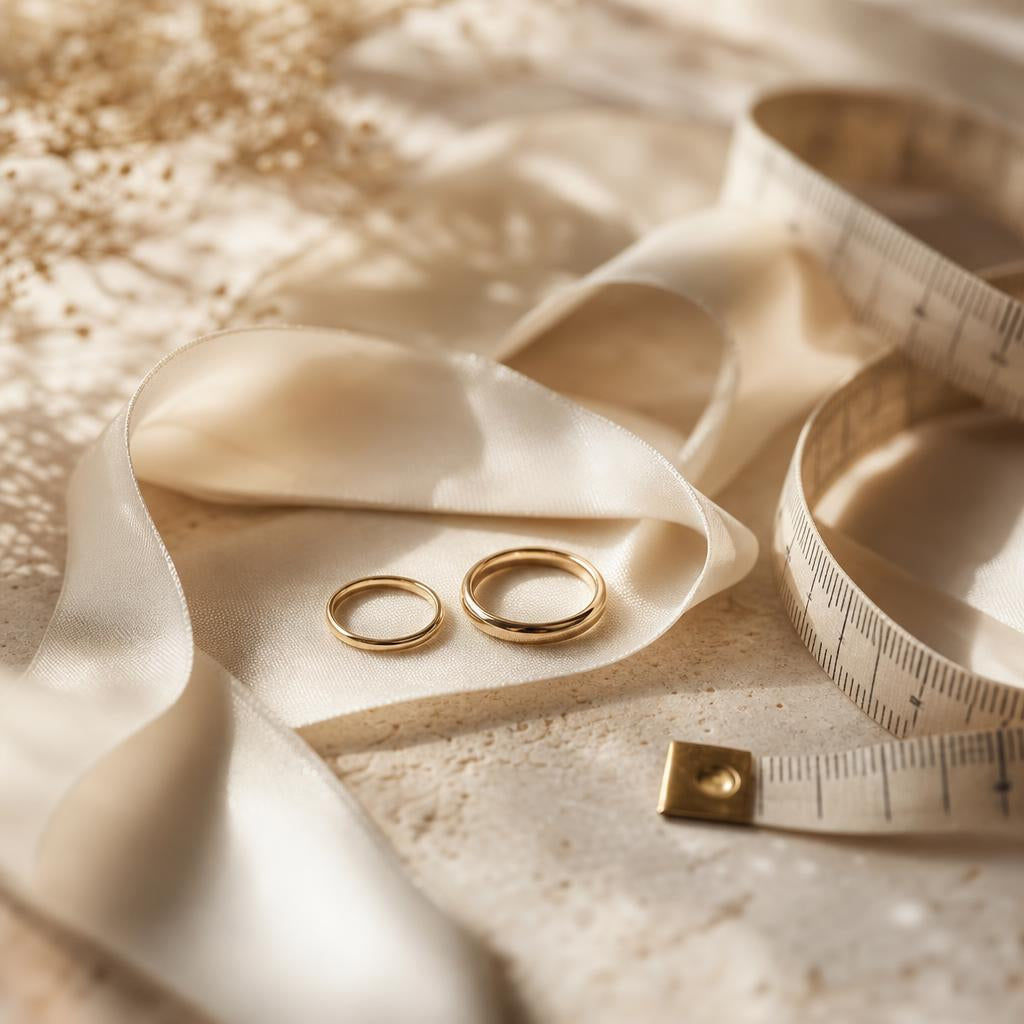
Promise Ring vs Engagement Ring Sizing: Does the Occasion Change the Approach?
A promise ring and an engagement ring are sized exactly the same way — a finger doesn't know the difference between a promise and a proposal. What actually changes isn't the measuring, it's everything around it: who's doing the guessing, how much secrecy is involved, and how forgiving the ring itself is if you get it slightly wrong.
That distinction matters more than most sizing guides let on. Engagement ring shopping tends to come with more urgency (and more secrecy), while promise rings are often bought together, gifted more casually, or chosen as a first ring before a bigger purchase down the line. Before you get into the details, here's a spread of styles worth knowing — some built for a quieter, everyday promise, others with the presence of a classic engagement piece.


The mechanics don't change — the constraints around them do
Start with the part that stays constant: a ring band is a circle, and a circle only has one correct measurement for a given finger. Whether the ring is a $130 promise band or a ring that's about to anchor a proposal, the sizing methods are identical — string-and-ruler measurements, printable sizing guides, borrowing an existing ring to trace, or using a sizer set. None of that logic bends for the occasion.
What actually shifts is the situation you're sizing inside of. A promise ring is frequently chosen with the recipient standing right next to you, trying pieces on in real time. An engagement ring is far more likely to be bought in secret, sized from guesswork, a borrowed ring, or a friend's tip-off — which is a fundamentally harder sizing problem, not a different one.
Worth knowing: If you're buying an engagement ring in secret and have no reliable size, most simulated diamond rings — including all of ours — use a standard sizer range with resizing or exchange support, so a close guess is rarely a disaster. It's a workable safety net, not a reason to skip measuring altogether.
Why promise ring sizing tends to be lower-stakes
Promise rings are usually bought with less pressure attached. The recipient often knows the purchase is happening, which means you can simply ask, borrow a ring off her hand for an afternoon, or take her along to try sizes in person. Even when it's meant as a small surprise, the emotional stakes of getting the size slightly wrong are lower — a promise ring that runs a touch loose can be worn as a right-hand or pinky ring for a few weeks without the moment feeling derailed.
That lower pressure changes buying behavior more than it changes the ring itself. Shoppers tend to size promise rings the way they'd size any piece of jewelry: practically, without over-researching, and without the spiral of "what if this ruins the moment" that engagement ring buyers describe constantly. If you haven't measured before, a quick pass through measuring your ring size at home covers the four methods that actually hold up, no jeweler required.

The Cherish Ring
Individually bezel-set stones sit close to the finger with no raised prongs to catch — a practical, everyday-friendly choice if the ring is going to be worn while sizing questions are still being sorted out.
Shop The Cherish Ring →Why engagement ring sizing carries more pressure
Engagement ring shopping is where sizing anxiety actually lives, and it's not really about the ring — it's about the moment. A ring that's visibly too big can slide around during the proposal photos; one that's too small might not go past the knuckle at all. Because so many proposals are still planned as a surprise, the size is frequently estimated rather than confirmed: a sister who "just knows," a ring borrowed off a nightstand and returned before it's missed, or a size guessed by comparing hands.
None of that makes the sizing process different — it makes the input less reliable, which is a separate problem with its own fixes. If you're planning a surprise, finding out her ring size without asking walks through the more reliable covert methods, and it's worth doing before you buy rather than hoping a "close enough" size works out.
✦ Pro tip: When in doubt between two sizes for an engagement ring, size up rather than down. A slightly loose ring can be worn safely with a ring guard until it's resized; a ring that doesn't fit past the knuckle can derail the actual moment.
The one real difference: how much the ring needs to "perform" on day one
Here's the closest thing to a genuine sizing difference between the two: an engagement ring is expected to fit perfectly the moment it's opened, in front of an audience, often being photographed. A promise ring has more room to be adjusted afterward without anyone noticing or minding. That's a pressure difference, not a measurement difference — but it does mean engagement ring buyers should build in more margin for error before the big moment, while promise ring buyers can comfortably buy first and fine-tune later.
This is also where choosing a promise ring that feels intentional rather than interim matters — a ring meant to be worn immediately and often benefits from a comfort-forward fit, not just a technically correct one.
Sizing charts, half sizes, and the numbers that trip people up
Regardless of occasion, the same numeric confusion shows up again and again: US sizes don't map cleanly onto UK, EU or Australian sizing, and many buyers don't realize their "usual size" from one country doesn't automatically translate to another. If you're gifting across borders, or simply bought a ring while traveling, run the numbers rather than assuming.
| Occasion | Typical sizing method | Margin for error |
|---|---|---|
| Promise ring, given in person | Try-on or borrowed ring | Low risk — can adjust immediately |
| Promise ring, surprise gift | Estimate or borrowed ring | Moderate — resize after the fact |
| Engagement ring, planned together | Confirmed in-store or online | Low risk — size is known |
| Engagement ring, surprise proposal | Covert estimate or borrowed ring | Highest — plan for resizing |
Whichever ring you're buying, it's worth checking exactly how the numbers line up before you commit, especially if a size was estimated rather than measured directly. Our guide to how US, UK, EU and Australian ring sizing compares is a quick way to double-check before you check out, and if the number you land on falls between two sizes, our note on whether half and quarter sizes actually matter explains when to round up and when it genuinely doesn't matter.

The Fleur Ring
A radiant-cut centre stone framed in a floral halo of marquise and round accents — the kind of ring built for a proposal moment, where the size needs to land right the first time.
Shop The Fleur Ring →What to do if you get it wrong
Getting a size slightly off is far more common than most buyers expect, and it's rarely the emergency it feels like in the moment. A ring that runs slightly loose can be worn safely with a ring guard while a replacement or resize is arranged. A ring that's slightly tight is usually the easier fix of the two, since most simulated diamond bands can be resized within a size or two without disturbing the setting.
The bigger mistake isn't a wrong guess — it's not planning for one. If you already suspect the size you have is a rough estimate rather than a confirmed number, it's worth reading which ring sizers and adjusters actually work before the ring arrives, so you're not scrambling for a fix on the day it matters most.
Quick Takeaways
- Sizing itself is identical for promise and engagement rings — a finger measures the same regardless of occasion.
- What differs is the reliability of the information: promise rings are usually sized with the recipient present, engagement rings are often sized from a guess.
- Engagement rings carry more pressure to fit perfectly on day one; promise rings have more room to be fine-tuned afterward.
- When estimating, size up rather than down — a loose ring is easier to manage than one that won't go past the knuckle.
- Always double-check international size conversions before ordering, especially for a gifted or surprise ring.
Frequently asked questions
Should I size a promise ring differently than an engagement ring?
No — the measuring method is the same. The difference is practical: promise rings are more often sized with the recipient present, so there's less guesswork involved.
What if I only have a rough guess at her size for a proposal?
Size up rather than down, and choose a ring style that resizes easily. A slightly loose ring can be worn safely for weeks with a ring guard while you arrange a proper resize.
Do promise rings need to fit as precisely as engagement rings?
Not immediately. Since promise rings are usually given in a lower-pressure setting, there's more room to try it on, adjust, or exchange without the moment being affected.
Can a ring bought for a proposal be resized afterward?
In most cases, yes — a size or two of adjustment is usually possible without disturbing the setting, which is why an educated guess is rarely a lasting problem.
Whichever ring you're sizing, the goal is the same either way: measure what you can, plan for the parts you can't control, and treat a slightly imperfect fit as a fixable detail rather than a verdict on the moment itself. The ring will catch up to the right size. The moment it marks won't need to wait for it.


