

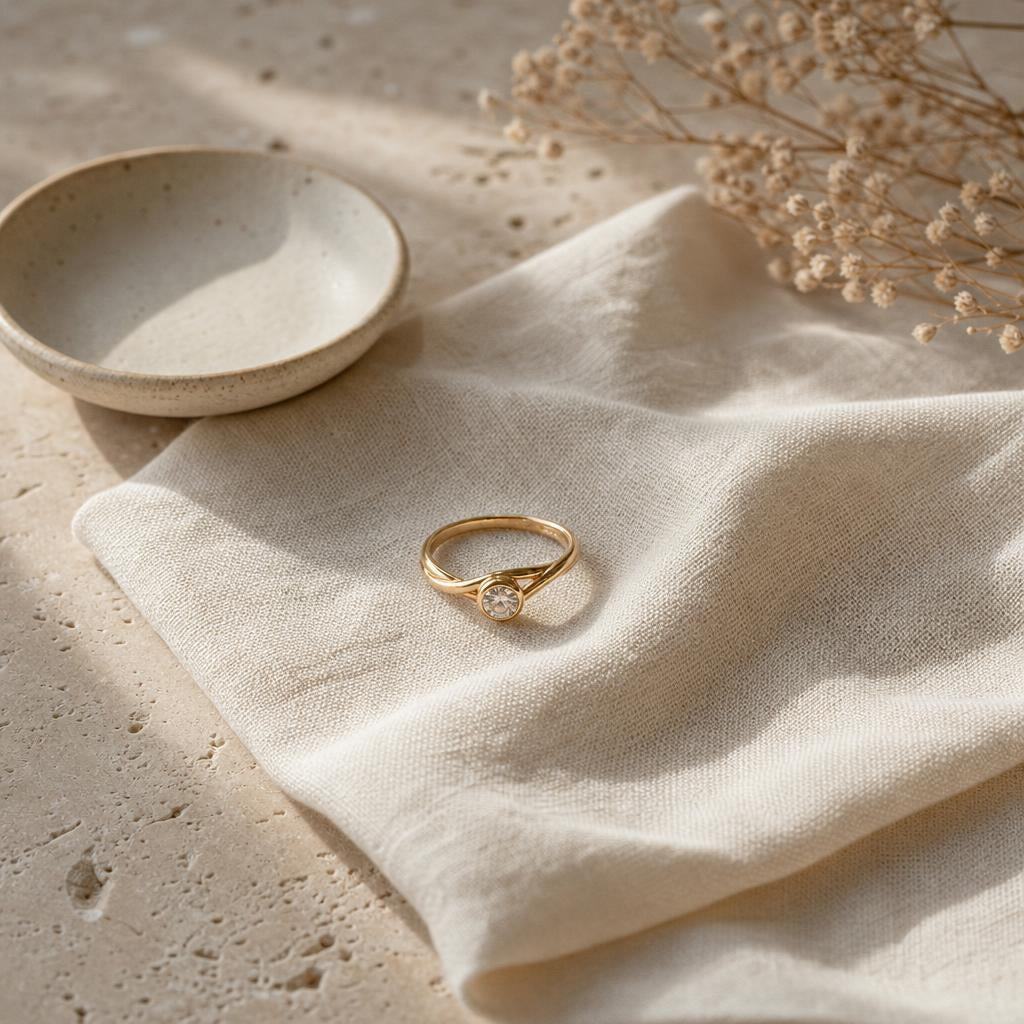
Postpartum Ring Sizing: Why Your Ring Might Not Fit Anymore
Somewhere between the third trimester and the first sleepless month home with the baby, a lot of women quietly notice the same thing: the ring that used to slide on so easily now sits differently. Sometimes it's tight. Sometimes it spins loose. Sometimes it just doesn't feel like "yours" the way it used to — and nobody warned you this was coming.
Postpartum ring sizing is one of those topics that rarely comes up in any pregnancy book, yet it affects an enormous number of new mothers. The good news is that the reasons behind it are well understood, the fixes are simple, and you don't have to choose between an uncomfortable ring and an expensive resize while you figure it out.


Why Your Finger Size Actually Changes After Pregnancy
It isn't in your head, and it isn't just water weight. Several things happen at once during and after pregnancy that can permanently or temporarily shift how a ring sits on your hand.
During pregnancy, your body produces significantly more relaxin, a hormone that loosens ligaments and connective tissue to prepare for childbirth. That same loosening effect happens throughout the body, including the small joints and soft tissue in your fingers. Combined with the fluid retention that builds up over the third trimester, fingers often swell noticeably — which is why so many women take their rings off in the final weeks.
What surprises people is what happens next. Fluid retention usually resolves within a few weeks of delivery, but the ligament laxity from relaxin can take considerably longer to fully reverse — for some women, months. On top of that, overall body composition changes during pregnancy and postpartum recovery can leave finger circumference slightly different than it was before, even after swelling is long gone. None of this is unusual, and none of it means anything is "wrong" with your body. It's simply what carrying and recovering from pregnancy does.
Worth knowing: It's common for finger size to fluctuate for six months to a year postpartum before settling into a new baseline. Sizing decisions made too early — while swelling is still resolving — often need to be redone.
How Long Should You Wait Before Resizing Anything?
This is the question that trips most new mothers up, because the instinct is to fix the problem immediately. But resizing (or replacing) a ring while your hands are still settling from birth can mean paying for the same adjustment twice.
A reasonable rule of thumb: give it at least three to four months postpartum before making any permanent decision, longer if you were still noticing swelling at your six-week checkup. Some women find their pre-pregnancy size returns almost exactly. Others find they've settled a half size — sometimes a full size — larger than before, particularly after a second or third pregnancy. There's no way to predict which outcome you'll get, which is exactly why waiting matters more than acting fast.
In the meantime, you don't have to just tolerate a ring that doesn't fit, or go without one. This is where a lot of new mothers reach for something they didn't expect to need: a genuinely affordable ring in a size that works right now, worn as a placeholder while the real decision waits.

The Cherish Ring
Individually bezel-set stones sit low and smooth against the skin — no raised prongs to catch on a diaper bag, a car seat buckle, or a newborn's delicate skin. A popular bridge ring for the exact months when comfort matters more than anything else.
Shop The Cherish Ring →The Signs Your Old Ring No Longer Fits Safely
A ring that's slightly snug is an inconvenience. A ring that's genuinely too tight is a circulation risk, and it's worth taking seriously rather than pushing through it. Watch for a band that leaves a deep, lasting groove after you take it off, fingers that look pale or feel tingly while it's on, or any real difficulty getting it past the knuckle in either direction. If you're seeing any of that, remove the ring and don't force it back on until you've had it properly resized or sized up in a new piece — a ring stuck on a swollen finger is a genuine emergency in the making, not just an annoyance.
On the other end, a ring that's become loose enough to spin freely or slide toward the knuckle carries its own risk: it's far easier to lose in the shower, at the changing table, or anywhere you're washing your hands more often than usual with a newborn in the house.
Your Options: Resize, Wait, or Buy New
Once you've given it enough time and you're confident the fit has genuinely changed, there are really three paths forward, and the right one depends on the ring and your budget.
Resizing your existing ring makes sense when the piece has sentimental weight — an heirloom, an engagement ring, something with history. Most jewelers can resize up or down a size or two without much visual change, though very ornate bands, eternity styles, or anything with stones set all the way around the shank can be difficult or impossible to resize without compromising the design.
Waiting it out is worth considering if you're still within that first six-month window and the change hasn't felt permanent yet. Plenty of women find their original ring fits again by the time their baby is crawling.
Buying a new ring in your current size is where a lot of postpartum women land, and for good reason. Sinking money into resizing a ring that might shift again in a few months feels like a gamble. A well-made simulated diamond ring at an accessible price point removes that pressure entirely — you get something that looks and wears like fine jewelry, sized correctly for exactly where your hand is today, without betting on where it'll be in a year.
✦ Pro tip: Get sized later in the day rather than first thing in the morning. Fingers are naturally smaller after a night's rest and larger by evening — sizing in the afternoon gives a more realistic everyday fit.
Choosing a Ring When You're Not Sure the Size Is Final
If your hand is still settling, look for styles that are forgiving rather than razor-precise. A slightly domed band, a comfort-fit interior, or a design that isn't reliant on a perfectly snug fit to look intentional all give you a little more room to be wrong. Solitaires with simple pavé shoulders — the kind that read as effortless rather than engineered — tend to sit well across a slightly wider size range than anything with an elaborate, fitted shank.
It's also worth resisting the urge to go dramatically smaller than where you're sitting right now "just in case it goes back." Sizing too tight in the hope of shrinking back down is how rings end up stuck at the worst possible moment — usually when your hands are swollen again from heat, travel, or simply an ordinary humid afternoon.

The Lumière Ring
A slim, polished band keeps the focus entirely on the stone rather than an intricate setting — a forgiving, classic shape for anyone still finding their post-baby size.
Shop The Lumière Ring →Why More Postpartum Moms Are Choosing an Affordable New Ring
There's something quietly practical about not treating your postpartum body as a temporary inconvenience to be corrected as fast as possible. Bodies change permanently after pregnancy — hands included — and there's no rulebook that says your ring has to be the one thing that stays exactly as it was. A new ring, sized for the hand you actually have now, isn't a downgrade or a compromise. For a lot of women, it becomes the ring they reach for daily, long after the original sizing question is settled.
It also means you're not stuck waiting anxiously for your hand to "go back" before you can wear something you love again. If your taste has shifted too — plenty of new mothers find themselves drawn to something a little different after such a major life change — this is often the moment that opens the door to it.
Quick Takeaways
- Relaxin and fluid retention both affect finger size during and after pregnancy — swelling usually fades in weeks, but ligament looseness can take months.
- Wait at least three to four months postpartum before making a permanent resizing decision.
- A ring that leaves deep grooves, causes tingling, or won't come off is a circulation risk — don't force it.
- Resize sentimental pieces; consider a new, affordably sized ring for everything else while your hand settles.
- Choose forgiving shapes — simple solitaires, comfort-fit bands — if you're not sure your size is final yet.
Frequently Asked Questions
How long after giving birth does ring size stabilize?
Most swelling resolves within a few weeks, but the ligament looseness caused by pregnancy hormones can take three to six months — sometimes up to a year — to fully settle. Wait for at least a few consistent months before committing to a permanent resize.
Will my ring size go back to what it was before pregnancy?
For many women, yes, eventually. For others, especially after multiple pregnancies, hands settle a half size or full size larger permanently. Both outcomes are completely normal.
Is it safe to wear a ring that feels slightly tight postpartum?
A little snugness isn't dangerous, but a ring that leaves deep marks, causes tingling, or is genuinely difficult to remove should come off right away. Circulation issues can escalate quickly, particularly if your hands swell further from heat or activity.
Should I resize my engagement ring or buy a new one?
Sentimental or heirloom pieces are usually worth resizing once your size has stabilized. For everyday wear in the meantime, many new mothers prefer an affordable ring sized correctly for right now, rather than resizing (and potentially re-resizing) a piece with real meaning attached.
However your hands settle in the months after birth, there's no need to rush the decision or live with a ring that no longer feels right. Give it time, watch for the real warning signs, and choose something — whether it's your original ring restored to fit or something entirely new — that actually feels good on the hand you have today.


