

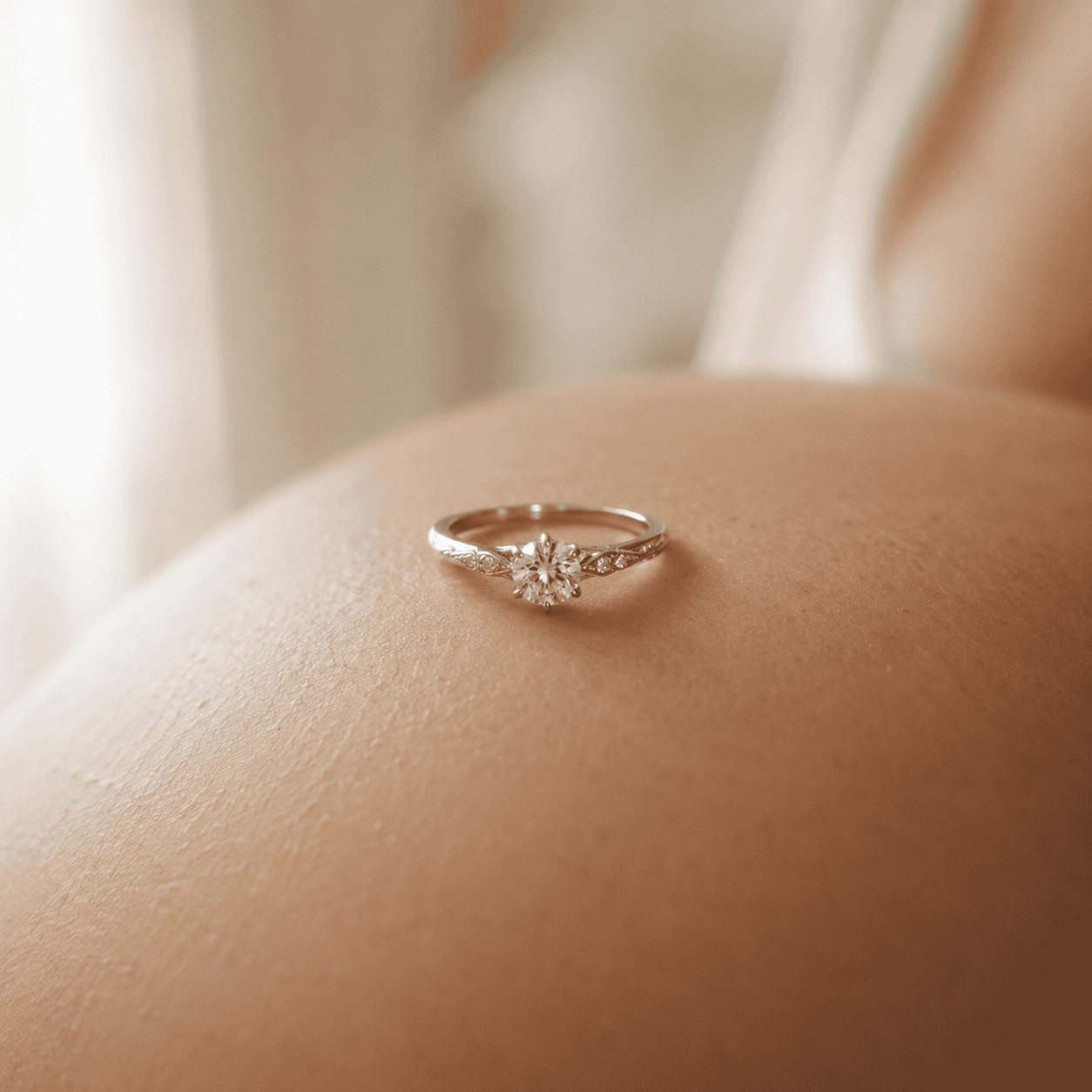
Pregnancy Rings: Why Your Fingers Swell and Which Ring to Wear Through Every Trimester
You go to slide on your engagement ring one morning and it simply won't budge. Your fingers look the same as always — but the ring tells a different story. If this has happened to you during pregnancy, you are in very good company. Swollen fingers are one of the most common and least talked-about parts of pregnancy, and they raise a question almost every expectant mother eventually faces: what do I wear on my finger now?
This guide answers that question in full. We'll walk through why your fingers swell, when it tends to happen across each trimester, and — most importantly — which ring styles actually work when your body is changing week by week.

Why Do Fingers Swell During Pregnancy?
Finger swelling during pregnancy is almost always caused by a natural and necessary increase in blood volume and fluid. From the earliest weeks of pregnancy, your body begins producing significantly more blood to support the growing placenta and baby. To accommodate this, your kidneys retain more sodium and water — and that extra fluid doesn't distribute evenly. It tends to pool in the extremities, including the hands and fingers.
There are a few specific reasons this happens:
- Increased blood volume. During pregnancy, blood volume rises by around 40–50%. Your circulatory system expands to meet the demands of a growing life, and your hands bear some of that volume.
- Hormonal changes. Progesterone and relaxin — both elevated during pregnancy — relax the walls of blood vessels, which can cause fluid to leak into surrounding tissue more easily.
- Reduced circulation. As the uterus grows, it can put pressure on the vena cava, the large vein that returns blood from the lower body to the heart. This slows circulation and encourages fluid to settle in the lower limbs and, to a lesser extent, the hands.
- Heat and activity. Warm weather and time on your feet both amplify swelling. Many women notice their rings feel tightest in the afternoon or after a long day.
Worth knowing: Some degree of swelling is entirely normal and expected. If your swelling appears suddenly, is severe, or is accompanied by headaches or changes in vision, it's worth speaking to your midwife or doctor promptly — these can occasionally be signs of something that needs attention.
The degree of swelling varies enormously from person to person and even from pregnancy to pregnancy. Some women go up only half a ring size; others find their fingers change by two full sizes before the third trimester is over. There is no single "right" experience.
When Does the Swelling Happen? A Trimester-by-Trimester Guide
Understanding roughly when swelling tends to peak can help you plan ahead rather than scrambling when your ring suddenly stops fitting.
First Trimester (Weeks 1–12)
For most women, the first trimester is relatively ring-friendly. Visible swelling in the hands is uncommon this early, and many women wear their engagement ring or wedding band without any issues right through the first twelve weeks.
That said, hormonal changes begin immediately at conception. Some women notice very subtle puffiness in their fingers even in the first few weeks, particularly in warm weather or at the end of a long day. If you're a lighter sleeper and already notice mild morning swelling, it's worth paying attention — your body may be more reactive to fluid changes than average.
✦ First trimester tip: This is the ideal time to order a pregnancy ring, while you're not yet in a rush. Sizing up by one size from your usual fit gives you room to grow without the band feeling oversized just yet.
Second Trimester (Weeks 13–26)
This is typically when swelling becomes noticeable for most women. Blood volume is increasing steadily, and the extra fluid in your body starts to make its presence known. Many women find that the ring they wore comfortably in the first trimester begins to feel snug — not painful, but noticeably tighter — somewhere around weeks 16 to 20.
By the end of the second trimester, it is not unusual for fingers to have increased by a full ring size. Summer pregnancies in particular can accelerate this, as heat causes blood vessels to dilate and fluid to shift toward the skin's surface.
This is the trimester where most women make the switch. Wearing a tight ring is uncomfortable and, in some cases, can restrict circulation. The sensible and stylish solution is to move your original ring to a necklace chain (so it stays close and meaningful) and switch to a pregnancy ring on your finger.
Third Trimester (Weeks 27–40)
Swelling is typically at its most pronounced in the third trimester, particularly in the final six to eight weeks. The combination of peak fluid retention, reduced mobility, and (for many) warmer months means that fingers can feel significantly fuller than usual. Some women find they are two or even two-and-a-half sizes larger than their pre-pregnancy ring size by the time they reach full term.
By this point, most women with their original ring on a chain are very happy to have made that decision weeks earlier. A well-chosen pregnancy ring — one sized generously and designed without a high-profile stone that catches on things — becomes not just a practical choice but a genuinely comfortable and beautiful one.
Worth knowing: Swelling often peaks in the evening and on warmer days. If your ring feels fine in the morning but tight by afternoon, that's a reliable sign it's time to size up for your pregnancy ring.
After Birth
The good news: finger swelling almost always resolves after delivery. For most women, fluid levels normalise within a few weeks postpartum. Some women find their fingers return to their exact pre-pregnancy size; others notice a very slight, permanent shift of half a size, particularly after multiple pregnancies. In either case, most women can return to their original engagement ring within four to six weeks of giving birth.
Your pregnancy ring doesn't have to be retired at that point, of course. Many women find it becomes a beautiful piece of everyday jewellery — something they reach for when they don't want to wear their fine ring, or stack alongside it as a meaningful reminder of that chapter of their life.
What to Look for in a Pregnancy Ring
Not every ring is equally well-suited to pregnancy. When your fingers are changing size and you're using your hands constantly — for work, for nesting, for all the practical business of preparing for a baby — comfort and practicality matter more than ever. Here's what to prioritise.
Low profile or band-style designs
High-set solitaires with tall prongs are beautiful on a normal day but can become a nuisance when your hands are busier than usual. A ring with a lower-profile stone, or a slim band-style design with stones set flush or pavé-style into the band, is far more practical. There are fewer opportunities to catch the prongs on clothing or skin, and the ring sits more comfortably against your finger.
A comfortable, everyday metal
Pregnancy is a time when skin can become more sensitive than usual. Sterling silver with rhodium plating, or a good quality gold-plated finish, sits gently against the skin and is far less likely to cause irritation than cheaper alloys. If you know you have a nickel sensitivity, this is worth factoring into your choice — look for rhodium-plated or vermeil-finished options.
A size with room to grow
When ordering your pregnancy ring, size up by at least one full size from your current fit — or even one and a half sizes if you're already in the second trimester. It may feel slightly loose on some days, but a ring that's a touch generous is infinitely more comfortable than one that becomes painfully tight as the weeks pass.
Something you genuinely love wearing
This matters more than it might sound. You're likely to wear this ring every day for months. It should make you feel like yourself — polished, put-together, and beautiful. A ring that feels like a compromise will sit in a drawer. A ring that feels like a genuine choice will be worn and cherished.
Our Picks: The Best Gemiros Rings for Every Trimester
Gemiros rings are designed for real, active life — which makes them an excellent fit for pregnancy. All are made with simulated diamonds set in quality metals, sized across a full range, and priced so that getting the right fit doesn't feel like a financial gamble. Here are the styles we'd recommend across each stage.
For the first trimester: something close to what you love
If you're ordering early and your fingers haven't changed much yet, this is a good opportunity to find a ring that genuinely echoes the style of your engagement ring — so the transition feels seamless rather than like a step down.

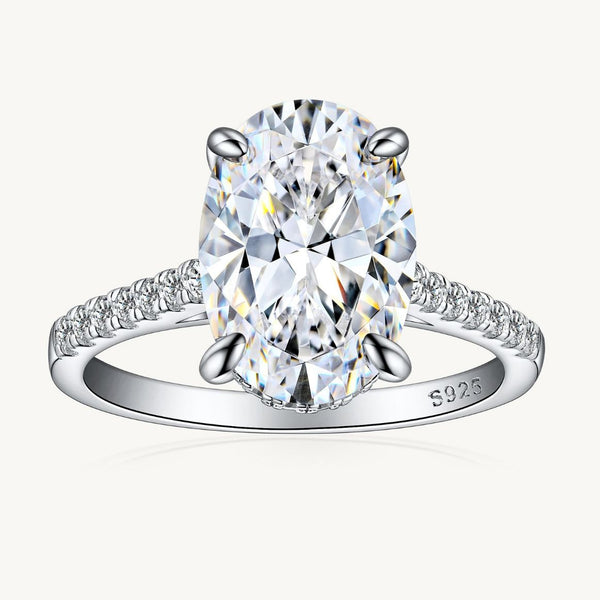
The Ophelia Ring
A 4.5-carat oval-cut simulated diamond with a hidden halo — brilliant, elegant, and a near-perfect stand-in for an oval engagement ring. The low-set profile and slim band make it more comfortable to wear daily than a tall solitaire.
Shop The Ophelia Ring →
The Aura Ring
A radiant-cut simulated diamond with a secret side halo — a ring that catches light from every angle without the height of a classic solitaire. Available in both platinum and gold finishes. One of our most consistently loved styles for everyday wear.
Shop The Aura Ring →For the second trimester: a reliable, comfortable everyday ring
By the second trimester, practicality moves up the priority list. You want a ring that stays comfortable through long days and doesn't catch on anything. Slim bands and lower-set stones come into their own here.

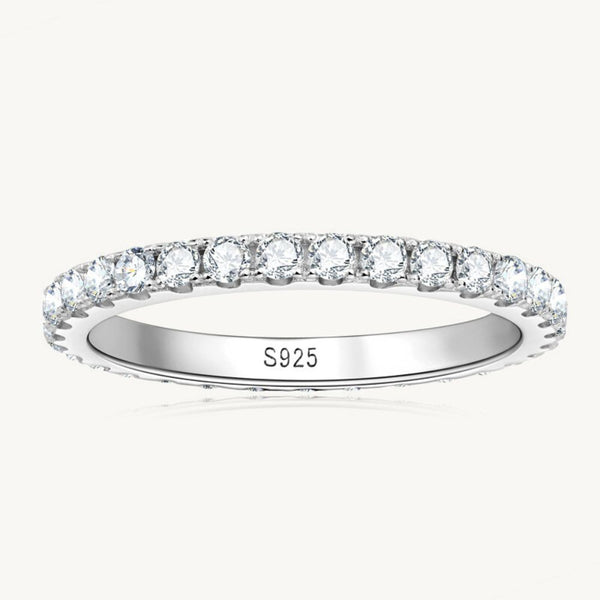
The Forever Ring
A classic half-eternity band with shimmering simulated diamonds across a 2mm design. Flat, snag-free, and endlessly wearable — it sits flush against the finger and won't catch on clothing or skin. Beautiful alone or stacked with another band.
Shop The Forever Ring →
The Eternity Ring
A full-circle eternity band with a continuous row of 2mm simulated diamonds. All the sparkle, none of the height. One of the most comfortable and low-profile options in the range — a particular favourite for the third trimester when comfort is everything.
Shop The Eternity Ring →For the third trimester: maximum comfort, still beautiful
In the final stretch, comfort is the non-negotiable. Slim, low-profile bands are your best friends. But comfort doesn't mean sacrificing how you feel — these options still look polished and intentional on a dressed-up hand.

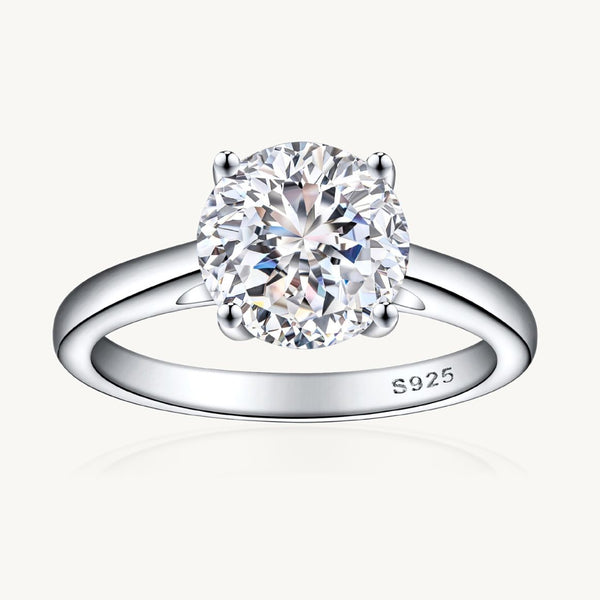
The Stella Ring
A clean 2-carat round solitaire with a slim, understated band. Simple enough to forget you're wearing it; beautiful enough to get compliments anyway. The low setting is kinder to sensitive, swollen skin than taller prong styles.
Shop The Stella Ring →✦ Sizing tip for the third trimester: If you're 30+ weeks and your fingers have been swelling in the afternoons, size up by one and a half to two sizes from your pre-pregnancy size. It's better to have a ring that's slightly generous than one you can't get off at the end of the day.
What to Do With Your Original Ring
Switching to a pregnancy ring doesn't mean your engagement ring disappears. Most women choose one of two approaches, and both work beautifully.
Wear it on a necklace chain
This is the most popular option. A delicate chain keeps your ring close — literally against your heart — and it's visible enough that you still feel like you're wearing it. Many women find this unexpectedly meaningful: the ring you were given when your life changed is now resting against your chest as your life changes again.
Store it safely until after the birth
If you'd rather not risk a necklace catching on things, a clean ring box or soft pouch in a safe place works just as well. This option has the lovely quality of making the moment you put it back on feel like something worth marking — a small homecoming.
Worth knowing: If you're concerned about having to cut a ring off — which is a genuine risk if a tight ring isn't removed before swelling peaks — act sooner rather than later. It is always easier to remove a ring when fingers are cool and slightly damp, first thing in the morning.
The Pregnancy Ring as a Keepsake
There's something worth saying about the pregnancy ring beyond the practical. Many women who buy one find that it becomes one of their most-worn pieces of jewellery — not just during pregnancy, but long after.
It's a ring you bought for yourself, at one of the most significant moments of your life. It saw you through the early anxiety of the first trimester, the growing excitement of the second, the anticipation of the third. Some women wear it as an everyday ring after the birth, saving their engagement ring for occasions. Some stack it alongside their wedding band as a permanent reminder of that chapter. Some put it away and bring it out again for their next pregnancy.
However you use it after the birth, a well-chosen pregnancy ring is rarely just a placeholder. It tends to carry a meaning you didn't entirely expect when you ordered it.
Frequently Asked Questions
When should I stop wearing my engagement ring during pregnancy?
There's no single right answer — it depends entirely on your swelling. A good rule of thumb: if your ring leaves a visible indentation on your finger after wearing, or feels uncomfortable at any point during the day, it's time to take it off. For most women this happens somewhere between weeks 16 and 24, though it can be earlier in warm weather or with a naturally leaner finger size.
What size should I order for a pregnancy ring?
If you're in the first trimester, sizing up by one full size from your current ring size is a reasonable starting point. If you're in the second trimester or beyond, one and a half to two sizes up gives you more room for the swelling that's likely still to come. When in doubt, err on the generous side — a slightly loose ring is far more comfortable than one that tightens progressively over the coming weeks.
Will my fingers go back to normal after pregnancy?
For the vast majority of women, yes. Most pregnancy-related swelling resolves within two to six weeks postpartum as excess fluid is shed. A small number of women notice their fingers settle at a very slightly different size — usually no more than half a size — after multiple pregnancies, but this is the exception rather than the rule.
Can I wear my pregnancy ring after the baby arrives?
Absolutely. Many women find their pregnancy ring becomes one of their most-worn pieces of everyday jewellery — either on its own, stacked with a wedding band, or kept as a meaningful keepsake. There are no rules about when it should or shouldn't be worn.
Is it safe to wear a ring during pregnancy?
Yes, as long as the ring is not too tight. A ring that fits comfortably — with a small amount of give — is perfectly fine to wear throughout pregnancy. The concern is a ring that is too snug: this can restrict circulation as swelling increases. If you notice your ring leaving marks, puffiness around the band, or discomfort at any time of day, remove it and switch to a larger size.
Quick Takeaways
- Finger swelling during pregnancy is normal and caused by increased blood volume and fluid retention.
- Swelling typically begins in the second trimester and peaks in the third — but varies significantly between women.
- A pregnancy ring sized one to two sizes larger than your pre-pregnancy fit gives you comfortable room to grow.
- Low-profile bands and slim designs are the most comfortable and practical choice for active daily wear.
- Your engagement ring can be worn on a necklace chain or stored safely — and put back on after the birth once swelling subsides.
- A pregnancy ring often becomes a lasting piece of jewellery — a keepsake as much as a placeholder.
Browse the full Gemiros pregnancy rings collection to find the style and size that works for where you are right now.
✦ ✦ ✦


