

How to Size a Ring for a Different Finger Than You Planned
You found a ring you love, and you already know it's not going on your left ring finger. Maybe it's a statement piece for your right hand, maybe it's a band you want stacked on your index or middle finger, maybe it's a ring someone gave you that never quite made sense for its "intended" spot. Whatever the reason, there's one thing most people don't realize until the ring arrives: the size that fits your ring finger almost never fits the finger you actually plan to wear it on.
Ring sizing isn't one number that applies to your whole hand — it's finger-specific, and the differences are bigger than most first-time buyers expect. Before you order, it helps to understand exactly what changes from finger to finger, and how to measure for the one you're actually going to wear.


Why the Ring Finger Isn't a Universal Size
The left ring finger gets treated as the default measurement for a reason — it's the finger most engagement and wedding jewelry is sized for, so it's the one most people have measured at some point. But it's rarely a typical finger. On most hands, the ring finger sits close in size to the pinky and noticeably smaller than the index or middle finger. If you take the size that fits your ring finger and order the same number for a right-hand ring or an index-finger stack, there's a good chance it stops at the first knuckle and goes no further.
This is the mistake behind most "it doesn't fit" returns on rings bought for a finger other than the traditional one. The ring wasn't wrong — it was sized for the wrong finger. Why the same ring fits differently on different fingers goes deeper into the anatomy behind this, but the short version is that every finger has its own base circumference, its own knuckle width, and its own taper — and none of them match.
Worth knowing: A ring that fits your ring finger at a size 7 will often need to be a 7.5 to 8.5 for the middle or index finger on the same hand, and a 5.5 to 6.5 for the pinky. There's no universal offset — it depends on your hand — but the direction of the shift is consistent.
Buying for the Right Hand on Purpose
Right-hand rings have become one of the most common reasons people size for a non-traditional finger, and it's worth thinking about the styling logic, not just the numbers. A ring bought to make a statement on its own — without an engagement ring or wedding band beside it — can carry more presence than a ring designed to sit flush in a stack. Wider bands, bolder halos, and single dramatic stones all read differently when they have the whole finger to themselves.
If you're choosing a style specifically for this purpose, wearing a ring on your right hand is worth reading before you buy — it covers how to pick something that reads as intentional rather than like a ring that ended up there by accident. The sizing conversation and the styling conversation aren't separate: a ring that's sized correctly for the finger you're actually wearing it on is already halfway to looking deliberate.

The Cherish Ring
A bezel-set eternity band with a smooth, snag-free edge — one of the easier styles to move between fingers because there's no raised setting to catch on a knuckle as it goes on.
Shop The Cherish Ring →Index, Middle, and Pinky: What Actually Changes
Every finger behaves a little differently, and it helps to know roughly what to expect before you measure.
Index finger. Usually close to the middle finger in size, often a half size to a full size larger than the ring finger. The index knuckle also tends to be noticeably wider relative to the base, so a snug base measurement can still mean a tight pass over the joint.
Middle finger. Frequently the largest finger on the hand, sometimes a full size to a size and a half above the ring finger. It's a popular choice for statement rings precisely because it can carry more visual weight without looking oversized.
Pinky finger. Almost always the smallest, often a size and a half to two sizes below the ring finger. Pinky rings are also where knuckle mismatch shows up the most, since the taper from knuckle to base is sharper on a smaller finger.
Thumb. The most unpredictable of all — on some hands it's close to the index finger, on others it's significantly larger, and the knuckle-to-base ratio varies more than any other finger. If you're buying specifically for the thumb, measure that finger directly rather than estimating from any other size you already know.
Knuckles Change Everything
The base of a finger and the knuckle above it are rarely the same width, and the gap between them tends to be more dramatic on fingers other than the ring finger. A ring has to clear the knuckle to go on, then needs to sit securely at the base without spinning or sliding once it's past — which means the "right" size is really a compromise between two different measurements, not one.
Sizing a ring for wide or wide-set knuckles covers this mismatch in detail, and the same logic applies here — if anything, it matters more when you're sizing for an unfamiliar finger, because you don't have years of daily wear to tell you how a slightly-off fit actually feels.
✦ Pro tip: Measure at the end of the day, when fingers are at their largest, and measure both the base and the knuckle of the specific finger you plan to wear the ring on. Order to the knuckle measurement if the two numbers differ by more than half a size — a ring that won't pass the joint is a ring you won't wear.
How to Measure for the Finger You Actually Plan to Wear It On
The process is simple, but it only works if you measure the correct finger — not the one you're used to measuring.
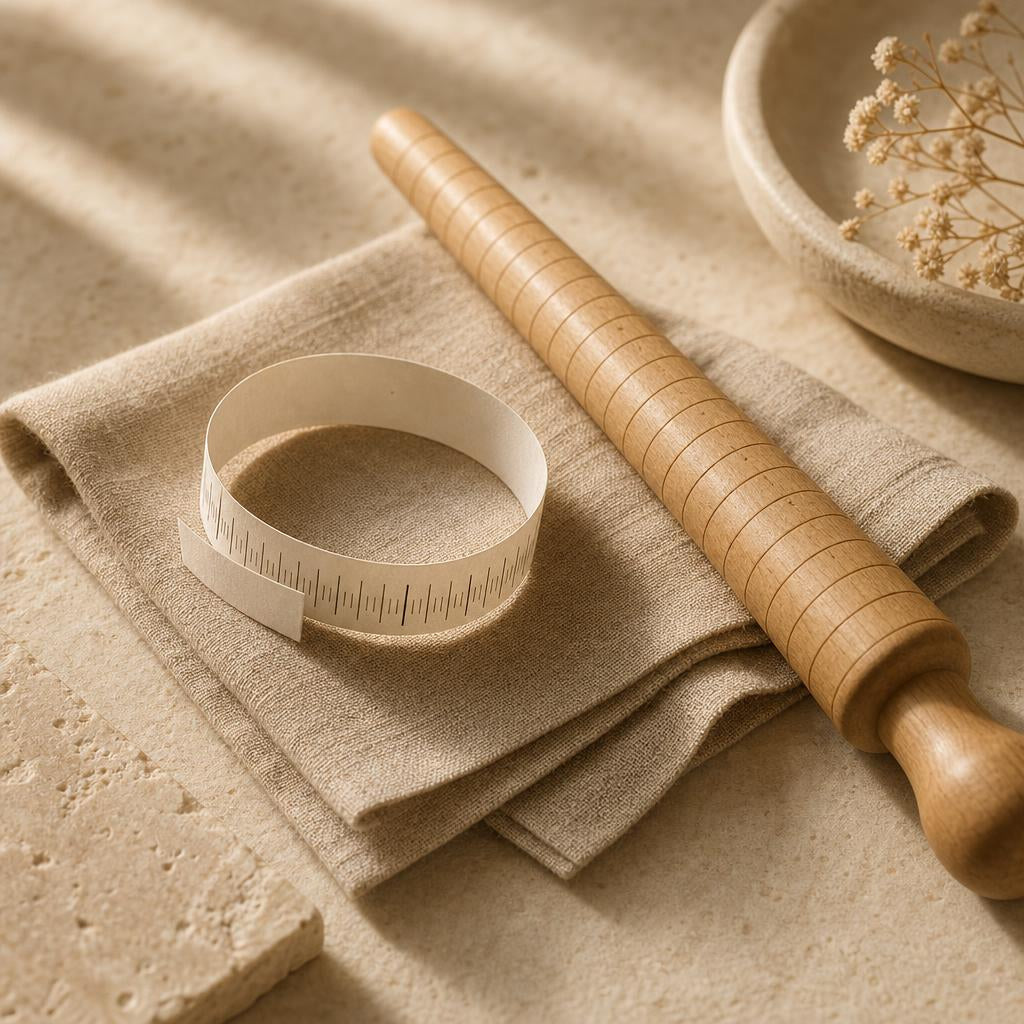
- Wrap a strip of paper, string, or a proper sizing tool snugly around the base of the finger you intend to wear the ring on, not your ring finger.
- Note where the wrap overlaps, then measure that length against a ring sizing chart.
- Repeat the same measurement over the knuckle of that finger.
- If the two numbers are close, order the base measurement. If they differ noticeably, size up toward the knuckle measurement instead.
- Measure on a normal-temperature day — not right after a workout, a hot shower, or a flight, all of which temporarily swell fingers.
If you'd rather do this properly with a printable guide instead of estimating with string, the printable ring sizing guide walks through it step by step and works for any finger, not just the traditional one.

The Infinity Ring – Rose Gold
A slim eternity band that reads equally well as a right-hand piece, a stacking layer, or a standalone ring on the index or middle finger — the thin profile makes it more forgiving of knuckle mismatch than a bulkier setting.
Shop The Infinity Ring →Stacking on a Different Finger
If the plan is to build a stack on the finger rather than wear a single ring, the sizing math gets a little more layered — literally. Each ring in the stack needs to clear the same knuckle on the way on, but the combined width of multiple bands sitting at the base changes how snug the fit needs to be. A stack that's sized too tightly at the base can feel fine going on and then pinch by the end of the day as fingers naturally swell slightly with wear.
Wearing multiple rings on the same finger is worth a read before you commit to a full stack on an index or middle finger, since the styling considerations and the sizing considerations end up shaping each other — a stack that's proportioned well for the finger is also usually the one that ends up fitting well.
What If You Already Bought It in the Wrong Size?
It happens more often than people expect, especially with gifted rings or pieces bought for a specific finger sight unseen. Before assuming a ring needs to be professionally resized, it's worth knowing what temporary options exist. Ring sizers and adjusters breaks down which quick fixes genuinely hold up for everyday wear and which ones tend to loosen or shift within a few weeks — useful information whether the ring is a size too big for its new finger or just slightly loose after the initial adjustment period.
For a ring that's meaningfully off — not just a quarter size, but a full size or more in the wrong direction — a proper resize is usually the better long-term answer, particularly for a ring you intend to wear daily on its new finger rather than occasionally.
Quick Takeaways
- Never assume your ring-finger size applies to any other finger — index and middle fingers typically run half a size to a size and a half larger, while the pinky runs a size and a half to two sizes smaller.
- Measure the actual finger you plan to wear the ring on, both at the base and at the knuckle, and size toward the knuckle if the two numbers differ.
- The thumb is the least predictable finger to estimate — measure it directly rather than guessing from another size.
- Slimmer, bezel-set, or low-profile styles tend to move between fingers more comfortably than bulky settings, since there's less to catch on the knuckle.
- Stacks need base-width room to account for multiple bands sitting together, not just individual ring sizing.
Frequently Asked Questions
Can I just order my ring-finger size for a right-hand ring?
It's not recommended. Most people's dominant hand and index or middle fingers run larger than the ring finger, so ordering the same number is one of the most common reasons a right-hand ring arrives too tight to comfortably wear.
Is there a standard size difference between fingers?
There's a general pattern — index and middle fingers tend to run larger than the ring finger, and the pinky tends to run smaller — but the exact difference varies by hand. Measuring the specific finger is always more reliable than applying a rule of thumb.
What if the ring fits my knuckle but feels loose at the base?
This is common on fingers with a larger knuckle-to-base taper, like the pinky or thumb. A ring sizer or adjuster can take up the extra room at the base without affecting how the ring passes over the knuckle, and it's often a simpler fix than a full resize.
Should I size up or down if I'm between two sizes on a non-ring finger?
For fingers other than the ring finger, sizing toward the larger of the two options is usually safer, since these fingers tend to have more pronounced knuckles that need to be cleared. A slightly loose fit can be adjusted; a ring that won't pass the knuckle can't be worn at all.
Does the width of the band affect what size I should order?
Yes. Wider bands generally need to run slightly larger than thin bands to feel equally comfortable, since more surface area is in contact with the finger. This matters even more on fingers with tighter knuckle clearance.
A ring bought for the wrong finger by accident is one of the most fixable sizing mistakes there is — but a ring sized correctly for the finger you actually plan to wear it on, from the very first order, is the one that ends up in daily rotation instead of a jewelry box. Measure the finger you mean to wear it on, account for its knuckle, and the rest of the decision — which style, which stack, which hand — becomes a lot easier.


