

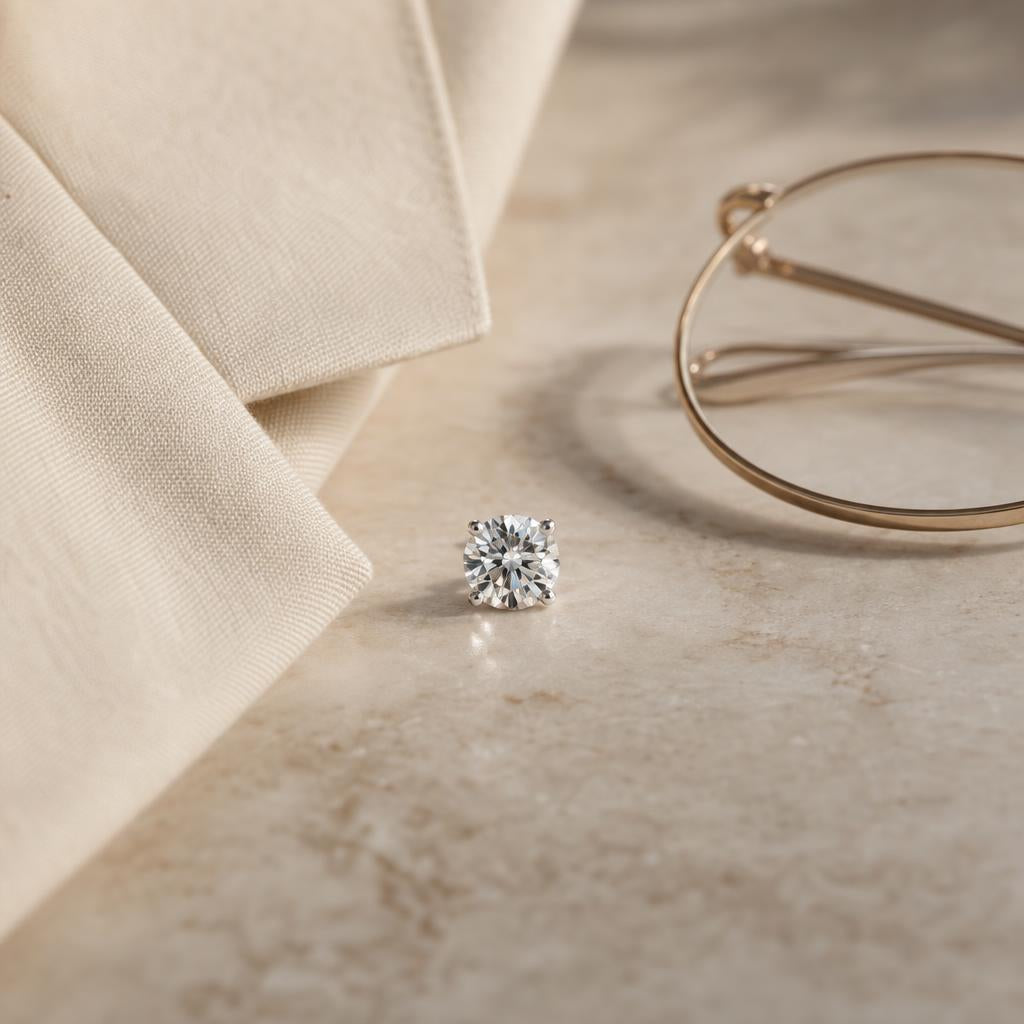
Work Earrings for Job Interviews: What to Wear (and What to Skip)
You've picked the outfit. You've rehearsed the answer to "tell me about yourself" until it stopped sounding rehearsed. And then, ten minutes before you walk out the door, you're standing in front of your jewelry tray wondering if the earrings you love are about to work against you.
They don't have to. The right pair does the opposite of distracting — it reads as put-together without saying a word, which is exactly the impression you're trying to make. Here's what actually holds up under interview lighting, video calls, and a hiring manager's eye, and which pieces from the Gemiros edit already do the job.


What "Professional" Actually Means for Earrings
Nobody hands you a rulebook before a job interview, so most of what you've absorbed about professional earrings came from watching what other women in the room were wearing. The pattern holds up: small, close to the ear, and quiet when you move your head. That's it. It isn't about avoiding sparkle — a stud that catches light when you turn your head reads as polished, not flashy, because it's contained to a single, deliberate point.
Where earrings actually go wrong in an interview isn't sparkle at all. It's motion and noise. A dangle that swings every time you nod, or metal-on-metal clink every time you gesture, pulls attention away from what you're saying — which is the one thing you actually want the room focused on. Studs and huggies solve this by staying still. That's the whole mechanism, and it's why the same handful of styles keep showing up in every "what to wear to an interview" guide: they've simply been tested against a room full of distracted interviewers and passed.
The Size, Sound, and Movement Rule
If you only remember one framework, make it this one. Before you put on any pair of work earrings, run them through three quick checks:
- Size: Keep the visible footprint smaller than a dime. A stud or a huggie under an inch reads as considered rather than shy — it's not about going invisible, it's about not competing with your face for attention.
- Sound: Give your head a small shake before you leave the house. If you hear anything, size down or switch to a stud.
- Movement: Anything that swings past your jawline draws the eye every time you speak. Save the drama for after the offer letter.
Conservative fields — law, finance, banking, anything with a strict corporate dress code — reward you for staying inside all three rules with zero exceptions. Creative industries loosen the size rule slightly but rarely the sound or movement ones. Either way, a well-chosen stud clears every bar without you having to think about which room you're walking into.
Business Casual Earrings vs. Formal Corporate Studs
The dress code on the job posting matters more than most candidates realize when they're choosing earrings. A strict corporate interview — think financial services, law firms, anything with a suit-and-tie expectation on the careers page — calls for a single, simple stud: a round solitaire or a small halo, nothing that competes with a blazer. Business casual earrings have more room to breathe. A huggie hoop, a slightly larger stud, or a subtle geometric shape all read as put-together without tipping into overdressed, which matters if the office culture leans more relaxed than the interview process suggests.
When you genuinely can't tell which category the room falls into, default to the stricter read. It's easier to look slightly more polished than the room expects than to walk in wondering if your earrings are the reason the interviewer's eyes keep drifting.
Worth knowing: Moissanite and simulated diamonds read exactly the same as mined stones under office fluorescents and on video calls — the light-catching quality that makes a stud look polished doesn't care what the stone is made of. What matters for an interview is size and placement, not what's underneath the sparkle.
Why the Stone Doesn't Need to Be the Compromise
There's a quiet assumption that "safe for work" and "actually beautiful" are two different categories of earring — that the interview-safe pair is the practical one, and the one you actually love stays in the drawer for after 6pm. That's an old rule, and it doesn't hold up anymore. A moissanite or simulated diamond stud isn't a smaller version of the real thing; it's 925 sterling silver and a stone that passes diamond testers, set the same way a fine jewelry stud would be. No one across a conference table is close enough — or qualified enough — to tell the difference, and the ones who could tell wouldn't be looking at your earlobes during a job interview.
That's the actual upgrade here: you get to stop choosing between "appropriate" and "the ones that make you feel like yourself." The Éclat and the Ophelia below are both built for exactly that — quiet enough for a boardroom, sharp enough that you'll reach for them again the next time you actually want to be looked at.

The Éclat Moissanite Stud Earrings
A six-prong round moissanite solitaire on a plain polished setting — no pavé, no halo, just a single clean point of light. It's the pair built to disappear into a boardroom and still be the best thing you're wearing.
Shop The Éclat Moissanite Stud Earrings →
The Ophelia Stud Earrings
An oval solitaire with a hidden halo and pavé detail underneath — the kind of construction that looks like $15,000 or higher without a single visible compromise. Small enough for a nine-to-five, sharp enough that you'll forget it's an "interview pair" at all.
Shop The Ophelia Stud Earrings →What to Actually Skip
A short list, because it really is short:
- Long dangles or chandeliers. Even a quiet pair swings with every head movement, and movement is what reads as distraction on camera or across a desk.
- Statement hoops over an inch. Beautiful for a Friday, too much visual weight for a first impression you're trying to control.
- Anything genuinely loud or clattery — multiple charms, beaded drops, stacked hardware. Save it for the job you already have.
- Mismatched or asymmetric pairs. A fashion-forward choice on a normal day, a distraction during the ninety seconds someone is deciding whether they can picture you across from a client.
None of this means playing it safe forever — it means being deliberate about the thirty minutes where the earrings aren't the point, you are.
On Camera: The Video Interview Adjustment
Video calls change the math slightly. Webcam lighting flattens everything, so a truly tiny stud can read as "no earrings at all" on a laptop screen from three feet away. Size up marginally from what you'd wear in person — a small halo instead of a bare solitaire, or a huggie instead of a plain hoop — so there's still a visible point of polish once the compression and the lighting have done their worst. The sound and movement rules matter less here, since the microphone won't pick up much beyond your voice, but a dangling pair still shows up as motion in your peripheral frame every time you turn to a second monitor.
Quick Takeaways
- Studs and huggies under an inch are the safest, most versatile choice for any interview setting.
- Run the size, sound, and movement check before you leave the house — not just the mirror check.
- Business casual gives you slightly more room than formal corporate; when unsure, default to the stricter read.
- Moissanite and simulated diamonds read identically to mined stones in office lighting and on camera — the stone was never the compromise.
- Size up marginally for video interviews so a small stud doesn't disappear under webcam lighting.
Frequently Asked Questions
What earrings are considered professional?
Small studs and huggie hoops under about an inch, in a single finish, that stay still when you move. A round or oval solitaire, a small halo, or a plain metal huggie all clear the bar — the common thread is size and stillness, not the absence of sparkle.
Is it okay to wear earrings to a job interview?
Yes — earrings are expected in most professional settings and a bare ear rarely reads as more polished than a well-chosen stud. The only real risk is size, sound, or movement pulling focus away from the conversation.
What counts as business casual jewelry?
More room than a strict corporate dress code, less than a night out. A huggie hoop, a slightly larger stud, or a subtle geometric shape all fit comfortably — the goal is put-together, not invisible.
Should I wear my everyday earrings to an interview?
If they already pass the size, sound, and movement check, yes — there's no rule that interview earrings need to be a separate, more boring category. If your everyday pair leans toward dangles or statement hoops, save them for after the offer and reach for a stud instead.
The earrings were never going to get you the job. But the right pair means you walk in not thinking about them at all — which is exactly the point. Pick the stud that already feels like you, run it through the three checks, and put the rest of your energy where it actually belongs.


