

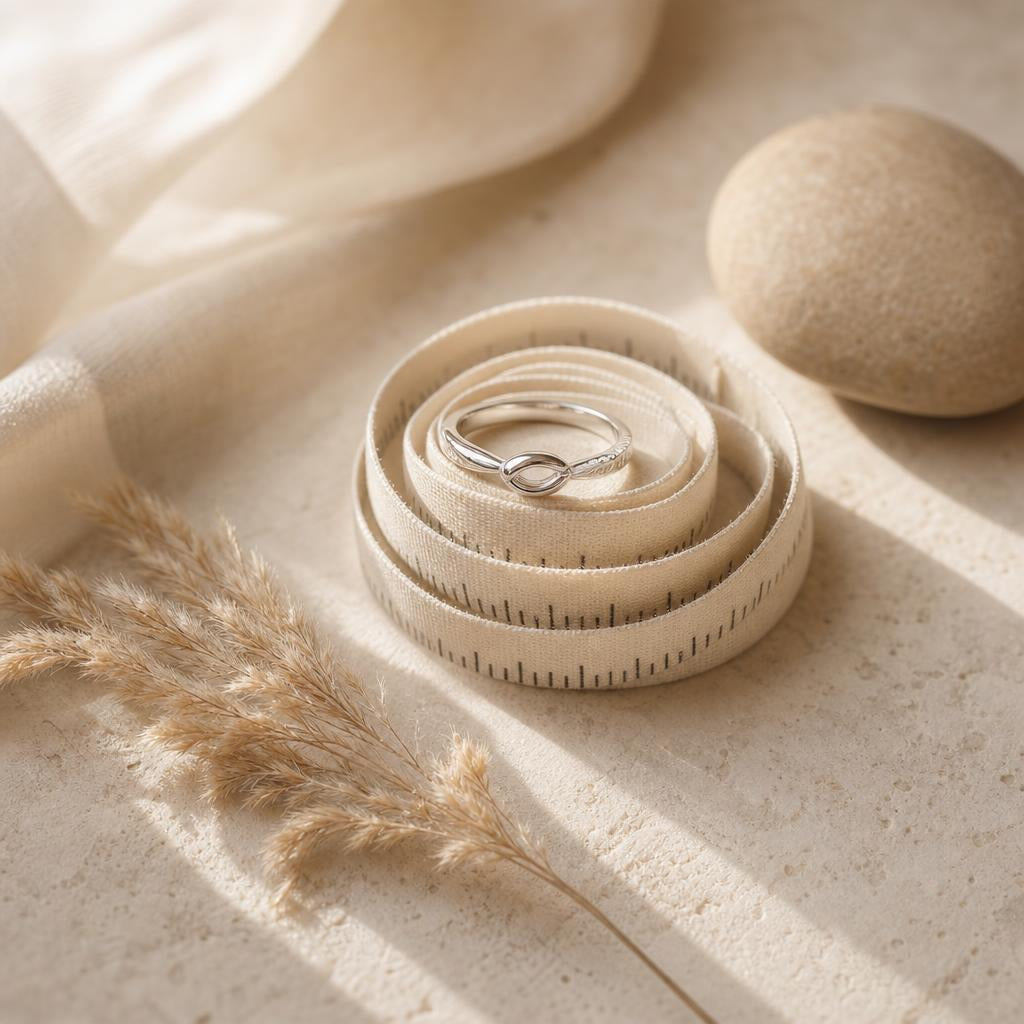
Why Your Fingers Swell — and How to Size Your Ring Around It
Some mornings your ring slides right off with a soap-slicked hand. By evening, the same ring is leaving a faint pink line at the knuckle. Nothing happened to the ring. Something happened to you — and it happens to almost everyone, almost every day, for reasons that have nothing to do with your actual ring size.
Finger swelling is normal, temporary, and driven by a handful of predictable triggers: heat, exercise, sodium, altitude, hormones, even the time of day. Once you understand what's actually causing the fluctuation, sizing your ring stops feeling like guesswork and starts feeling like a solvable, one-time decision.


Why your fingers actually swell
Finger swelling almost always comes down to fluid — either more of it moving through your blood vessels, or more of it sitting in the tissue around your joints. A handful of everyday triggers cause this, often stacking on top of each other without you noticing.
Heat and humidity
When your body gets warm, blood vessels near the skin's surface widen — a process called vasodilation — to help release heat. That includes the small vessels in your fingers, which is why hands often look and feel puffier on a hot afternoon than they do first thing in the morning. Humidity makes it worse, since your body works harder to cool itself and tends to retain more fluid in the process.
Exercise and physical activity
During a workout, blood flow increases to working muscles, and your hands — which swing, grip, and pump throughout most movement — see a temporary rise in circulation. Add sweat-related fluid shifts and a slightly elevated body temperature, and it's common for a ring that fit comfortably before a run to feel snug immediately after.
Sodium, hydration, and altitude
A salty meal, a long flight, or a day spent under-hydrated can each cause the body to hold onto extra water, and fingers are one of the first places it shows. Cabin pressure changes during air travel are a frequent, underrated culprit — many people notice their rings fit differently by the end of a long-haul flight than they did at takeoff.
Worth knowing: A finger can change size by half a ring size or more over the course of a single day. That's not a sizing mistake — it's normal physiology, and it happens to people who've never had a swelling-related health concern in their life.
Hormones and pregnancy
Pregnancy introduces a hormone called relaxin, which loosens ligaments throughout the body — including in the fingers — while blood volume rises to support the growing baby. The combination means many women notice their rings fitting more snugly starting in the second trimester, independent of any overall weight change. It's one of the most common reasons a ring that was perfect at the proposal doesn't sit the same way months later.
Building a ring around fluctuation, not against it
Once you accept that your finger size is a range rather than a fixed number, the smartest move is choosing a setting that stays comfortable across that range — rather than one that only feels right on your best day.

The Everlasting Ring
A continuous line of pavé stones with no raised centerpiece to catch or press — the kind of low-profile silhouette that tends to stay comfortable whether your hand is at its smallest or slightly swollen.
Shop The Everlasting Ring →Low-profile settings — solitaires with a modest gallery height, hidden halos that hug the center stone instead of stacking width above the finger — tend to be the most forgiving through normal daily swelling. A tall, heavily domed setting has less room to give, and buyers who notice their ring stopped fitting the way it used to often find the issue is the setting height as much as the actual size.
✦ Pro tip: If you know your hand swells more in summer or after workouts, size to your largest comfortable measurement rather than your smallest. A ring that's very slightly loose on a cool morning is far less noticeable than one that won't come off after a hot afternoon.
Sizing for pregnancy and postpartum change
If you're pregnant or planning to be, it's worth having an honest conversation with yourself about timeline. Sizing a ring in the first trimester, before swelling sets in, often means resizing again later — while waiting until the third trimester to buy usually means the ring won't fit the same way once swelling subsides after birth. For that reason, many women choose to size for their pre-pregnancy baseline and treat any mid-pregnancy snugness as temporary, using a ring built for the trimesters in the meantime rather than resizing their main ring back and forth.
The same logic applies in reverse after birth. Fluid retention doesn't disappear the moment you deliver — it can take weeks or months to fully resolve, and postpartum ring sizing is its own, separate adjustment period. Patience here saves an unnecessary trip to a jeweler.

The Destiny Ring
A slim, crossing pavé band designed to be worn alone or stacked — a practical option for the in-between months when your main ring needs a break but you still want something on your hand.
Shop The Destiny Ring →Why the time of day matters more than you'd think
Jewelers often ask customers to get sized later in the day rather than first thing in the morning, and there's a reason for it. Hands are typically at their smallest overnight and just after waking, then gradually swell slightly as the day goes on, activity increases, and body temperature rises. Getting measured at 8am and expecting that same size to feel identical at 8pm is one of the most common — and most avoidable — sources of a ring that feels "wrong" within the first few weeks of wearing it.
A simple habit fixes this: try on a ring, or take a measurement, at more than one point in the day before committing to a size. If a size feels comfortable both after waking and after dinner, it's a genuinely reliable fit rather than a lucky snapshot.
Practical ways to size around normal fluctuation
- Measure more than once. Take your measurement in the evening, after a warm day, and again first thing in the morning. The difference tells you your realistic range, not just a single snapshot.
- Size to the larger end of that range. A ring that's a touch roomy on your smallest days is more comfortable — and safer — than one that won't budge on your largest.
- Favor lower, flatter settings. Less height between your finger and the setting means less pressure when things swell.
- Keep a guard or spacer on hand. For the mornings your ring runs loose, an inexpensive guard closes the gap without any permanent change.
- Take it off before you know you'll swell. Long flights, hot yoga, beach days, and heavy workouts are predictable enough to plan around — pack a travel-friendly stand-in instead of forcing a ring past its comfortable point.
If you're shopping without the benefit of an in-person fitting, the fundamentals still apply. Buying a ring online means leaning even more heavily on multiple measurements taken at different times of day, since you won't have a jeweler on hand to double-check the fit in the moment.
When it's more than a passing fluctuation
Occasional, mild swelling from heat, activity, or hormones is normal and expected. Sudden, significant, or one-sided swelling — especially with pain, discoloration, or numbness — is a different situation and worth mentioning to a doctor rather than working around with jewelry. This guide covers the ordinary, everyday kind of fluctuation almost everyone experiences, not a medical symptom.
And if a ring simply stops fitting properly on an ongoing basis rather than day-to-day, know that resizing is usually possible and far simpler than starting over with a new piece entirely.
Quick Takeaways
- Heat, exercise, sodium, altitude, and hormones all cause temporary, normal finger swelling.
- Measure at different times of day to find your real sizing range, not just one number.
- Size to your largest comfortable measurement, not your smallest.
- Low, flat settings flex better with daily fluctuation than tall, domed ones.
- Pregnancy and postpartum swelling are temporary — avoid resizing a ring until change stabilizes.
Frequently asked questions
Is it normal for my ring size to change throughout the day?
Yes. Most people experience some fluctuation between morning and evening, driven by temperature, activity, and hydration. A half-size difference across a day is common and not a cause for concern.
Should I size my ring for my smallest or largest measurement?
Generally, size to the larger end of your comfortable range. A slightly loose ring on a cool day is a minor inconvenience; a ring that won't come off during swelling can become a real problem.
Will my ring size go back to normal after pregnancy?
For most women, yes — though it can take weeks or months for fluid retention to fully resolve. It's worth waiting until your size has stabilized before committing to a permanent resize.
What ring styles handle swelling best?
Lower-profile settings — modest solitaires, hidden halos, and flatter pavé bands — tend to flex more comfortably with daily fluctuation than tall, heavily domed styles.
When should I actually worry about swelling?
Mild, predictable swelling tied to heat, activity, or hormones is normal. Sudden, severe, or one-sided swelling — particularly with pain or discoloration — is worth discussing with a doctor rather than managing with jewelry alone.
The goal isn't to find a ring that fits perfectly on one ideal day — it's to find one that fits comfortably on most of them, and to understand your own patterns well enough that the rest stop feeling like surprises.


