

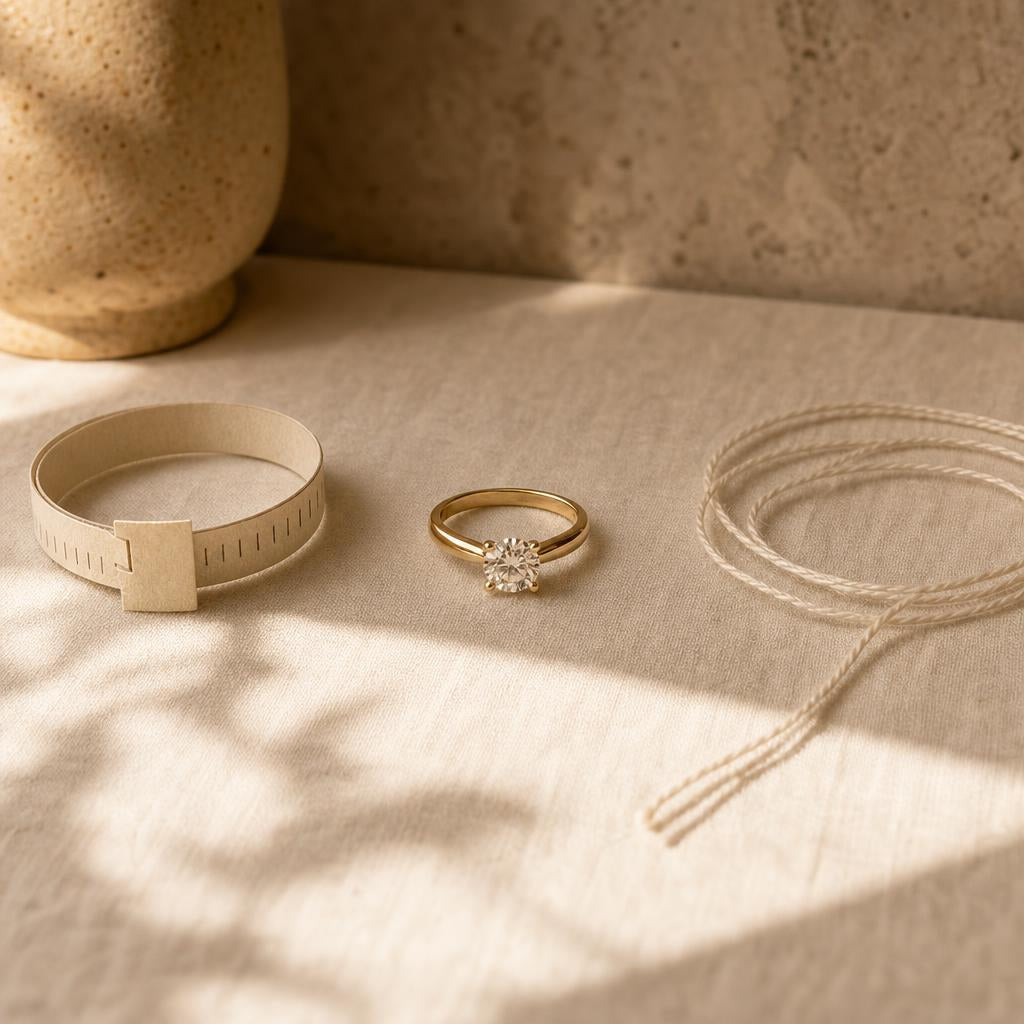
Buying a Ring Online Without Visiting a Store: How to Get the Size Right the First Time
The ring is perfect. The price is right. You've had the tab open for three days. And then you get to the size dropdown and freeze — because what if you guess wrong?
That one hesitation is the single biggest thing standing between "I love this" and "add to cart" when you're shopping for a ring online. The good news: getting your size right without ever stepping into a store is a solved problem, and it takes about five minutes. Here's exactly how to do it, plus a few rings worth trying it on for.


Why sizing is the real reason people hesitate to buy rings online
Nobody actually worries about the setting, the stone, or the metal tone when they're shopping for a ring online — pictures and product descriptions handle all of that. What people worry about is the one variable a screen can't show them: whether the ring will actually fit. It's a completely reasonable concern. A ring that's a half size off doesn't just feel wrong, it can spin around your finger, catch on things, or feel tight by the end of a warm day. But the fix isn't avoiding online shopping — it's spending five minutes getting an accurate number before you check out.
Unlike clothing, where sizing is inconsistent across brands, ring sizing is standardized. A US size 7 is a US size 7 no matter which jeweler made it, as long as the sizing chart the brand uses follows the standard. That consistency is exactly what makes this whole process reliable — you just need one accurate measurement, taken once, and it applies everywhere you shop.
Method 1: Measure a ring you already own
The fastest and most accurate method doesn't require any tools at all — it requires a ring that already fits the finger you're buying for. Pick one that sits comfortably (not snug, not loose) on the target finger, then measure the inside diameter in millimeters with a ruler, laid flat across the inside of the band from edge to edge. Match that number against a standard ring size chart and you have your size.
This method works because it removes guesswork about knuckle size, finger width, and how tight you personally like a ring to sit — all of which vary from person to person and can't be captured by a generic sizing formula. If you have access to an existing ring on the correct finger, use it first before trying any other method.
✦ Pro tip: Trace the inside of the ring onto a piece of paper instead of measuring by eye — a traced circle is far easier to line up against a printed sizing chart than trying to eyeball millimeters on a ruler.
Method 2: The string or paper strip test
If you don't have a ring to reference, wrap a thin strip of paper or a piece of non-stretchy string snugly around the base of the finger, mark where the ends meet, then measure that length in millimeters against a circumference-based size chart. This method is slightly less precise than measuring an existing ring, mostly because "snugly" is subjective — too tight and you'll size down incorrectly, too loose and you'll size up. Do it two or three times and take the middle result if your numbers vary.
Time of day matters here more than most people realize. Fingers are consistently smaller in the morning and slightly larger by evening, especially in warm weather. If you're on the fence between two sizes, measure again in the afternoon and use whichever size accommodates both readings comfortably.

The Eternity Ring
A full band of continuous pavé makes The Eternity a forgiving first online purchase — the slim, even profile sits close to the finger, so it reads true to size across the whole US 5–9 range.
Shop The Eternity Ring →Reading a size chart correctly — and why "close enough" isn't
Every reputable ring listing includes a size chart, but the way people read it is often where things go wrong. A size chart converts a measurement — either finger circumference in millimeters or inside diameter — into a standardized ring size. The mistake is rounding. If your measurement lands between two sizes, don't automatically round down because it "should still fit" or up because you don't want it tight. Whichever direction you round, be intentional about it, and lean on the guidance most jewelers give: when between sizes, size up rather than down, since a slightly loose ring is a safer everyday risk than one that won't slide past your knuckle.
Worth knowing: Ring sizes aren't universal across countries. If you're converting a size from a UK, EU, or Australian chart, always convert through millimeters rather than assuming the number itself translates directly — a UK "L" and a US "6" are the same size, but the numbering systems don't line up in any predictable pattern.
What a properly built online listing should tell you
Part of removing sizing risk is choosing to shop somewhere that's designed the buying experience around it. A well-built ring listing gives you more than just a size dropdown — it gives you a printable or on-screen size guide, clear language about how the ring fits (true to size, runs small, runs large), and a straightforward exchange policy if you land on the wrong size. Before you check out anywhere, scroll to the bottom of the product page and confirm all three of those things exist. If a listing has none of them, that's a signal to measure twice and double-check the return policy before you commit.

The Cherish Ring
The Cherish sets each stone in a smooth bezel with no raised prongs to catch, which makes it one of the more forgiving styles if your size lands right on the edge between two numbers.
Shop The Cherish Ring →Buying for someone else, without a store to walk into together
Sizing gets harder when the ring isn't for you — but it's still very doable. The existing-ring method works even better here, since you can borrow a ring the person already wears on the correct finger without them ever noticing it's gone for an afternoon. If borrowing a ring isn't possible, a well-fitting ring from any other jewelry box, or even asking a mutual friend for a rough read on their hand size compared to someone you both know, can get you close enough to order with confidence — especially when the listing offers an easy exchange if you're off by half a size.
What to do if it arrives and doesn't fit
Even with careful measuring, a ring can occasionally arrive feeling slightly different than expected — new metal sits differently than a worn-in ring, and that's normal. Try it on for a full day before deciding it's wrong, since a ring often settles differently after a few wears. If it's genuinely off, don't force it or set it aside — go straight to the retailer's exchange process. This is exactly why checking the return and exchange policy before you buy matters as much as the measuring itself: a good policy turns "I got the size wrong" from a costly mistake into a five-minute fix.
Quick Takeaways
- Measure an existing ring that fits the target finger first — it's the most accurate method available
- No reference ring? Use a snug paper strip or string measurement, taken more than once
- When you're between two sizes, size up rather than down
- Always convert international sizes through millimeters, not by matching numbers directly
- Only buy from listings with a clear size chart and a straightforward exchange policy
- Give a new ring a full day of wear before deciding the size is wrong
Frequently Asked Questions
What if my measurement falls exactly between two sizes?
Size up. A ring that's very slightly loose is a minor daily adjustment — a ring that's too tight can be uncomfortable or difficult to remove.
Can I trust an old ring size from years ago?
Only as a rough starting point. Weight changes, temperature, and even the season can shift finger size slightly, so it's worth re-measuring rather than relying on a number from memory.
Do all online jewelers size the same way?
Most reputable retailers follow the standard US sizing scale, but always check the specific size chart on the listing — "true to size" language and the retailer's own chart should be your reference, not a chart from a different brand.
Is it risky to buy a ring online without ever seeing it in person?
Not if you do two things: measure carefully using one of the methods above, and buy from a retailer with a clear exchange policy. Between those two safeguards, the actual risk is minimal.
Getting your size right isn't the hard part of buying a ring online — it just feels that way until you've done it once. Measure carefully, read the chart the way it's meant to be read, and pick a retailer that makes it easy to fix things if you land on the wrong number. Everything else about shopping this way — the convenience, the selection, the ability to compare a dozen styles side by side from your couch — is the upside you get once that one variable is handled.


