

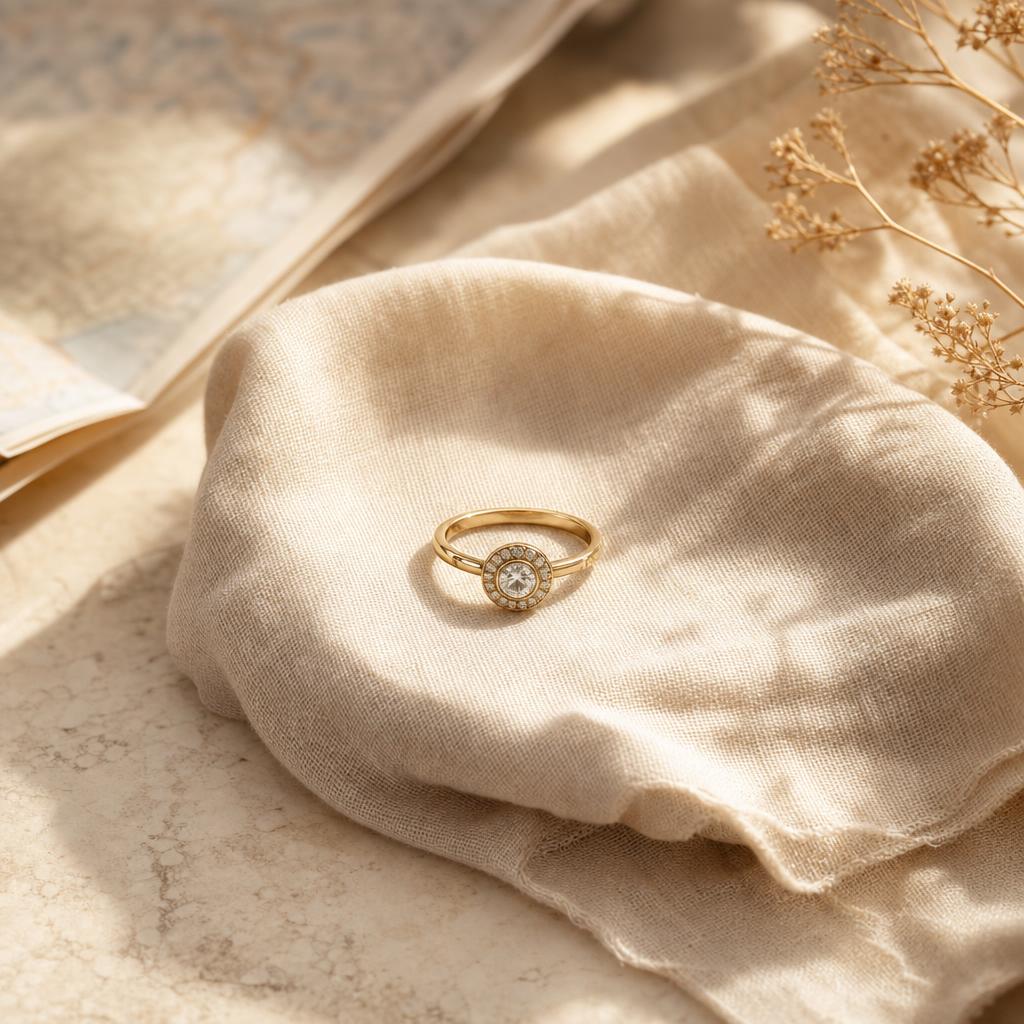
When to Size Up Before a Big Event: Weddings, Holidays and Travel Swelling Explained
There's a specific kind of panic that sets in when a ring you've worn comfortably for months suddenly won't slide past your knuckle — usually the night before a wedding, three hours into a flight, or somewhere between the second and third holiday dinner of the week. Your ring didn't change. Your finger did, temporarily, and it happens to almost everyone under the right conditions.
Fingers swell in response to heat, salt, altitude, alcohol, and plain old standing-around-in-a-dress-for-six-hours fatigue — all of which show up disproportionately around the events where you most want your rings to look effortless. Knowing which occasions actually call for sizing up, and which ones just call for a different ring entirely, saves you from either cutting off circulation at the altar or spending the whole party fidgeting.


Why Your Fingers Swell in the First Place
Finger swelling is mostly a fluid-shift problem. Heat and humidity pull blood vessels wider to help you cool down, which pushes more fluid into your extremities. Salt — from restaurant food, holiday appetizers, or the pretzels on your flight — makes your body retain water to balance sodium levels. Alcohol dehydrates you initially, then causes rebound fluid retention the next day. Cabin pressure on a plane does something similar over a period of hours, which is why a ring that fit perfectly at takeoff can feel snug by landing.
None of this is dangerous on its own, and it's rarely permanent. The issue is timing: these triggers cluster around exactly the events where you're wearing your best rings the longest and taking them off the least.
The Big Events That Actually Call for Sizing Up
Weddings — yours or someone else's
A wedding day is close to a perfect storm for finger swelling: early nerves, a long day on your feet, champagne, rich food, and often outdoor heat if the ceremony isn't indoors. Brides frequently find their own rings tighter by the reception than they were at the morning getting-ready photos. If you know your day will involve several hours outside or a lot of dancing, it's worth trying your ring on in the afternoon rather than first thing in the morning — that's a more honest read of how it'll actually fit by evening.
Holiday gatherings and travel
Christmas dinners, Thanksgiving, New Year's Eve — these combine salt, alcohol, and often actual travel in the same 24–48 hours. It's common to feel a ring go from comfortable to tight somewhere between the second glass of wine and the drive home. If you're hosting or traveling for the holidays and plan to wear a ring the entire visit, budget for some swelling by evening rather than fitting the ring to how your hand feels first thing in the morning.
Long-haul flights specifically
Altitude and cabin pressure cause a slower, more gradual swelling that many people don't notice until they try to take a ring off mid-flight and can't. This is different from heat-based swelling — it builds over hours rather than showing up immediately, which is exactly why it catches people off guard on transcontinental or international routes.
Worth knowing: Swelling from heat or salt usually peaks within a few hours and resolves within a day. Swelling from a long flight can take a day or two to fully settle once you're back on the ground and rehydrated.
| Trigger | Typical onset | How much size shift to expect |
|---|---|---|
| Heat / outdoor event | 1–3 hours in | Slight to noticeable — a snug ring may feel tight |
| Salt-heavy meals | 2–6 hours after eating | Mild — usually resolves by the next morning |
| Alcohol (rebound retention) | The following day | Mild to moderate |
| Long-haul flight | 4+ hours into the flight | Moderate — can persist for a day after landing |
| Standing all day (wedding, event) | By late afternoon | Mild to moderate, especially in warm weather |
How Much Bigger Should You Actually Go?
For most people, event-driven swelling shifts a ring by about a quarter to a half size — not a full size. Sizing up a full size to compensate for a single hot afternoon usually means the ring spins and slides for the other 95% of the time you wear it, which creates its own problems. The better approach for most short-term events is a temporary fix rather than a permanent resize: a ring guard or spacer that only goes on for the day, or simply choosing a slightly different piece for the occasion.
This is where a second ring earns its keep. Rather than resizing a ring you love for one event, some people keep a slightly looser stacking band on hand specifically for the days they know will run hot or long — swapping it in without touching the fit of their main ring at all.

The Destiny Ring
A crossover pavé band with a bit more breathing room in the profile — a natural stand-in on the days you know will run warm, salty, or long-haul.
Shop The Destiny Ring →✦ Pro tip: If you're not sure how much a specific event will affect your fit, try the ring on at the same time of day the event will happen — not first thing in the morning, when hands are almost always at their smallest.
The Half-Size Question
If you find that the same handful of predictable situations — summer weddings, long flights, a particular in-law's over-salted cooking — consistently tighten your ring, that's a signal worth acting on permanently rather than managing around each time. A genuine, repeated pattern is different from a one-off. In that case, going up half a size on your everyday ring (rather than a full size) is usually enough to account for normal daily fluctuation without the ring becoming loose the rest of the time.
What doesn't make sense is resizing a ring based on the single most extreme day you can remember — a resize is a permanent decision responding to a temporary condition, and it should be based on your typical range, not your outlier.
What to Do If You Can't Resize in Time
If an event is close and there's no time to size up properly, a few short-term options work better than forcing a tight ring on for hours:
- Ring guards or spacers — small adjustable inserts that snap onto the inside of the band, buying you a temporary size increase without any permanent change.
- Wear it on a different finger — your ring finger swells the most because it sits closest to where rings are worn constantly; a spare finger, worn for one day, may have more room.
- A different ring altogether — this is often the simplest fix. If your everyday ring runs tight in heat, a piece with a slightly more generous profile can stand in for the day without you thinking about it once.
For events you can plan around — travel, a wedding you're attending months out, a holiday you host every year — the better long-term move is simply having more than one ring in rotation, so a hot afternoon or a long flight never becomes a fit emergency in the first place.

The Duchess Ring
A double-halo cushion silhouette that reads as dressed-up on its own — a good option for events where you'd rather not stress about how your everyday ring is fitting by hour six.
Shop The Duchess Ring →Quick Takeaways
- Heat, salt, alcohol, and altitude are the main triggers — and they cluster around weddings, holidays, and travel.
- Most event-driven swelling shifts a ring by a quarter to half size, not a full size.
- Try rings on at the time of day your event happens, not first thing in the morning.
- A recurring pattern (not a one-off day) is the real signal for a permanent resize.
- Ring guards, a spare finger, or a second ring in rotation all solve the short-term problem without a permanent change.
Frequently Asked Questions
Should I size up my engagement ring before my wedding day?
Only if you have a consistent pattern of swelling in similar conditions. A single hot day is usually better solved with a ring guard or a spare ring than a permanent resize, since a ring sized for one extreme day will likely feel loose on a normal one.
Why does my ring feel tight after a long flight but fine when I board?
Cabin pressure and prolonged sitting cause a slower, cumulative swelling that often isn't noticeable until several hours in — which is why the ring that fit fine at takeoff can feel snug by landing.
How much does finger size actually change from swelling?
Typically a quarter to a half size for most people in most conditions. Larger shifts are usually tied to specific causes like pregnancy, heat illness, or certain medications, which are worth discussing with a doctor rather than solving with jewelry alone.
Is it better to size up or use a ring guard?
For occasional events, a ring guard is almost always the better choice — it's reversible and costs nothing to try. Reserve an actual resize for a pattern you notice repeatedly, not a single event you're anticipating.
The bigger-picture fix isn't really about any one ring — it's about not asking a single ring to do every job, in every condition, for every event on your calendar. A properly fitted everyday ring, a slightly roomier stacking piece for the hot and high-altitude days, and the good sense to try things on at the right time of day will get you through weddings, holidays, and long-haul flights without a single moment of finger panic.


