

Understanding SKU and Product Variants: Why the Same Ring Can Come in Six Listings
You found the ring. The exact silhouette, the exact cut, the exact everything. Then you searched the name to double-check the details, and three more listings came up — same name, same setting, different metal tones, different URLs, different photos entirely. For a second you wonder if you found a knockoff, a reseller, or a mistake in the store. You didn't. You found the same ring, listed the way ring shops actually work — and once you understand why, you'll shop faster and second-guess yourself a lot less.
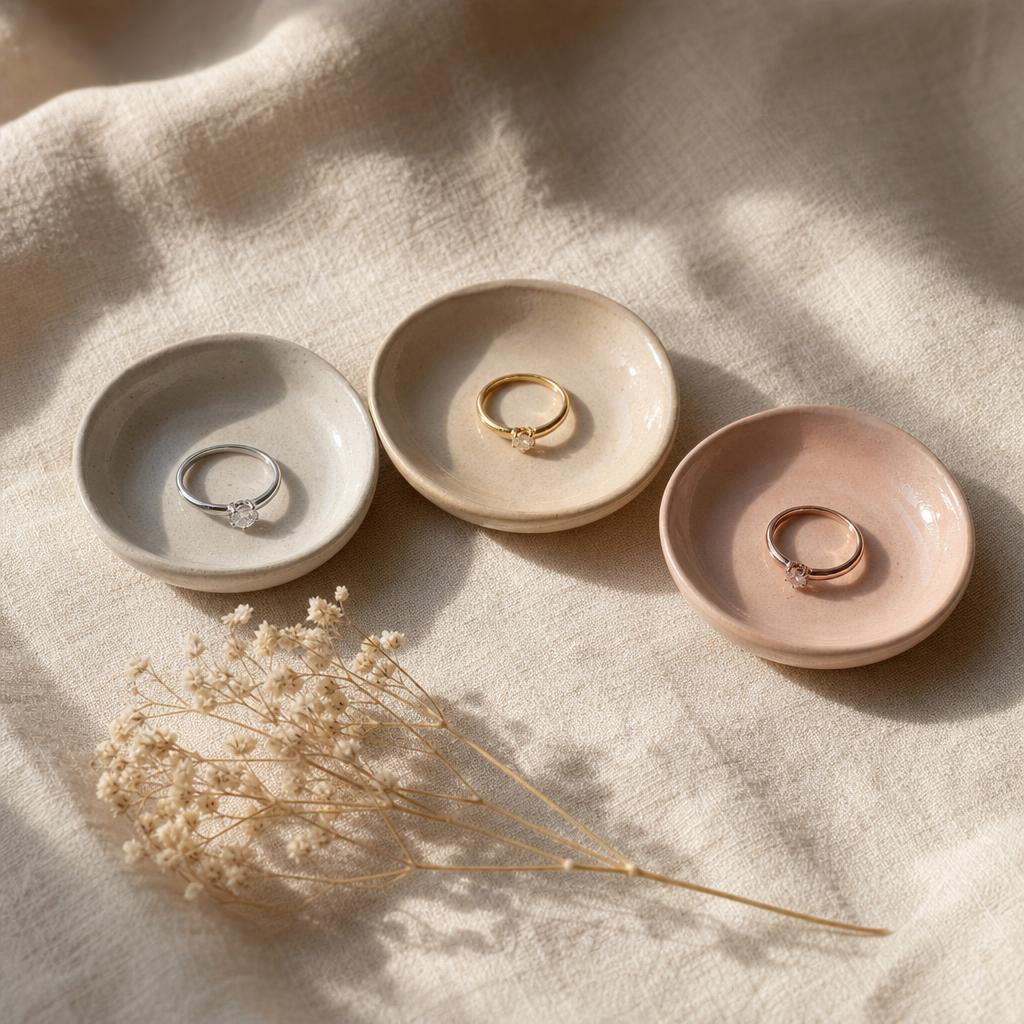
Here's the short version: on a ring listing, size is a dropdown, but metal color usually isn't — it's an entirely separate product page. That single distinction explains almost every "wait, is this the same ring?" moment you'll ever have while ring shopping online. Before we get into why, here's a spread of current styles so you can see exactly what a listing looks like in practice.


What a SKU Actually Is (No Jargon Required)
SKU stands for "stock keeping unit" — it's just the unique code a retailer assigns to one specific, sellable version of a product. It sounds like warehouse language because it is warehouse language, but understanding it changes how you shop. Every listing you see online is built around one: one SKU, one product page, one set of photos, one review thread. When a ring exists in more than one metal color, a jeweler generally has two ways to handle it — fold every version into a single page with a color selector, or give each version its own page entirely.
Gemiros does the second. It's a deliberate choice, not an inconsistency, and once you know the logic, the listings stop looking confusing and start looking organized.
Ring Size Is a Variant. Metal Color Is a Different Listing.
On a Gemiros product page, ring size lives inside a single dropdown — you pick your size, the price and design stay identical, and you check out from the same page. Metal color works differently. Rhodium-finished platinum, 18k gold plating, and rose gold plating are each their own manufacturing run, photographed separately and listed as their own product. That's why you'll find The Aura Ring, The Aura Ring – Gold, and The Aura Ring – Champagne as three distinct pages rather than one page with a color toggle.
Worth knowing: If a ring you like is offered in more than one metal color, each color has its own URL, its own photography, and its own review count — but the same underlying design, the same 925 sterling silver base, and no change in price between colors.

The Aura Ring
A radiant-cut center stone in a hidden halo setting — this design exists as three separate listings, one per metal tone, so the photos always show you exactly what you're getting.
Shop The Aura Ring →There's a real reason behind the split, beyond just website architecture. A platinum-finished ring under studio light behaves differently than an 18k gold-plated one — the reflections shift, the warmth of the tone changes how the center stone reads, and a single "representative" photo with a color swatch layered on top would flatten all of that. Separate listings mean the photo you're looking at is the ring you'll actually receive, in the tone you actually chose — not a rendering.
How to Shop Across Listings Without Losing the Thread
Once you know the pattern, cross-shopping listings gets fast. A few habits make it faster:
- Decide on the design first, the color second. Fall in love with the setting and the cut before you worry about metal tone — the design doesn't change between listings, only the finish does.
- Search the ring's name, not just the collection. Typing "Beatrice Ring" into the search bar will typically surface every metal-color listing for that design at once, so you can compare them side by side in separate tabs.
- Check the photos for finish, not for design accuracy. Since each listing is shot in its actual metal tone, trust the color you see — it's the color you'll receive.
- Bookmark before you compare. If you're weighing gold against rose gold, open both listings and sit with them for a day. The design is identical; the decision is really about which tone flatters your hand and your existing jewelry.

The Beatrice Ring
Round cut, milgrain detailing, and a pavé band — vintage in spirit, and listed separately in platinum, gold, and rose gold so you can shop the exact tone you want.
Shop The Beatrice Ring →Does a Different Listing Mean a Different Ring?
No — and this is the part worth being direct about. A separate SKU for a different metal color doesn't mean a downgrade, a different construction, or a different price tier. The 925 sterling silver base is identical across every color listing for a given design. What changes is only the plating layer on top: rhodium for the platinum finish, 18k gold, or rose gold. The stone, the setting, the band width, and the craftsmanship stay exactly the same. You're not choosing between versions of different quality — you're choosing a finish, full stop.
This also applies to stacking bands, which show up across multiple metal-color listings just as often as center-stone rings do. The Beloved Ring is a good example: the same slim stacking silhouette, listed separately in platinum, gold, and rose gold, so whichever tone you're building your stack around, there's a listing that matches it exactly rather than approximating it.

The Beloved Ring
A clean, versatile stacking band listed in three metal tones — the kind of piece that's easiest to shop once you already know your color-matching logic.
Shop The Beloved Ring →✦ Pro tip: If you're already stacking rings, shop by metal color first and design second within that color. It's faster to build a cohesive stack when you're only ever browsing one tone's worth of listings at a time.
Why This Beats a Single Page With a Color Dropdown
A color dropdown is convenient, but it hides information a separate listing doesn't. When every color lives on one page, retailers often reuse a single "hero" photo and simply swap a swatch — which means you're guessing at how gold plating actually catches light versus how rose gold does. Separate listings force honest photography for every finish. It also means reviews are grouped by the exact piece someone actually owns, so if you're reading feedback on a rose gold listing, you know the reviewer is describing rose gold — not a platinum ring with a color filter applied to the thumbnail.
It's a small structural choice that adds up to a more transparent shopping experience — more pages to scroll past, but less guessing about what's actually inside the box.
Quick Takeaways
- Ring size is a dropdown within one listing; metal color is usually a separate listing entirely.
- Separate SKUs per metal color mean separate, honest photography for each finish — not a different ring.
- The design, the stone, the setting, and the 925 sterling silver base stay identical across every color listing.
- Search by ring name to surface every metal-color listing for a design at once.
- Decide on the design first, then compare metal tones side by side before you choose.
Frequently Asked Questions
If a ring comes in three metal colors, are they actually different quality?
No. Every metal-color listing for the same design shares the same 925 sterling silver base, the same stone, and the same setting. The only difference is the plating — rhodium, 18k gold, or rose gold — which affects tone, not quality or construction.
Why don't listings just use one page with a color selector?
Separate listings allow each metal finish to be photographed and reviewed on its own terms, so what you see is exactly what you'll receive — rather than a single photo with a color swatch layered over it.
Does the price change between metal-color listings of the same ring?
No — the price stays the same across metal-color listings for a given design. You're choosing a finish, not a different tier of ring.
How do I find every metal-color version of a ring I like?
Search the ring's name directly rather than browsing by collection. That typically surfaces every listing for that design — platinum, gold, and rose gold — so you can open them side by side and compare.
Does ring size ever require a separate listing too?
No — ring size is handled as a variant within a single listing, selected from a dropdown on the product page. It's only the metal color that typically splits into its own separate listing.
None of this changes what you're actually buying — it just changes how it's organized. Once you know that a new listing usually means a new metal tone rather than a new ring, the whole search gets faster: pick the design you love, pull up its sibling listings, and choose the finish that actually belongs on your hand.


