

Sterling Silver Moissanite Earrings: Why They Catch Light Differently Than Diamonds
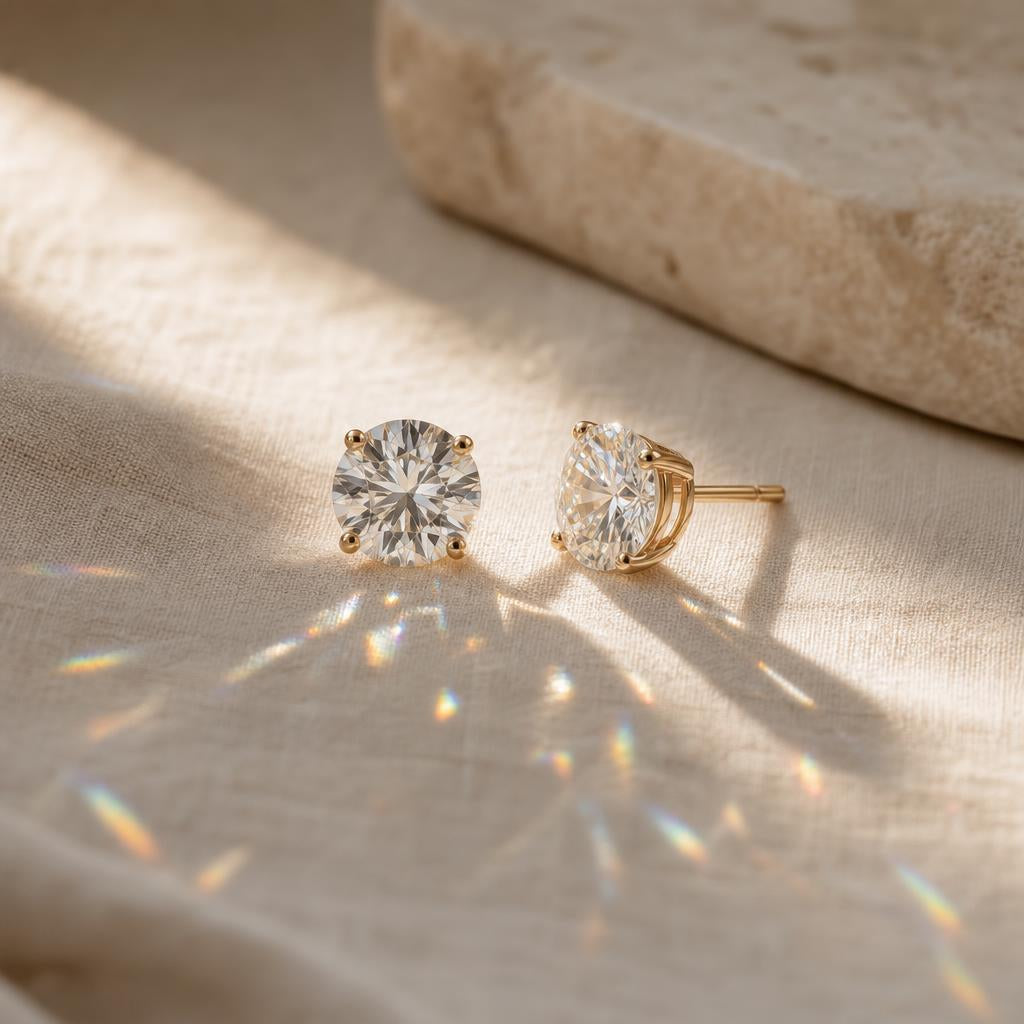
Hold a moissanite stud in the shade and it looks like a very good diamond. Turn your head in direct sun and it throws a flash of color a diamond doesn't. That flash is the whole story, and once you know why it happens, you'll know exactly how to choose a pair.
Moissanite doesn't bend light the way a diamond does, and in earrings you see the difference every time you move. Here are four pairs from the Gemiros collection that show it best, followed by the optics, the metal and the settings that decide how a stud actually reads on your ear.

Fire and brilliance are two different things
Two measurements explain almost everything you see. Refractive index describes how strongly a stone bends light, and moissanite sits higher than diamond. Dispersion describes how widely a stone splits white light into colors, and moissanite's is roughly two and a half times diamond's. Higher refraction reads as a crisp, bright face. Higher dispersion reads as fire: the flashes of orange, blue and pink that show up when a stone catches a direct light source.
A diamond's character is brilliance. It returns a lot of white light and shows sharp contrast between bright and dark facets. Moissanite does both of those things and adds more color on top. If you want the longer side-by-side, we cover the broader moissanite-versus-diamond comparison separately. This guide stays on one question: what does the light actually do on your ear?
Worth knowing: Moissanite is lab-created and conflict-free, and it will pass a diamond tester. A standard thermal test can't separate the two, which is why the real difference is something you see in motion, not something a counter test reveals.
Sterling silver moissanite earrings: where the metal changes the light
An earring is a small stone in a small setting, so the metal around it changes how the light lands. This is where the sterling silver base earns its place. A bright rhodium finish is white and reflective, so it bounces light back up into the stone instead of absorbing it. The facets stay clean, and the fire reads against a neutral frame. A yellow gold finish does the opposite: it warms the stone and softens the flashes into something richer and quieter.
Neither is better. They are two moods. White metal gives you the icy, high-contrast version, and gold gives you the glow. Our core line is 925 sterling silver with rhodium or 18k gold plating, so the choice is about how you want the light to read, not about quality. If you've ever wondered what 925 actually means on a listing, it's the standard for silver content, and it is what makes these pieces durable enough to wear daily.
✦ Pro tip: Check a pair in three places before you decide: by a window, under warm indoor light and in direct sun. Moissanite changes the most between them, and the setting you love in all three is the right one.
How the same stone reads in different light
| Lighting | What moissanite shows | What it feels like |
|---|---|---|
| Direct sun | Bright white face with colored flashes at the edges | Lively, a little theatrical |
| Overcast daylight | Clean, crisp white sparkle with little color | Polished and understated |
| Warm indoor light | Soft glow with occasional warm flickers | Quietly luminous |
| Candlelight or evening | Small, quick points of light as you move | Intimate, romantic |
This is the part most listings never explain. A moissanite stud doesn't look like one thing. It looks like the light you're standing in, which is exactly what makes it easy to wear from a morning meeting to dinner.
The stud that shows the stone best

The Éclat Moissanite Studs
Round-cut moissanite in a classic 6-prong setting. A 6-prong setting keeps the stone open to light from every side, so the fire has room to show. Also available in Gold.
Shop The Éclat Moissanite Studs →A round cut is the shape built to return the most light, which is why round studs are where moissanite looks most like itself. Keep the setting simple and let the stone do the work.
Why a huggie sparkles differently from a stud
A stud sits still. A huggie moves with every turn of your head, and movement is what turns a stone's fire into visible flashes. Because you're seeing many small stones at changing angles, a huggie reads as a constant shimmer rather than a single point of light. If you're new to the style, here's what makes a huggie a huggie.

The Vivara Moissanite Huggies
Brilliant round moissanite stones set along a sleek huggie, framed by milgrain edges for a soft, vintage-inspired texture. Nickel-free, tarnish-resistant and backed by a 1-year warranty.
Shop The Vivara Moissanite Huggies →Moissanite or simulated diamond: how to choose
Gemiros also makes studs set with our Signature Simulated Diamonds, and the choice comes down to the look you want. Moissanite leans toward fire, with more color in the flash. A simulated diamond leans toward the clean, bright, white-on-white sparkle people picture when they think "diamond." Both pass diamond testers, and neither one is a step down from the other.

The Stella Studs
1.2-carat round-cut simulated diamonds in a classic four-prong setting. Pure, unapologetic sparkle, with nickel-free materials and a 1-year warranty.
Shop The Stella Studs →Size, scale and what your ear does to the light
Size changes the effect more than most buyers expect. A small stone shows its fire as a single quick point, the kind of flicker people notice only when you turn toward them. A larger stone shows broader flashes and reads as a statement from across the room. Neither is the wrong choice. It comes down to whether you want your earrings to be discovered or noticed.
Placement matters too. Studs sit close to the face, so they pick up light reflected from your skin and hair. Hoops hang lower and catch more overhead light. If you wear your hair down most days, choose a setting that lets the stone face outward and stay visible, because a stone hidden by hair can't throw any fire at all.
Finally, think about the whole day, not just one moment. A pair that glows in a bright office can look almost silent at a candlelit dinner, and the reverse is just as true. The easiest way to get both is a simple round stud in the metal you wear most, plus a huggie for the evenings when you want movement. Between them, you cover soft daylight, sharp sun and low evening light without owning a drawer full of earrings.
Keeping the light coming through
Fire needs a clean surface. Skin oils, lotion and hairspray build up on the back of a stone and dull it faster than anything else, so a quick wipe after wearing keeps the sparkle where you bought it. Rhodium and gold plating stay bright with the same gentle habits; what actually causes tarnish is mostly moisture, perfume and storage, all easy to control. Keep earrings dry and stored apart, and give them a soft cloth, and our full guide to cleaning moissanite and sterling silver earrings covers the rest.
Quick Takeaways
- Moissanite bends light more and splits it into color more than diamond does, so it shows more fire.
- White rhodium finishes give a crisp, icy sparkle, while gold finishes warm the stone and soften the flash.
- Round studs show the most fire, and huggies turn that fire into constant movement.
- Check any pair in shade, indoor light and direct sun before you decide.
Frequently Asked Questions
Is sterling silver moissanite good quality?
Yes. The stone is lab-created moissanite, one of the hardest gemstones you can wear, and 925 sterling silver is the standard base for demi-fine jewelry. Gemiros pieces use rhodium or 18k gold plating, are nickel-free and carry a 1-year warranty.
Are moissanite earrings worth it?
If you want diamond-level sparkle without the diamond markup, they are an easy call. Moissanite is durable enough for everyday wear and passes diamond testers, so you are paying for the look rather than for a jewelry store's markup.
Does moissanite sparkle more than diamond?
It sparkles differently. Moissanite throws more colored fire, while diamond returns a whiter, more contrasted brilliance. In direct sun the difference is obvious, and in everyday light most people simply see a bright, lively stone.
Will moissanite studs look too colorful?
Not in a small stud. The colored flashes show up mainly in direct light and in motion, and in overcast or indoor light the stone reads as a clean, bright white.
Which is better for earrings, moissanite or a simulated diamond?
Choose moissanite if you love fire and flash, and a simulated diamond if you want the classic white sparkle. Either way you get a stone that passes diamond testers, set in 925 sterling silver.
The right pair of moissanite studs doesn't announce itself. It catches the light you're already standing in and quietly returns more of it. Choose the setting that matches the mood you want, wear them in the sun at least once, and you'll understand why so many women have stopped paying for a name.


