

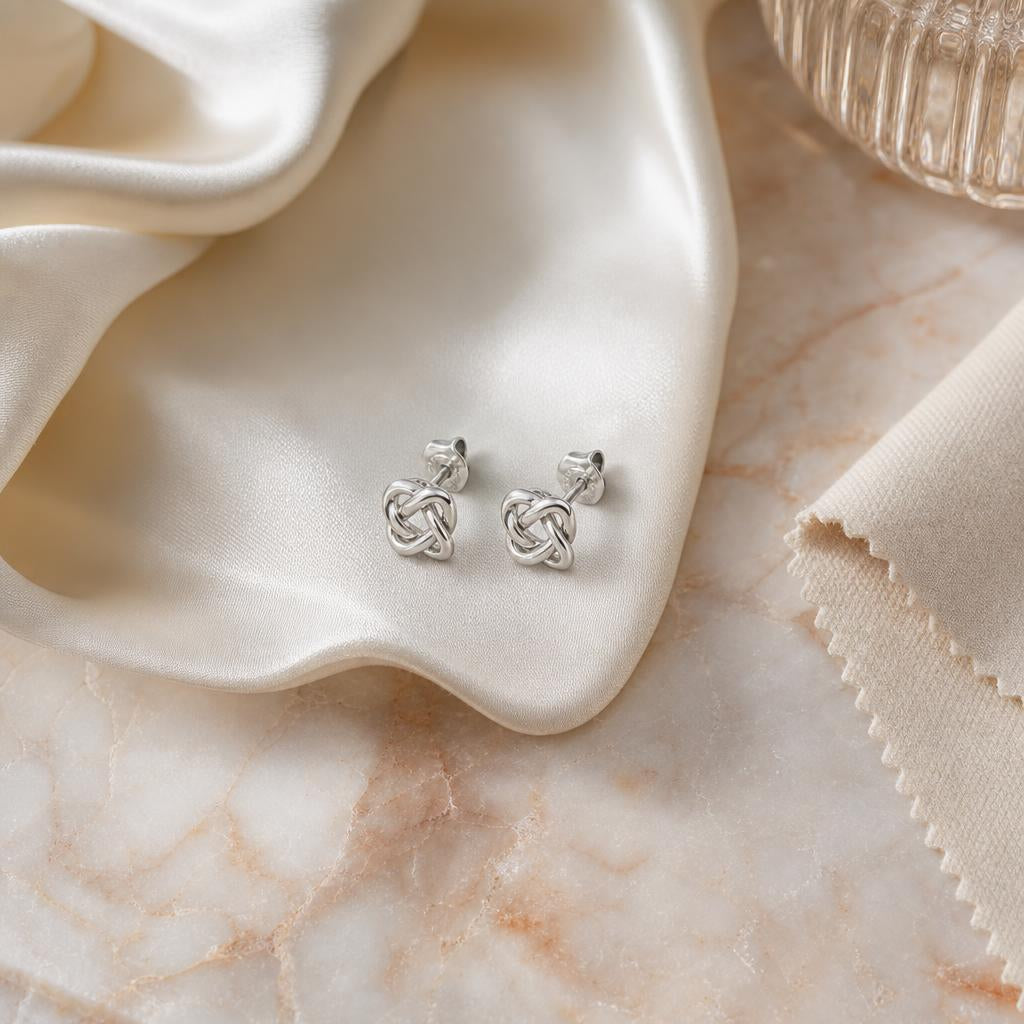
Do Sterling Silver Earrings Tarnish? What Actually Causes It
You pull off your earrings after a long week and notice it: a faint shadow along the post, a dullness that wasn't there when you bought them. Before you assume something is wrong with your jewelry, here's the actual answer — yes, sterling silver earrings tarnish, and it has nothing to do with quality.
It's one of the most searched questions in jewelry care, and for good reason: nobody explains it clearly before you buy. So let's fix that. Here's exactly what tarnish is, why it happens to genuine sterling silver, and what actually keeps it under control — starting with a few earrings that are easy to love and easy to keep looking new.


Yes, Sterling Silver Earrings Tarnish — Here's What's Actually Happening
Sterling silver is 92.5% pure silver mixed with 7.5% other metal, almost always copper. Pure silver on its own is too soft to hold a setting or survive daily wear, so that small amount of copper is added for strength. The trade-off is that copper reacts with sulfur in the air, in sweat, and in everyday products like lotion and perfume. That reaction creates a thin surface layer called silver sulfide — what you're actually seeing when a piece looks dull or slightly gray.
Here's the part most first-time buyers never get told: tarnish is proof your earrings are genuine sterling silver, not a mark against them. Metals that never tarnish at all are usually stainless steel or heavily plated base metal — materials that hold their shine because there's no real silver content underneath to react in the first place. If your earrings are gradually dulling, it means the 925 stamp is doing exactly what it's supposed to.
Worth knowing: Tarnish sits only on the surface. It isn't rust, it doesn't eat into the metal, and it comes off completely with the right care — nothing about it is permanent or damaging.
Does Sterling Silver Turn Your Skin Green?
This is the other question that tends to alarm first-time buyers, and it deserves the same direct answer: occasionally, yes — and it's the copper in the alloy, not the silver, causing it. When copper reacts with the natural oils and acids on your skin, it can leave a faint green or gray mark, usually around the earlobe or post. It rinses off with soap and water in seconds and says nothing about how well-made your earrings are. It's chemistry, not a defect, and it fades the moment you clean the area.
If you've specifically noticed sterling silver earrings turn green rather than just dull, that's the same copper reaction showing up more visibly — it tends to happen with sweat, humidity, or skincare products layered underneath. It isn't a different problem, just a more noticeable version of the same one, and it clears up the same way.
What Actually Speeds Up Tarnish on Earrings
Some conditions accelerate the reaction, and knowing them means you can control most of it without changing how often you wear your favorite pair.
- Humidity and sweat. Warm, humid climates and workouts both speed up the sulfur reaction that causes tarnish.
- Perfume, lotion, and hairspray. Apply these first, then put your earrings in — letting products dry completely keeps them off the metal surface.
- Chlorine and salt water. Pools and the ocean are two of the fastest ways to dull sterling silver, so it's worth taking earrings out before you swim.
- Everyday storage. A jewelry box left open to humid air tarnishes pieces faster than a closed pouch or a lined case.
Can You Shower With Sterling Silver Earrings?
You can, and plain water alone does very little damage. What actually causes trouble is what comes with the shower — shampoo, conditioner, and body wash all leave a thin film that dulls the metal over time, and minerals in tap water don't help either. If you tend to shower with your earrings in, a quick rinse with clean water afterward and a pat dry with a soft cloth keeps that buildup from settling in.
What About Pools, the Ocean, and Everyday Water Exposure?
Plain tap water is the mildest scenario your earrings will face. Chlorinated pool water and salt water are a different story — both react with the copper in sterling silver much faster than a quick hand wash ever would, which is why a beach day or a swim is one of the few times it's genuinely worth taking earrings off rather than rinsing and moving on. For everyday wear, washing your hands or getting caught in the rain isn't something to worry about at all; it's sustained soaking in chlorinated or salt water that actually accelerates the reaction.

The Stella Stud Earrings
A clean, round-cut solitaire in 925 sterling silver, built for the kind of daily wear this whole conversation is about — simple enough to leave in from morning to night.
Shop The Stella Stud Earrings →How to Keep Sterling Silver Earrings From Tarnishing
None of this requires babying your jewelry. A few small habits go a long way toward keeping sterling silver bright between wears.
- Wear them often. Counterintuitively, silver that's worn regularly tends to tarnish more slowly than silver left sitting untouched — the light friction from daily wear helps keep the surface bright.
- Store them dry and sealed. An anti-tarnish pouch or a small airtight bag blocks the humidity and air exposure that drive the reaction.
- Put earrings on last. Apply perfume, lotion, and hairspray first, and let them fully dry before you put your earrings in.
- Wipe them down after wear. A soft polishing cloth run over the surface before you put them away removes the light buildup before it has a chance to set in.
✦ Pro tip: Keep a small polishing cloth in the same drawer as your everyday earrings. A ten-second wipe after you take them off does more to prevent tarnish than any once-a-month deep clean.

The Astraea Stud Earrings
A six-pointed halo of round-cut simulated diamonds in 925 sterling silver — enough presence for a night out, easy enough to care for that it never feels precious.
Shop The Astraea Stud Earrings →How to Clean Tarnished Sterling Silver Earrings at Home
If a pair has already dulled, restoring the shine takes a few minutes and nothing you don't already own.
- Mild soap and warm water handles light dullness. Soak briefly, wipe gently with a soft cloth, rinse, and dry completely.
- A dedicated silver polishing cloth is the fastest fix for moderate tarnish — no liquids, no soaking, just a gentle buff.
- Baking soda and foil works for heavier tarnish: line a bowl with foil, add warm water and a spoonful of baking soda, and let the earrings sit for a few minutes before rinsing and drying.
Whatever method you use, dry your earrings fully before putting them away. Moisture left on the surface is exactly what restarts the reaction you just cleaned off.
Quick Takeaways
- Yes, sterling silver earrings tarnish — it's copper in the alloy reacting with sulfur and moisture, not a flaw.
- Tarnish is actually a sign your earrings are genuine 925 silver, not a lesser material.
- A green mark on skin is a harmless, temporary copper reaction that washes off with soap and water.
- Wearing earrings regularly, storing them dry, and applying products before you put them on all slow tarnish down.
- Tarnish comes off completely with mild soap, a polishing cloth, or a quick baking-soda soak.
Frequently Asked Questions
Do sterling silver earrings tarnish faster than other jewelry?
Earrings sit close to skin oils, hair products, and perfume all day, so they can tarnish a little faster than a piece worn less frequently. That's about exposure, not the metal itself — a necklace or bracelet made of the same 925 sterling silver reacts the same way under the same conditions.
Does tarnishing mean my earrings aren't real sterling silver?
It means the opposite. Genuine sterling silver contains real silver and copper, both of which react naturally over time. Metal that never changes at all is more likely stainless steel or a heavy base-metal plating with little to no actual silver content underneath.
Can I shower or swim in my sterling silver earrings?
A quick shower won't hurt them, but shampoo, soap residue, and mineral-heavy tap water speed up dulling over time. Chlorinated pools and salt water are more aggressive and worth avoiding — take earrings out before you swim if you want to keep them bright longer.
Why do my sterling silver earrings turn my skin green?
The copper in the sterling silver alloy reacts with the natural acids and oils in your skin, which can leave a faint green or gray mark. It's a harmless, surface-level reaction that wipes away with soap and water and has nothing to do with the quality of the piece.
Does wearing earrings every day actually help prevent tarnish?
Yes. Light, regular friction from wearing sterling silver helps keep the surface bright, while pieces left untouched in a drawer for months tend to dull faster. Combine daily wear with dry, sealed storage when they're off, and tarnish slows down considerably.
Does 925 sterling silver turn black over time?
It can, and it's simply a more advanced stage of the same tarnish process — as the silver sulfide layer thickens, the color shifts from a faint gray toward black. A polishing cloth or a short baking-soda soak removes it just as effectively as it does lighter tarnish.
Does 925 sterling silver turn green on its own, or only on skin?
The metal itself doesn't turn green — that reaction happens on skin, not on the earring. What you'll see directly on the silver is dulling toward gray or black; the green tint only shows up where the copper in the alloy has been in contact with your skin.
None of this is a reason to think twice about sterling silver — it's just the honest version of how the material behaves, the version most listings skip. A little occasional care is a small price for earrings that look this good and cost this little to keep that way. Wear them daily, wipe them down, and let the compliments do the rest.


