

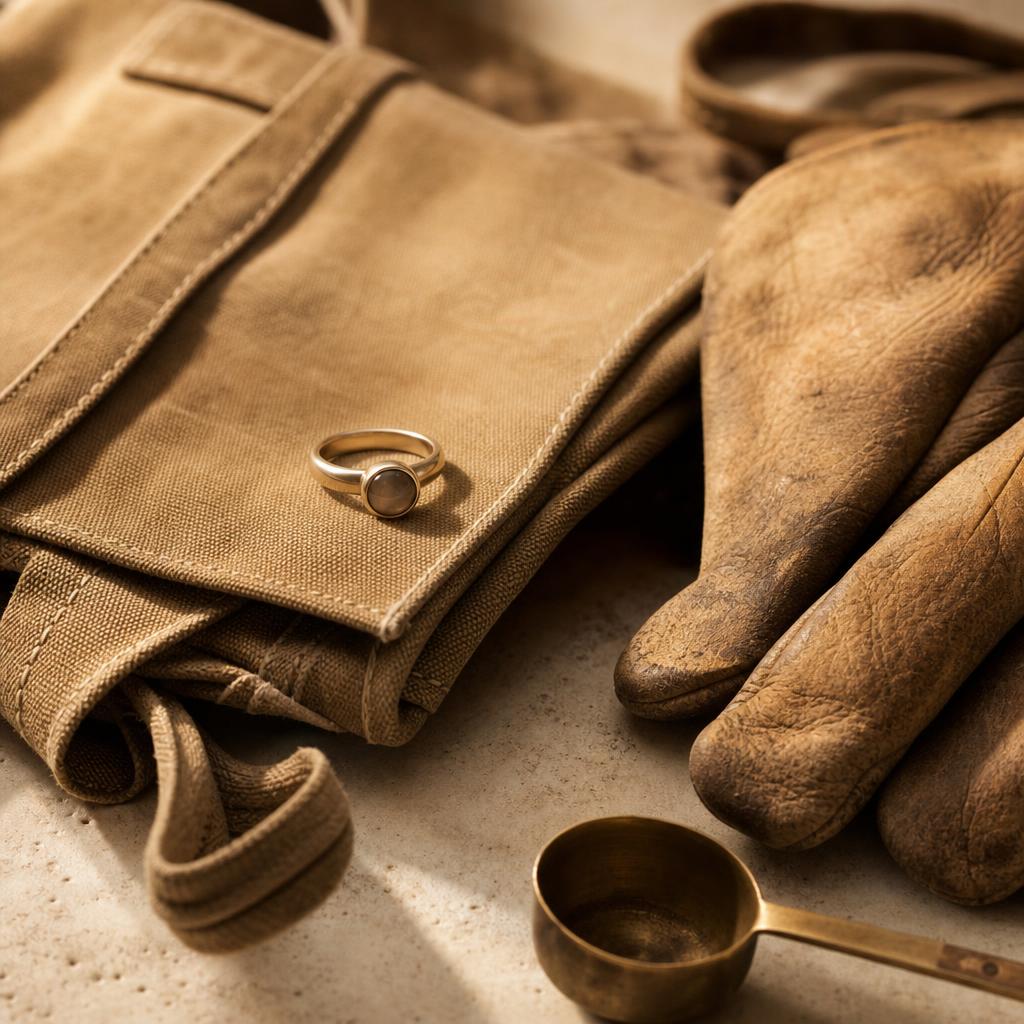
Rings for People Who Work With Their Hands: Durable Everyday Options That Still Look Put-Together
Your hands do a lot in a day — kneading dough, gripping a steering wheel, typing for eight hours straight, planting bulbs, adjusting a stethoscope, hauling grocery bags up three flights of stairs. A ring that can't keep up with that isn't just impractical, it's a ring you'll stop wearing within a month. The good news is that "durable" doesn't have to mean plain, and "everyday" doesn't have to mean boring.
Some settings are built to survive a real day and some simply aren't, and the difference usually comes down to a handful of structural details rather than price. Before we get into what to look for, here are a few styles built with exactly this kind of daily wear in mind.

Why Prongs Are Usually the First Thing to Go
Most engagement-style rings are built around one goal: making a stone look as large and as lifted as possible. That means tall settings, thin claw-like prongs, and a lot of empty space between the stone and the band. It looks spectacular in a ring box. It's also exactly the kind of geometry that catches on wool gloves, snags on garden netting, hooks the edge of a dish towel, and gets bent out of shape the first time it collides with a doorframe or a gym bar.
If you spend your day cooking, gardening, teaching, nursing, styling hair, playing an instrument, or doing anything that keeps your hands moving and touching things, a tall prong setting is working against you from the start. It's not that these rings are poorly made — it's that they were designed for evenings out, not for a Tuesday shift. The fix isn't to give up on sparkle. It's to choose a setting whose entire structure is built to sit low, stay closed, and take contact without complaint.
What Actually Makes a Ring Durable for Hands-On Days
Durability in a ring isn't really about the metal being "strong" in some abstract sense — sterling silver and gold vermeil are both perfectly capable of years of daily wear. It's about geometry: how much of the setting sticks up, how exposed the stone's edges are, and whether there's anything for a glove, a sponge, or a keyboard key to catch on.
Bezel settings: nothing for the world to grab onto
A bezel setting wraps a continuous rim of metal around the entire edge of the stone instead of holding it with a handful of thin prongs. There's no raised claw to snag, no exposed girdle to chip against a countertop, and the smooth outer edge means the ring slides on and off gloves without catching. It's the single biggest upgrade you can make if your hands are in motion all day.

The Cherish Ring
A bezel-set eternity band where every stone is sealed in its own rubbed-edge frame — nothing raised, nothing to catch, and it stacks flush against a low-profile ring without adding bulk.
Shop The Cherish Ring →If you've been curious about this style beyond just durability, bezel settings are worth understanding on their own merits — they read quieter and more modern than a classic prong solitaire, which is part of why they've become such a popular everyday choice.
Flush eternity bands: the shape does the protecting
An eternity band with stones set flush into the metal, rather than raised above it, behaves almost like a smooth ring even though it's covered in sparkle end to end. There's no single "focal point" stone standing proud of the band to bump or bend — the surface stays close to level all the way around, which is exactly what you want if your hands are gripping tools, steering wheels, or piping bags for hours at a stretch.
This is also why a lot of people who work with their hands end up wearing an eternity band as their primary ring rather than as a stacking piece. It gives you a full circle of stones — genuinely more sparkle than a single solitaire, in most cases — without a single vulnerable high point.
A comfort-fit interior matters as much as the outside
The inside of the band matters just as much as the setting on top. A flat-backed ring on a hand that's constantly flexing, gripping, and releasing will start to feel like a blister generator by lunchtime. A rounded, comfort-fit interior lets the ring rotate slightly with your finger instead of digging in at the same pressure point all day — a small detail that makes a much bigger difference than most people expect once you're wearing gloves, washing your hands two dozen times a shift, or gripping equipment for hours.
Worth knowing: Rhodium plating on sterling silver rings adds a thin protective layer that resists everyday scuffing, but no plating is scuff-proof forever. A ring that gets genuine daily contact — not just daily wear — will show its wear pattern eventually, no matter what it's made from. That's normal, not a defect.
Metal Choice: Silver, Vermeil, or Rose Gold
Once the setting shape is sorted, metal choice comes down to how your skin and your day-to-day react to it, rather than one option being objectively tougher than another. Gemiros rings are set in nickel-free 925 sterling silver, with rhodium or 18k gold plating layered on top depending on the finish — all genuinely wearable through a full working day.
Solid sterling silver has real structural strength — 925 sterling silver is an alloy specifically because pure silver is too soft to hold a shape under daily pressure, and the alloy is what gives it the resilience to survive being knocked around a kitchen or a classroom. Gold vermeil rings share that same silver base underneath, with a thicker gold layer on top than standard plating, which is part of why it tends to hold its color longer under frequent hand-washing and glove use.

The Forever Ring — Gold
A flush pavé eternity band in gold vermeil — warm tone, low profile, and a full circle of sparkle with no raised points to catch or chip.
Shop The Forever Ring — Gold →If you're someone whose hands are in water constantly — bartending, nursing, hairstyling, dishwashing at the end of a dinner shift — sterling silver with rhodium plating tends to be the lowest-maintenance choice simply because rhodium is extremely scuff-resistant. If your work is drier but still hands-on — teaching, retail, studio work, office days that involve a lot of typing and lifting — gold vermeil or rose gold hold up just as well and give you more warmth in the tone.
When It's Actually Better to Take the Ring Off
No setting, however well designed, is meant to survive everything. There's a real difference between "durable enough for a normal working day" and "built to withstand direct impact or crushing force," and no ring — regardless of price or metal — belongs in the second category.
✦ Pro tip: Take rings off entirely for heavy lifting, weightlifting with a barbell, operating machinery, deep cleaning with harsh chemicals, and any task where your hand could get pinned or crushed. A ring left on during a real accident can make a bad injury worse — this one is about your finger, not the ring.
Outside of those higher-risk moments, a well-chosen bezel or flush eternity band is genuinely built to be a daily-wear piece — meant to be forgotten about on your hand rather than protected from it.
Caring for a Ring That Works as Hard as You Do
Daily-wear rings need slightly different care than occasion-only pieces, mostly because they're picking up hand cream, soap residue, and general daily grime far more often. A quick rinse with mild soap and a soft brush every week or two keeps a simulated diamond ring looking as bright as the day it arrived — this guide to cleaning moissanite and simulated diamond rings covers exactly what to use and what to avoid.

The Devotion Ring
A continuous circle of baguette-cut stones set fully flush into the band — sharp, architectural, and completely smooth to the touch from every angle.
Shop The Devotion Ring →A quick visual check every few weeks is worth building into the routine too — glance at the band for any thinning at the shank, and make sure nothing feels loose when you gently press on the stones. Because these settings don't have raised prongs to bend or loosen the way a classic solitaire does, this kind of everyday wear-and-tear check takes seconds rather than requiring a jeweler's loupe.
One Ring, Built for Every Part of the Day
There's a real case for keeping it simple if your hands are your tools: one well-built ring instead of a stack you have to think about. A single bezel-set or flush eternity ring gives you sparkle that reads as intentional rather than delicate, without asking you to remember to take off three separate pieces before you start your shift.

The Eternity Ring — Rose Gold
A complete circle of pavé stones in warm rose gold, set flush against the band for a piece that looks finished from every angle and wears just as smooth.
Shop The Eternity Ring — Rose Gold →If a single low-maintenance piece sounds right for your day-to-day, it's worth reading up on how to choose that one ring well — the same logic that makes a ring durable also tends to make it the kind of piece that works with everything you wear, which is really the whole point of a hands-on, no-fuss everyday ring.
Quick Takeaways
- Tall prong settings are the most likely style to snag, bend, or chip during hands-on work — bezel and flush-set styles are built to avoid that entirely.
- A bezel setting wraps a smooth rim of metal around the stone's edge, leaving nothing raised to catch on gloves, fabric, or tools.
- Flush eternity bands spread sparkle across a level surface instead of concentrating it in one exposed high point.
- A comfort-fit interior reduces pressure and irritation for hands that are gripping and flexing all day.
- Rhodium-plated sterling silver tends to suit frequent hand-washing best; gold vermeil and rose gold hold their tone well through drier daily wear.
- Always remove rings for heavy lifting, weightlifting, machinery, or any task with crushing risk — no setting is built to withstand that.
Frequently Asked Questions
What's the single most durable ring setting for someone who works with their hands all day?
A bezel setting is generally the most durable choice, since it wraps a continuous edge of metal around the stone with no raised prongs to catch or bend. A flush-set eternity band is a close second, spreading sparkle across a level surface rather than a single exposed point.
Is sterling silver strong enough to wear every day for manual work?
Yes. 925 sterling silver is an alloy specifically designed to be more durable than pure silver, and rhodium plating adds an additional scuff-resistant layer. It holds up well to daily hand-washing, gloves, and general contact, though like any fine jewelry it should still come off for heavy lifting or machinery.
Should I take my ring off for gardening, cooking, or cleaning?
A well-chosen bezel or flush-set ring can usually stay on for lighter hands-on tasks like these. It's worth removing for anything involving harsh chemicals, prolonged soil or grit contact, or repeated pressure against a hard surface, simply to protect the finish over time.
Do low-profile rings look less special than a classic prong solitaire?
Not at all — they tend to read as quieter and more considered rather than less impressive. Eternity bands and bezel settings put sparkle to work across the whole ring instead of concentrating it in one raised stone, which is a look a lot of people actively prefer for daily wear.
The best ring for hands-on days isn't the one that photographs the biggest — it's the one you forget you're wearing until you catch the light hitting it mid-task. Choose the setting first, let the metal tone follow your taste, and you'll end up with a ring that's genuinely built for the life you're actually living in it.


