

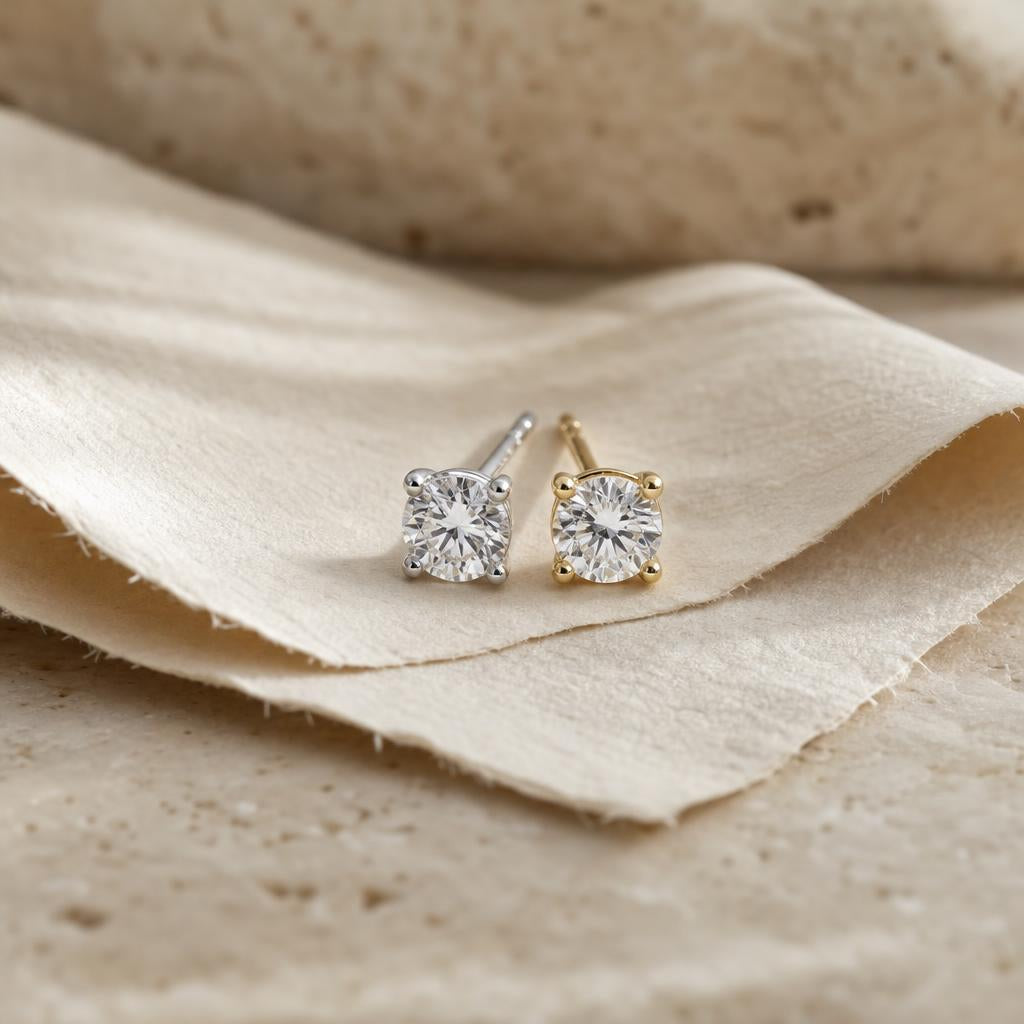
Mixing Metals Jewelry: Do Your Earrings Have to Match Everything Else You Wear?
Somewhere along the way, someone decided your earrings had to match your necklace, your ring, your watch and the hardware on your bag. Nobody asked you. The women who wear jewelry best stopped following that rule a long time ago, and they have a much better system.
Here is the short version of it: metal tone is a choice, not a matching exercise. Below, how to decide when your earrings should echo what you wear, when they should deliberately differ, and which pairs make either approach effortless.


What "Mixed Metal" Actually Means in Jewelry
When a jeweler or a store says a piece is mixed metal, they mean it combines two or more metal tones in a single design: a gold twist wrapped around silver, a two-tone hoop, a pendant with a yellow bail and a white setting. The phrase has a second meaning in styling, and it is the one that matters here: wearing pieces of different metal tones together, on purpose, as one look.
That second meaning is where the anxiety lives. Most women have a drawer of silver-tone and gold-tone pieces and a nagging sense that wearing them together is somehow an error. It is not. It is a skill with about four rules, and none of them involve matching.
Is It Classy to Mix Metals?
Yes. What reads as classy is not the metals. It is intention. Two tones that look chosen read as confident. Two tones that look accidental read as a rushed morning.
The difference comes down to repetition. If you wear one gold piece and one silver piece, each alone on the opposite side of your look, it looks like a mistake. If each tone appears at least twice, it looks like a decision. That single principle solves most of mixing metals jewelry in practice.
The two-and-two rule: Every metal tone in your look should appear at least twice, in different places. Silver studs and a silver ring, plus a gold necklace and a gold bracelet, is a deliberate look. Silver studs alone with everything else gold is not.
Four Rules That Make Mixing Look Intentional
1. Let one piece be the bridge
A bridge piece contains both tones, so it gives the two metals permission to coexist. A two-tone hoop, a bracelet with silver and gold links, a ring that combines both. Wear a bridge piece and everything else can lean either direction. It is the cheat code for anyone nervous about trying layering gold and silver together for the first time.
2. Keep the stones consistent
This is the rule that surprises people. When the metal varies, a consistent stone does the unifying. Round brilliant stones in both a silver-tone stud and a gold-tone stud look related no matter what holds them. A moissanite solitaire in one tone and a moissanite huggie in another read as a family because the sparkle is identical.
3. Vary the weight, not just the color
Mixing works best when the two tones differ in scale too: a fine silver chain with a bolder gold hoop, or a tiny gold stud over a larger silver ring. Pieces of identical weight in competing colors are the ones that fight each other.
4. Pick a dominant tone for the ears
Your earrings sit closest to your face, so they carry more visual weight than anything else you wear. Decide which tone you want near your skin and eyes, then let the other metal appear lower down, on your hands or wrists. Our guide to mixing metals in your ring stack applies the same logic from the hand's point of view.

The Ophelia Stud Earrings
An oval silhouette in a silver tone, with the kind of presence that anchors a look. Wear it as your dominant ear tone and let gold appear on your hands.
Shop The Ophelia Stud Earrings →When Your Earrings Should Match
Matching is not forbidden. It is simply situational, and there are three moments where it is the smartest option.
- When the earrings are the whole story. A single pair of diamond-bright studs with nothing else on needs no coordination at all. Nothing to match, nothing to clash.
- When you want a polished, uniform look. Interviews, formal events and photographs reward a single-tone palette because it reads as controlled.
- When you wear one set daily. If you have a signature pendant and a signature pair of studs, matching them is the fastest way to look pulled together without thinking.
Even then, matching is a choice. The woman who wears the same silver-tone studs every day and layers gold rings over them isn't breaking a rule. She wrote a better one.
When Your Earrings Should Deliberately Differ
This is where mixed metal earrings earn their place. A few situations where contrast beats coordination:
- Stacked piercings. A silver-tone stud in your first hole and a gold-tone huggie higher up looks curated. Our earring stack ideas walk through spacing and proportion.
- When your wardrobe leans one way. If most of your jewelry is gold-tone but you love how silver sparkle looks against your skin, wear the silver in your ears. Contrast is what makes the sparkle visible.
- When you own more pieces than rules. Nobody should refuse an heirloom bracelet because it doesn't match this week's studs.
✦ Pro tip: Standing in front of a mirror, ask whether each tone appears twice in your look. If yes, you're done. If not, move one piece. Thirty seconds, no rulebook.

The Isabella Stud Earrings
A pear-shaped center with a halo, set in 925 sterling silver. It adds a softer, more romantic shape when the rest of your look is gold.
Shop The Isabella Stud Earrings →A Simple Decision Table
| Situation | Go with | Why it works |
|---|---|---|
| Formal event or interview | One tone throughout | Reads controlled and polished |
| Everyday, mostly gold rings | Silver-tone studs | The sparkle stands out against the warm tone |
| Two or more piercings | One of each tone, plus a bridge piece | Looks curated, not accidental |
| Layered necklaces | Earrings in the more frequent tone | Ears become the anchor |
| Unsure | The two-and-two rule | Repetition signals intention |
The Metal Underneath Matters More Than the Color
Color is the visible decision. The base metal is the one your ears feel. If you have ever swapped an earring after an hour because of itching, you already know why this matters. Sterling silver at 925 purity, with nickel-free plating over it, is a sound choice for sensitive ears, and it takes rhodium or gold plating equally well, which is what lets one base metal give you both silver and gold tones.
It also means you can build a mixed collection without a mixed set of reactions. Our guide to studs, hoops and huggies covers which shapes sit comfortably for long wear.
Building a Pair-Anything Earring Set
If you only buy a few pairs, build for flexibility. Two silver-tone pairs, one gold-tone pair and one bridge-friendly huggie will coordinate with nearly everything you own. A round solitaire for daily wear, a huggie for stacking, and an oval or halo for the days you want presence. The stones do the unifying, and the metal tone becomes a mood you pick that morning.
That is also why we think of a collection as a wardrobe rather than a matched set. A wardrobe is something you get smarter about over time.
Frequently Asked Questions
Is it okay to wear gold and silver earrings together?
Absolutely. Wear one tone in each ear or stack both in the same ear. Add a bridge piece or repeat each tone elsewhere in your look, and it reads as deliberate.
Do my earrings have to match my necklace?
No. They have to look related. A shared stone shape, a shared tone elsewhere in your look, or a bridge piece is enough. Matching exactly is a style choice, not a requirement.
What is the healthiest metal for earrings?
Nickel-free metals are the safest choice for sensitive ears. 925 sterling silver, with nickel-free plating, is a reliable everyday option and is hypoallergenic.
Which tone suits my skin better, silver or gold?
Cooler undertones tend to look striking in silver tones and warmer undertones in gold, but contrast also works. Many women wear the opposite tone because it makes the sparkle stand out.
Quick Takeaways
- Intention, not matching, is what makes mixing metals look polished.
- Use the two-and-two rule: every tone should appear at least twice in your look.
- A bridge piece with both tones lets everything else mix freely.
- Consistent stones unify different metals.
- Your ears are your dominant tone; let the other appear on hands or wrists.
You don't need permission to mix, and you don't need a matching set to look put together. Choose a tone, repeat it, and let the sparkle do the rest.


