

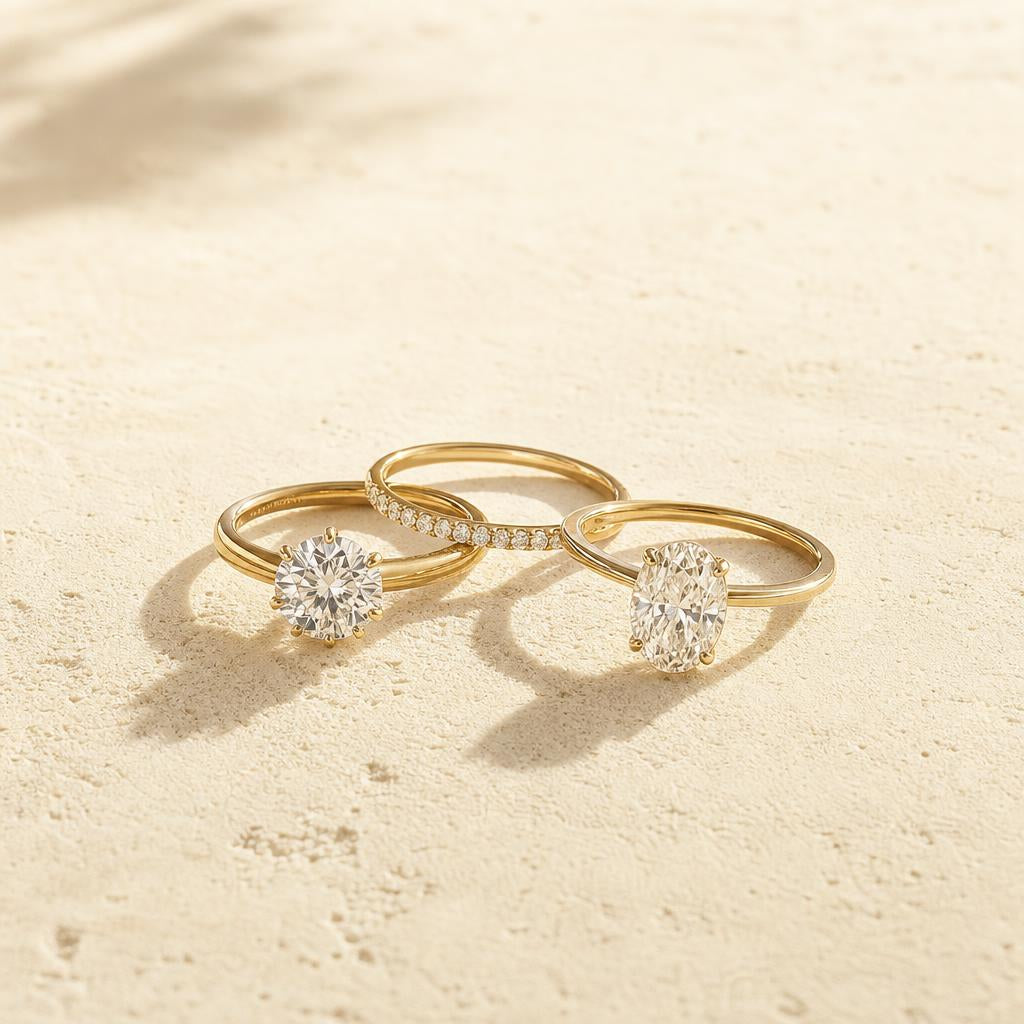
Jewelry in the Heat: What Holds Up in Summer, What Tarnishes, and What to Leave at Home
Every summer, the same question surfaces: which rings are actually safe to wear through the heat, the salt air, and the pool — and which ones are quietly being destroyed? The answer matters more than most jewellery guides let on.
Summer is unusually hard on jewellery. Not because heat alone damages most metals, but because heat arrives in combination with sunscreen, chlorinated pool water, salt water, humidity, and sweat — and that combination accelerates reactions that bench testing rarely replicates. The piece that looked fine after your morning swim develops a dull film by dinner. The ring that made it through a week in Europe comes back with a faint discolouration across the band. Understanding why that happens is the first step to making better choices before you pack.


Why summer is unusually hard on jewellery
The enemy isn't heat by itself — it's what comes with heat. On a summer day, a ring on your hand comes into contact with several substances simultaneously: sunscreen chemicals (often containing avobenzone and oxybenzone), chlorine from pool water, salt and magnesium from seawater, sweat acids from your skin, and humidity that keeps the surface perpetually damp. Each of these accelerates chemical reactions at the metal surface. Thin gold plating oxidises faster. Sterling silver tarnishes faster. Base metals underneath thin coatings begin to migrate to the surface.
The compound effect means that one summer holiday can age a ring by the equivalent of six to twelve months of normal daily wear. That's not an excuse to stop wearing jewellery in summer — it's a reason to think more clearly about which pieces you take, and which ones you don't. If you've ever wondered which specific types of jewellery actually survive a beach or pool holiday, the short answer is that metal choice matters more than stone choice.
The metals, ranked by how well they hold up
Rhodium-plated sterling silver
This is the strongest performing finish for summer jewellery. Rhodium is a platinum-group metal with exceptionally high corrosion resistance — it holds up in chlorine, salt water, and humid conditions better than gold plating at the same thickness. Sterling silver (925) is a chemically stable base, and the rhodium coating adds an additional barrier between the silver and everything summer throws at it. A properly plated rhodium-over-sterling ring will maintain its finish through normal pool and beach exposure for considerably longer than a gold-plated alternative.
This is why all Gemiros rings are built on a 925 sterling silver base with rhodium plating — it isn't just a cost decision, it's a durability one. The same stone, in the same setting, on a rhodium-plated band will look better after three weeks of travel than the same design on thin gold plating over a base metal core.
Worth knowing: "Sterling silver" and "rhodium-plated sterling silver" are not the same thing in practice. Plain sterling silver (without a coating) tarnishes visibly when exposed to salt water or sustained humidity. Rhodium plating is what prevents this. If you're buying a ring specifically for summer wear, confirm it's rhodium-plated — don't assume. For a deeper breakdown of what gold vermeil, sterling silver, and gold-plated actually mean for your ring, including how each performs over time, that guide covers it in full.
Gold vermeil
Gold vermeil is a thicker gold deposit over sterling silver — by US standard, at least 2.5 microns of gold over a minimum 925 silver base. This performs better than thin gold plating and better than plain sterling silver, but it remains vulnerable to extended pool and beach exposure. A vermeil ring worn daily through a two-week beach holiday will show wear at the high-contact areas — inner band, prong tips, any engraved edges — faster than a rhodium-plated equivalent. It's not the worst choice for summer, but it's not the best one either.
Thin gold plating over base metal
This is where most affordable fashion jewellery falls — and this is what fails most visibly in summer. A thin layer of gold, often 0.5 to 1 micron, sits over brass or a copper alloy. Chlorine strips the plating efficiently. Salt water accelerates corrosion at the exposed base metal. Sweat and sunscreen residue do the rest. The tell-tale signs are a pinkish or greenish tinge on the skin beneath the ring, and a dull, patchy appearance to the band where the gold layer has worn through. Once this happens, the ring cannot be recovered without replating.
Solid gold
14k and 18k solid gold holds up in summer conditions better than any plated alternative — it doesn't tarnish, and it isn't chemically attacked by chlorine or salt water at normal exposure levels. The limitation isn't physical — it's practical. Solid gold is valuable. A solid gold ring at the beach represents financial risk and, for most people, a level of low-grade anxiety that spoils the point of the holiday. Even if it survives perfectly, the worry that it might not is often enough reason to leave it behind. This is exactly the logic behind the travel ring concept — a ring that performs beautifully without any of that anxiety.
✦ Quick test: If your ring leaves a green or black mark on your skin after pool exposure, it's a base metal issue — the plating has compromised and copper or brass underneath is oxidising. A rhodium-plated sterling silver ring does not produce this reaction.
What summer does to different stones
Most stones people commonly wear in rings — diamonds, moissanite, cubic zirconia — are not harmed by summer conditions. These are hard, chemically stable crystalline materials. Heat, sunscreen, chlorine, and salt water do not damage them physically. The risk with real diamonds in summer isn't physical damage to the stone — it's loss, or the ring coming off unexpectedly in water, or the setting being gradually weakened by repeated exposure.
Other stones are considerably more vulnerable. Pearls are organic and porous — chlorine bleaches them, salt water damages the nacre surface, and sunscreen creates a chemical film that's difficult to remove without abrasion. Opals are notoriously sensitive to temperature change and can crack under sustained heat. Turquoise, malachite, and other porous or semi-porous stones absorb chemicals from sunscreen and sweat, permanently altering their colour and surface. If your everyday ring features any of these, it should be the first thing to come off before a swim — and probably before you apply sunscreen, too.
Simulated diamonds — whether moissanite or lab diamonds — are both chemically stable and practically worry-free. The value consideration that makes real diamonds anxious choices in summer simply doesn't apply. Wearing a moissanite ring into the sea feels different from wearing a mined diamond ring into the sea — one generates no anxiety whatsoever, which is precisely the point. If you're new to simulated stones and want to understand what they actually are, this guide covers the basics clearly.

The Soleil Ring
A round-cut simulated diamond set in a precision 6-prong setting on rhodium-plated sterling silver. Clean, well-proportioned, and built to hold its finish through extended summer wear. One of the most reliable everyday rings in the collection — the kind of ring that goes on in the morning and you forget to think about for the rest of the day.
Shop The Soleil →What to actually leave at home
The decision about what to leave behind isn't about what the jewellery can physically survive — it's about what you can emotionally afford to lose or damage. A good working rule: if replacing or repairing it would cost more than you're comfortable with, leave it at home.
Specific pieces that belong somewhere secure for summer trips:
- Your engagement ring or wedding band, if it features a mined diamond or significant coloured stone. The risk of losing it in the surf, or having the setting slowly weakened by repeated pool exposure, is simply not worth three weeks of wearing it to the beach. A travel ring worn in its place is the smarter solution.
- Heirloom pieces — anything irreplaceable by virtue of sentimental value, family history, or monetary significance.
- Rings with pearls, opals, or turquoise — summer conditions damage these materials in ways that cannot be undone. These are not recoverable by cleaning.
- Very fine chain bracelets and necklaces — summer activity, particularly water sports, increases the likelihood of snagging and snapping, especially on thinner chains below 1mm.
- Thin gold-plated rings over base metal — if you know the plating is thin, summer is the season that will prove it. Better to retire it now than to have it come back from holiday looking irreparably worn.
The underlying principle is simple: summer is higher-stakes for jewellery than most other seasons. Higher activity levels, more water, more heat, more chemical exposure. The pieces you wear should be ones where the downside scenario — loss, tarnishing, damage — is manageable rather than devastating. For a broader holiday packing framework that covers all jewellery types, the travel jewellery capsule guide is worth reading before you pack.
Building a summer jewellery edit
The smart approach isn't to wear nothing in summer — it's to make a deliberate, small edit of pieces that are genuinely built for the conditions. A summer ring wardrobe for most women looks something like this:
- One or two simulated diamond rings in rhodium-plated sterling silver — these are the workhorses. They look the part, hold their finish, and carry no emotional risk if something goes wrong.
- One warm-toned piece for evenings — something that suits the gold-toned look without representing a significant financial loss if it doesn't make it home.
- Stud earrings, not drops — summer activity makes longer earrings a practical hazard. A pair of moissanite studs goes everywhere and requires no thought.
If you enjoy ring stacking, summer is actually an ideal season to experiment — simulated diamond bands layer well, hold their finish, and cost a fraction of what a real diamond stack would. The risk-to-reward ratio of stacking in summer is genuinely hard to beat.
This approach lets you stay dressed and considered without the low-grade anxiety that comes from wearing genuinely valuable pieces in conditions that work against them. Summer jewellery should be joyful, not stressful — and the right ring makes all the difference.

The Aura Ring
A radiant-cut simulated diamond centre with an architectural side halo — more presence than a solitaire, built on the same rhodium-plated sterling silver base. The kind of ring that reads as significant without carrying any of the summer anxiety that comes with wearing a mined diamond to the pool. Wear it, enjoy it, and leave the worry at home where it belongs.
Shop The Aura →Practical habits for keeping summer jewellery in good condition
Even with the right pieces, how you handle them matters. A few habits that extend the life of any ring through a summer season:
- Remove rings before applying sunscreen, then wait until the cream has been fully absorbed before putting them back on. Sunscreen residue trapped under a setting accelerates tarnishing and can permanently stain porous stones.
- Rinse with clean fresh water after pool exposure. Chlorine is the most aggressive chemical your ring encounters in a normal summer — removing it promptly reduces the cumulative damage significantly.
- Keep rings in a small zip-lock bag or ring roll when not wearing them. Humidity in coastal environments is higher than most people account for, and jewellery left on bathroom counters near the sea absorbs it overnight.
- Check prongs at the end of a trip. Extended activity can work stones slightly loose over time. A simple visual check — does the stone move at all when you press it? — costs nothing and catches problems early.
- Clean rings gently with warm water and a soft toothbrush after returning from holiday. This removes accumulated sunscreen, salt, and mineral deposits before they become harder to shift. For a more thorough post-holiday clean, this guide to cleaning moissanite and simulated diamond rings covers the safest methods in detail.
Quick Takeaways
- Summer's real enemy is the combination of heat, sunscreen, chlorine, and salt water — not any one of them alone
- Rhodium-plated sterling silver outperforms gold plating and gold vermeil in pool and beach conditions
- Simulated diamonds are chemically stable — neither the stone nor the setting is harmed by standard summer exposure
- Pearls, opals, and turquoise are not summer-safe — chlorine and salt water cause irreversible damage to these materials
- Real diamonds are physically fine, but the anxiety of losing them in summer conditions outweighs the benefit of wearing them
- A small, deliberate summer jewellery edit is more enjoyable — and more practical — than trying to wear everything and worrying about all of it
Frequently asked questions
Can I wear a simulated diamond ring in the pool?
Yes. The simulated diamond itself — whether moissanite or cubic zirconia — is not damaged by chlorine or pool water. The main consideration is the metal setting. Rhodium-plated sterling silver holds up well in pool conditions. Rinse the ring with fresh water after swimming to remove chlorine residue, and it should maintain its appearance through regular use.
What does chlorine actually do to ring plating?
Chlorine is an oxidising agent. On thin gold plating over base metal, it accelerates corrosion of the base metal underneath, which can cause the plating to lift or flake and the base metal to bleed through as a discolouration. On rhodium plating, chlorine has significantly less effect — rhodium is more chemically resistant than gold at comparable thicknesses. Extended exposure will eventually affect any surface finish, but rhodium-plated sterling silver is considerably more durable in pool conditions than gold plating over base metal. For more on how to care for and maintain your ring's finish, that guide covers the full picture.
Should I take my engagement ring off at the beach?
If your engagement ring features a mined diamond or significant coloured stone, yes — take it off and leave it somewhere secure. The risk of losing it in the surf outweighs any benefit of wearing it. If you're wearing a simulated diamond travel ring or a simulated diamond band as your beach ring, that's exactly what it's designed for. Wear it, enjoy it, and stop thinking about it.
Does heat make rings expand or change shape?
Your fingers expand in heat — your ring does not. Fingers swell noticeably on hot days, which can make a ring feel tighter than it does at room temperature. This is the main physical discomfort of wearing rings in summer, and it's worth factoring into your sizing if you plan to wear jewellery heavily in warm climates. The ring's metal band itself does not meaningfully expand or deform from ambient summer temperatures.
Can I wear my ring in the sea?
For rhodium-plated sterling silver with a simulated diamond: yes, occasional sea swimming is fine. Rinse with fresh water afterward to remove salt residue. The greater risk in the sea is physical — cold water causes fingers to contract, which can make rings slip off more easily than in warmer conditions. If you're going into the sea, consider whether your ring fits snugly enough to stay on, and take it off if there's any doubt. For a full guide on how to check and measure your ring fit accurately, that covers the methods that actually work.
Summer jewellery is less about sacrifice and more about making a smarter edit. The rings that make it to the beach shouldn't be ones you'll miss if something goes wrong — they should be the ones you chose specifically because you won't have to think about them. That's the version of summer sparkle that's actually worth wearing.


