

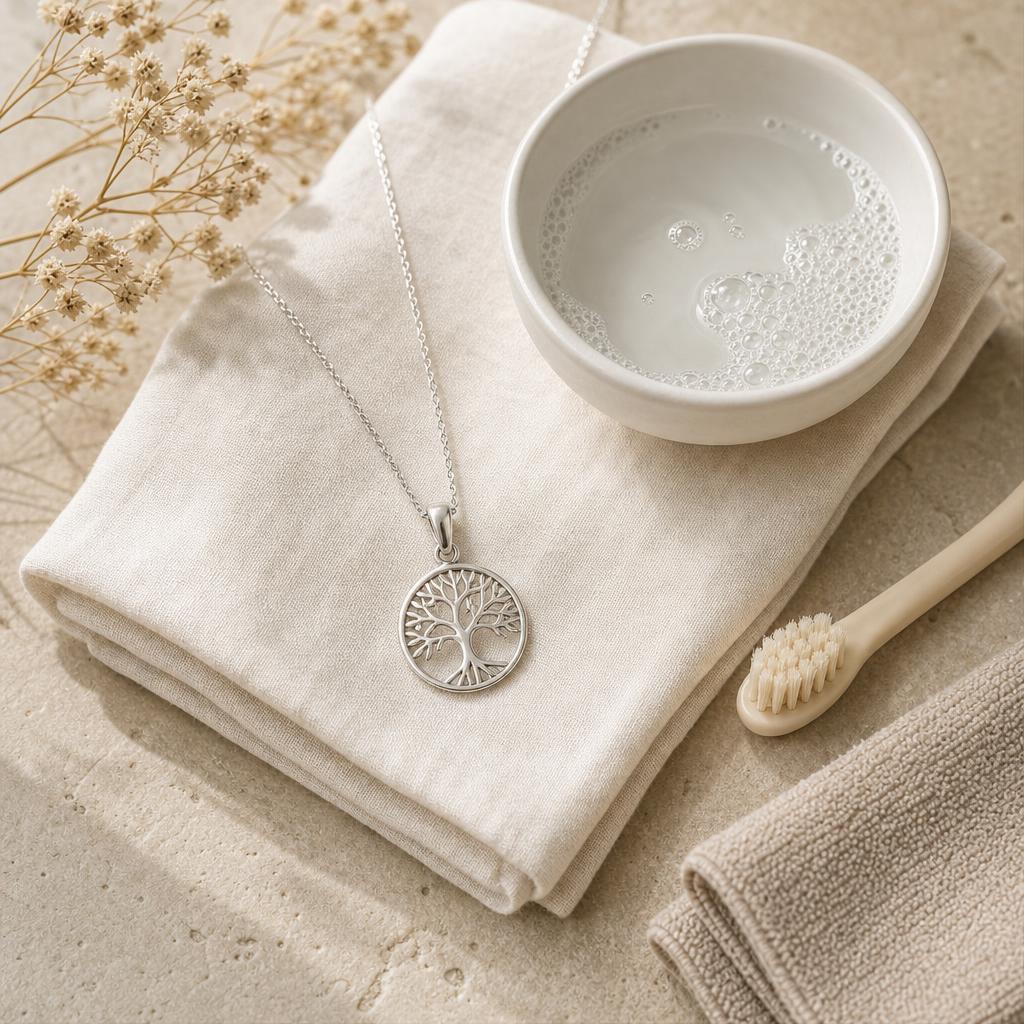
How to Clean Silver Necklace Pendants Without Damaging the Setting
A pendant is the one piece of jewelry that spends all day pressed against your skin, collecting lotion, sunscreen, hair product and the ordinary oils of a normal day. By evening, the stone has gone slightly cloudy and the chain has lost its shine. Nothing is damaged. It is simply dirty, and the fix takes about five minutes and a bowl of warm water.
If you have ever wondered how to clean a pendant necklace without loosening a stone or dulling the finish, the answer is gentler than most of the internet suggests. First, a look at the settings that decide how you clean.


What You Are Actually Cleaning
Most pendants that look tired are not tarnished. They are coated. Body oil, moisturizer and hairspray form a thin film over the back of the stone, and the back of the stone is where light enters. Block that, and even a brilliant stone reads flat and gray.
That is good news, because a film comes off with soap. Tarnish, the darkening that sterling silver develops over time, is a separate chemical process and a separate fix, and we will get to it below. For now, the useful question is where the film collects: in the gaps between prongs, under the stone, along the inside of a halo, and in the links of the chain where it bends.
How to Clean Silver Necklace Chains and Pendants at Home
This is the method jewelers use for routine care. It suits 925 sterling silver with rhodium or 18k gold plating, which is what every Gemiros necklace is made from, and it is safe for moissanite and simulated diamonds.
- Mix the bath. A bowl of warm (not hot) water with a few drops of mild dish soap. Hot water is unnecessary and can stress adhesives and finishes.
- Soak for about ten minutes. This loosens the film so you are not scrubbing it off.
- Brush gently. A soft baby toothbrush, used lightly, reaches behind the stone and around the setting. Brush the way you would brush a watercolor, not a grill.
- Rinse in a bowl, not under the faucet. Rinsing over an open drain is how pendants disappear. Fill a second bowl with clean warm water and swish.
- Pat dry with a lint-free cloth. A microfiber cloth is ideal. Leave the pendant out for a few minutes so no moisture sits in the setting.
✦ Pro tip: Run the toothbrush bristles toward the stone from the side, not straight down onto it. Pressing down on a prong-set stone is the one real way to nudge a setting. Sideways strokes clean the gaps without any load on the metal.
That is the full routine to clean a sterling silver necklace at home. Done every few weeks, it keeps a pendant bright without ever needing anything stronger.
Setting by Setting: Where the Grime Hides
The same soap-and-soft-brush method works on every pendant, but the places you concentrate on change with the setting. If prongs, bezels and halos still blur together, our plain-language guide to necklace anatomy names each part. Here is how the care differs.
Prong settings
Prongs leave the most open space around the stone, which is why a prong-set pendant gets the most light and why it gathers the most grime underneath. Brush from the side and look for the cloudy ring around the base of the stone. When that clears, the stone returns to full sparkle.

The Ophelia Necklace
A 5.5-carat oval-cut simulated diamond in a clean four-prong setting. With a stone this size, the underside collects the most film, so give the back extra attention.
Shop Ophelia Necklace →Bezel settings
A bezel wraps a thin rim of metal around the stone, so there are no prongs to snag a cloth and very little gap for dirt. It is the lowest-maintenance setting there is. A soak and a quick wipe is usually all it needs. The Aria in the grid above is a bezel, and so are the two small stones along the chain of the North Star.

The North Star Moissanite Necklace
A radiant moissanite at the center of a starburst pendant, with two bezel-set stones along the chain. The points of the star are where lint hides, so use the brush tip there.
Shop North Star Necklace →Halo settings
A halo adds a ring of small stones around the center, which means more surface, more tiny gaps and more places for film to settle. Give a halo pendant a slightly longer soak, then go around the ring with the brush in small, light passes. If you are deciding between styles partly on upkeep, our guide to halo pendant necklaces covers what the setting does for the look as well.

The Belle Pendant Necklace
A 0.8-carat round-cut simulated diamond surrounded by a full halo of radiant stones. The ring between center stone and halo is the spot to work with the brush.
Shop Belle Pendant Necklace →What Not to Use on a Pendant
Searching for a cleaning method turns up a long list of kitchen-cabinet hacks. Some are fine, some do nothing, and a few can damage a plated piece or a setting. Here is the sorting.
| Method | Verdict | Why |
|---|---|---|
| Warm water and mild dish soap | Use it | Lifts oils and film without touching the metal or the stone. A few drops of a dye-free soap such as Dawn is fine. |
| Soft baby toothbrush | Use it | Reaches behind the stone with no abrasion. |
| Rubbing alcohol on a cotton swab | Optional | Spot-lifts stubborn residue on a stone. It does nothing for tarnish and is rarely needed. |
| Baking soda and aluminum foil | Skip on plated pieces | The reaction is aggressive and designed for solid silver, not a rhodium or gold finish. |
| Toothpaste | Skip | It is a mild abrasive. Over repeated use it wears away plating and leaves micro-scratches on the metal. |
| Ultrasonic or steam cleaners | Skip | Vibration and heat can loosen stones in small settings. |
| Bleach, chlorine, ammonia | Never | These attack the metal and the finish, and the damage cannot be reversed. |
| Polishing cloth with rouge | Skip on plated pieces | It removes a thin layer of metal on every pass. That is what plating is made of. |
The pattern is simple: if it works by removing something from the surface, it is working on your finish. Warm water and soap remove only the film, which is the one thing you want gone.
Dull, Dirty or Tarnished?
These look similar and call for different responses. A pendant that has simply gone cloudy is dirty and comes clean with the soak above. A silver chain that has gone gray or yellowish in the creases is showing early tarnish, a natural reaction between silver and the air that every sterling piece goes through at its own pace. Our honest answer to whether sterling silver tarnishes explains the process and how plating changes the timeline.
The practical takeaway: wiping a pendant with a soft cloth after each wear handles most of what you would otherwise have to clean. A rinse every few weeks handles the rest.
Dry It, Store It, and Build the Habit
Cleaning is the smaller half of necklace care. The larger half is what the pendant meets between cleanings. Put it on after lotion, perfume and hairspray, not before. Take it off for workouts, and for the pool, where chlorine is the one thing on the "never" list above. Our guide to showering with a necklace on goes through what each metal and plating tolerates.
Store the necklace dry, clasp closed, in a soft pouch or a lined box compartment of its own. A chain left loose in a pile is a chain that knots. The same soap-and-soft-brush routine also works on studs and hoops, and our guide to cleaning earrings covers the earring-specific details.
Worth knowing: Every Gemiros necklace is 925 sterling silver with rhodium or 18k gold plating, and it carries a one-year warranty. Gentle cleaning is how you keep that finish looking the way it did on day one.
Quick Takeaways
- Most dull pendants are coated with body oil and lotion, not damaged. Warm water, mild dish soap and a soft baby toothbrush remove it.
- Soak about ten minutes, brush from the side, rinse in a bowl, then pat dry with a lint-free cloth.
- Prongs and halos hide the most film. Bezels need the least upkeep.
- Skip toothpaste, ultrasonic cleaners, bleach, and foil-and-baking-soda on plated pieces.
- Wipe after each wear, and put the necklace on last when you get dressed.
Questions Women Ask About Cleaning a Pendant
Can I use Dawn dish soap to clean my jewelry?
Yes. A few drops of a mild, dye-free dish soap in warm water is the standard jeweler's method for silver, moissanite and simulated diamonds. It lifts oils without abrading the finish. It will not remove true tarnish, only film.
What should you not clean jewelry with?
Skip bleach, chlorine, ammonia, toothpaste, abrasive polishing cloths, and ultrasonic or steam cleaners on a plated or small-set pendant. Each either strips the finish or puts stress on the setting.
Can I use rubbing alcohol to clean my necklace?
Diluted rubbing alcohol on a cotton swab can lift stubborn residue from a stone. It does nothing for tarnish, and soap and water handle most grime without it.
How do I clean my silver pendant at home?
Soak it for about ten minutes in warm water with a few drops of mild dish soap. Brush gently with a soft baby toothbrush, rinse in a bowl of clean water, and pat dry with a lint-free cloth.
Will Dawn dish soap remove tarnish from silver?
No. Soap removes oils and film. Tarnish is a chemical change on the surface of the metal. On plated sterling, the best approach is wiping after each wear so it builds slowly.
How often should I clean a pendant I wear every day?
A quick wipe after each wear and a full soak every two to four weeks is plenty. Wear it often and the stone will tell you: when it starts looking cloudy, it is time.
A pendant that sparkles is a pendant that has been looked after for five minutes, not rescued with a drastic fix. Warm water, a soft brush and a dry cloth are all the maintenance a well-made piece asks for. Everything else is optional, and some of it is the reason a ring or necklace stops looking new.


