

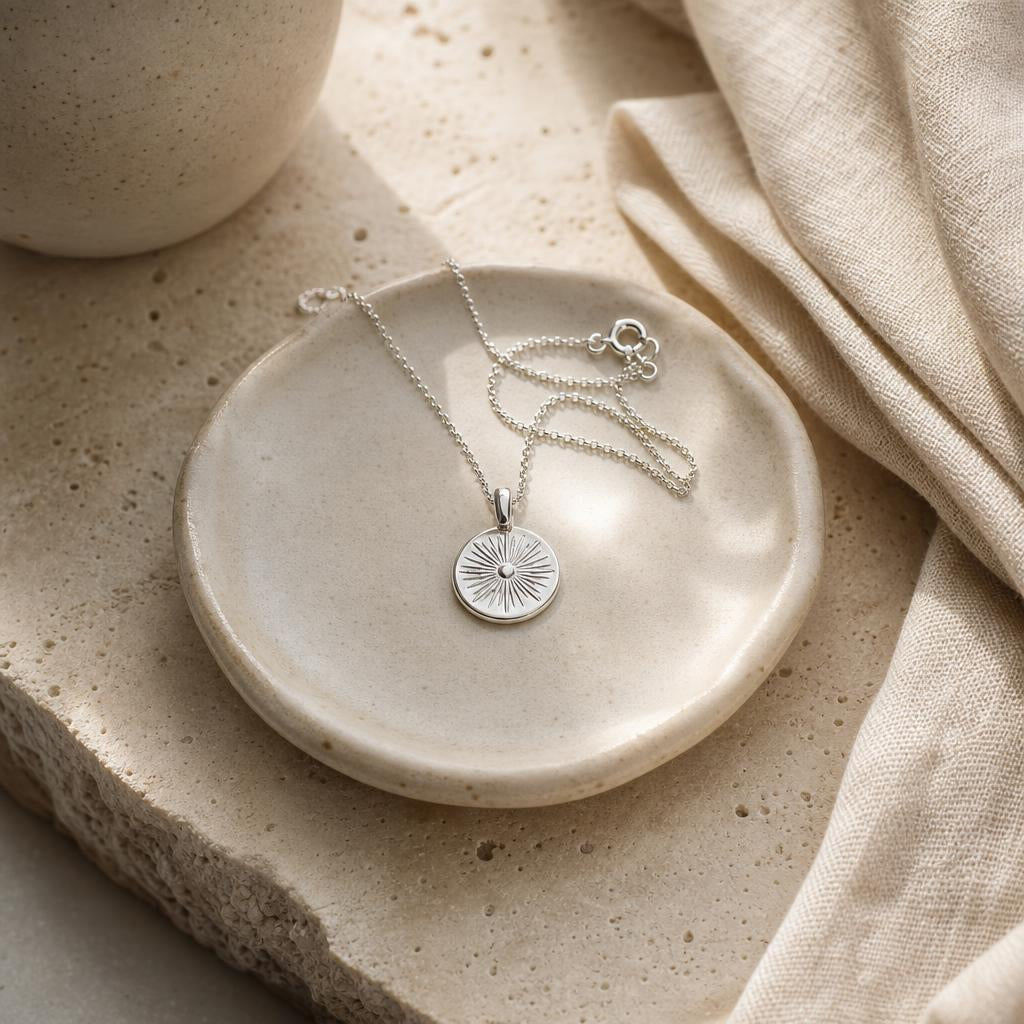
Can You Shower With a Necklace On? What to Do by Metal, Plating and Stone
You put a necklace on because it makes the outfit, and then it stays on through the shower, the gym, the nap and the pool, because taking it off is one more thing to remember. Most of the advice online is either "never" or "it's fine." Neither answer is very useful. What actually matters is what your necklace is made of and what it's being exposed to.
Here is the version that respects both your time and your jewelry: a clear rule for every situation, sorted by material, so you can wear your pieces hard and still have them look new a year from now.


Can You Shower With a Necklace On? The Answer Depends on the Metal
The short version: water alone rarely ruins a necklace. The combination of hot water, soap, shampoo and hard-water minerals, repeated daily, is what dulls a finish over time. Here is how the common materials behave.
| Material | In the shower | In the pool or ocean |
|---|---|---|
| Solid gold (14k and up) | Fine occasionally; soap film builds up in the links | Avoid chlorine, and know that chains slip off easily in water |
| 925 sterling silver | Off is better; soap and steam speed up tarnish | Off. Chlorine and salt are the fastest way to dull it |
| Rhodium or gold plating over silver | Off is better; the plating is a thin finish that daily soap wears down faster | Off |
| Stainless steel or titanium | Built for it | Generally fine, rinse afterward |
| Pearls and soft gemstones | Off, always; soap and moisture damage them | Off, always |
| Moissanite | The stone itself is unaffected by water; the metal and setting around it decide | The stone is fine; protect the metal |
That last row is where a Gemiros necklace sits. Moissanite is one of the hardest gemstones there is, so the stone never needs protecting from water. It is the 925 sterling silver setting and its finish that benefit from a little routine, and that routine takes about ten seconds.
Can You Shower With a Sterling Silver Necklace? The Plating Question
Sterling silver is a real precious metal, 92.5% silver, and it stays beautiful for years when you give it basic habits. The 7.5% that isn't silver, usually copper, is what reacts with moisture, sulfur and chemicals to create tarnish. Steam and soap accelerate that reaction. If you want the full picture of how the metal behaves over time, we broke down what 925 sterling silver tarnishing actually looks like, and the takeaway is reassuring: it is cosmetic, slow, and reversible with a soft cloth.
Gold-tone pieces work slightly differently. The gold color is a plated finish over the sterling silver base, and plating is a thin layer by design. Daily soap and hot water wear thin layers down faster than air does, which is why "off in the shower" is the single best habit for gold-tone jewelry. If you're weighing finishes, our guide to how gold vermeil, plated and solid gold differ for daily wear goes deeper on what each one can take.
Worth knowing: The neck is the hardest contact point on any necklace. Sweat, lotion and skin oils collect at the clasp and the first few inches of chain, so that area dulls first. Wiping it down is more useful than fussing over the pendant.
What Actually Happens in the Shower
It is worth knowing the mechanism, because it tells you which shortcuts are safe.
- Soap film. Body wash and shampoo leave a residue that sits in the crevices of a chain and behind a pendant. It dulls the shine and holds moisture against the metal.
- Hard water minerals. If your tap water is hard, minerals dry onto the surface and leave a cloudy film, especially on polished silver.
- Heat and steam. Warm, humid air speeds up tarnishing on silver. A bathroom is one of the worst places to leave jewelry sitting out, too.
- Friction and snagging. Wet hair wraps around a chain, and lathering pulls on it. A fine chain under tension is how clasps and links get stressed.
None of that is dramatic in a single shower. It is the cumulative effect of doing it every day for months that shows up as a dull, slightly gray necklace you swear you kept nice.
Sleeping, Swimming and the Gym
At night
The concern here is mechanical, not chemical. A fine chain twists around itself overnight, catches on bedding and pulls against the clasp when you turn over. A sturdier chain with a secure pendant is a better candidate for wearing to bed than a delicate one. If you wake up with a knot, that is your cue to take it off for sleep. Our guide to layering necklaces without tangling covers the tangle-proofing habits that make the difference.
In the pool, hot tub and ocean
This is the clearest "off" on the list. Chlorine and salt water are harsh on silver and on any plated finish, and a wet chain slips off a neck without a sound. Take it off before you get in, and rinse and dry it if you forget.
At the gym
Sweat is mildly acidic and salty, and it sits against the skin exactly where the clasp lives. A gentle workout is fine. After a hard session, wipe the chain with a soft cloth before it dries onto the metal.

The Aria Moissanite Necklace
A round brilliant moissanite solitaire in a bezel setting, a low-profile design that is easy to wipe clean and comfortable against the collarbone all day.
Shop The Aria Moissanite Necklace →
The Clover Moissanite Necklace
A dainty four-leaf clover pendant set with moissanite. Light enough to forget you're wearing, which is exactly why it helps to have a place to put it every night.
Shop The Clover Moissanite Necklace →
The Meridian Moissanite Necklace
A marquise-cut moissanite solitaire that catches light from every angle, and the piece you'll want to keep polished for dinners and dressed-up days.
Shop The Meridian Moissanite Necklace →Last On, First Off: The Routine That Protects Everything
You don't need a complicated system. You need an order of operations.
- Put it on last. Perfume, hair spray, lotion and sunscreen all leave film on metal. Let them dry first, then clasp the necklace.
- Take it off first. Before the shower, the pool, the workout or the bed, it comes off before anything else does.
- Wipe it once. A soft, dry cloth across the chain and pendant removes the oils that turn into dullness.
- Store it flat or hanging. A small dish by the sink or a hook keeps it from tangling and from sitting in bathroom steam.
✦ Pro tip: Keep a small dish next to where you brush your teeth. A necklace only comes off consistently when taking it off takes two seconds.
If You Wore It in the Shower Anyway
It happens, and one shower is not a problem. Rinse it under clean lukewarm water to remove soap, pat it dry with a soft, lint-free cloth, and lay it flat until it is completely dry before you put it away. Skip toothbrushes and abrasive cleaners, which scratch the finish. Understanding the pieces of a pendant helps here: our plain-language guide to necklace anatomy explains the bail, the setting and the clasp, so you know exactly where residue collects.
Quick Takeaways
- Water doesn't damage moissanite. The metal and finish around it are what benefit from care.
- For silver and gold-tone necklaces, off in the shower is the single best habit.
- Always take it off for the pool, hot tub and ocean.
- Sleep in sturdier chains only; fine chains tangle and stress the clasp.
- Last on, first off, and a quick wipe with a soft cloth keeps it bright.
Frequently Asked Questions
Should I take my necklace off when I sleep?
For most people, yes. It is less about the metal and more about the chain twisting and catching on bedding, which stresses the clasp. A sturdier chain is safer to leave on than a delicate one.
Can I wear 925 silver in the shower?
You can, but you shouldn't make it a habit. Occasional exposure is not a problem; daily soap and steam speed up tarnish and wear on any plated finish. Taking it off takes two seconds and keeps it bright for years.
Can I wear my sterling silver necklace every day?
Absolutely. Sterling silver is designed for daily wear. Just keep it away from water, chlorine and heavy lotions, and wipe it down when you take it off.
What type of necklace can you shower with?
Stainless steel and titanium are built for it, and solid gold tolerates it occasionally. Silver, plated pieces, pearls and soft gemstones are best kept dry.
Is it okay to wear a necklace 24/7?
It isn't ideal for any necklace, since constant wear means constant exposure to soap, sweat and friction. Rotating pieces and giving your necklace a few hours off each day makes it last noticeably longer.
A necklace is only as beautiful as the way you treat it, and treating it well is smaller than it sounds: take it off before water, put it on after products, wipe it once. It is the same quiet logic that made you choose smart over expensive in the first place. Gemiros necklaces are built on 925 sterling silver and backed by a one-year Gemiros warranty, so wear yours the way it was meant to be worn: every day, on your terms.


