

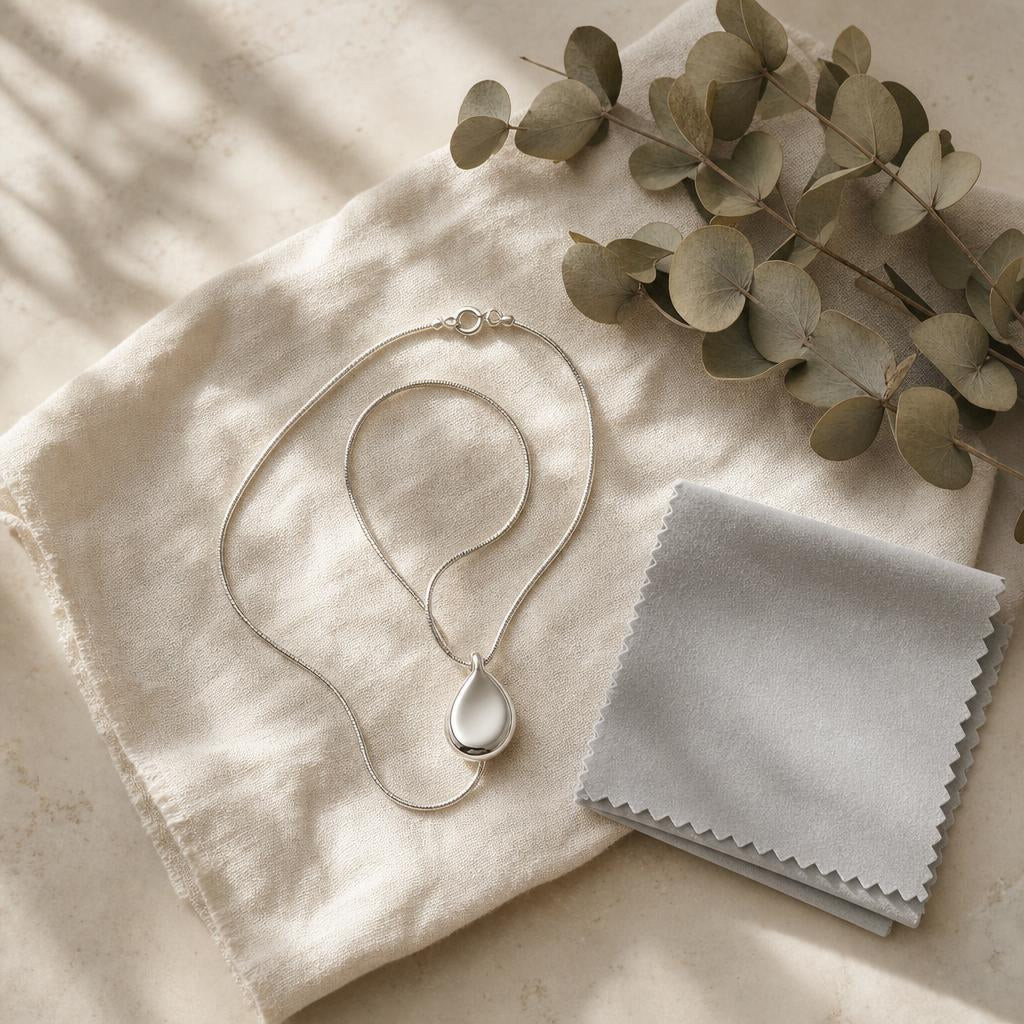
Does Sterling Silver Tarnish? The Honest Answer for Necklace Wearers
Yes, sterling silver tarnishes. That's not a warning label — it's proof you're wearing the real thing. If a piece never darkens at all, it's usually because it isn't sterling silver in the first place. Here's exactly why it happens, how fast, and what it actually means for the necklace you put on every morning.
Before we get into the chemistry, here's a look at a few silver pieces worth knowing this about — the kind you can wear daily without babying them.


Does Sterling Silver Tarnish? Here's Exactly Why
Sterling silver is 92.5% pure silver and 7.5% other metal, almost always copper. Pure silver on its own is too soft to hold a setting or survive daily wear, so that small percentage of copper is what gives a necklace enough structure to actually last. The tradeoff is that copper reacts with sulfur compounds in the air, in perfume, in the lotion on your neck, and in ordinary humidity. That reaction is tarnish: a thin, dark surface layer that sits on top of the metal, not inside it.
This is the part most people never get told plainly. Tarnish isn't damage. It's a surface-level chemical reaction that proves the copper alloy is genuinely there — the same alloy that lets sterling silver survive a decade of wear instead of bending out of shape in a year. A piece that's stamped "silver" but never darkens even slightly is usually plated over a base metal, not solid sterling underneath.
How Long Before You'll Actually Notice It?
There's no fixed clock on it. Climate, how often you wear the piece, and what it touches all move the timeline. A necklace worn daily against skin oils often tarnishes more slowly than one left sitting in a humid drawer, because the light friction from wear buffs the surface as it goes. A piece stored in a sealed pouch away from air can go months without any visible change. One kept near a bathroom, where steam and cosmetics linger in the air, will darken faster.
What Actually Speeds It Up (And What Doesn't)
A few everyday things accelerate the reaction more than people expect. Chlorinated pool water is one of the fastest — it can blacken sterling silver in a single swim. Rubber bands and latex do something similar if a piece sits against them in a jewelry box. Perfume and hairspray applied directly onto the metal, rather than letting them dry first, speed things up too. On the other side, plain tap water on its own does very little; a quick hand-wash or a rainy walk isn't the threat people assume it is.
Tarnish Isn't Rust, and It Isn't a Flaw
These two get confused constantly, so it's worth separating them. Is that rust, the way a bike chain gets rust? No — rust only happens to metals that contain iron, and sterling silver has none. What you're seeing on a darkened necklace is silver sulfide, not the structural kind of oxidation that eats away at a metal from the inside out. It stays on the surface, which is exactly why it polishes off completely rather than leaving pitting or damage behind.

The Aura Pendant Necklace
An 8-carat radiant-cut simulated diamond in a clean floating setting, built to sit flush against the skin. Sterling silver, indistinguishable from a diamond, and easy to keep looking new with the care below.
Shop The Aura Pendant Necklace →Does Sterling Silver Turn Your Skin Green?
Sometimes, and it's the same copper doing it. When copper reacts with sweat, natural skin acids, or the products already on your neck, it can leave a faint green mark. That mark is copper salts transferring onto skin, not the necklace itself changing color, and it washes off with ordinary soap and water. If a piece leaves a heavy green stain fast, that's usually a sign of a cheap base metal wearing through a thin plating — not a mark against genuine sterling silver.
Can You Shower With Sterling Silver, Sleep In It, or Swim?
✦ Pro tip: A quick rinse in clean water won't hurt sterling silver. What actually speeds up tarnish is soap residue, chlorine, and salt water sitting on the metal for hours at a time.
Sleeping in a necklace is generally fine and won't do meaningful damage on its own. Showering occasionally is low-risk too, though shampoo and body wash residue can dull the shine faster if it happens every day.
Pools and the ocean are the two situations worth actually planning around. Does ocean water do the same thing over a long swim? Yes — salt reacts aggressively with the copper in the alloy over time, and chlorine does something similar in a pool, so it's worth taking a piece off before either one rather than finding out the hard way.
Why Not Just Wear Pure Silver Instead?
Does pure silver tarnish less? Yes, noticeably — 99.9% pure silver resists discoloration far better than the sterling alloy does. But that resistance comes at a real cost: pure silver is soft enough to bend under normal pressure, warp out of round, and pick up scratches from almost anything it touches. Sterling silver's alloy is the deliberate trade that makes a necklace something you can actually live in, not something you take off before you shake someone's hand.

The Lume Moissanite Necklace
A round-cut moissanite set in a minimal 4-prong mount, designed to let the stone float against your collarbone. Sterling silver, built for the wear-it-every-day kind of woman, not the special-occasion drawer.
Shop The Lume Moissanite Necklace →How to Remove Tarnish From Sterling Silver in Under 10 Minutes
Line a bowl with aluminum foil, shiny side facing up, and lay the necklace directly on it so the metal touches the foil. Sprinkle a tablespoon of baking soda over the piece, then pour in hot water until it's fully covered. Let it sit for five minutes while it fizzes — that reaction is transferring the tarnish off your necklace and onto the foil instead. Rinse under cool water and dry completely with a soft, lint-free cloth.
For a piece that's only lightly dulled, skip the soak entirely. A dedicated silver polishing cloth, used every few weeks, is usually enough to keep the shine even and prevent tarnish from building up in the first place. Save the foil-and-baking-soda method for pieces that have gone visibly dark.
Worth knowing: Store pieces you're not wearing in an airtight bag or anti-tarnish pouch. Less air exposure means a slower reaction, full stop.
Quick Takeaways
- Tarnish is a normal chemical reaction between copper and sulfur in the air — not a defect and not a sign your necklace is cheap.
- It's cosmetic and surface-level; it polishes off completely and doesn't weaken the metal underneath.
- Chlorine and salt water speed it up fast. Plain tap water barely touches it.
- Sleeping in it is fine. Take it off for pools and the ocean if you want it to stay brighter longer.
- Baking soda, foil, and hot water clear it in about five minutes at home.
- Airtight storage between wears is the single easiest way to slow the whole process down.
Frequently Asked Questions
How long does sterling silver take to tarnish?
It varies by climate, humidity, and how often the piece is worn — anywhere from a few weeks to several months. Daily wear against skin often slows it down, since light friction buffs the surface as you go.
Can I shower or swim while wearing it?
Showering occasionally is low-risk, though soap residue can dull the shine over time. Chlorine and salt water are the two things worth removing your necklace for, since both react aggressively with the copper in the alloy.
Does it turn your skin green?
Occasionally, and it's a harmless reaction between the copper in the alloy and the oils or sweat on your skin. It washes off with soap and water and isn't a sign anything is wrong with the piece.
Is tarnish a sign my jewelry isn't real?
It's actually the opposite. A genuine piece darkens because of the copper alloy that gives it strength. A piece that never darkens at all is usually plated over a different base metal entirely.
What type of silver doesn't tarnish?
Pure silver resists it far better than sterling, but it's too soft to hold a setting for daily wear. Rhodium plating over sterling silver can also slow visible tarnish for a while, though the effect wears down over time with regular use.
Does cleaning it too often cause more harm than good?
Not with the right method. Gentle polishing cloths and the occasional baking-soda soak are both safe as often as you need them. What to avoid is abrasive scrubbing or harsh household chemicals, which can wear down the metal's surface finish over repeated use.
None of this is a reason to treat a necklace like something fragile. It's information — the kind that makes you the person in the room who already knows why her jewelry looks the way it looks, instead of the one googling it after the fact. Wipe it down, store it dry, and wear it as often as you want to.


