

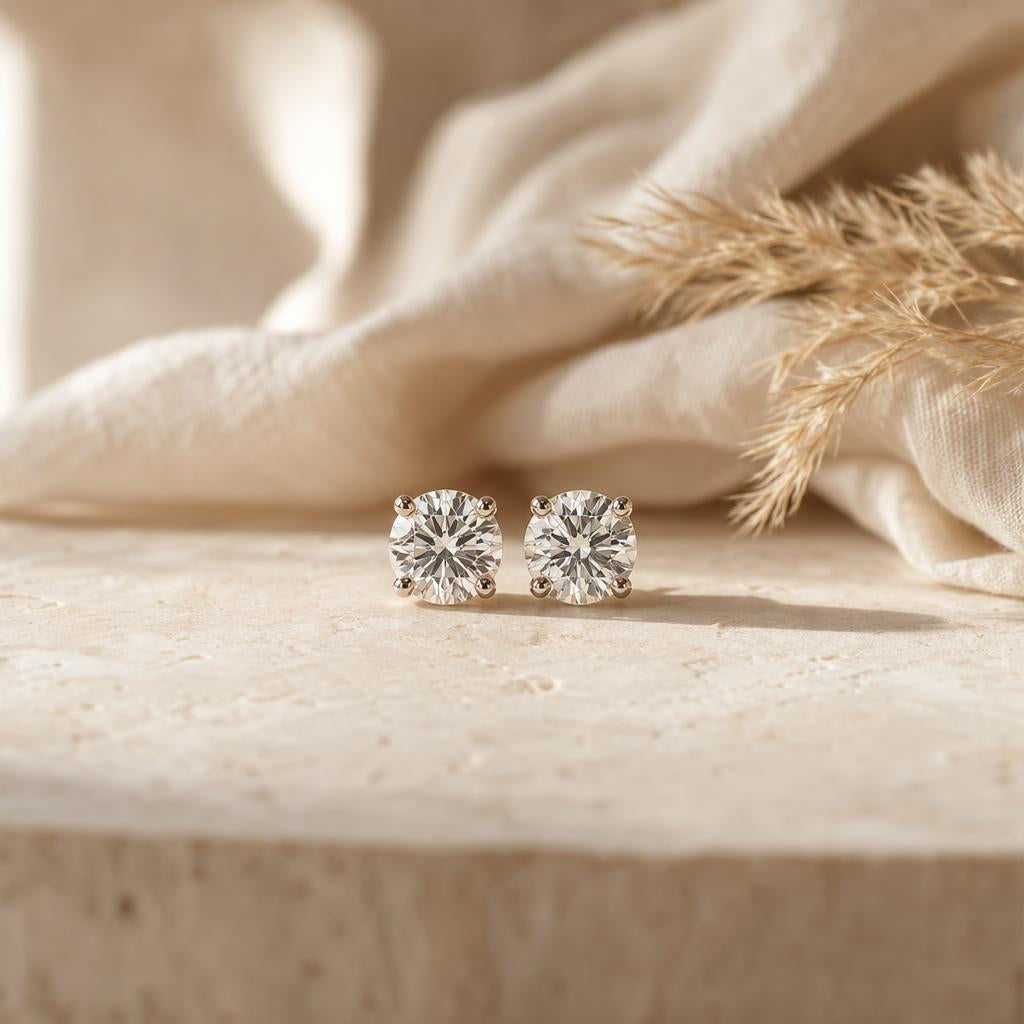
Your First Earrings After Piercing: Choosing a Pair You'll Keep Wearing
Your piercer's starter studs did their job. They got you through the healing window, and now the part you've actually been waiting for has arrived: choosing a pair that's yours. This is the moment most people either rush or overthink, and both usually end with a pair sitting in a drawer.
Here's how to do it the smart way. You'll learn how to tell your ears are truly ready, which details decide whether a pair is comfortable for years or annoying by Thursday, and which shapes earn a spot in your daily rotation. Four of our best everyday studs are below to start with.


Two Different Jobs: The Starter Pair and Your Real Pair
The jewelry your piercer put in is medical-style hardware. It has a long post to allow for swelling, a flat back that stays out of the way, and a plain design that can't snag. It's built for one purpose, which is helping a fresh piercing heal.
Your first earrings after piercing are built for a completely different purpose: looking spectacular and feeling invisible for twelve hours at a stretch. Gemiros earrings belong firmly in that second category. They're made for ears that have finished healing, and that distinction is the foundation of everything below.
Worth knowing: Your piercer's aftercare instructions always outrank any general guide, including this one. If they gave you a timeline, follow it. If your piercing is on cartilage rather than the lobe, expect a considerably longer wait.
How to Know Your Ears Are Truly Ready
Lobe piercings are commonly given six to eight weeks before the first swap, and dermatology guidance says to leave starter jewelry in for at least six weeks, even overnight. But the calendar is only half the test. Feeling fine at week three isn't the same as being healed, which is exactly why so many first swaps go wrong.
Before you change anything, check for the following:
- No tenderness when you touch or gently move the starter stud.
- No redness, warmth or swelling around either side of the hole.
- No crusting or discharge on the post or the back.
- The jewelry moves without pulling. If it feels stuck, stop and ask your piercer to take a look.
If every box is checked and your piercer agrees, you're ready. If you're unsure, a quick visit to your piercer costs nothing and settles it. Skipping that check is the single most common reason a new pair ends up feeling "wrong" when the real culprit was timing.
What Actually Matters in a First Pair
Forget trends for a minute. Five details decide whether you'll still reach for these earrings in a year.
1. The closure
The back of an earring is the part that touches your neck, your hair and your pillow, so it's the part you notice. A secure push-back or screw-back closure keeps studs from migrating or going missing, and it's worth understanding how a push-back or screw-back closure holds before you buy. Pick the one that feels reassuring to you, not the one that looks fanciest in photos.
2. The post
Thickness and length matter more than most listings admit. A post that's too short squeezes the lobe, and one that's too long swings and snags. Your starter studs give you a baseline, so if they felt comfortable at the end of healing, your new pair should feel familiar.
3. The material
This is the one detail where it pays to read carefully rather than assume. Gemiros earrings are 925 sterling silver, nickel-free, with a no-green-skin promise, and it's smart to understand whether sterling silver suits sensitive ears before you commit to any pair, ours or anyone else's. Skin that reacts to earrings usually has a specific trigger, so it also helps to know why some earrings irritate and others don't.
4. The weight
Gravity is undefeated. A heavy pair pulls on a lobe that's only just finished healing, and you'll feel it by mid-afternoon. For your first pair, choose something you can forget about. Round and halo studs at around one carat or under are the easy wins.
5. The stone
Here's the part nobody tells you: a stud is the one piece of jewelry people really do look at, up close, in conversation. Indistinguishable from a diamond isn't a nice-to-have at that distance, it's the whole point. Gemiros stones are indistinguishable from diamonds to the naked eye, and our moissanite passes diamond testers, so the sparkle you see is the sparkle everyone else sees.

The Isabella Stud Earrings
A 0.8-carat pear-shaped stone in a delicate halo, with a soft teardrop silhouette. Lightweight, nickel-free and covered by a 1-year warranty.
Shop The Isabella Stud Earrings →
The Octavia Stud Earrings
Brilliant 1.0-carat oval-cut simulated diamonds, each framed by a sparkling halo. Polished enough for a morning meeting, dressy enough for midnight toasts.
Shop The Octavia Stud Earrings →Three Mistakes That Make a First Pair Feel Wrong
Most disappointment with a new pair has nothing to do with the earrings. It comes from a handful of avoidable choices, and all three are easy to sidestep once you know to look for them.
Buying for the photo instead of the ear. A pair that looks dramatic on a model can be heavier, wider or longer than you'd choose in person. Check the carat weight and the silhouette against how you actually dress, and favor the pair you'd wear on your most ordinary Tuesday.
Treating the first swap as a test of toughness. If a post is hard to thread or the back is stiff, that is information, not a hurdle to push through. Forcing it is how a good pair gets a bad reputation. Back off, wash your hands, take a breath and try again calmly, or stop and ask your piercer.
Buying three pairs at once. It's tempting, but your ears are still adjusting and you don't yet know which post length, closure feel and weight you prefer. Buy one pair, live in it for a couple of weeks, and let that experience guide the next purchase. You'll spend more wisely and end up with a collection that genuinely fits.
Choosing a Style for How You Actually Live
The right shape is the one that fits your week. Before you fall for a silhouette, run it through a simple question: where will these spend most of their time?
| If your week looks like… | Start with | Why it works |
|---|---|---|
| Desk, video calls, commuting | Round solitaire studs | Clean, secure and quiet. Sparkle without any movement. |
| Dinners, dates, events | Halo studs | The frame adds presence and makes the stone read larger. |
| Wanting a softer, more distinctive shape | Oval or pear studs | Elongated shapes catch light differently and flatter most face shapes. |
| One pair for absolutely everything | A six-prong moissanite solitaire | Durable, bright and dressed up or down with no effort. |
Resist the urge to buy hoops first. Studs are the lowest-risk way to learn what your ears like, and once you're comfortable, the full stud, hoop or huggie lineup is a fun next step. Think of the first pair as your anchor and everything after as the collection.
The First Week With a New Pair
Even healed ears need a gentle introduction to new jewelry. Wear the new pair for a few hours the first day, check how the lobes feel, then extend the time. If anything feels tender, switch back and let things settle.
✦ Pro tip: Wash your hands before every swap and wipe the posts clean. It takes ten seconds and removes most of the reasons a switch ever goes badly.
Night-time is the other question mark. Before you leave a new pair in around the clock, it's worth reading up on whether you can sleep in your new pair, because the answer depends on the style. Smooth, low-profile studs are far more forgiving than anything with a bulky back.
Quick Takeaways
- Starter jewelry and your real pair do two different jobs. Don't swap until your ears have finished healing and your piercer agrees.
- Judge readiness by symptoms, not just the calendar: no tenderness, redness, swelling or discharge.
- Five details decide comfort: closure, post, material, weight and stone.
- Start with studs. They are the lowest-risk way to learn what your ears like.
- Ease in with short wear sessions and always start with clean hands.
Questions People Ask
How long should starter earrings stay in?
For standard lobe piercings, most piercers suggest six to eight weeks, and dermatology guidance says at least six weeks, including overnight. Cartilage piercings take far longer. Your piercer's timeline is the one to follow.
What happens if I switch earrings too early?
Changing jewelry before the piercing has healed can irritate the area and, in some cases, cause the hole to tighten or close. If a swap feels painful or stuck, stop, put the starter back if you can, and check with your piercer.
Is three weeks too soon to change earrings?
Almost always. A piercing can feel perfectly comfortable on the surface long before it has healed inside, which is why timing and symptoms both matter.
What type of earring back is best for newly pierced ears?
While a piercing is fresh, stay with the flat-back starter your piercer chose. Once you're healed, a secure push-back or screw-back is a reliable choice for everyday studs.
Your first earrings after piercing should feel like a small act of confidence, not a gamble. Wait until your ears are ready, choose the closure and weight you'll forget about, and pick a stone that looks every bit as brilliant as it feels. That's a pair you'll still be wearing years from now.


