

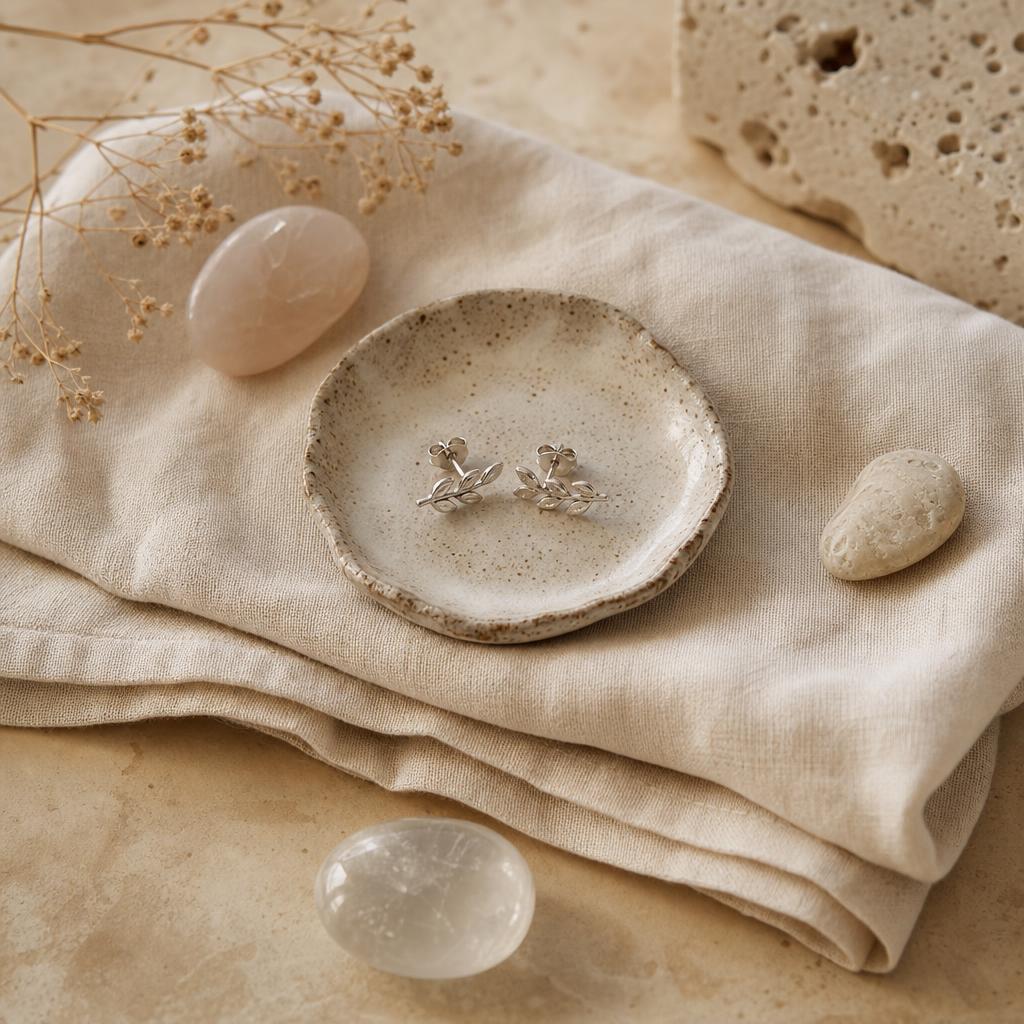
Is Sterling Silver Good for Sensitive Ears? What to Know Before You Buy
You've been burned before — literally. A pair of earrings looked perfect in the box and felt like a mistake by lunchtime: red, itchy, maybe a little swollen at the lobe. So now every new pair comes with the same silent question before it ever touches your ear: is sterling silver good for sensitive ears, or is this about to be another pair you never wear again?
The honest answer is more specific than "yes" or "no" — it depends on what's actually in the silver, and what's happening on your skin, not just the label on the listing. Here's what's worth knowing before you buy, plus a few Gemiros styles built with sensitive ears in mind.


The Short Answer
Yes — genuine 925 sterling silver is safe for the large majority of people with sensitive ears, including most healed piercings with mild reactivity. The reason comes down to composition: 925 silver is 92.5% pure silver alloyed with other metals, almost always copper, and it contains no nickel — the metal behind most jewelry allergic reactions. If your ears have reacted to silver-colored jewelry before, there's a real chance the culprit wasn't silver at all. It was whatever the silver was covering.
Worth knowing: A lot of jewelry sold as "silver" is actually a base metal — often containing nickel or brass — with a thin silver-tone coating that wears through in weeks. Once that coating goes, the metal underneath is what touches your skin, and that's usually where the irritation starts.
Why 925 Silver Works for Most Sensitive Ears
Nickel allergy is the single most common cause of earring irritation, and 925 sterling silver simply doesn't contain it. That's the whole mechanism behind why nickel free earrings tend to sit so much more comfortably than an unmarked, mystery-metal pair with no purity stamp at all. The copper in the alloy is there for structural strength — pure silver on its own is too soft to hold a prong setting — and copper reactions are far less common than nickel ones, though not impossible if your skin is reactive to it specifically.
This is also why the purity stamp matters more than the word "silver" on its own. A listing that says "silver-tone" or "silver-plated" is telling you something different than one stamped 925. If you're new to what that stamp is actually certifying, it's worth understanding what "925 sterling silver" actually means before you trust a listing's claims at face value.

The Isabella Stud Earrings
A pear-cut center stone in a halo setting, built in solid 925 sterling silver — no plating to wear through, no nickel base underneath.
Shop The Isabella →What's Actually Causing the Reaction (It's Often Not the Metal)
Before writing off silver entirely, it's worth ruling out the other usual suspects. Sterling silver does tarnish — that's a normal reaction between the copper in the alloy and the air, sweat, or lotion on your skin, not a defect. Left alone, that tarnish layer can turn slightly dark and rough, and a rough surface sitting inside a piercing is more likely to trap bacteria and cause irritation than a smooth, clean one. So the earrings themselves might be perfectly safe, and the discomfort is really a buildup problem, not an allergy at all.
Fresh piercings are the other variable. A piercing that hasn't fully healed is more reactive to almost anything, sterling silver included, simply because the skin is still an open wound. Most brands marketing hypoallergenic earrings for sensitive ears are really speaking to healed piercings with everyday sensitivity — not the first six to eight weeks after a new hole, where a genuinely inert, non-porous metal is the safer call regardless of nickel content.
How to Tell If a Pair Is Actually Safe for You
A few checks before you buy save a lot of regret after:
- Look for the 925 stamp, not just the word "silver." It's the only reliable signal that you're getting the real alloy and not a coated base metal.
- Check whether the listing specifies nickel-free. "Hypoallergenic" isn't a regulated term — anyone can print it — but "nickel-free" is a specific, checkable claim.
- Consider the setting, not just the metal. A backing that presses too tightly against the lobe can irritate skin that would otherwise tolerate the metal just fine.
- Match the metal to how healed the piercing is. Newly pierced ears deserve extra caution regardless of what any listing claims on the label.

The Leighton Stud Earrings
A round-cut halo stud in 925 sterling silver, light enough to wear daily without the lobe fatigue that heavier settings can cause.
Shop The Leighton →Sterling Silver vs. Titanium, Stainless Steel, and Gold
For most people, this isn't really a competition — sterling silver holds up fine. But if you're managing a genuine metal allergy rather than general sensitivity, it helps to see how the options actually compare.
| Metal | Contains Nickel | Best For | Tradeoff |
|---|---|---|---|
| 925 Sterling Silver | No | Healed piercings, everyday sensitivity | Tarnishes; needs occasional cleaning |
| Implant-Grade Titanium | No | Fresh piercings, severe reactions | Fewer design options, cooler-toned finish |
| Surgical Stainless Steel | Trace amounts | Everyday wear, budget pieces | Not fully nickel-free; can still react in true allergies |
| 14k+ Gold | No (in high-karat pieces) | Long-term daily wear | Lower karat gold can still contain nickel alloy |
Where sterling silver has a real edge is that it doesn't require choosing between comfort and how the piece actually looks — it takes a bright, clean-white polish that reads as more precious than stainless steel, without the higher cost of solid gold.
Caring for Sterling Silver So It Stays Comfortable
✦ Pro tip: Take earrings off before showering, swimming, or applying lotion and perfume directly to the earlobe. Most of what people mistake for an allergic reaction is actually a buildup of product residue trapped against the skin.
Store sterling silver earrings somewhere dry and airtight when you're not wearing them — a small pouch or lined box, not an open dish — and wipe them with a soft polishing cloth every few weeks. This is the same tarnish mechanism that shows up on rings; if you want the fuller explanation of why sterling silver tarnishes and simulated stones don't, it's worth a read. Keeping the surface clean and smooth is most of what keeps a pair of good earrings for sensitive ears comfortable for years instead of weeks.
If you're weighing which silhouette to buy alongside all of this, the setting shapes comfort as much as the metal does. Worth reading before you commit: stud, hoop or huggie — what each style actually means for how a piece actually sits against the ear over a full day of wear.
Quick Takeaways
- Genuine 925 sterling silver contains no nickel and is safe for most healed piercings with mild sensitivity.
- Look for the 925 stamp — "silver-tone" or unstamped pieces are often a coated base metal, not real silver.
- A lot of "reactions" are actually tarnish buildup or product residue, not a true metal allergy.
- Fresh, unhealed piercings call for extra caution regardless of metal type.
- Clean and store earrings properly and they'll stay comfortable well past the first few wears.
Frequently Asked Questions
Are sterling silver earrings okay for sensitive ears?
For most people with everyday sensitivity and healed piercings, yes. Genuine 925 sterling silver contains no nickel, which is the metal behind the majority of earring reactions. People with a diagnosed severe metal allergy, or very new piercings, are usually better served by implant-grade titanium instead.
Is sterling silver 100% nickel-free?
Genuine 925 sterling silver is 92.5% pure silver, with the remaining 7.5% almost always copper rather than nickel. A reputable listing that specifies "nickel-free" is telling you something checkable — unlike "hypoallergenic," which isn't a regulated term and can appear on almost anything.
What are the downsides of sterling silver for earrings?
The main one is tarnish: the copper in the alloy reacts with air and moisture over time, which can dull the finish or leave a rough surface if it's never cleaned. That's a maintenance issue, not a safety one — a quick polish restores the shine, and regular care prevents the buildup that can irritate skin.
Why do my ears itch when I wear sterling silver earrings?
It's often not the silver itself. The most common causes are tarnish buildup, leftover soap or lotion trapped against the earlobe, or — if the earrings aren't genuinely stamped 925 — a base metal underneath a worn silver coating. Clean the earrings, clean the piercing, and see if it resolves before assuming an allergy.
Is titanium or sterling silver better for sensitive ears?
Titanium is the more inert option and the safer choice for fresh piercings or a confirmed severe metal allergy. For everyday sensitivity on a healed piercing, sterling silver performs well for most people and offers a warmer, more traditionally "jewelry" look than titanium's cooler finish.
The most reliable answer isn't a blanket yes or no — it's checking the stamp, keeping the pair clean, and giving your ears a little grace while a new piercing finishes healing. Get those three things right, and a well-made 925 silver pair is built to be worn every day, not just the first one.


