

Cut Quality vs. Carat Size: Which One Actually Makes a Ring Look Bigger?
Somewhere along the way, carat weight became shorthand for how impressive a ring looks. It isn't. Two stones with the exact same weight can read completely differently on the hand — one dazzling, one strangely flat — and the difference has almost nothing to do with size.
The real variable is cut: the angles, symmetry, and setting that decide whether a stone actually uses the light available to it. Before we get into why, here's a spread of styles that shows the range — from a hidden halo that quietly inflates a stone's presence to a solitaire that lets a single, well-cut shape do all the work.


What "Cut" Actually Means (It Isn't the Shape)
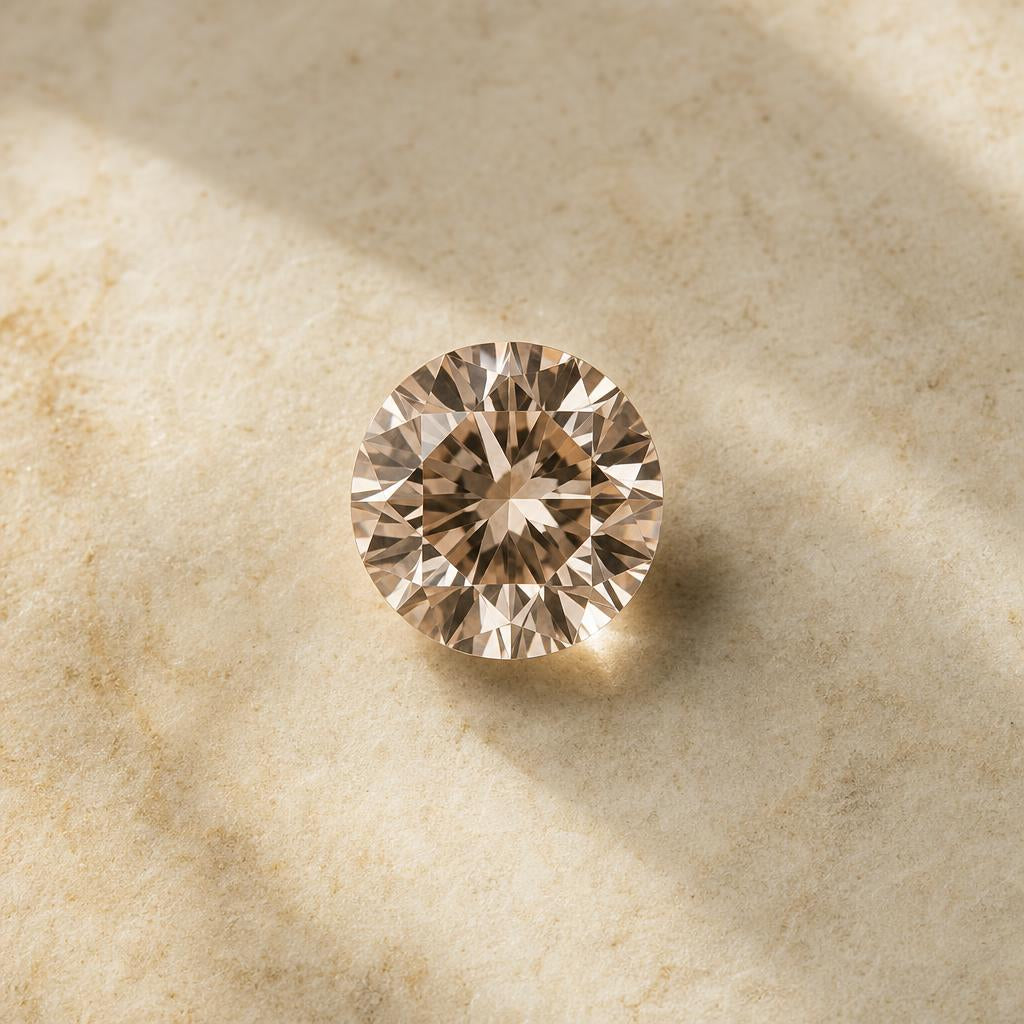
People use "cut" and "shape" interchangeably, and it's an easy mix-up. Shape is the outline — oval, round, cushion, emerald. Cut is something else entirely: the angles, proportions, symmetry, and polish that determine how light enters a stone, bounces around inside it, and exits back toward the eye. A stone can be cut into any shape and still be cut well or cut poorly. Cut is what separates a stone that looks alive from one that looks glassy, even at the exact same size.
This is where moissanite has a built-in advantage. Its refractive index is higher than a mined diamond's, which means it bends and splits light more aggressively — more fire, more of that rainbow scatter you notice across a room. Set it with precise faceting in 925 sterling silver, and it isn't approximating brilliance. It's indistinguishable from a diamond to the naked eye, and it passes diamond testers.
What Carat Actually Measures (And What It Doesn't)
Carat is a unit of weight — 200 milligrams, to be exact. That's it. It says nothing about how wide a stone looks from above, how much it sparkles, or how it will read on your hand. A heavier stone can hide its weight in depth rather than spread, sitting tall and narrow instead of wide and luminous. Two stones of an identical carat weight can differ in visible diameter by a noticeable margin, purely because of how they were proportioned.
Worth knowing: The part of a stone everyone actually sees is its face-up diameter — the width visible from above. That measurement comes from cut proportions, not from the number on the listing. A shallow, well-proportioned cut can look larger and brighter than a deeper cut of the same carat weight.
Why Setting Style Changes the Whole Equation
A halo — a ring of smaller accent stones circling the center stone — extends the sparkle outward and increases the ring's total visual footprint without touching the center stone's actual weight. A hidden halo takes this further, tucking that ring of pavé beneath the crown so it isn't obvious from a glance, but it still does the same job: it makes the center stone read larger than its listed size.

The Ophelia Ring
A 4.5-carat oval center stone set in a hidden halo, four-prong setting. The pavé ring tucked beneath the crown adds visual width without changing the center stone's weight — the kind of detail that gets mistaken for a stone that costs $15,000 or higher.
Shop The Ophelia Ring →Pavé does something similar, at a smaller scale
A pavé band — tiny stones set edge to edge along the shank — keeps the sparkle going past the center stone itself, so the whole hand catches light instead of just one point. It's a quieter effect than a halo, but it adds up: a slim pavé band under a solitaire reads as more finished, more considered, than the same center stone on a bare shank.
Metal choice plays a smaller but real role too. Rhodium plating gives a bright, cool-white reflection that bounces light back through the stone from underneath, while 18k gold and rose gold plating shift that reflection warmer. Neither is more "correct" — but the pairing between metal tone and stone changes how crisp or how warm the overall sparkle reads, which is worth considering alongside cut and setting rather than as an afterthought.
When a Smaller Carat Actually Reads Bigger
Shape matters here too. Elongated cuts — oval, cushion, marquise — spread their weight across a longer face-up area, so they tend to look larger per carat than a round stone of the same weight. A round brilliant is cut to maximize light return above almost everything else, which is part of why it's the most common shape. But an elongated shape paired with a halo setting can out-present a larger round stone that's set plainly.

The Maxima Ring
A cushion-cut center stone in a square halo setting with a pavé band. The squared-off halo frames the cushion's rounded corners, widening its presence well past what the center stone measures on its own.
Shop The Maxima Ring →The Simulated Diamond Advantage
Here's the part the jewelry store markup depends on you never asking about: a mined diamond's brilliance is capped by its own physical properties, no matter how skilled the cutter. Moissanite starts from a higher refractive index, so precise faceting compounds an advantage that's already built into the stone. A well-cut Gemiros ring isn't working around a limitation — it's starting from better raw material and cutting it with the same precision the fine jewelry industry uses to justify its prices.
Every Gemiros ring is set in 925 sterling silver with rhodium, 18k gold, or rose gold plating, and every stone is hypoallergenic and nickel-free. None of that changes based on carat weight. A smaller, well-cut stone in a considered setting will consistently out-sparkle a larger stone that was cut carelessly — on your hand, in a photo, and across a room.
This is also why chasing the biggest carat number a budget allows is often the wrong instinct. A stone that's been cut to preserve maximum weight — rather than maximum light return — can end up looking duller than a smaller stone cut with more care. The number on the listing rewards weight. Your eye rewards light. They aren't always the same ring.
How to Actually Judge a Ring's Presence
Skip the carat number as your first filter. Look instead at the face-up spread — does the stone appear to fill the space it sits in, or does it look narrow for its listed size? Check the setting: does a halo or pavé detail extend the sparkle outward, or is the center stone sitting alone on a plain band? And consider shape: an elongated cut will typically look larger than a round of the same weight, simply because of how the weight is distributed across the face-up area.
None of this is a trick or a compromise. It's just paying attention to the variables that actually determine how a ring looks, instead of defaulting to the one number that's easiest to compare on a spec sheet.
Quick Takeaways
- Cut determines how much light a stone returns — that's what reads as size and sparkle, not carat weight alone.
- Carat is a unit of weight. Face-up diameter depends on cut proportions, not the number on the listing.
- Halo and pavé settings visually extend a center stone's footprint without changing its actual carat weight.
- Elongated shapes — oval, cushion, marquise — tend to look larger per carat than a round stone of the same weight.
- Moissanite's higher refractive index means a smaller, well-cut stone can out-sparkle a larger, poorly cut one.
Frequently Asked Questions
Does a bigger carat number always look bigger on the hand?
No. Carat measures weight, not face-up width. A shallow, well-proportioned cut can look larger than a deeper cut of the same carat weight, and a halo setting can extend a stone's visual footprint further still.
Which cut catches the most light?
Round brilliant cuts are faceted specifically to maximize light return, which is part of why the shape is so common. That said, a well-cut cushion or oval in a halo setting can look just as luminous, since the setting adds sparkle the center stone alone wouldn't produce.
Is a 2-carat stone too big for everyday wear?
It depends far more on the setting than the weight. A low-profile setting holds a larger stone closer to the finger, which makes it more practical for daily wear than a taller setting at a smaller carat size.
Does cut quality matter as much for moissanite as it does for diamonds?
If anything, it matters more. Moissanite's higher refractive index rewards precise faceting with more fire and brilliance, so a well-cut moissanite stone shows off that advantage more visibly than a poorly cut one would.
Buying by carat number alone is the old rule — the one that assumes bigger automatically means better, and leaves cut and setting as an afterthought. Once you know what actually determines how a ring looks, the number on the listing stops being the whole story, and you start shopping like someone who already knows what she's looking at.


