

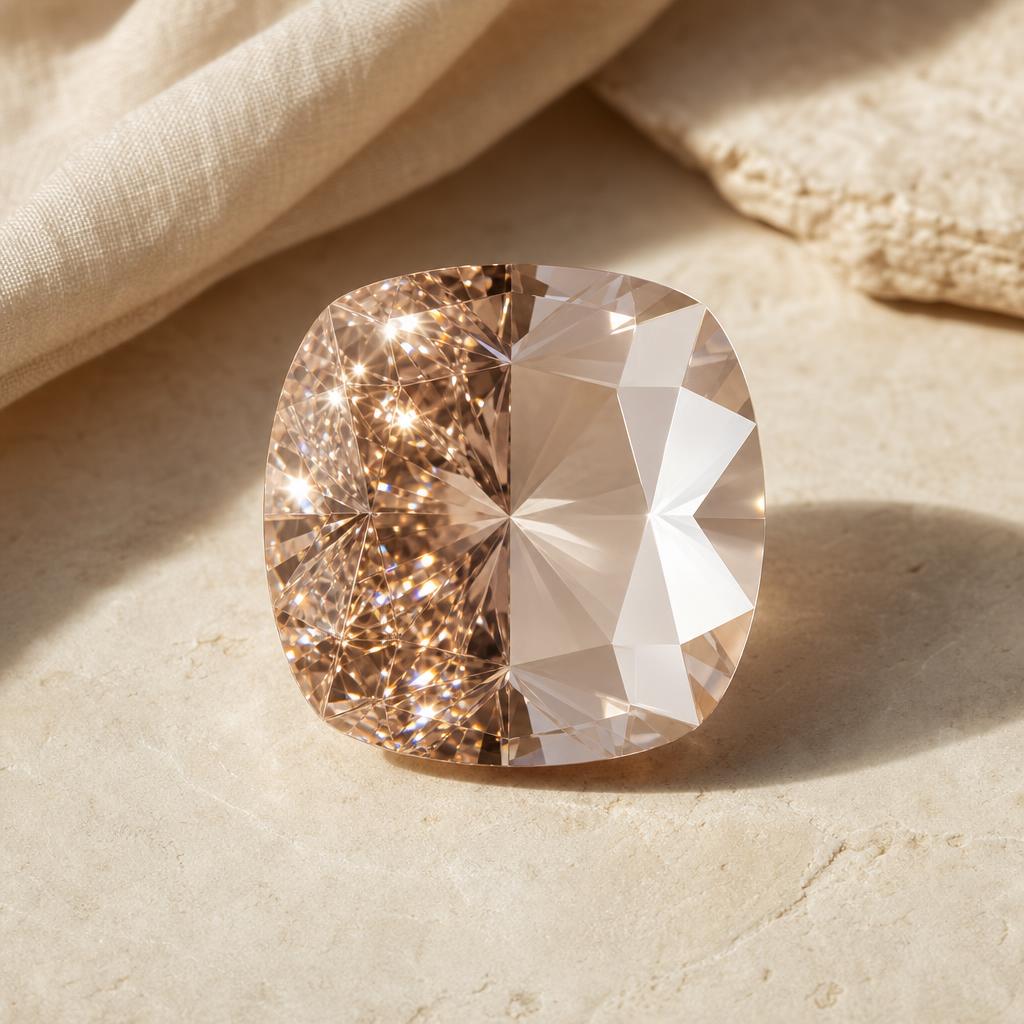
Round Cut vs. Brilliant Cut: What Actually Makes a Stone Sparkle
Round cut. Brilliant cut. Step cut. If you've spent any time comparing rings, you've probably seen these words used almost interchangeably — and that's the actual problem. The brilliant cut vs step cut divide is the one that actually matters, and once you understand it, choosing a ring stops feeling like guesswork.
Before we get into facets and light performance, here's a look at four Gemiros styles that show the difference in real settings — from a classic round solitaire to a step-cut emerald silhouette.


What "Brilliant Cut" Actually Means
"Brilliant cut" isn't a shape — it's a faceting style. A brilliant-cut stone is covered in small, triangular and kite-shaped facets, all angled to catch light and throw it back out as fast as possible. That's what produces the sparkly, scattered, almost sparkler-like flash people picture when they imagine a diamond. The round brilliant is the original and most famous version, with 57 to 58 facets arranged in a pattern that's been refined for over a century. But "brilliant cut" applies to far more than round stones — oval, cushion, pear, marquise, and princess cuts are all built on the same light-scattering logic, just reshaped around a different outline.
Round Cut vs. Brilliant Cut: Why the Two Get Confused
Here's where most of the confusion actually starts. When people compare these two terms, they're usually trying to figure out if they're two different things — and the honest answer is that they're not opposites at all. Round describes the outline of the stone; brilliant describes how it's faceted. A round brilliant is simply a round stone cut in the brilliant style, which happens to be so common that the terms get used interchangeably in casual conversation. That distinction only really matters once you start comparing a round stone to a non-round one — say, an oval or a cushion — because at that point, shape and facet style genuinely are two separate decisions.
Worth knowing: Every Gemiros round solitaire, like the Lumière, is cut in the classic round brilliant style — the same faceting logic jewelers have used to maximize sparkle for over a hundred years.
What Is a Step Cut Diamond, Exactly?
The short version: a step cut is the opposite approach to brilliant faceting. Instead of small triangular facets built for scatter and fire, a step cut uses long, rectangular facets arranged in parallel rows — like the steps of a staircase, which is exactly where the name comes from. Rather than fast, busy sparkle, a step-cut stone produces broad, clean flashes of light as it moves, an effect often described as a "hall of mirrors." Emerald and Asscher cuts are the most recognizable step cuts, along with the narrow baguette shapes often used as accent stones.
Step cuts also have a large, open table — the flat top facet — which means the inside of the stone is more visible than it is in a brilliant cut. With a mined diamond, that transparency is exactly why step cuts demand higher clarity grades: there's nowhere for a flaw to hide. With moissanite, this isn't something to worry about. Gemiros' step-cut stones are manufactured to a consistent, clean standard from the start, so that "hall of mirrors" effect reads exactly as intended — clear, architectural, and indistinguishable from a diamond at arm's length.
If the elongated rectangle appeals to you, it's worth browsing the best emerald cut engagement rings to see how the shape reads across different settings before you decide.

The Kensington Ring
A 3-carat emerald-cut center stone in a clean solitaire setting — the step cut's long facets on full display, with nothing competing for attention.
Shop The Kensington →Modified Brilliant Cuts: Oval, Cushion, and Beyond
Round isn't the only shape that gets the brilliant treatment. A modified brilliant keeps the same triangular, light-scattering facet logic but reshapes it around an oval, cushion, pear, or marquise outline instead of a circle. The result is a stone that sparkles the way a round brilliant does, just wearing a different silhouette. The Ophelia's hidden-halo oval is a modified brilliant, and so is the Maxima's cushion center — both built for maximum scintillation, just stretched or softened into a shape that flatters the hand differently than a round stone would.
Choosing between them usually comes down to how the stone should sit on the hand rather than how it sparkles, since the underlying facet logic is the same. An oval elongates the finger; a cushion softens the light with rounded corners. The best oval engagement rings collection is worth a look if the elongating effect is what you're after.

The Maxima Ring
A 3.5-carat cushion-cut center in a square hidden halo, with a pavé band that keeps the sparkle going all the way around.
Shop The Maxima →Brilliant Cut vs. Radiant Cut: Two Kinds of Sparkle in the Same Family
A radiant cut sits in an interesting middle ground. It's rectangular or square, like an emerald or Asscher, but it isn't a step cut at all — it's a brilliant, with the same small, scattering facets as a round stone, just trimmed into a shape with cropped corners. Shape alone doesn't tell you which family a stone belongs to. A radiant delivers the fast, busy "crushed ice" sparkle of a brilliant cut, while an emerald or Asscher — despite looking similar from across the room — reads calmer and more architectural. The Fleur's floral halo is built around a radiant center for exactly this reason: it wants the maximum sparkle of a brilliant cut, but in a shape with more presence than a round stone.
The two effects genuinely photograph differently. A radiant scatters small points of light across the whole stone; an emerald or Asscher throws fewer, broader flashes as it catches the light. If the squared-off symmetry of an Asscher is what draws you in, the best Asscher cut rings show off that architectural quality well. Neither cut is more "correct" — it's a question of which kind of movement you want to see every time you look down.
Does the Difference Matter More With Moissanite?
Moissanite already has a higher refractive index than diamond, which means it bends and disperses light more aggressively to begin with. In a radiant or round brilliant setting, that can push the sparkle into genuinely dramatic territory — closer to a disco ball than a gentle shimmer. In a step-cut setting like an emerald or Asscher, that same intensity gets tempered by the calmer, more structured facet pattern, which is part of why so many people find emerald-cut moissanite pieces feel quieter and more refined than their round or radiant counterparts. If you've weighed emerald cut vs radiant cut moissanite options before, this is usually the real deciding factor — not which one is "better," but which mood you're after.
✦ Pro tip: If you already own a brilliant-cut piece and want your next one to feel distinct rather than duplicated, a step cut is the easiest way to add real visual variety to your collection.
The Two Families, Side by Side
| Brilliant Cut | Step Cut |
|---|---|
| Triangular, kite-shaped facets | Long, rectangular parallel facets |
| Fast, scattered "fire" and sparkle | Broad, clean "hall of mirrors" flashes |
| Round, oval, cushion, pear, marquise, radiant, princess | Emerald, Asscher, baguette |
| Busy facet pattern reads as glittery and lively | Open table reads as clear and architectural |
| Naturally forgiving to the eye | Clean, geometric, and unmistakably intentional |
Quick Takeaways
- "Brilliant" and "step" describe how a stone is faceted — not its outline. A round stone can be a brilliant; an emerald or Asscher is a step cut.
- A round brilliant is simply a round stone faceted in the brilliant style — the shape and the facet style are two separate decisions, not competing terms.
- Radiant cuts are brilliants trimmed into a rectangular silhouette — not step cuts, despite the visual similarity to emerald and Asscher.
- Modified brilliant cuts (oval, cushion, pear, marquise) keep the same scattering sparkle as a round brilliant, reshaped to flatter the hand differently.
- Moissanite's higher light dispersion makes the difference between brilliant and step cuts more noticeable, not less.
Frequently Asked Questions
Is a step cut more expensive than a brilliant cut?
With mined diamonds, step cuts can cost more relative to their brilliant-cut counterparts because they require a higher-clarity rough stone to avoid visible flaws. With Gemiros' simulated stones, that isn't a factor — every cut, brilliant or step, is manufactured to the same clean, consistent standard, so the price difference between styles comes down to design, not clarity grading.
Is an emerald cut considered a step cut?
Yes. Emerald cut is the most recognizable shape within the step-cut family, alongside Asscher and baguette. "Step cut" describes the facet pattern; "emerald cut" describes the specific elongated rectangular outline built with that pattern.
Do step-cut stones sparkle less than brilliant cuts?
They sparkle differently, not less. A step cut trades the fast, scattered flash of a brilliant for broader, slower flashes of light — a calmer effect rather than a dimmer one. Held under the same light, both are genuinely eye-catching; they just move differently.
What is a modified brilliant cut?
A modified brilliant cut keeps the same triangular, light-scattering facet arrangement as a round brilliant but reshapes it around a different outline — oval, cushion, pear, and marquise are the most common examples. The sparkle behavior stays consistent; only the silhouette changes.
Is a radiant cut good for moissanite?
Very. Moissanite's naturally high light dispersion pairs well with the radiant cut's dense, scattering facet pattern, producing an especially lively "crushed ice" sparkle. If you'd rather tone that intensity down, an emerald or Asscher center gives the same rectangular silhouette with a calmer, more structured flash.
Once you know the difference between how a stone is faceted and what shape it's cut into, the terminology stops being a wall between you and the right ring — it becomes a genuinely useful way to describe exactly what you want. Whether that's the classic scatter of a round brilliant, the architectural calm of an emerald, or the in-between drama of a radiant, the right choice was never about which one is objectively best. It's about which kind of sparkle you actually want to see every day.


