

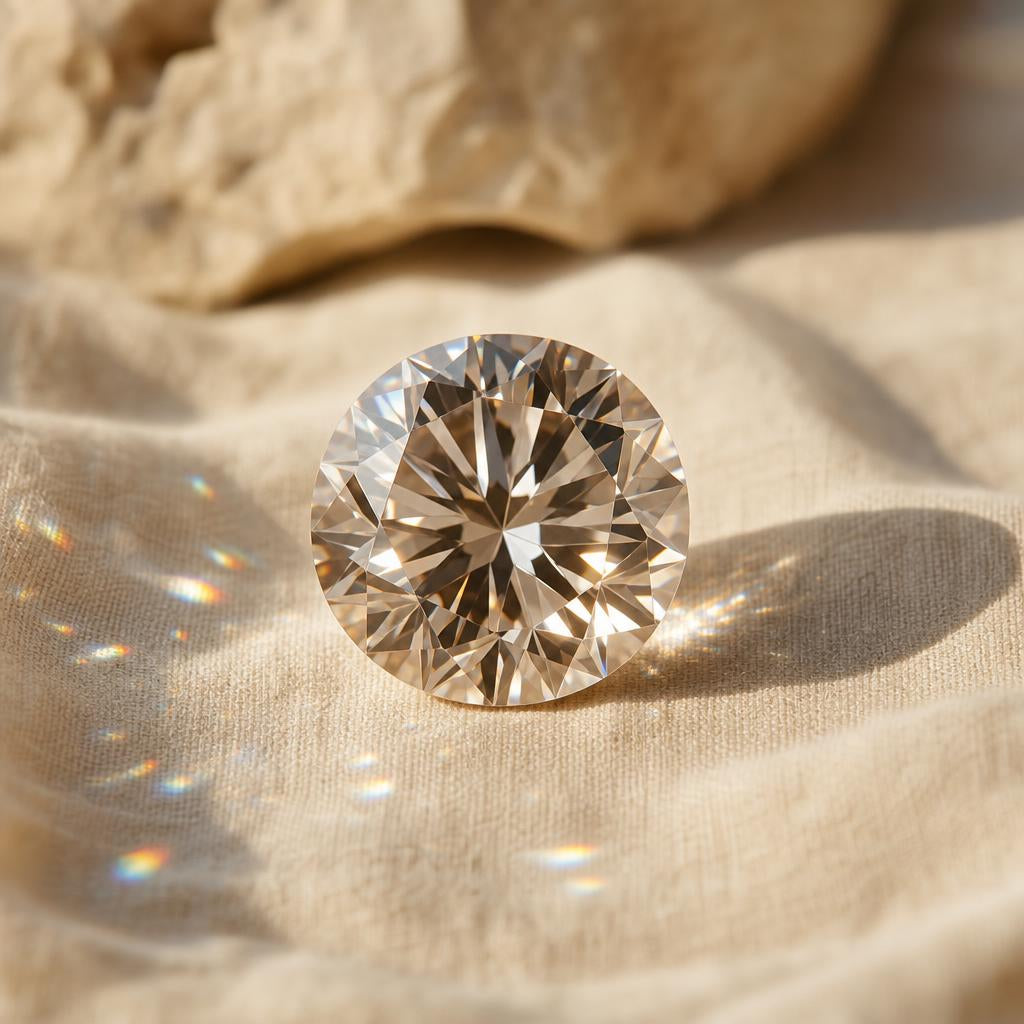
Big and Unapologetic: What a Large Statement Ring Actually Says About You
There's a particular flinch that happens when a woman considers a large stone for herself. Not because she doesn't love it — she does, immediately, involuntarily — but because some old voice in her head asks if it's "too much." Too big. Too loud. Too likely to invite a comment she'll have to manage. That flinch isn't about the ring. It's about a rule she never agreed to.
The rule says a big stone has to be earned, explained, or apologized for. It doesn't have to be any of those things. A large ring is simply a decision — and the styles below make that decision easy to live with every day.


Why "Bigger" Still Makes People Nervous
Somewhere along the way, ring size got tangled up with a strange kind of math: the bigger the stone, the bigger the explanation required. Where did it come from. What did it cost. Who paid for it. A woman wearing a large ring she bought for herself skips every one of those questions, and that's precisely what unsettles the old script — she isn't waiting for permission, and she isn't performing modesty she doesn't feel.
This is the same outdated math that inflates diamond prices at the traditional jewelry store: the idea that scale and sentiment have to be purchased at a markup to count as real. It's a rule built for a market, not for a hand. Once you see it that way, a 3.5-carat cushion cut stops being an indulgence and starts looking like a fairly obvious choice.
What a Large Stone Is Actually Communicating
A big ring doesn't say "I'm trying too hard." It says the wearer made a decision and isn't hedging on it. There's a specific kind of confidence in choosing scale on purpose — not by accident, not because someone else picked it, but because she looked at the options and picked the one that actually caught the light the way she wanted.
The fear underneath all of this is rarely about the ring itself. It's the worry that a stone this size will read as costume the second someone looks closely. It won't. A well-cut simulated diamond at 3 to 4.5 carats is indistinguishable from a mined stone to the naked eye and passes diamond testers — the size isn't the vulnerability people assume it is. What actually gives a large ring away as trying too hard is a setting that can't support the size, not the carat weight itself.

The Odette Ring
A 3.5-carat oval standing entirely on its own, no halo required. The kind of ring that proves restraint and scale aren't opposites — the size does the talking, and the setting simply gets out of the way.
Shop The Odette →Take the Ophelia as the clearest example of this. Its 4.5-carat oval, set in a hidden halo with a pavé band, reads like the kind of ring you'd expect to cost $15,000 or higher. It doesn't — but the visual language is identical, because the engineering underneath it is doing exactly what an expensive setting does: directing every bit of light back up through the stone.
The Settings That Make Size Look Intentional
Carat weight is only half the equation. The setting is what decides whether a large stone looks deliberate or simply heavy. A few structural choices do most of the work:
- Hidden halo. A ring of smaller stones tucked beneath the center stone, invisible from above, that adds perceived size and extra sparkle without changing the ring's silhouette.
- Pavé band. Continues the sparkle down the shank instead of stopping abruptly at the center stone, so the whole hand reads as considered rather than a single oversized focal point.
- Three-stone construction. Heart-cut or round side stones flanking a larger center stone add width and presence while keeping the proportions balanced — full without tipping into cluttered.
- Elongated cuts. Oval, pear, and radiant shapes distribute carat weight across more finger real estate, which is why a 3.5-carat radiant can look more wearable day to day than a smaller round stone in a tight setting.

The Paris Ring
A 3-carat pear cut in a hidden halo with a pavé band — the elongated shape reads larger than its carat weight suggests, which is exactly the kind of engineered confidence a big ring should have.
Shop The Paris →How to Wear a Big Ring Without It Wearing You
A large stone changes a few practical things about how a hand reads, and none of them require toning the ring down — they just require a little intention elsewhere.
Keep nails short to medium and in a neutral or clean finish if the ring is doing the visual work; a heavily embellished manicure next to a 4-carat oval starts to compete rather than complement. Skip stacking bands on the same finger unless they're genuinely slim — a large solitaire wants breathing room on either side. And resist the instinct to downsize everything else on the hand to "balance" the ring. One deliberate, sizeable piece reads as a style decision. A hand full of tiny apologetic accents reads as second-guessing.
Worth knowing: A large stone actually hides everyday wear better than a smaller one does. More surface area means more places for light to bounce, so minor dust or a light touch of hand lotion is far less noticeable than it would be on a smaller, more tightly set stone.
Why This Is a Self-Purchase Category Now
Large-stone rings used to be almost exclusively gift territory — something received on a milestone occasion, chosen by someone else, on someone else's timeline. That's changed. More women are buying their own statement rings, on their own schedule, for no occasion beyond deciding they wanted one. Over 50,000 orders in, the pattern is clear: the reason to wait for a bigger ring rarely holds up once you actually look at it.
Part of that shift is practical. When a ring isn't tied to a five-figure price tag, the decision stops being a negotiation with a budget or a partner's opinion and becomes a straightforward style choice, made the same way you'd choose a coat or a bag you actually love. Part of it is generational — the idea that jewelry has to be earned through a specific life event is exactly the kind of outdated rule this whole category has quietly stopped following.
Choosing the Cut That Matches How You Actually Live
Not every large-stone silhouette suits every hand or every routine, and that's a genuinely useful thing to think through before choosing one.
Cushion cuts like the Maxima's 3.5-carat center carry weight beautifully on shorter or wider fingers because the rounded corners soften the visual edge. Oval and pear shapes elongate, which flatters almost any hand shape and is why they dominate the large-stone category. Radiant cuts, like the Fleur's floral-halo 3.5-carat center, split the difference — architectural enough to feel modern, faceted enough to throw serious light. And a three-stone build like the Statement Ring adds horizontal presence, which reads as more substantial from across a room without requiring a heavier band.
None of these is more "correct" than another. The only real filter is honesty about how you move through your days — a hidden halo and pavé band both add durability and forgiveness for hands that are busy all day, while a clean solitaire like the Odette rewards a slower, more deliberate way of wearing jewelry.
Quick Takeaways
- A large stone reads as confidence, not excess — the setting is what makes size look intentional.
- Hidden halos, pavé bands, and elongated cuts all add perceived size without sacrificing wearability.
- Keep the rest of the hand simple: short-to-medium nails, minimal stacking, no competing accents.
- Bigger stones actually hide daily wear better than smaller, tightly set ones.
Frequently Asked Questions
Is a 3 to 4.5-carat ring considered too big for everyday wear?
Not with the right setting. A hidden halo and pavé band add structural support and distribute weight evenly, which is what makes a large stone genuinely wearable day to day rather than just photograph well.
Does a bigger stone look less convincing up close?
No — the opposite is often true. A well-cut simulated diamond at this size is indistinguishable from a mined stone and passes diamond testers. Scale doesn't create vulnerability; a poorly proportioned setting does.
What setting makes a large stone look intentional rather than overwhelming?
Hidden halos and pavé bands are the most consistent answer. They add sparkle and perceived size around the center stone so the whole ring feels considered rather than the carat weight doing all the work alone.
Which cut looks largest for its actual carat weight?
Elongated shapes — oval, pear, and radiant — tend to cover more visible finger space per carat than round or cushion cuts, which is why a 3-carat pear can read as boldly as a larger round stone.
A big ring was never actually the risky choice. The risky choice is spending years picking something smaller because you were worried about a reaction that, statistically, mostly happens in your own head. Choose the scale that makes you glance down at your hand mid-conversation. That's the whole point.


