

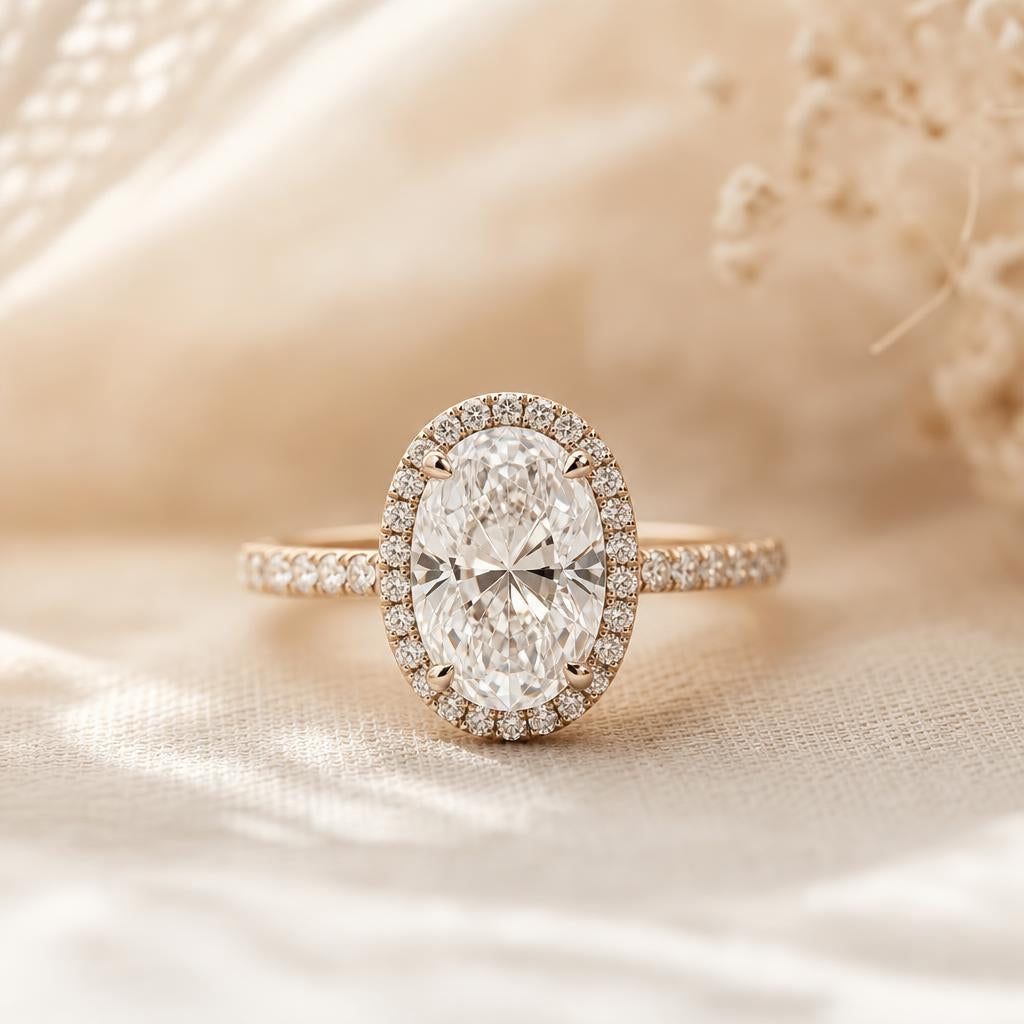
When Bigger Is Better: How to Pull Off a Large Stone Ring Without It Looking Costume
There's a moment every woman who loves bold jewellery knows: you put on a ring with a substantial stone, catch a glimpse of yourself in a mirror, and wonder — is this too much? Does this look real? The fear of looking "costume" is genuine, and it keeps a lot of women from wearing the size of ring they actually want. Here's the thing, though: size isn't what makes a ring look cheap. What does is entirely learnable — and entirely fixable.
The difference between a ring that commands a room and one that reads as dress-up comes down to a handful of specific details: the quality of the setting, the proportions between the stone and the band, the finish on the metal, and how you wear it. Get those right, and a large stone ring doesn't just look legitimate — it looks exceptional. What follows covers exactly that, with the specific rings that do it best.


The real reason rings look "costume" — and it isn't the size
People assume that a large stone automatically reads as fake. It doesn't. What actually triggers the "costume" response is a very specific combination: a thin, flimsy band that can't support the visual weight of the stone above it; metalwork that looks rough, hollow, or imprecise; a stone that's flat and glassy rather than alive with depth; or some version of all three at once.
Large stones in well-executed settings with solid metalwork, fine pavé detailing, and stones cut to maximise brilliance — meaning they play with light rather than just reflecting it — do not look fake. They look impressive. Think of a well-tailored blazer: it reads as quality even if the fabric isn't designer, because it's the construction that signals care, not the price tag. The same is true of rings.
Worth knowing: Stone size is measured in carats, but what matters visually is how the cut affects face-up size. A shallow oval cut at 4ct can look much larger than a deep round brilliant at the same weight. The shape and the angles of the cut — not the number on the spec sheet — are what create visual presence on the hand.
Why the setting makes or breaks a large stone
The setting is the architecture of the ring. For a large stone, it has two jobs: to hold the stone at the right height so it catches light correctly, and to create enough visual structure around the stone that the whole ring looks considered and intentional, not accidentally oversized.
Halo settings: the most effective framing tool available
A halo is a ring of smaller stones set around the perimeter of the centre stone. It does something quite specific: it creates a defined visual edge around the stone, which signals to the eye that what you're looking at was deliberately designed this way. The halo frames the stone the way a well-chosen border frames a piece of art — it tells you where to look, and it makes what you're looking at seem more considered.
Full halos — where the smaller stones completely encircle the centre stone — create the most dramatic effect. They also increase the apparent visual size of the ring considerably, which works in your favour if impact is the goal. A full halo on an oval centre stone is one of the most proven combinations in engagement ring design precisely because the two elements reinforce each other: the oval elongates, the halo amplifies, and the result looks expensive by every visual metric that matters.

The Victoria Ring
A marquise-cut centre stone with a full pavé halo — one of the most visually elongating shapes available. The marquise's pointed ends create a line of length across the finger, making the hand appear longer and more slender while the halo adds the structural framing that keeps the whole ring polished rather than overpowering. For anyone who wants serious impact with a refined hand, this is the shape to try.
Shop Victoria Ring →Hidden halos: restraint and surprise in the same ring
A hidden halo sits beneath the gallery of the centre stone rather than encircling it. From above, the ring shows the stone and a minimal band — clean, modern, unfussy. Tilt the ring and you catch a flash of diamonds tucked underneath: a detail that rewards the people close enough to notice it. Hidden halos add depth and light-play without adding visual bulk, which makes them an excellent choice when you want a large stone ring to read as quietly assured rather than unmistakably loud.
The Ophelia Ring is built on exactly this principle. The oval centre stone is generous, but because the halo is concealed beneath it rather than surrounding it, the ring has a clean silhouette from above. What you register first is the stone itself, not the setting architecture — and that's precisely what makes a large stone ring feel effortless rather than effortful.
Stone shape and proportion: what actually looks large on the hand
Not all large stones read the same. The shape changes how the eye perceives size, how the stone sits on the finger, and whether the ring adds elegance or awkwardness to the hand it's on.
Oval is arguably the most flattering shape for a large stone ring. The elongated silhouette creates an illusion of even greater size than the carat weight suggests, while the curved edges are soft enough that the ring doesn't look hard or geometric. Ovals sit relatively close to the finger and elongate its appearance — a practical advantage that makes the stone feel proportional rather than outsized, even when the stone is genuinely large.
Cushion cut is the warm, romantic choice. The rounded corners soften what would otherwise be a square shape, which means the stone reads as generous and opulent without the architectural sharpness of a princess cut. Cushion cuts tend to flash fire — coloured sparkle — more than most other cuts, which gives a large cushion ring its distinctive glow. It's the cut that rewards you most in candlelight.
Radiant cut is the choice for maximum light return. With 70 facets — more than most cuts — the radiant handles light the way no other shape quite does. The result is a ring that looks alive from every angle, and because the rectangular outline is clean and straight-edged, radiant cuts tend to read as modern and intentional rather than maximalist. If the oval feels too soft and the cushion too romantic, radiant is the sharp, contemporary middle ground.

The Isabella Ring
The pear is one of the most interesting shapes for a large stone: its teardrop silhouette elongates dramatically toward the finger, and the tapered point means the stone has visible presence without widening the hand. The Isabella pairs a generous pear-cut centre with a full pavé halo and band — the result is theatrical in the best way, the kind of ring that reads as a deliberate style choice rather than an impulse. Wear it point-up for classic elegance, or point-down for a modern twist.
Shop Isabella Ring →The band: the part most people get wrong
A large stone on a band that's too thin creates a visual imbalance that reads as unstable — even if the metalwork is technically fine. The band needs enough visual weight to anchor the stone above it. This doesn't mean the band has to be chunky or bold in its own right; pavé settings solve this elegantly by adding both width and sparkle to a band that remains structurally fine while looking substantial.
The ratio to aim for: the band should be wide enough that the stone appears to sit in it, not perched above it precariously. If the stone looks like it might tip, the ring will never look settled on the hand. This is why so many of the best large stone rings use split shanks or pavé bands — both techniques add visual width without adding bulk, and both make the stone look like it belongs exactly where it is.
Proportion check: Look at the ring from the side, not just from above. The stone should look comfortably cradled by its setting — if the base of the stone looks unsupported or if there's a lot of open metal beneath it, that gap is where the "costume" feeling comes from. A lower-profile setting that pulls the stone closer to the band will fix it entirely.
Metal finish: the detail that quietly changes everything
White rhodium-plated sterling silver is the default for simulated diamond rings, and it works exceptionally well with large stones because it recedes into the stone's brilliance rather than competing with it. The stone becomes the entire story; the metal is clean infrastructure.
Rose gold changes the character of a large stone ring significantly. It adds warmth and a vintage register that reads as deliberate and editorial. Large stones in rose gold settings tend to look less "look at how big this stone is" and more "this is a ring with a strong point of view." If the goal is maximum visual impact without feeling overdone, rose gold is worth serious consideration.
Yellow gold is the most confident choice. There's a directness to yellow gold that suits large stones particularly well — it doesn't apologise for itself and doesn't try to blend in. A large oval or cushion in yellow gold reads as a woman who knows exactly what she wants and has stopped waiting to be told she can have it. That's the energy a large stone ring deserves.
Five rules for wearing a large stone ring well
Keep the rest of your hand uncrowded. A large stone ring works best with space around it. You can stack on the other hand — but adding four more rings to the same hand as a statement centre stone creates noise rather than impact. One focal point per hand is a rule worth keeping.
Mind your nails. Longer, more tapered nails extend the line of the finger and give a large stone ring visual runway to work with. Short, very wide nails can make a proportionally large stone feel mismatched. This isn't a reason to avoid bold rings; it's a reason to pay attention to how you groom the hand the ring sits on.
Let occasion guide you. A large cushion in a full double halo is dressed up — that's a feature, not a limitation. Let it work for the occasions where you want to show up fully, and let plainer rings handle Tuesday. The rings that look most impressive are the ones their wearers save for the right moment — not because the ring isn't good enough for everyday life, but because knowing when to wear it is part of wearing it well.
Photograph it in natural light. A large stone ring photographed under fluorescent or yellow indoor light will look flat. Natural light — even overcast daylight from a window — is what activates the stone's brilliance and captures the fire. If the ring looks underwhelming in a photo you've taken, change the light before you change anything else.
Wear it like you own it. The most important styling element is the most obvious one: wear it with confidence. A statement ring worn apologetically is the only version of a large stone ring that actually reads as too much. Worn with the certainty that it's exactly right, the same ring becomes exactly that.
The simulated diamond advantage: One of the quieter benefits of choosing a simulated diamond ring is that you get to choose the visual size you actually want — not the size your budget forces you into. A generous oval in a well-made halo setting looks the way it looks. That's the whole point. The ring is the statement. Its origin is, as it always has been, between you and no one else.
Quick Takeaways
- Size doesn't make a ring look cheap — thin metalwork, poor proportions, and the wrong stone finish do.
- A halo setting (full or hidden) frames the stone and creates structure that reads unmistakably as quality.
- Oval, cushion, and radiant cuts are the most flattering shapes for large stones on the hand.
- The band must have enough visual weight to anchor the stone — pavé bands achieve this without adding bulk.
- Keep the rest of your hand clean: one statement ring reads as confidence, five reads as confusion.
- Metal choice changes the register: white for maximum brilliance, rose gold for warmth, yellow gold for confidence.
Frequently asked questions
How do I know if a ring stone is too big for my hand?
The starting indicator is proportion rather than absolute carat size. If the stone looks wider than your finger when viewed from the front, you're in large stone territory — whether that reads as too large depends almost entirely on the shape. Elongated cuts like oval and marquise add length rather than width, which works in your favour on most hand shapes. The real test is how you feel wearing it: if it feels like you, it's not too big.
Can I wear a large stone ring every day?
Yes, with the right setting. The variable to watch is setting height: high-set stones (cathedral settings, tall prong baskets) catch on clothing, bags, and gloves, which creates wear on the setting over time. If you want a large stone ring for daily wear, look for lower-profile settings where the stone sits closer to the band. Hidden halo designs and low-basket solitaires handle this well. Bezel settings are the most practical for daily wear at any stone size.
Does a large stone ring work with other jewellery?
Yes — but choose one focal point per outfit. If the ring is the statement, keep earrings small: studs or huggies rather than drops or chandeliers. A fine chain necklace can work, but a bold pendant competes. The principle is that when everything shouts, nothing is heard. Give the ring the space to be the thing people notice, and let everything else support rather than compete.
What's the best way to photograph a large stone ring?
Natural light, no filter, close range. Hold your hand at mid-height with your fingers relaxed and softly curved — a completely flat extended hand often makes even a beautiful ring look clinical. Shoot from slightly above and to the side so you capture the stone's depth rather than just the table from directly overhead. A warm cream or linen surface underneath keeps the light soft. The ring should do the work; your job is just to give it the right light to do it in.
A ring with a large stone is, at its core, a declaration of personal style. It says you know what you want and you're not waiting for permission to want it. That's not costume energy — that's confidence, and confidence is the one thing no setting can manufacture for you.


