

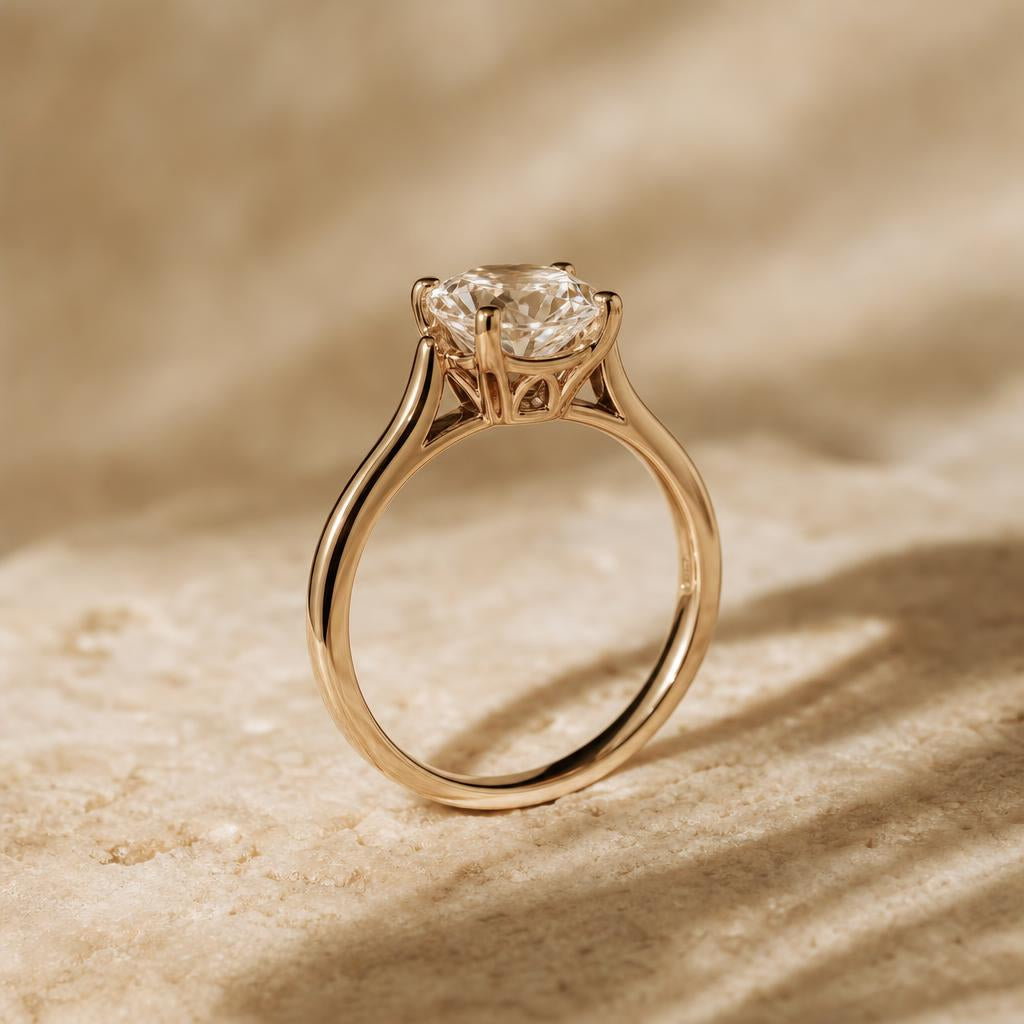
Anatomy of a Ring: Shank, Crown, Gallery and the Terms Every Listing Uses
Somewhere between "I love this ring" and "I understand this ring" is a small vocabulary — shank, crown, gallery, prong — that most listings assume you already know. You don't need a jewelry degree to shop well. You just need to know what you're actually looking at.
Once you can read a ring the way someone who's spent years around them does, the differences between two similar-looking pieces stop feeling arbitrary and start feeling obvious. Here's the anatomy, broken down in plain language, with real examples to make each part click.


Why Ring Anatomy Actually Matters When You're Shopping
Every ring listing uses the same handful of structural terms, whether you notice them or not. They're not decorative jargon — they describe the actual physical parts that determine how a ring fits your finger, how it catches light, how durable it is day to day, and how it will look ten years from now. Once you know what each part is, you can compare two rings on their actual merits instead of just their photos.
Think of a ring in three structural layers: the shank, which is the band itself; the crown, which sits above your finger and holds the stone up toward the light; and the gallery, the often-overlooked architecture underneath the stone that connects it all together. Everything else — prongs, halos, pavé, bezels — builds on top of those three fundamentals.
The Shank — The Foundation You'll Feel Every Day
The shank is simply the band of the ring — the part that wraps around your finger. It sounds like the least interesting part of a ring, but it's the part you'll actually feel the most, every single day, whether you're typing, washing your hands, or just resting your hand on a table.
Standard vs Comfort-Fit Shanks
A standard shank has a flat interior profile. A comfort-fit shank is gently rounded on the inside, which reduces the surface area in contact with your finger and tends to feel looser and more comfortable at the same measured size — which is part of why two rings in the "same" size can fit noticeably differently.
Split Shanks and Cathedral Shanks
A split shank divides into two thinner bands as it approaches the center stone, which can make a smaller stone look larger by adding visual width without adding bulk. A cathedral setting, by contrast, describes a shank that arches upward like the ribs of a cathedral ceiling before it reaches the crown — a detail that changes how the ring reads from the side, not just from above.

The Verge Ring
A round brilliant center stone lifted by a split shank that opens gradually into two sparkling rows, giving the illusion of a fuller, more elevated silhouette without competing with the stone itself.
Shop The Verge Ring →The Crown — Where the Stone Meets the Light
The crown is the upper portion of the ring, above the shank, that actually holds the stone. Its height matters more than most first-time buyers expect: a taller crown lifts the stone higher, allowing more light to enter from the sides and increasing perceived brilliance, while a low crown sits closer to the finger for a sleeker, lower-profile look that's less likely to snag on clothing or hair. It's a separate question entirely from carat weight, which describes only the size of the stone — two rings with an identical carat weight can wear completely differently depending on the crown height surrounding them.
Crown Height and Why It Changes the Whole Look
This is one of the most useful things to check before buying, because it directly affects daily wearability. A low-profile crown is often the better choice for anyone who works with their hands often, while a taller crown tends to maximize sparkle for special-occasion pieces. Neither is objectively "better" — it depends entirely on how you actually live in the ring.

The Échelon Ring
A sharp, architectural asscher-cut solitaire with deeply layered step cuts and a low, structured crown — proof that a lower profile doesn't have to mean less presence.
Shop The Échelon Ring →The Gallery — The Hidden Architecture Underneath the Stone
The gallery is the structural framework directly beneath the center stone, connecting the crown to the shank. You rarely notice it head-on, but it's doing real structural work — supporting the stone, allowing light to pass through from underneath, and in many designs, adding a decorative detail of its own, like a delicate basket of metal or a row of tiny pavé stones.
| Gallery Style | What It Looks Like | Best For |
|---|---|---|
| Open basket | Visible metal "cage" beneath the stone | Maximizing light and brilliance |
| Solid gallery | Closed, seamless metal underneath | Durability and everyday wear |
| Pavé gallery | Tiny stones set into the gallery itself | Extra sparkle from every angle |
Worth knowing: An open gallery generally allows more light to reach the underside of a stone, which can make it appear brighter — but it also collects more lotion, soap residue, and lint over time. A solid gallery trades a small amount of brilliance for a much easier ring to keep clean.
Prongs, Settings and the Terms That Describe How a Stone Is Held
Prongs are the small metal claws that grip the stone and hold it in place — most commonly in sets of four or six. Four prongs show slightly more of the stone and read as more modern; six prongs distribute pressure across more contact points, which some buyers prefer for larger center stones. Beyond prongs, a bezel setting encircles the entire stone in a rim of metal instead of using individual claws — the most protective option of all, and a favorite for anyone whose hands are in and out of bags, gym equipment, or gardening gloves all day.
Then there's the halo setting — a ring of smaller accent stones encircling the center stone, which both amplifies sparkle and makes the center stone appear larger than its actual size. A hidden halo tucks that ring of stones just beneath the crown rather than around it, visible only from certain angles — the detail that makes the Majesté Ring above feel dramatically more finished from the side profile than from directly overhead.
Halo, Pavé and Side Stones — Reading the Details Around the Center
Pavé refers to tiny stones set closely together along the shank or gallery, literally "paved" with sparkle, each held by minuscule shared prongs so the metal underneath nearly disappears. Side stones are a different thing entirely — larger accent stones (often baguettes or tapered trapezoids) flanking the center stone, adding width and drama rather than texture. The Empress Ring above uses tapered baguette side stones for exactly this effect, while the Evermore Ring builds its entire band from channel-set stones, meaning each stone sits recessed between two strips of metal rather than held by visible prongs at all.
Channel Setting, Briefly
A channel setting holds a row of stones between two parallel walls of metal with no prongs showing at all — the stones are simply nestled into a groove and secured from the sides. It's one of the most snag-resistant ways to set stones into a band, which is exactly why it shows up so often in eternity and stacking pieces meant for daily wear.
✦ Pro tip: If you're shopping for a ring you intend to wear every single day — cooking, typing, traveling — prioritize a low crown, a solid or channel-set gallery, and either a bezel or six-prong setting. If you're buying a special-occasion piece, a taller crown and an open, pavé-lined gallery will maximize sparkle instead.
How to Read a Ring Listing Like Someone Who Already Knows
Once you have this vocabulary, a product listing stops being a wall of unfamiliar words and starts reading like a spec sheet. "Cushion-cut center stone with a hidden halo and pavé shank" tells you almost everything about how a ring will look and wear, before you've even seen a second photo. It's the same logic we walk through in more depth in our guide to decoding a ring product listing, which covers the metal, carat, and sizing terms that sit alongside the structural ones covered here.
The size of the stone is only half the story — the anatomy surrounding it is often the more useful information of the two, and it's the part most buyers skip straight past.
Quick Takeaways
- Shank = the band. Comfort-fit and split-shank styles change how it fits and looks.
- Crown = the part above your finger holding the stone. Height affects both sparkle and snag risk.
- Gallery = the structure beneath the stone. Open galleries sparkle more; solid galleries clean easier.
- Prongs, bezels, halos and pavé all describe how the stone is held and framed — not how big it is.
- Carat weight and setting anatomy are two separate things — read both before you buy.
Frequently Asked Questions
What's the difference between the shank and the band?
Nothing — they're the same part of the ring. "Band" is the more casual term; "shank" is what you'll see used in product specifications and by jewelers.
Does a taller crown mean the ring will catch on things more?
Generally, yes. A taller crown lifts the stone higher off your finger, which increases sparkle but also increases the chance of catching on sweaters, hair, or gloves. If snag-resistance matters more to you than maximum brilliance, look for a lower crown height.
Is a hidden halo worth the extra detail if no one can see it head-on?
Most people see your ring from angles other than straight overhead — across a table, holding a coffee cup, resting on a steering wheel. A hidden halo adds dimension and sparkle precisely in those everyday viewing angles, even if it's invisible in a straight-down photo.
Which setting is most durable for someone who works with their hands a lot?
Bezel settings and channel-set bands are generally the most snag- and impact-resistant options, since neither relies on protruding prongs that can catch or bend over time.
You don't need to memorize every term in this guide to shop well — but the next time a listing mentions a "low crown" or a "pavé gallery," you'll know exactly what you're picturing, and exactly why it matters for the way you'll actually wear the ring.


