

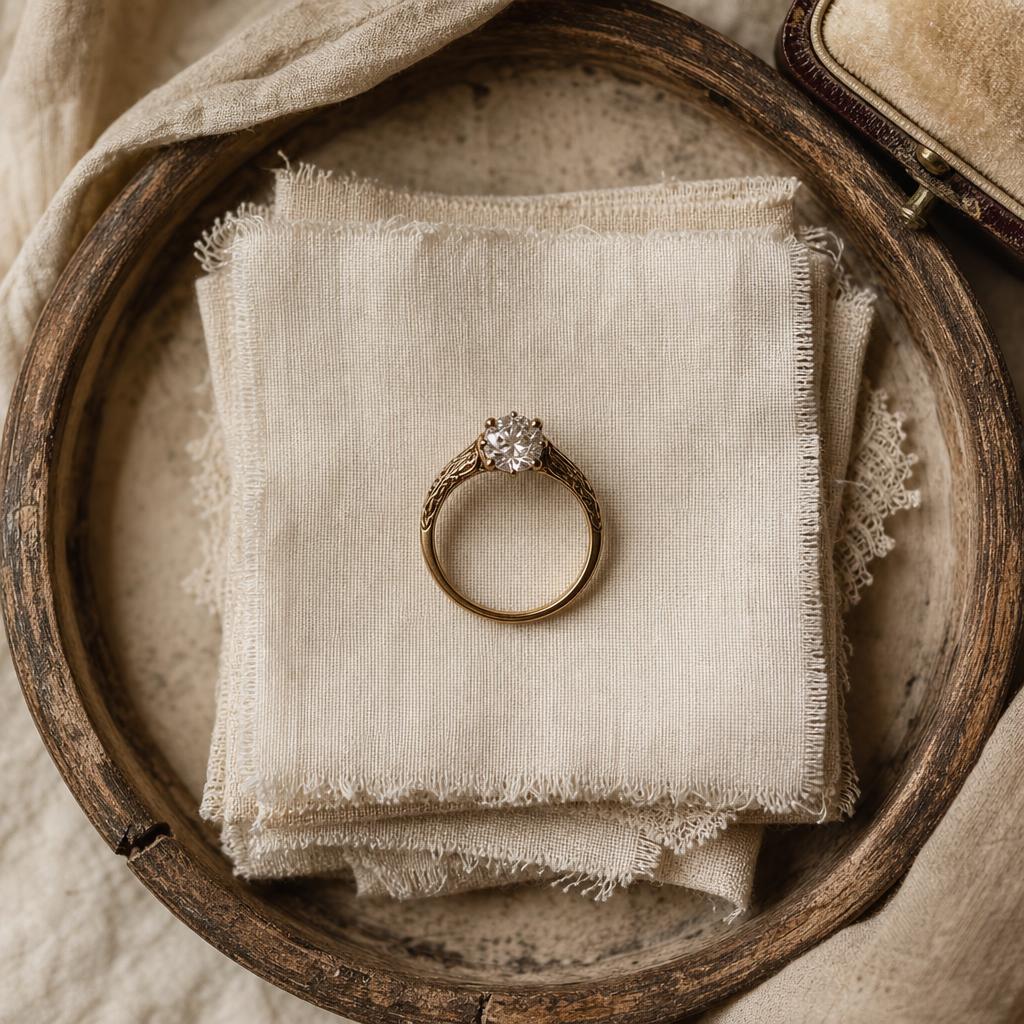
What Your Grandmother's Ring Teaches You About Heirloom Jewelry
There's a ring in nearly every family that has outlived a marriage, a move across the country, or a decade in a jewelry box nobody opened. It isn't always the most expensive piece. It's usually the plainest one — a little worn at the shank, a little loose at the joint — and somehow it's the one everyone remembers on her hand. That staying power isn't an accident. It's the result of a handful of decisions someone made decades ago, and most of them have nothing to do with price.
Look closely at why a grandmother's ring survives — while so many trendier pieces from the same era end up in a drawer — and you start to see a pattern worth borrowing for whatever you buy next.


What Actually Makes a Ring an Heirloom
It's tempting to assume a piece becomes an heirloom simply by surviving long enough. Age helps, but it isn't the mechanism. A ring earns that status because someone, at some point, decided it was worth keeping — and it happened to be built well enough to still be wearable when that decision got tested by decades of daily life. Strip away the sentiment and you're left with three practical qualities: a setting sturdy enough to survive real wear, a silhouette plain enough to still look right forty years later, and proportions that don't scream a single passing trend the moment you glance at old photographs.
Those three qualities are exactly what separates heirloom jewelry from the merely old. Plenty of costume pieces from the same decade as your grandmother's ring didn't make it this far — not because they were less loved, but because the settings gave out, the stones clouded, or the design dated itself so specifically that nobody wanted to wear it past its moment.
The Setting Did Most of the Work
Ask anyone who's had a ring resized, re-tipped, or rebuilt from scratch and they'll tell you the setting is where longevity is actually decided. A stone can be flawless, but if the prongs are thin or the structure is fragile, the ring won't survive the version of "everyday wear" that a grandmother's generation put their rings through — dishwashing, gardening, decades of taking rings on and off without a second thought.
A four-prong solitaire like The Stella Ring below owes its staying power to exactly this kind of restraint: fewer, sturdier structural points holding the stone in place, rather than delicate filigree that looks beautiful in a case and struggles under daily use.

The Everlasting Ring
A continuous line of pavé stones built for genuine daily rotation — the kind of low-maintenance eternity band that's still on someone's hand a decade from now, not just a season.
Shop The Everlasting Ring →Bezel settings solve the same problem a different way. Instead of prongs that can bend or catch, the metal wraps fully around the stone's edge, protecting it from knocks in a way that's nearly impossible to damage by accident. It's part of why so many genuine family heirloom ring pieces you'll find in an estate collection lean bezel rather than delicate open-prong work — the ones that survived tended to be built that way on purpose.
The Design Wasn't Chasing a Moment
Look at photographs spanning fifty years of the same family and the rings that keep reappearing share something specific: they were never the loudest option available at the time they were bought. A round or oval solitaire, a plain band, a modest halo — these shapes read as "classic" now for the simple reason that they weren't trying to be exciting when they were new. They were trying to be correct.
That's a useful filter for anyone shopping today. A ring engineered around a single dramatic trend — an unusual silhouette, an of-the-moment stone shape, an oversized statement setting — can look wonderful in the store and slightly strange in a photo from ten years out. It's not that trend-forward rings are wrong to buy. It's that they're rarely the ones that get quietly handed down, because the moment they were built for eventually passes, and the ring passes with it.
Vintage Details Without the Vintage Price
None of this means a modern ring has to look plain to earn its keep. A vintage heirloom ring — the genuine kind, decades old — often carries small period details: milgrain edging, a floral gallery, a softly domed profile. Those details read as considered rather than trendy precisely because they've already survived one full cycle of fashion. You can borrow that same visual language in a new piece without inheriting the fragility that sometimes comes with actual antique metalwork.

The Eternity Ring - Rose Gold
A complete band of simulated diamonds in warm rose gold — the kind of quietly classic piece that reads the same in a photo today as it will in twenty years.
Shop The Eternity Ring - Rose Gold →Why the Stone Itself Matters Less Than People Assume
Here's the part that surprises most first-time buyers: the emotional weight of an heirloom rarely comes from what the center stone is made of. It comes from who wore it and what they were doing with their life at the time. A ring becomes meaningful through use, not through a certificate. That's genuinely good news for anyone building a modern collection on a real budget, because it means a beautifully cut simulated diamond in a well-built sterling silver or gold vermeil setting can carry exactly the same weight, decades from now, as a mined stone that cost ten times as much. The setting has to hold up. The design has to age well. The stone is almost beside the point.
Worth knowing: Jewelers who handle inherited pieces will tell you the same thing — most family rings that get lovingly passed down are simulated, cubic zirconia, or modest-carat stones. Sentimental value was never about carat weight.
Heirloom Jewelry Ideas Worth Actually Stealing
If you're shopping with "will this still matter in thirty years" as the actual test, a few practical habits make the decision easier. Buy the setting first and the stone second — a beautifully cut stone in a flimsy mount is a short-term win. Favor silhouettes that photograph well in black-and-white as much as in color, since that's a rough proxy for whether a shape will still look intentional once the current trend cycle has moved on. And don't discount a plain band or solitaire just because it feels understated in the store; understated is often exactly what ages best.
It's also worth asking what the ring is actually for. A piece meant to be worn daily for decades needs a different structural logic than a special-occasion ring worn a handful of times a year. Rings built for daily rotation — comfort-fit interiors, low-profile settings, secure bezels — are the ones most likely to still be in circulation when someone eventually hands them down.
What Won't Make the Cut
Not every ring is meant to become an heirloom, and that's fine — plenty of jewelry exists purely to be fun for a season. But if longevity is the goal, a few red flags are worth knowing before you buy. Extremely thin bands wear through faster than they look like they will. Prong-heavy settings with more than six delicate points tend to snag and bend with regular wear. And anything built around a fast-moving trend — a specific influencer-driven shape, a color pairing tied to one particular year — has a shorter shelf life than the price tag might suggest, regardless of how well it's made.
Quick Takeaways
- Sturdy settings — four-prong, six-prong, or bezel — matter more for longevity than the stone itself
- Classic silhouettes age better in photographs than trend-driven shapes
- Simulated stones in well-built settings can carry the same sentimental weight as mined ones
- Daily-wear rings need comfort-fit, low-snag construction to actually survive daily wear
- Meaning comes from use over time, not from what's written on a certificate
Frequently Asked Questions
What actually makes a piece of jewelry an heirloom?
Timeless design, durable construction, and genuine emotional significance — not age or price alone. A ring becomes an heirloom when someone decides it's worth keeping, and it's built well enough to still be wearable when that decision gets tested by decades of real use.
Does a piece have to be old or expensive to count as an heirloom?
No. Plenty of the most treasured family rings are modest in cost — the sentimental weight comes from who wore it and what it witnessed, not from its price tag or the number of decades it's existed.
What finger should you wear a family heirloom ring on?
There's no fixed rule — most women wear an inherited ring on whichever finger feels most natural for its size, whether that's the original ring finger, the right hand, or worked into an existing stack. Comfort and fit matter more than tradition here.
Can a ring you buy today actually become tomorrow's heirloom?
Yes — any ring can become an heirloom regardless of its age or original cost, as long as it holds real meaning and is genuinely built to last. Choosing a sturdy setting and a classic silhouette today is exactly how that process starts.
What's the difference between a vintage ring and an heirloom piece?
"Vintage" simply describes a ring's age — typically at least twenty to fifty years old. "Heirloom" describes its role within a family, regardless of age. A brand-new ring can be destined to become an heirloom; a genuinely vintage ring isn't automatically one unless it carries that sentimental designation too.
The next ring you buy doesn't need a dramatic backstory to eventually become someone's favorite. It just needs a setting that won't fail you, a shape you won't outgrow, and enough real wear woven into it that it starts to mean something. That's the whole formula your grandmother's ring already proved — decades before either of you knew it would matter this much.


