

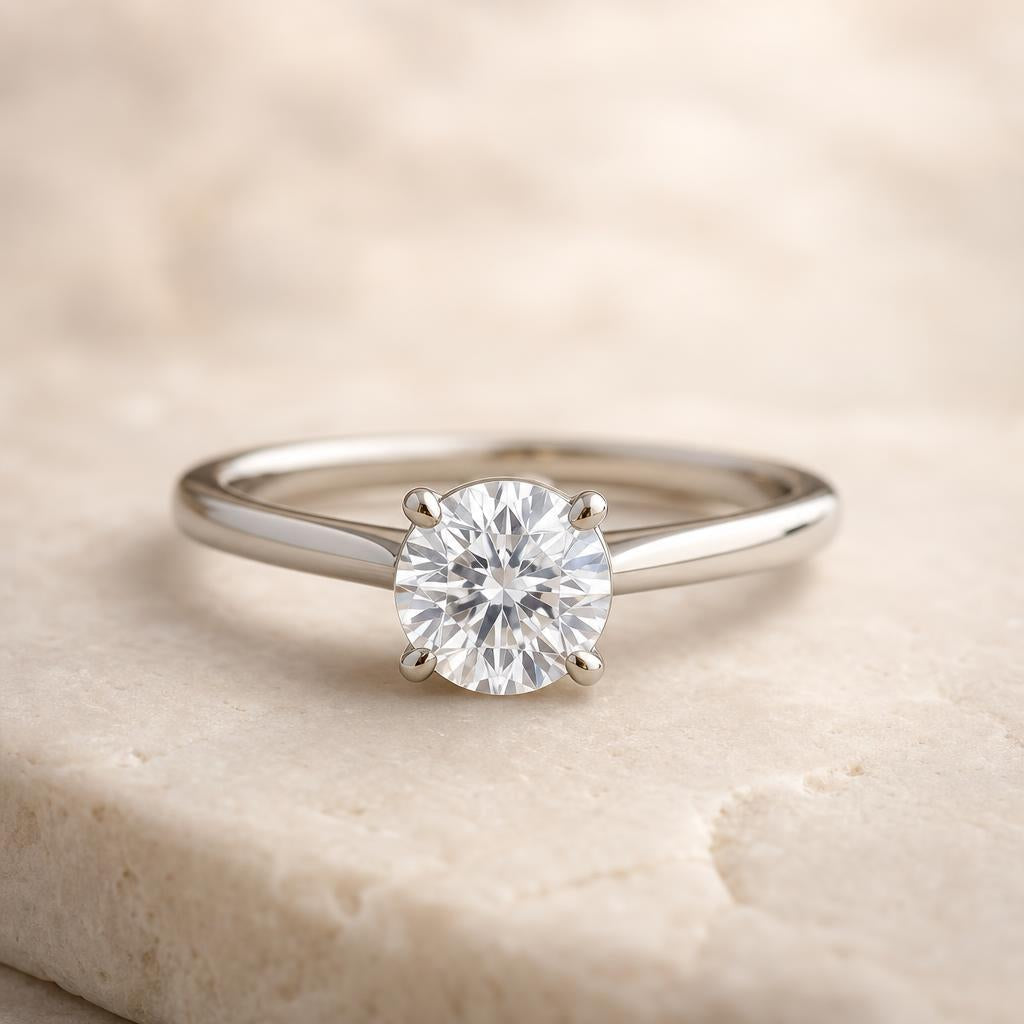
The Best Solitaire Engagement Rings: Timeless Single-Stone Styles Ranked
There is a reason the solitaire has been the engagement ring of choice for more than a century. One stone. One band. Nothing competing for attention. When the setting disappears, the diamond takes centre stage — and that is exactly the point.
Solitaire rings look effortless, but they reward careful choosing. The cut you select, the way the stone sits in its setting, the metal underneath — all of it shapes how the ring looks and how it wears every day. This guide walks through the best solitaire styles in the Gemiros collection, what makes each one worth knowing about, and how to decide which version belongs on your hand.


What makes a solitaire different from every other ring style?
Most ring styles add things: a halo of pavé stones around the centre diamond, accent stones along the band, milgrain borders, or split shanks. All of these are beautiful additions that can amplify sparkle and create visual complexity.
A solitaire does the opposite. It removes everything that is not essential — and what is left is just the stone and the metal that holds it. That restraint is the whole point. When there are no surrounding stones competing for attention, every ray of light that hits the ring lands on a single, perfectly positioned diamond.
This is why solitaires tend to read as expensive and intentional, even when the stone itself is modest in size. The setting is not distracting the eye or adding visual noise — it is framing the stone and stepping back.
Worth knowing: Solitaires also age exceptionally well. Halo styles and pavé bands follow micro-trends in setting design that shift every decade; a solitaire from fifty years ago looks nearly identical to one made today. If you want a ring that will feel current through every decade of your life, the solitaire is a very reliable choice.
The round brilliant solitaire: still the most widely chosen cut in the world
Round brilliant is by far the most popular cut for solitaire engagement rings — and for good reason. The geometry of a round brilliant is specifically engineered to maximise light return. Every facet is angled to catch incoming light and reflect it back toward the viewer. The result is that signature fire and brightness most people associate with the word "diamond."
When you set a round brilliant in a solitaire setting, there is nowhere for the light to go except straight back to you. A 4-prong setting — which holds the stone at four cardinal points — exposes the maximum amount of the stone's crown, letting more light enter from the sides. A 6-prong setting grips the stone at six points, which is marginally more secure and gives the ring a slightly more architectural silhouette.
The Stella Ring is our round brilliant solitaire. A generously sized stone sits at a flattering height in a clean 4-prong setting that keeps the focus entirely on the stone. Available in both white silver and warm rose gold, it is the ring most people picture when they hear the words "engagement ring."

The Stella Ring
The textbook answer to what an engagement ring looks like. A high-clarity round brilliant held in a clean 4-prong solitaire setting — understated, timeless, and effortlessly elegant. Available in silver or rose gold.
Shop The Stella Ring →The oval solitaire: the same brilliance with a more flattering silhouette
Oval engagement rings have grown considerably in popularity over the past decade, and the oval solitaire in particular has become a modern classic in its own right. Visually, oval offers nearly everything the round brilliant does — the same faceting structure, the same light performance, the same fire and sparkle — but in a shape that does something extra: it elongates the finger.
Because the oval stone runs lengthwise along the hand rather than sitting as a symmetrical circle, it creates a slimming, lengthening optical effect on shorter or wider fingers. For many people, the oval solitaire is a more flattering choice than the round, even when the stone is exactly the same carat weight.
There is also something slightly more distinctive about an oval solitaire — it reads as a considered choice rather than the default, which appeals to buyers who want something classic but with a quiet individuality. The Odette Ring in gold captures this beautifully: a 3.5 carat oval stone in a clean setting, finished in a warm tone that suits a wide range of skin tones.
✦ Pro tip: When comparing oval to round in photographs, the oval will often appear larger. Because the stone covers more surface area along its length, it creates a bigger visual impression face-up than a round stone of the same carat weight — something worth keeping in mind if maximum visual presence matters to you.

The Odette Ring — Gold
A 3.5 carat oval simulated diamond in a clean solitaire setting, finished in warm gold. One of the most consistently popular rings in the collection — its combination of generous stone size, clean setting, and elongating silhouette makes it genuinely hard to argue with.
Shop The Odette Ring →Beyond round: three stone shapes worth considering for a non-traditional solitaire
The round brilliant dominates sales figures, but it is far from the only shape that works beautifully in a solitaire setting. If you want the clean, unfussy aesthetic of a solitaire with a more distinctive silhouette, three shapes are worth serious consideration.
The Asscher cut: architectural and timeless
The Asscher cut is a square stone with heavily cropped corners and a stepped faceting structure — a series of concentric squares that draw the eye down into the stone rather than bouncing light outward. Where a round brilliant is bright and sparkly, an Asscher is deep and mesmerising: jewellers often describe it as having a "hall of mirrors" effect.
Asscher cuts were the stone of choice during the Art Deco period, and they carry that precision and geometry with them. An Asscher solitaire is an architectural choice — it suits women who are drawn to clean lines, graphic shapes, and a certain confident understatement. The Échelon Ring is our Asscher solitaire: sharp, structured, and quietly spectacular up close.
The pear cut: versatile and unexpectedly bold
A pear-cut solitaire is perhaps the most versatile of the non-round choices. The teardrop shape works beautifully in a traditional north-south orientation — point toward the fingertip, which elongates the finger further — or in the increasingly popular east-west setting, where the stone rests horizontally across the finger for a modern, confident look.
The Ondine Ring takes the east-west approach, and it is quietly one of the most striking rings we carry. The 2.0 carat pear-cut stone sits horizontally in a fluid wave-shaped band, creating a silhouette that is genuinely unlike anything you will find in a conventional jewellery window.

The Ondine Ring
A 2.0 carat pear-cut stone set horizontally in a fluid wave-shaped band. The east-west orientation gives this solitaire an unexpectedly bold, modern silhouette — distinctly different from anything you will see in a traditional jewellery display. Distinctive without being loud.
Shop The Ondine Ring →How to choose your solitaire: four things worth knowing before you buy
Once you have settled on a stone shape, a few practical considerations will shape how your ring looks and wears every day.
Setting height. A higher setting lifts the stone further from the band, which maximises light entry and gives the ring a more prominent, jewellery-box look. A lower-profile setting sits closer to the hand — less snagging, better comfort during activity, and a slightly more understated silhouette. Neither is better than the other; it depends entirely on your lifestyle and what you find more appealing.
Prong count. Four prongs expose the maximum surface area of the stone to the light and create a clean, minimal look. Six prongs add two more grip points, which is marginally more secure and gives round stones a more symmetrical circular appearance. For ovals and other non-round shapes, four-prong settings are generally the cleaner choice.
Metal tone. White-toned metals make the stone appear as bright white as possible and suit cool skin tones particularly well. Rose gold adds warmth that works beautifully with warmer or olive complexions, and it carries a romantic, slightly vintage quality. Yellow gold gives the ring a rich, traditional feel and currently reads as a confident, intentional choice. All three metal tones work with all stone shapes.
Stone size versus face-up size. Carat is a measure of weight, not surface area. Different cuts use their carat weight differently: an oval or elongated pear stone will cover more area face-up than a round stone of the same carat weight, simply because of its shape. If maximum finger coverage matters to you, elongated cuts offer more visual presence per carat than round.
Worth knowing: If you are drawn to a solitaire for its clean, minimal look, it is worth considering one as a travel ring too. A solitaire without an intricate halo or pavé band is significantly less prone to stone loss, far easier to clean, and considerably less stressful to travel with than a more elaborate design. Many customers use a Gemiros solitaire as a stand-in for a more precious ring on holiday — which, as a side benefit, also buys valuable time to decide on the forever ring without any pressure to rush.
Quick Takeaways
- Solitaires put all focus on one stone — they read as elegant and confident precisely because of what they leave out.
- Round brilliant is the most popular cut globally, offering the best light return and a genuinely timeless silhouette.
- Oval solitaires offer near-identical sparkle to round with the added benefit of elongating the finger and appearing larger face-up per carat.
- Step-cut shapes like Asscher offer a different kind of beauty: deep, geometric, and mesmerising up close rather than broadly sparkly.
- Pear cuts work in traditional north-south orientation or the increasingly popular east-west — a more modern take on the solitaire form.
- Metal tone, prong count, and setting height each meaningfully change how a solitaire looks and wears daily — worth considering before you buy.
Frequently asked questions
What exactly is a solitaire ring?
A solitaire ring features a single centre stone set alone on a plain or lightly detailed band — no side stones, no halo, no pavé accents. The stone is the entire focus of the design. Solitaire settings can be adapted to almost any stone shape: round, oval, pear, Asscher, emerald, cushion, and many others.
Is a solitaire a good choice for an engagement ring?
It is the most popular engagement ring style in the world, and has been for well over a century. The solitaire suits an enormous range of personal styles — from minimalist and modern to classic and romantic — precisely because it lets the stone do all the talking. It also ages exceptionally well, never looking dated or overly of its time.
Are solitaire rings suitable for everyday wear?
Generally, yes — and in some respects more so than halo or pavé styles. Without a border of small stones surrounding the centre stone, there are fewer stones that can loosen or be lost over time. A simple band is also far less likely to snag on fabric or catch on skin. If you are particularly active, a low-profile solitaire is one of the most practical engagement ring choices available.
What is the most flattering stone shape for a solitaire?
This depends on your hand shape and finger length. Oval and pear shapes tend to be the most universally flattering because their elongated form creates a lengthening effect on the finger. Round stones are always elegant. Asscher and emerald cuts suit longer fingers particularly well, as their geometric structure can look slightly boxy on very short fingers. The most practical approach is to browse a range of shapes at a similar carat weight and see which silhouette appeals to you most.
Can I stack other rings with a solitaire?
Absolutely. Solitaires stack beautifully, partly because the clean band leaves plenty of room for a companion ring on either side. A thin curved wedding band on one side, a delicate pavé band on the other — the solitaire holds the overall look together without competing with either. It is one of the more stack-friendly ring styles available.
Whether you are drawn to the reassuring familiarity of a round brilliant or the architectural confidence of an Asscher cut, the solitaire rewards the decision to keep things clean. Take the time to explore the styles above — a ring this meaningful deserves as much consideration as you want to give it.


