

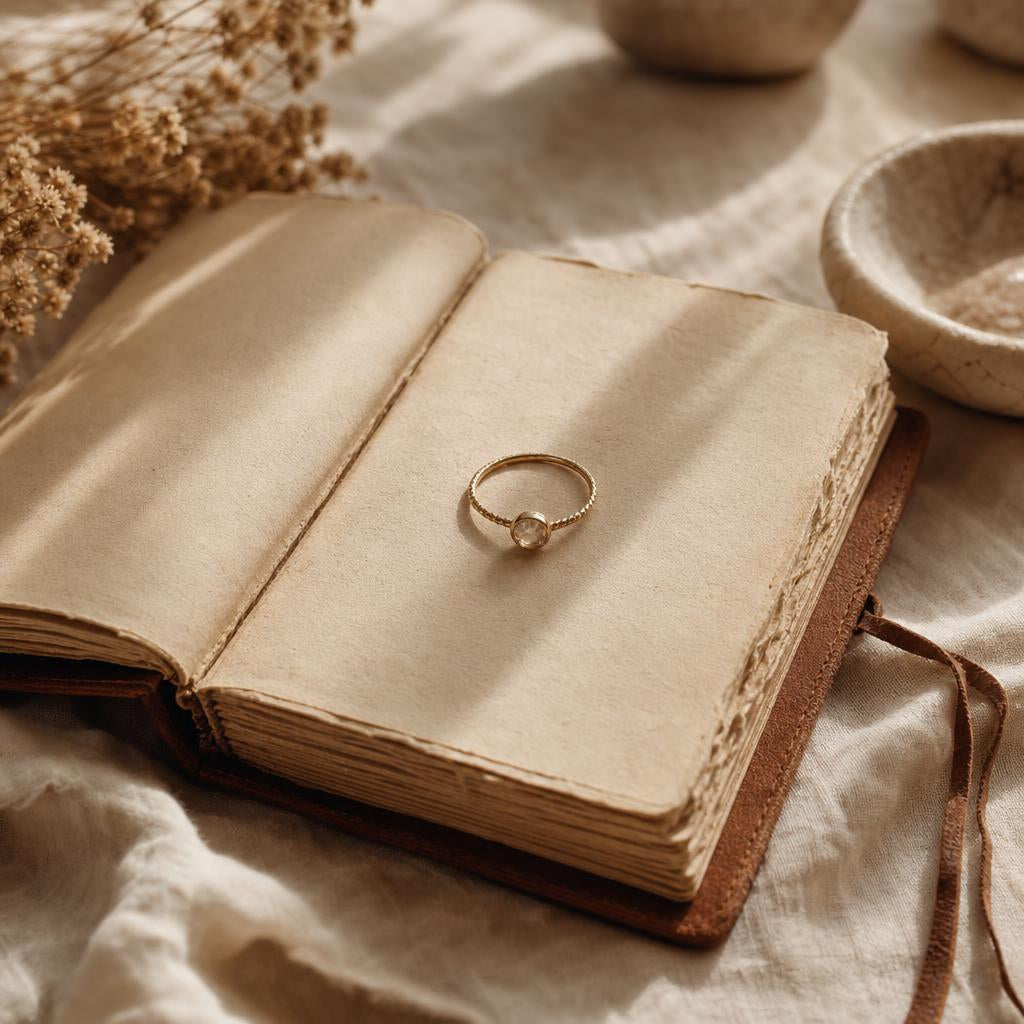
Jewelry as Memory-Keeping: Why Some Rings Matter More Than What They Cost
The ring you reach for without thinking isn't usually the one that cost the most. It's the one that was on your hand the day you got the job, or the trip you took alone the year everything changed, or the ordinary Tuesday you decided to stop waiting for a reason. Jewelry remembers things you'd otherwise let slip.
That's the quiet argument for buying (or keeping) a ring for what it means rather than what it's made of. A price tag fades from memory almost immediately. A moment doesn't — and the right piece can hold onto it for decades.


Why a Ring Becomes a Memory and Not Just an Object
Psychologists who study attachment to objects have a name for it: possessions become extensions of identity when they're tied to an experience, not just a purchase. A ring bought because it was on sale rarely earns that status. A ring worn on the day you crossed a finish line, said goodbye to someone, or finally chose yourself over what everyone else expected — that one does.
It isn't really about the ring at all. It's about repetition. Every time you look down and see it, you're handed a small, involuntary flashback to whatever it's attached to. Over years, that adds up to something closer to a diary than an accessory — one you wear instead of read.
Worth knowing: The pieces people describe as "irreplaceable" are almost never the most expensive ones in their collection. They're the ones worn during a specific, nameable chapter of life — which is a detail no price tag can manufacture after the fact.
The Rings That Tend to Become Keepers
Not every ring is destined to carry memory the same way. A few patterns show up again and again in the pieces women describe as meaning the most to them.
The one you bought for yourself, on purpose
Self-purchased jewelry carries a specific kind of weight, because there's no ambiguity about the intention behind it. Nobody guessed your size wrong or picked a style that wasn't quite you — you chose it, deliberately, which makes it a small, wearable record of a decision you made for yourself.
The one tied to a single, specific day
A ring worn to a graduation, a hard conversation, or a first solo trip absorbs the emotional charge of that day almost by accident. You don't have to try to remember — the ring does the remembering for you, every time you put it on again.

The Paris Ring
A pear-cut center stone with a hidden halo underneath — the kind of ring that quietly becomes attached to wherever you were when you first wore it.
Shop The Paris Ring →The one that outlasted a hard year
Some rings are bought during difficult chapters — not to celebrate anything, but to mark the fact that you got through it. Those pieces tend to be worn the longest, because taking them off can feel like letting go of the proof that you made it to the other side.
✦ Pro tip: If you want a piece to become a genuine keeper rather than a passing purchase, wear it during the moment it's meant to mark — don't save it "for later." A ring that's actually present for the memory is the one that ends up carrying it.
Why the Cost Almost Never Matches the Meaning
Ask anyone to describe their most sentimental piece of jewelry, and cost rarely comes up unprompted — even when the piece was genuinely expensive. What gets mentioned instead is who was there, what changed afterward, or how it felt to finally buy it. That's a useful thing to remember before assuming a bigger price tag guarantees a bigger emotional payoff. It doesn't. A modestly priced ring worn through a meaningful year will almost always out-sentiment an expensive one bought on a whim.
This is part of why simulated diamond rings have found such a devoted audience among women who care more about the story than the certificate. The ring still does its job — it still catches light, still photographs beautifully, still feels substantial on the hand — without asking you to treat it like a vault piece you're afraid to actually live in.

The Majesté Ring
An elongated cushion-cut center stone with a hidden halo and slender pavé band — quiet grandeur that's meant to be worn often, not saved for a special occasion.
Shop The Majesté Ring →How to Turn an Ordinary Ring Into a Memory-Keeper
You don't need a milestone to start this. A ring becomes meaningful through use and attention, not through the occasion that technically justified the purchase. A few ways to help that happen on purpose:
- Wear it during the thing you want it to remember. A ring bought "for later" rarely gets attached to anything specific.
- Say why you bought it, out loud, to someone. Naming the reason — even briefly — cements it in a way that silence doesn't.
- Let it get a little worn. A ring that's clearly been lived in tells a more convincing story than one kept pristine in a box.
- Resist buying its replacement too soon. Meaning needs time to accumulate; a ring swapped out every season rarely gets the chance.
The Difference Between a Keepsake and a Just-in-Case Ring
Plenty of jewelry boxes hold a piece that was purchased with a vague, unspoken justification — "it'll go with everything," or "I might need it someday." Those rings rarely become sentimental, because they were never attached to anything specific in the first place. There's no moment to remember, so nothing accumulates.
Compare that to a ring bought with intention, even a small one: to mark finishing something hard, to celebrate an ordinary Tuesday that felt worth noting, to replace a piece that no longer fit who you'd become. The difference isn't the ring itself — it's whether you gave it a job to do. A keepsake has one. A just-in-case ring is still waiting for its assignment, and most never get one.
What to Do With Jewelry That Used to Mean Something
Meaning can fade, too — a ring from a relationship that ended, a gift from someone you've grown apart from, a piece that marked a version of yourself you've since outgrown. None of that erases what it meant at the time, but it doesn't obligate you to keep wearing it, either.
If a piece no longer fits the story you're telling with your life, it's fair to retire it — into a keepsake box, a memory drawer, or someone else's hands entirely. The ring did its job. It doesn't need to keep doing it forever for that to have been true.
Quick Takeaways
- Meaningful jewelry is built by repetition and timing, not by price
- Self-purchased and moment-specific rings tend to become the most sentimental pieces
- Wear a ring during the thing you want it to remember — don't save it "for later"
- A modest ring worn through a real chapter usually outlasts an expensive one bought on a whim
- It's okay to retire a piece once its story no longer fits who you are now
Frequently Asked Questions
Does a ring need to be expensive to become sentimental?
No — if anything, the opposite is often true. Sentimental value comes from repetition and timing: wearing a piece during a specific, memorable chapter of life. A modestly priced ring worn through a meaningful year will usually mean more than an expensive one bought without any story attached.
Is it strange to buy myself a ring to mark a personal milestone?
Not at all — self-purchased jewelry tends to carry more intentional meaning than gifted pieces, precisely because you chose it for yourself, on purpose, for a reason only you fully understand. Many women describe their self-bought rings as their most sentimental pieces for exactly this reason.
How do I make a new ring feel meaningful rather than just decorative?
Wear it during whatever you want it to remember, rather than saving it for later. Naming the occasion out loud, even briefly, and letting the ring show a little natural wear over time both help it become genuinely attached to a memory instead of sitting in a box as a nice object.
Is it okay to stop wearing a ring that used to mean something?
Yes. A ring's meaning is tied to a specific chapter, and it's normal for that chapter to close. Retiring a piece — to a keepsake box or to someone new — doesn't undo what it once meant; it just acknowledges that the story has moved on.
The most meaningful piece in your collection probably isn't the one you'd insure first. It's the one that quietly did its job of remembering something you'd otherwise have let go of — and that kind of value was never going to show up on a price tag anyway.


