

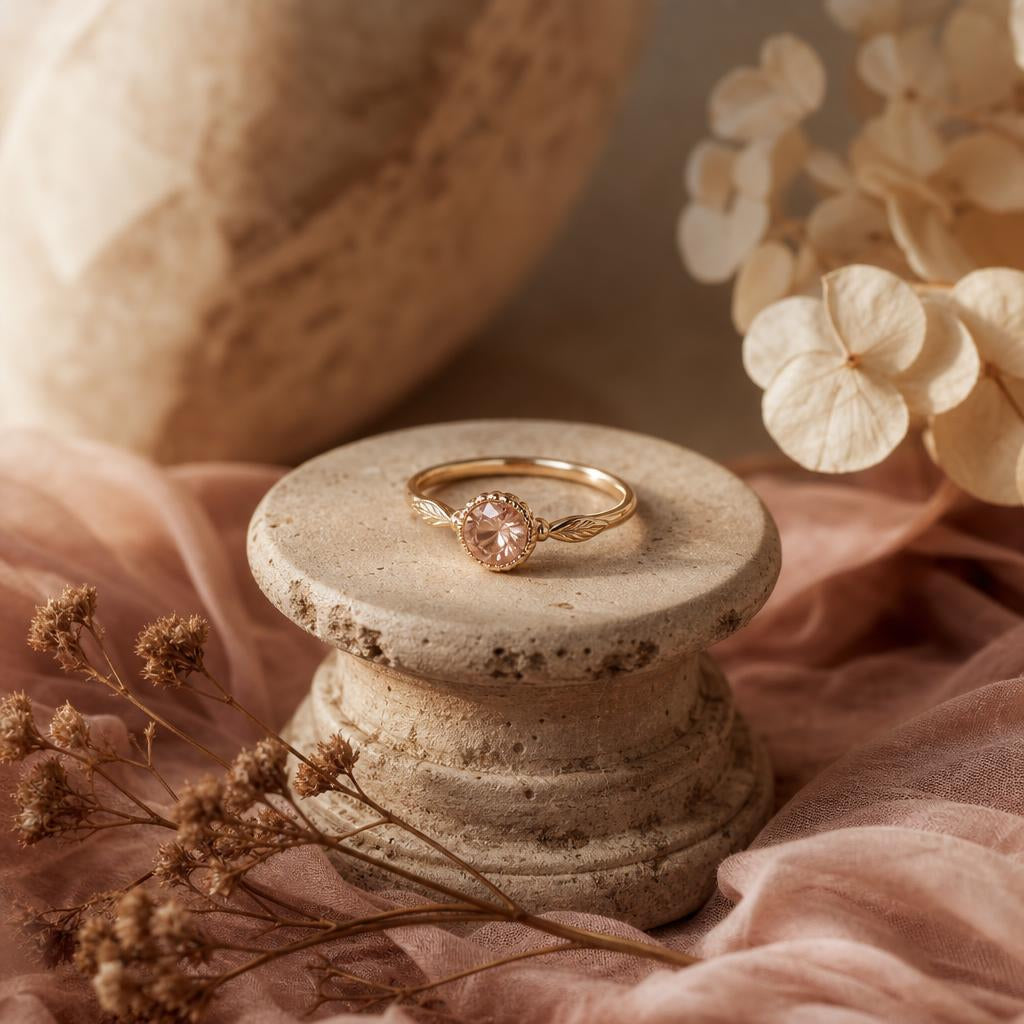
Buying a Ring During a Hard Year: Why Some Women Mark Difficult Chapters With Something Beautiful
Some years ask more of you than others. A diagnosis, a breakup, a job that ended badly, a loss that reshaped everything around it — the kind of year you get through rather than enjoy. It's not the kind of chapter anyone plans a celebration for. And yet more and more women are choosing to mark it anyway, with a ring bought for no other reason than that they made it through.
There's no rulebook for this. It isn't a reward for surviving something, and it isn't meant to erase what happened. It's simply a way of putting something beautiful on your hand that says: this mattered, and so did getting through it. Here are a few pieces that work well for exactly that.


Why a Hard Year Deserves Something to Mark It
Most jewelry marks a happy occasion by default — an anniversary, a graduation, a proposal. There's rarely a script for the years that were simply difficult: the year you moved out on your own, the year you finished treatment, the year you rebuilt a life you didn't expect to be rebuilding. Those years don't come with a registry or a party, but they change you just as much, sometimes more.
Buying a ring to mark one of those chapters isn't about pretending it was good. It's about acknowledging that it happened, that you're on the other side of it, and that you'd like something on your hand that quietly reflects that — not a trophy, just a marker. A lot of women describe it less as celebrating the hard year and more as closing it, deliberately, with something that's entirely theirs.
The Kind of Ring That Actually Works for This
There's no single "right" style for a ring like this, but a few qualities tend to matter more than usual. It should feel like it was chosen, not just picked up — something with a bit of intention behind the design, rather than the most generic option available. It should be a ring you'll want to keep wearing well after the year itself has faded, which usually rules out anything too trend-driven or too literal. And it helps if the ring has some kind of story to it, even a small one, because that's often what makes the piece feel like it's actually marking something rather than just decorating the moment.
Something With a Little Meaning Built In
Names and design details matter more here than they would for an everyday purchase. A continuous eternity band — a circle with no beginning or end — reads naturally as "this chapter is closed" in a way a single-stone ring doesn't quite manage. A bezel setting, where each stone gets its own frame rather than sharing prongs with its neighbors, can feel like a nod to standing on your own. None of this needs to be literal or explained to anyone. The meaning is allowed to be private.

The Amore Ring
A row of brilliant oval stones link together in an unbroken line — a design that reads as continuity and resilience rather than a single, fleeting sparkle.
Shop The Amore Ring →Or Something Deliberately Simple
Not everyone wants a design with a story attached, and that's just as valid. Sometimes the point is exactly the opposite — a ring plain enough that it doesn't ask anything of you, that you can put on without thinking and take comfort in precisely because it isn't trying to say anything. A quiet pavé band does that well. It marks the moment simply by existing, without needing to explain itself.

The Beatrice Ring
A round stone in a delicate, vintage-detailed pavé band — understated enough to wear every day without it feeling like a statement you have to live up to.
Shop The Beatrice Ring →You Don't Need a Reason Beyond the Year Itself
It's worth saying plainly: surviving a hard year is reason enough on its own. You don't need it to double as an anniversary or a birthday to justify the purchase, and you don't need anyone else's approval to know it's warranted. This tends to be the part women get stuck on — not whether the ring is nice, but whether they're "allowed" to buy something for a reason that isn't a conventional milestone. The honest answer is that the reason doesn't need to be conventional to be real, and it's the same logic behind the case for buying yourself a ring without waiting for a reason to present itself.
If it helps to reframe it, think of it less as a purchase and more as evidence — something tangible that says a specific chapter happened and you were the one who got through it. That's a legitimate thing to want physical proof of, and it's exactly the kind of purchase that tends to feel different from ordinary spending, in a good way.
Worth knowing: Women who buy a ring to mark a hard year consistently describe wearing it differently than other jewelry — checking in with it on harder days, rather than simply wearing it and forgetting it's there. That's not a coincidence; it's usually the entire point of choosing the piece deliberately in the first place.
How to Choose Without Overthinking It
Because this kind of purchase can carry more emotional weight than a typical one, it's easy to spend weeks deliberating over the "right" choice and never actually buy anything. A simpler approach: pick the design that you were drawn to before you started overthinking it, and trust that instinct. If a specific detail — a bezel setting, a particular cut, a certain metal tone — caught your eye without you fully being able to explain why, that reaction is usually worth more than a spreadsheet of pros and cons.
It also helps to separate this purchase from your existing collection entirely, rather than trying to make it match or coordinate with what you already own. This ring doesn't need to stack with anything or complement a stack you already wear — it's allowed to exist on its own, worn alone, exactly the way the year itself stood apart from the ones around it.
What This Ring Doesn't Have to Be
It doesn't have to be expensive to mean something — the significance comes from the decision to buy it, not the price tag attached. It doesn't have to be permanent in the sense of never changing hands or fingers either; plenty of women eventually move a ring like this to a different finger, or retire it to occasional wear, once the memory of the year has softened. And it doesn't need to be explained to anyone who asks about it. "I bought it for myself this year" is a complete answer on its own, and it's one nobody is entitled to push past.
Quick Takeaways
- A ring bought to mark a hard year doesn't need a conventional occasion attached to it — the year itself is reason enough.
- Continuous or bezel-set designs often read as "closure" or "standing on your own," if that kind of quiet symbolism appeals to you.
- A deliberately simple, quiet band is just as valid a choice as something with more built-in meaning.
- Choose the design you were instinctively drawn to rather than deliberating for weeks — this purchase doesn't need to be perfectly rational.
- You never owe anyone an explanation beyond "I bought it for myself this year."
Frequently Asked Questions
Is it "too much" to buy a ring just because a year was hard, with no other occasion attached?
No. Plenty of women buy jewelry for anniversaries and birthdays without a second thought — a genuinely difficult chapter is at least as legitimate a reason, arguably more so.
Should the ring have obvious symbolism, or is that unnecessary?
Entirely optional. Some women want a design with built-in meaning, like a continuous eternity band; others prefer something plain that doesn't ask to be interpreted. Both approaches work equally well.
Does this ring need to match or stack with rings I already own?
Not at all. It's usually more meaningful worn on its own, separate from an existing stack, precisely because the year it marks stood apart from the ones around it.
What if I want to stop wearing it once the memory feels less raw?
That's completely normal. Many women move a ring like this to a different finger or wear it only occasionally as time passes — it doesn't diminish what it meant when you chose it.
Not every chapter worth marking is a happy one, and there's nothing wrong with choosing to acknowledge the hard ones too. A ring bought this way isn't a celebration of difficulty — it's a small, permanent piece of evidence that you were there, that it ended, and that you're still moving forward. That's worth something on its own, no other occasion required.


