

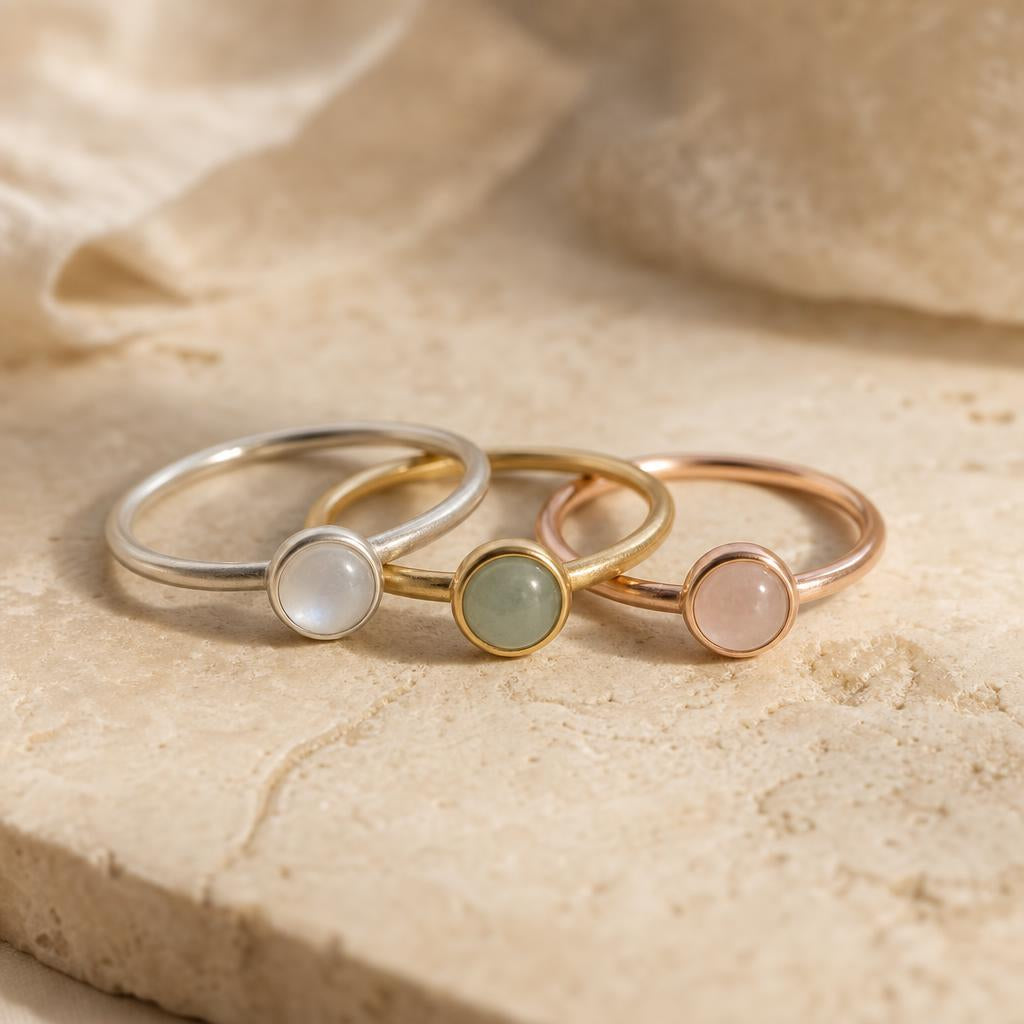
The Best Bezel-Set Rings: Our Top Picks for the Low-Profile, Durable Setting
There's a particular kind of ring you can forget you're wearing — not because it isn't beautiful, but because it simply doesn't get in the way. No prongs to snag on a sweater. No sharp edges digging into the finger next to it. Just a smooth, unbroken line of metal wrapped around a stone that still catches the light exactly the way you want it to. That's the quiet appeal of a bezel setting, and it's why more women are choosing it as their everyday ring rather than saving it for special occasions.
If you've never shopped for one on purpose, it's easy to walk past bezel styles in favor of something with more visible sparkle. But once you understand what the setting actually does — and see it done well — it's hard to unsee the appeal. Here's where to start.


What Makes a Setting "Bezel," Exactly
A bezel setting is exactly what it sounds like: a thin rim of metal that wraps entirely around the outer edge of a stone, holding it in place from the sides rather than gripping it with prongs from above. Think of it as a frame rather than a claw. The stone sits flush against the metal, with no gap between the two, which is what gives bezel rings their signature clean, unbroken silhouette.
This is a different philosophy from most engagement ring settings. A bezel setting trades some of the openness and light-play of a prong setting for something sturdier and quieter — the stone reads as part of the band rather than something perched on top of it. It's a setting more often associated with vintage design, but it has become one of the more popular choices among buyers who want their ring to survive real life without losing its shape.
Why Bezel Settings Are Having a Moment
The renewed interest in bezel styles isn't really about trends — it's about how women actually live now. More of us wear one ring for everything: the gym, the office, cooking dinner, travel. A setting that can quietly handle all of that without needing to come off constantly has real, practical value, and it shows in what's selling.
The biggest reason bezel settings win over buyers is durability. Because the metal fully encircles the stone, there's nothing raised or exposed to catch on gloves, pockets, or upholstery, and nothing thin enough to bend out of shape if the ring takes a knock. It's the same logic behind our no-snag, travel-friendly settings guide — a bezel ring sits low and smooth against the finger, which means it survives suitcases, gym bags, and daily wear in a way that a tall prong setting simply doesn't.
✦ Pro tip: If you already wear a ring or two on the same hand, a bezel style is one of the easiest to stack next to — the flush edge means neighboring bands sit flat instead of catching on an exposed prong.
The second reason is quieter but just as important: bezel settings look deliberate. There's a restrained, architectural quality to a stone framed this way, which is part of why the style pairs so naturally with the broader clean-girl aesthetic so many buyers are gravitating toward right now. It doesn't shout. It also doesn't apologize for being there.

The Beatrice Ring
A round-cut stone framed in a smooth bezel, set into a vintage-inspired pavé band with detailing along the shank. It reads as heirloom without the fragility of an actual antique — sterling silver, nickel-free, and built for daily wear.
Shop The Beatrice Ring →How Bezel Compares to Prong and Halo Settings
None of these settings is objectively "better" — they solve for different priorities. Here's the honest breakdown of how bezel stacks up against the two most common alternatives.
| Setting | Durability | Sparkle & light-play | Snag risk | Everyday wearability |
|---|---|---|---|---|
| Bezel | Highest — fully enclosed edge | Lower — less light enters from the sides | Very low | Excellent |
| Prong | Moderate — prongs can bend or catch | Highest — stone is fully exposed to light | Higher | Good, with more care |
| Halo | Moderate — small pavé stones need checking | High — extra stones amplify sparkle | Moderate | Good |
The trade-off is simple: a bezel setting sacrifices a little brilliance for a lot of peace of mind. Because the metal covers more of the stone's surface, light can't enter from every angle the way it can with an open prong setting, so the stone reads slightly quieter. What you get in return is a ring that's genuinely harder to damage — which matters more than most buyers expect once a ring becomes part of daily life rather than a special-occasion piece.
Who a Bezel Ring Actually Works For
Bezel settings tend to be the first recommendation for anyone whose hands are busy — literally. If you're active at the gym, work with your hands throughout the day, or simply hate the feeling of a prong catching on something, this is the setting built for you. It's also a smart choice for anyone who's damaged a prong setting before and doesn't want a repeat. Even the guidance around rings, chains and studs at the gym tends to circle back to the same conclusion — a low, flush setting is simply safer around equipment and free weights than anything with raised prongs.
It also works beautifully for anyone who prefers a quieter kind of sparkle. If halo settings or tall solitaires have always felt like slightly too much ring for your day-to-day life, a bezel piece gives you the same stone with a much lower visual volume.
Radiant and step-cut stones look especially striking here
While bezel settings are often associated with round stones, the frame effect is arguably even more dramatic on a radiant or step-cut stone, where the clean, geometric outline of the cut is fully echoed by the surrounding metal. The result is a ring that looks architectural rather than decorative.

The Evangeline Ring — Gold
A radiant-cut stone in a full bezel setting, joined by a pavé band with delicate detailing on either side. The 18k gold vermeil finish warms the whole look without losing any of the setting's clean, structured lines.
Shop The Evangeline Ring — Gold →Caring for a Bezel-Set Ring
The good news is that bezel settings are genuinely low-maintenance compared to most alternatives. Because the stone is fully enclosed, there's less surface area for lotion, soap residue, or dust to collect around the edges — a common complaint with prong and halo settings. A quick wipe with a soft cloth after wear keeps the metal and stone looking sharp.
Worth knowing: The same low-profile quality that makes bezel rings durable also makes them an easy ring to travel with. If you're the type to bring jewelry on every trip, the guidance in our piece on caring for your travel ring applies especially well to bezel styles, since there's simply less to catch, loosen, or knock out of place in transit.
Choosing Your Metal
Every bezel style here comes in sterling silver, 18k gold vermeil, and rose gold vermeil, and the choice genuinely changes the personality of the ring. Silver and white metals sharpen the architectural, modern read of a bezel setting. Gold vermeil softens it slightly, leaning into the vintage association bezel settings carry. Rose gold splits the difference — warm without being traditional. If you're torn, our guide to which metal tone works for your skin is worth a read before you commit, since metal choice affects a bezel ring's overall impression more than it does with a prong setting.
Quick Takeaways
- A bezel setting wraps metal fully around a stone's edge, trading some sparkle for significantly more durability.
- It's the most snag-resistant setting available, making it ideal for the gym, travel, and hands-on daily life.
- Radiant and step-cut stones look especially striking in a bezel frame, thanks to the echoed geometric line.
- Bezel rings require less upkeep than prong or halo settings since there's less surface area to trap residue.
- Metal choice matters more here than in most settings — silver, gold, and rose gold each shift the ring's whole personality.
Frequently Asked Questions
Is a bezel setting less sparkly than a prong setting?
Slightly, yes. Because more metal covers the stone's girdle, less light enters from the sides, so the stone reads a touch quieter than the same stone in an open prong setting. It still catches plenty of light from above — it's simply a more restrained kind of sparkle.
Do bezel rings work for people with active jobs or hobbies?
This is exactly where bezel settings perform best. The fully enclosed edge means there's no raised prong to catch on gloves, equipment, or fabric, which makes it one of the safer settings for anyone whose hands are in near-constant use.
Can a bezel-set ring be resized?
Yes, in most cases a bezel ring can be resized the same way a standard band can, since the setting itself sits independently of the shank. As with any ring, a smaller resize range works more smoothly than a dramatic size change.
Which stone shapes look best in a bezel setting?
Round and oval stones give a soft, classic frame, while radiant and emerald cuts create a more architectural, geometric look because the bezel echoes the stone's straight edges. Both directions work — it comes down to whether you want the setting to feel soft or structured.
A bezel ring isn't the flashiest choice on the shelf, and that's rather the point. It's the ring that keeps its shape through years of real wear, that doesn't ask you to think twice before the gym or a flight, and that still looks considered every single day. If low-maintenance elegance is what you're after, this is the setting worth building your everyday collection around.


