

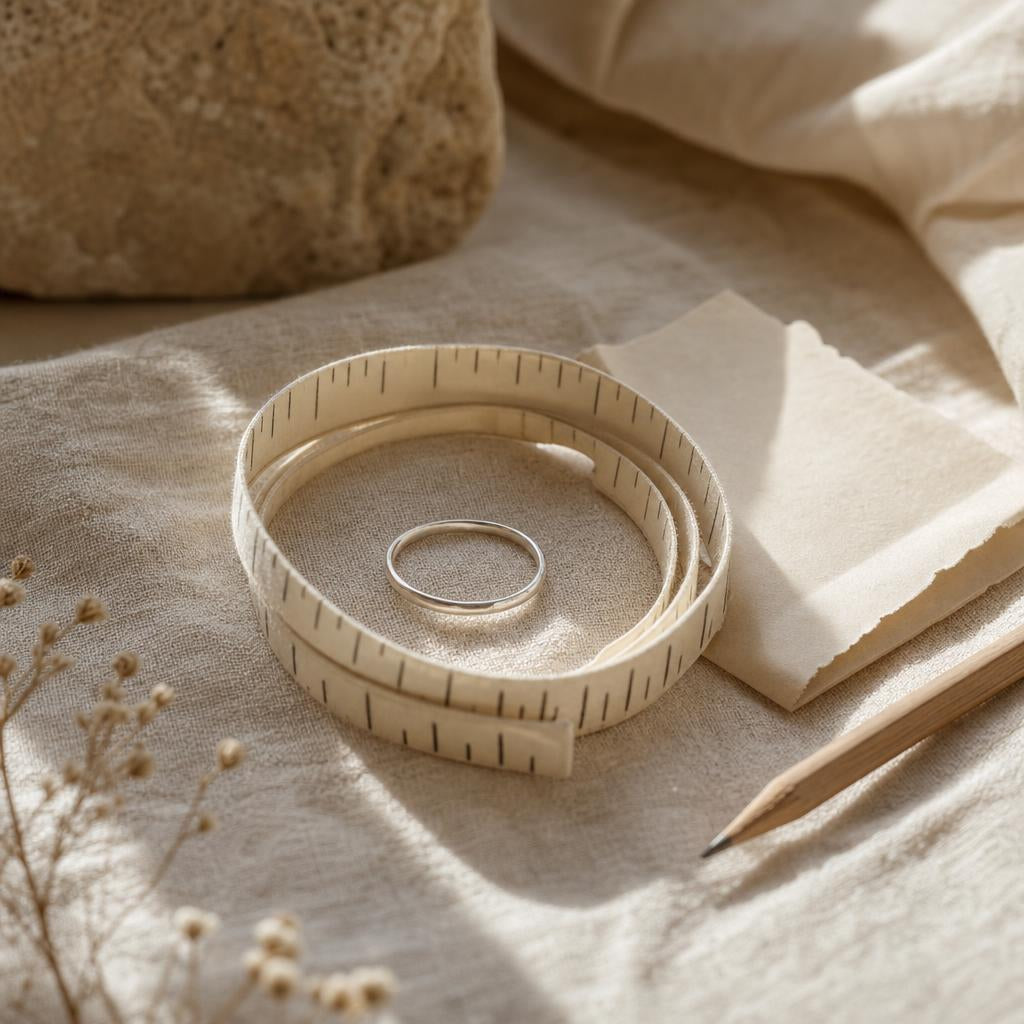
What "True to Size" Means on a Ring Listing — And How to Read a Ring Size Conversion Chart
A ring listing says "true to size." You order your usual number anyway, and it arrives fitting a little tighter than you expected — or looser, sliding past your knuckle with barely a whisper of resistance. You didn't do anything wrong. "True to size" is doing less work than it sounds like it's doing, and once you know exactly what it promises, you'll never second-guess a ring listing again.
It's a small phrase with a specific, limited meaning — and knowing exactly where that meaning stops is the difference between ordering with confidence and ordering by luck. Before we get into that, here's a quick look at a few styles worth knowing, since setting shape and band width both play into how a "true to size" ring actually feels on your hand.


What "True to Size" Actually Promises
When a ring listing says "true to size," it's making one specific claim: the numbered size on the listing corresponds to the standard measurement for that number. A size 7 is built to the size 7 industry standard — roughly 17.3mm in diameter, about 54.4mm around the inside of the band. It's a promise about accuracy against a fixed scale, not a promise about how the ring will feel on your particular finger.
That distinction matters more than it sounds like it should. Two rings can both be an honest, accurate size 7 and still feel completely different once they're on, because the number only measures the inside diameter. It says nothing about band width, stone bulk, or setting height, and all three of those change how snug a ring reads well before the size itself is ever in question.
Worth knowing: "True to size" is a statement about measurement accuracy, not a promise about fit. A listing can be completely true to size and still feel tighter or looser than a "true to size" ring from a different collection, because fit is shaped by more than the number on the tag.
Why the Same Size Feels Different Ring to Ring
A hidden halo pulls sparkle out to the edges of a stone, and that width sits directly against your finger — a size 7 halo ring can read snugger than a size 7 solitaire with the same internal circumference, simply because there's more metal and more surface making contact. The same logic applies to band width in general: a slim 2mm band and a bold 6mm band in the identical size will sit differently across the knuckle, even though both are, technically, an accurate size 7.
Solitaire vs. Halo: A Quick Comparison
| Setting Style | How It Wears at the "True" Size |
|---|---|
| Solitaire (e.g. Stella, Odette) | Slim profile, closest to the raw number on the chart |
| Halo / Hidden Halo (e.g. Ophelia, Maxima) | Reads slightly snugger due to surrounding pavé and setting height |
| Twisted or vintage-inspired band (e.g. Camilla) | Contact points shift across the finger, can feel looser at the base |
None of this means a listing was wrong. It means "true to size" answers one question — is the number accurate — and leaves a second question, how will this specific design feel on you, for you to work out separately.

The Odette Ring
A plain oval solitaire with no halo and no added bulk — the closest thing in the collection to a size that wears exactly like the chart says it should.
Shop The Odette Ring →How to Actually Use a Ring Size Conversion Chart
A ring size conversion chart is the tool that makes "true to size" useful instead of just reassuring. If you already know your size in one system — a US number from a past purchase, a UK letter, or a millimeter measurement from a jeweler — a conversion chart translates it accurately into whatever scale a new listing uses. That's the actual job of the chart: removing ambiguity between systems, not predicting how a specific setting will feel.
The most reliable way to use one: measure an existing ring that already fits the correct finger, note the internal diameter in millimeters, then match that number against the chart rather than trusting a remembered size from another country or another brand. Sizes don't always convert as cleanly as people assume, and a ring bought years ago may not reflect your current size anyway — fingers change more than most people expect.
✦ Pro tip: Cross-reference a listing's stated size against a chart before you buy, not after. If your measured diameter falls between two chart numbers, size up rather than down — a ring that's a touch loose is a quick trip to a jeweler for a guard; a ring that's genuinely too tight isn't wearable at all.
What the Number Doesn't Tell You
The average ring size for women in the US sits around a 6 to 7, and most listings — Gemiros included — build their whole-size runs around that range for exactly that reason. But an accurate average is still just an average. Knuckle width, finger taper, and even the time of day all shift how a technically correct size behaves, which is part of why knuckle size and finger base don't always agree on what "correct" should mean.
This is where a little skepticism actually serves you well. A "true to size" label is a fact about manufacturing accuracy, not a guarantee about your experience. Reading it that way — as one input instead of the whole answer — is what separates a shopper who orders with confidence from one who's just hoping. It's a small shift, and it's exactly the kind of small shift that adds up to genuinely smarter buying.

The Isabella Ring
A pear-cut halo with pavé shoulders — gorgeous on the hand, and a good example of a design where checking the width against your knuckle matters as much as checking the size number.
Shop The Isabella Ring →Reading the Rest of a Ring Listing Like You Know What You're Doing
Once you understand what "true to size" covers, the rest of a listing gets easier to read with the same clear eyes. Decoding the other terms on a ring listing works the same way — most listing language is precise and literal once you know what it's actually claiming, and only sounds vague if you assume it's promising more than it is. Every Gemiros ring runs true to size against the standard US chart, in whole sizes only, and every listing states the setting style up front so you can weigh band width and stone bulk before you order, not after.
Quick Takeaways
- "True to size" means the number is measured accurately — not that every design will feel identical at that number
- Halo and hidden halo settings tend to read slightly snugger than a plain solitaire at the same size
- Cross-check unfamiliar sizes against a standard conversion chart, always measuring an existing, correctly-fitting ring first
- When you're between two sizes, size up — a slightly loose ring is fixable, a tight one isn't wearable
- Band width and setting height matter as much as the number itself when you're predicting fit
Frequently Asked Questions
If a ring is listed as "true to size," can I trust my usual size without measuring again?
Mostly, yes — as long as your usual size was correct to begin with and the new ring's setting isn't dramatically wider or bulkier than what you normally wear. If it's been a while since you were sized, or the new design has a much wider band or a raised halo, it's worth a quick double-check against a ring size conversion chart first.
Does "true to size" mean the same thing across every jewelry brand?
Mostly — most brands build to the same standard US ring size chart, but calibration can vary slightly between manufacturers. Gemiros rings are built to the standard US chart in whole sizes only, so if you already know your standard US size, "true to size" here means exactly that number, nothing rounded or adjusted.
What should I do if my measurement falls between two sizes?
Size up. A slightly loose ring can be tightened inexpensively with a ring guard. A ring that's genuinely too small usually can't be worn at all, and resizing isn't offered on designs with fixed pavé or halo settings — sizing up is the safer call every time.
Why does a halo ring feel different from a solitaire in the exact same size?
Because the size number only measures the inside diameter of the band — it doesn't account for the width of metal or the height of the setting sitting against your finger. A halo's pavé edge adds surface contact that a slim solitaire band doesn't have, which is why the two can feel different even at an identical, accurately "true to size" number.
"True to size" isn't a phrase to be skeptical of — it's a precise, useful claim, once you know exactly what it's claiming. Read it for what it is, cross-reference it against a chart when you need to, and consider the setting alongside the number. Order the next ring after this one with the kind of certainty that has nothing to do with luck.


