

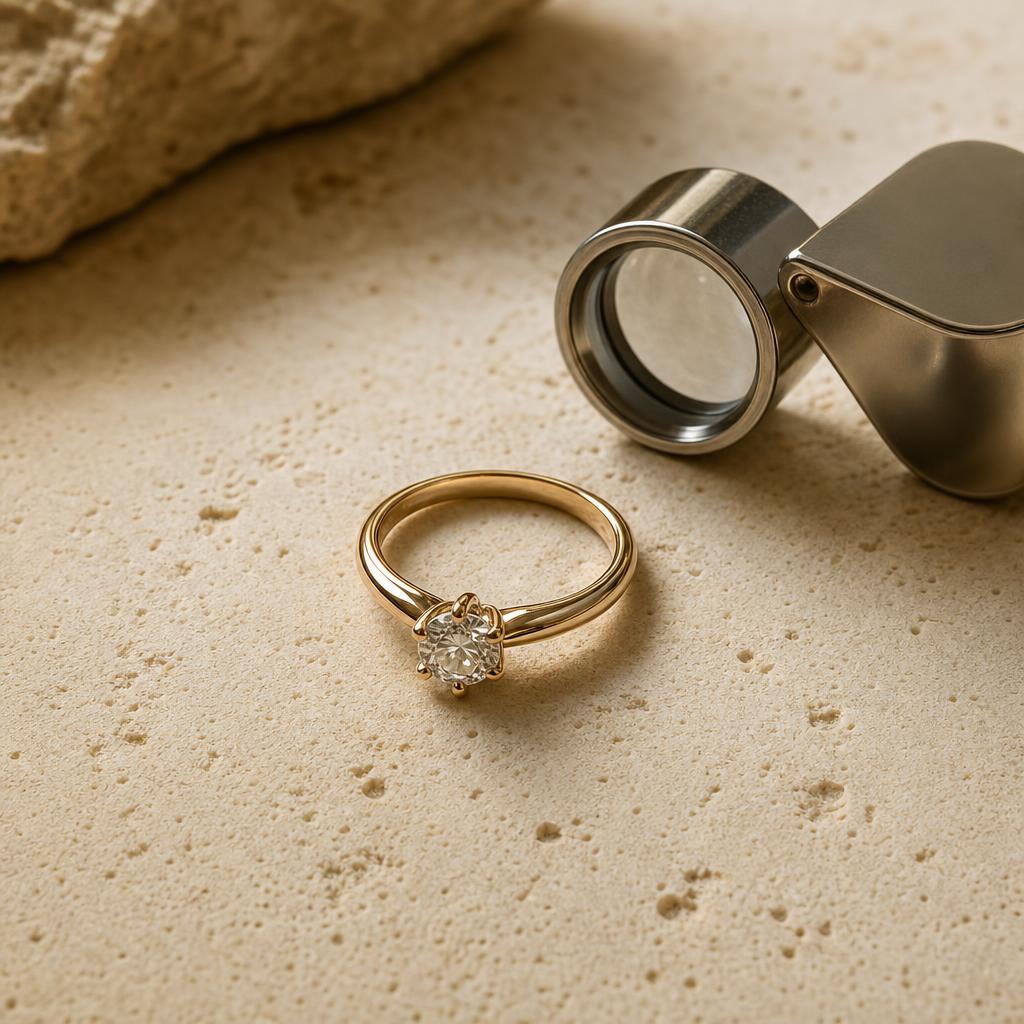
What Does 925 Mean on a Ring? How to Read Every Stamp Inside the Band
Flip a ring over and you'll usually find it: a cluster of tiny numbers pressed into the inside of the band, half-hidden unless you angle it just right toward the light. Most women have seen theirs a hundred times without ever knowing what it says — or why it's there at all.
Those marks aren't decoration. They're a shorthand the entire jewelry industry has used for centuries to state exactly what a piece is made of, and once you know how to read one, you'll never look at a ring the same way again. Here's where to start.


What Does 925 Mean on a Ring, Exactly?
So when you ask what does 925 mean on a ring, the short answer is this: it means the ring is genuine sterling silver — 92.5% pure silver, alloyed with 7.5% of a harder metal, almost always copper. That ratio is not a marketing figure. It's an international manufacturing standard, and it exists for a practical reason: pure silver on its own (99.9%) is too soft to hold its shape as jewelry. It bends, scratches, and dents under ordinary wear. Adding a small measure of copper gives the metal enough structure to survive being worn every day — through washing your hands, typing, sleeping, all of it — without losing its form.
Every Gemiros ring is built on this same 925 sterling silver base, whether the finish on top reads as bright platinum-white, warm gold, or rose gold. The stamp inside the band is the same regardless of color, because the stamp describes the metal underneath, not the plating layer on top.
Worth knowing: 92.5% pure silver to 7.5% alloy is a fixed international standard — any ring stamped 925 anywhere in the world is being held to the exact same ratio.
Why Jewelers Stamp Rings At All
Hallmarking is older than most of the brands using it today. Assay offices in Europe have been testing and marking precious metals for hundreds of years, originally to protect buyers from exactly the kind of deception people still worry about now — a seller passing off a lesser metal as something finer. The number stamped into a ring is, in effect, a maker's promise made permanent: press it into the metal itself, and it travels with the piece for as long as the piece exists, long after a receipt or a listing page is gone.
That's also why the stamp sits on the inside of the band rather than somewhere visible. It was never meant to be decorative. It's a quiet, permanent record — meant to be checked, not admired. Every legitimate jeweler, from a centuries-old assay office to a modern online brand, is ultimately using the same idea: put the truth about the metal directly onto the object, so it can't get lost, edited, or forgotten between the person who made it and the person who eventually wears it.
The Other Numbers You'll See: 750, 585, 18K, 14K
Once you start reading stamps, you'll notice 925 isn't the only number in circulation. A 750 stamp on gold jewelry always means solid 18-karat gold — 75 parts pure gold to 25 parts alloy metal. A 585 stamp means 14-karat gold, or 58.3% pure. These are the same purity system as 925, just applied to a different base metal.
Here's the detail that trips people up: if a ring is stamped 925 and carries a note about gold or rose gold plating — rather than a standalone 750 or 585 — the base is sterling silver with a layer of 18k gold plating over it, not a solid gold ring. That's precisely how Gemiros builds its gold and rose gold pieces: 925 sterling silver at the core, finished in 18k gold or rose gold plating on top. It isn't a lesser version of solid gold — it's a different, deliberate construction, and it's exactly what lets a ring hold the same warm, editorial finish as fine jewelry without asking you to spend anywhere close to what fine jewelry costs.
You'll sometimes see this same construction called gold vermeil, which is simply a specific, regulated version of gold-plated sterling silver — a genuine base of 925 silver with a thicker-than-average layer of gold over it. The terms overlap in casual use, but the underlying idea is the same one the stamp is telling you: real silver underneath, real gold plating on top, two honest materials working together rather than one material pretending to be another.

The Kensington Ring
An emerald cut center stone in a hidden halo, pavé band, finished in warm 18k gold plating over a 925 sterling silver base.
Shop The Kensington Ring →Where to Actually Find the Stamp
On a ring, the stamp almost always sits on the interior surface of the band — the part that touches your finger, not the part anyone else sees. That placement is deliberate: a jeweler wants the mark protected from everyday scuffing, not displayed. On thinner bands or delicate stacking pieces, the engraving can be small enough that it's easy to miss on a first look, especially under indoor lighting.
✦ Pro tip: Look on the inside of the band, usually near the bottom where it would sit closest to your palm. On rings that have been worn for years, the stamp can wear smooth — if you can't see it under regular light, tilt the band toward a window or use your phone's flashlight and camera zoom to bring the engraving into focus.
Is 925 Sterling Silver Real — and How to Tell
Real sterling silver is not a compromise metal, and a 925 stamp is not a hedge. It's the same purity standard used by fine jewelry houses worldwide — the number doesn't change based on price point. What does change is what sits on top of it: rhodium plating for a bright platinum-white finish, 18k gold plating for warmth, rose gold plating for a softer pink tone. The silver underneath is identical either way.
Counterfeit stamps do exist, which is a fair thing to want to rule out. A few checks help: a strong magnet won't stick to real silver at all (base metals dressed up as silver often will), and genuine sterling silver darkens slightly over time when it reacts with air — a plated base metal typically won't tarnish the same way, or will flake instead. Neither test requires a jeweler's loupe or a lab. They're things you can do standing in your kitchen.
How to Tell if a Ring Is Real Silver at Home
- The magnet test: Hold a small magnet near the band. Genuine silver isn't magnetic and won't be pulled toward it.
- The tarnish check: Real sterling silver develops a faint darkening over months of wear, especially where it touches skin oils and air. That's a sign of authentic metal, not a flaw.
- The weight and sound: Sterling silver has real heft compared to hollow base-metal imitations, and it produces a clear, bright tone when gently tapped against another piece of metal.
✦ Pro tip: If a ring shows zero tarnish after years of daily wear, that's usually the plating doing its job well, not evidence the ring is fake — rhodium and gold plating are specifically applied to slow tarnishing on the surface.

The Beloved Ring
A rose gold stacking band, 925 sterling silver at its core — the same standard as every ring it's stacked beside.
Shop The Beloved Ring →This matters most when you're building a stack. Each band in a stack carries its own individual stamp, even when several rings are worn together as one look — so a stack built from pieces of different origins can, in theory, mix purities. Buying a full stack from one source is the simplest way to know every piece meets the same standard.
S925 vs 925: Is There a Difference?
Functionally, no. "S925" and "925" describe the identical purity standard — the "S" simply stands for silver and is more common on jewelry manufactured for international markets. Neither version is a downgrade of the other; they're the same stamp, written two common ways. If you're comparing two rings and one says 925 while the other says S925, that alone tells you nothing about which is better made — you're looking at two rings held to the same 92.5% standard.
Where sellers occasionally get creative is in the letters that ride alongside the number, not the number itself. Marks like "EP" (electroplate) or "GF" (gold-filled) next to a purity stamp are telling you something different — a thin plating over a base metal core, rather than sterling silver all the way through. It's worth reading the full stamp, not just the first three digits.
What a Stamp Doesn't Tell You
A purity stamp confirms what a ring is made of. It doesn't say anything about how it was made, how it will hold up, or what happens if something goes wrong after you've worn it for a year. Those are separate questions worth asking before you buy — regardless of which brand you're buying from.
Every Gemiros ring comes with a one-year warranty and is built nickel-free, so it's safe for sensitive skin — the 925 base doesn't discolor skin the way lower-grade alloys sometimes can. None of that is stamped into the metal. It's the part of the story a stamp alone can't tell you, which is exactly why it's worth knowing before you buy, not after.
Quick Takeaways
- 925 means 92.5% pure silver, alloyed with 7.5% copper — a fixed global standard, not a marketing number.
- 750 and 585 stamps refer to solid 18k and 14k gold respectively; if a ring is stamped 925 with a plating note instead, it's gold-plated sterling silver.
- S925 and 925 mean the same thing — just two common ways of writing the identical standard.
- The magnet test and the tarnish check are both simple, reliable ways to confirm real silver at home.
- A ring's plating (rhodium, gold, rose gold) determines its color; the 925 stamp underneath tells you what it's actually made of.
Frequently Asked Questions
Can a ring be real silver without a stamp?
Yes, though it's less common on modern jewelry. Reputable makers almost always stamp their pieces, since it's the clearest way to state what the metal is. If a ring has no stamp at all, the magnet test and tarnish check are your best next step for confirming what you're looking at.
What's the difference between "925" and "S925"?
None in substance. Both indicate 92.5% pure silver. "S925" is simply a more explicit way of writing the same standard, commonly used by manufacturers selling into international markets.
Does an S925 stamp mean a ring is genuine?
Yes — an S925 stamp indicates genuine sterling silver, the same standard as a 925 stamp. As with any stamped metal, a magnet test and a look for natural tarnish over time are simple ways to confirm the stamp reflects the actual metal.
What does a 750 or 18K stamp mean if my ring isn't solid gold?
If you see 750 or 18K stamped alongside a note about plating, the ring is built on a different base metal — often sterling silver — finished with a genuine layer of 18-karat gold on top. That's a deliberate construction choice, not a lesser one, and it's how most demi-fine gold jewelry is made.
Is 925 sterling silver good quality for everyday wear?
Yes. The addition of copper is specifically what makes 925 silver durable enough for daily wear — rings, unlike display pieces, need to hold their shape through constant use, and pure silver alone can't do that.
Why do some rings have letters next to the number, like "925 ITALY" or a small logo?
Those additions are usually a country-of-origin mark or a maker's mark, layered on top of the purity stamp rather than changing what it means. The number is still the part that tells you the metal content; the letters and symbols around it just add context about who made the piece and where.
Reading a stamp takes about ten seconds once you know what you're looking at, and it's the fastest way to understand exactly what any ring — yours or someone else's — is actually made of. No guessing, no waiting on a jeweler's opinion, no taking a stranger's word for it. Just a small set of numbers, pressed into the metal, telling you the truth about what you're wearing. The next time you catch that little engraving inside a band, you'll know exactly what it's saying — and exactly why it's there.


