

Weight Fluctuation and Ring Size: What Changes, What Doesn't, and How to Plan for It
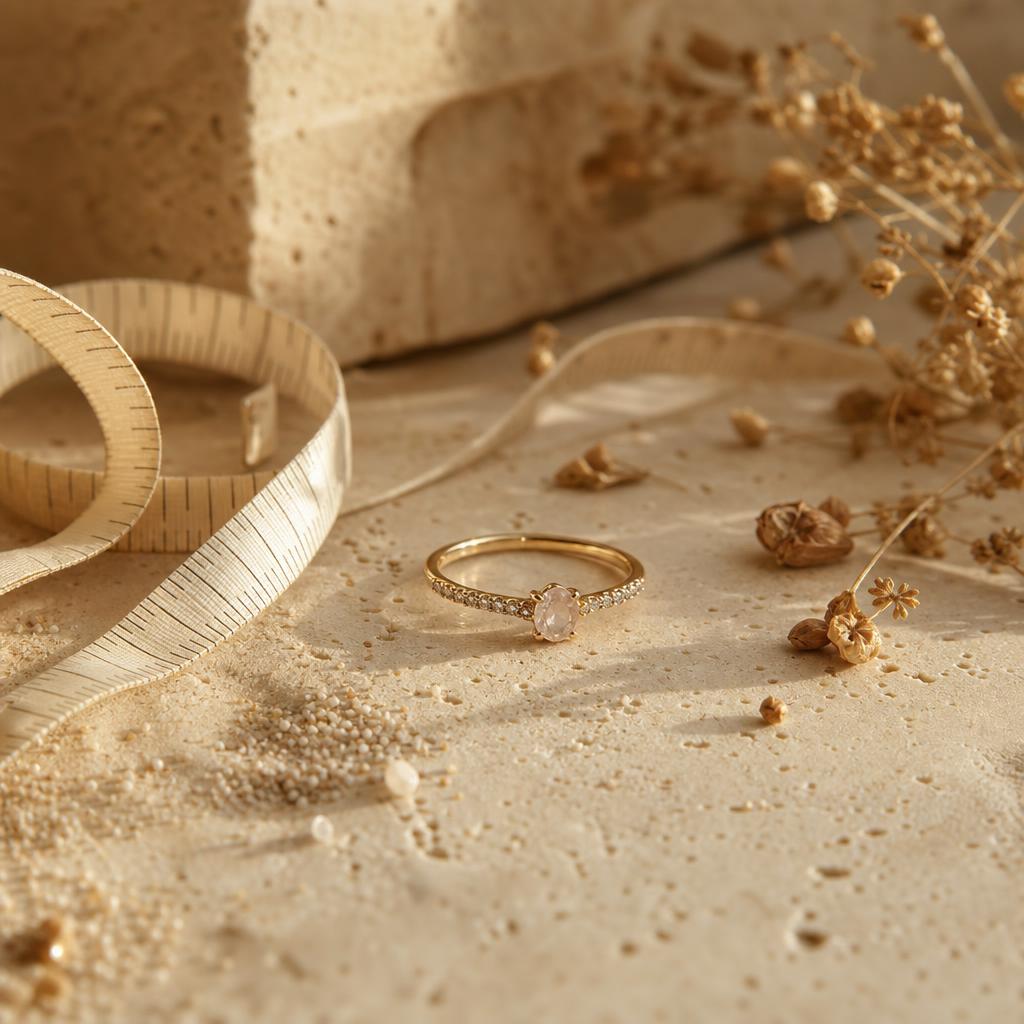
You didn't lose the ring. You didn't bump it out of shape. It just doesn't sit the way it used to — a little tighter by evening, a little loose by morning, or quietly snug in a way it never was the day you bought it. If your weight has shifted over the past few months, your ring size probably shifted with it, and almost no one tells you that going in.
Before we get into why that happens and what to actually do about it, here's a look at a few Gemiros styles that hold up well through exactly this kind of change — some because they're simple to resize, others because their construction makes fluctuation less of an issue in the first place.


Why Your Ring Size Isn't Actually Fixed
It's easy to think of ring size as a fact about you, something measured once at a jewelry counter and true forever after. In reality, it's a measurement of your finger on one particular day, under one particular set of conditions — and fingers are far more responsive to the rest of your body than most people realize.
Fingers are made mostly of soft tissue wrapped around a fixed bone structure. That soft tissue — muscle, fat, fluid — is what actually changes month to month, and it's what a ring is measuring when it's sized. Weight gain adds tissue around the knuckle and base of the finger. Weight loss removes it. Somewhere in between, water retention, sodium intake, temperature, and hormonal shifts move the number around even when your weight on the scale hasn't budged. A ring that fit perfectly in March can feel meaningfully different by August, with nothing "wrong" having happened at all.
Worth knowing: A finger can change by half a size or more from morning to evening, independent of any real weight change — heat, activity, and salt intake all cause temporary swelling. That's a different problem from the gradual shift caused by sustained weight change, and it calls for a different response.
What Changes When Your Weight Changes — and What Doesn't
Weight change doesn't affect every finger evenly, and it doesn't affect every ring the same way. A few patterns are worth understanding before you decide to do anything about it.
The base of the finger, where a ring actually sits, tends to respond to weight change faster and more visibly than the knuckle above it. This is why some people find that a ring that used to slide on easily now has to pass a tighter knuckle to get there — the base has widened, but the knuckle hasn't changed proportionally, or vice versa with weight loss. It's also why the same amount of weight change can affect your ring finger differently than it affects your rings on other fingers; hands don't gain or lose evenly across all ten digits.
What doesn't change is the ring itself. Sterling silver and gold vermeil don't stretch or shrink with wear, and a properly constructed band holds its shape indefinitely. If a ring feels different, the finger moved — not the metal. That distinction matters, because it means the fix is about matching the ring to where your hand is now, not about anything being defective.

The Lumière Ring
A classic round solitaire on a simple silver band — one of the simplest, most affordable styles to resize when your finger changes, since there's no pattern of stones to disrupt.
Shop The Lumière Ring →Should You Resize, or Wait It Out?
The honest answer depends on how long the change has lasted. Temporary swelling — from heat, a salty meal, travel, or a hard workout — resolves on its own within a day or two and never justifies a permanent resize. Sustained weight change is different. If your size has genuinely shifted and stayed shifted for several months, that's a real change worth addressing rather than working around indefinitely.
The general guidance jewelers use is to wait for stability before resizing anything — roughly three to six months of your new size holding steady. Weight in transition, whether up or down, tends to keep moving for a while before it settles, and resizing too early can mean paying for the adjustment twice.
✦ Pro tip: Measure your ring finger at the same time of day, several times over a few weeks, before concluding your size has actually changed. A single measurement — especially one taken after a workout, a flight, or a salty dinner — isn't reliable enough to act on.
Once a change is confirmed as lasting, resizing is genuinely worth doing rather than avoiding. A ring that's too tight can be uncomfortable or even restrict circulation over a full day of wear; a ring that's too loose is at real risk of slipping off and getting lost. Neither is a small inconvenience once you're wearing the ring daily.
The Bands and Settings That Handle Fluctuation Best
Not every ring style responds to sizing changes the same way, and this matters more than most buyers expect when weight is actively in flux. A plain band with a single solitaire, like the Lumière Ring above, is one of the easiest and least expensive styles to resize — a jeweler can adjust the shank without disturbing the setting or the stone at all.
Full eternity bands, where stones circle the entire ring rather than sitting across the top, are the opposite case. Because there's no plain metal section left to cut and rejoin, resizing an eternity band is more limited, sometimes impossible past a size or two, and it's worth knowing that going in rather than discovering it later. If your size is still moving, a half-eternity or single-stone style will simply give you more room to adjust down the line.
Bezel settings sit somewhere in between. The smooth metal edge that wraps the stone is durable and low-snag, which makes bezel rings genuinely comfortable through the kind of daily hand-swelling that has nothing to do with long-term weight change — no pronged edges to catch or feel different as your finger changes size slightly hour to hour.

The Cherish Ring
A bezel-set stacking band with a smooth, rubbed edge — comfortable through everyday swelling and durable enough to wear daily while your size settles.
Shop The Cherish Ring →When a Fixed-Size Ring Still Needs to Work
Not every ring in a stack can or should be resized every time your weight shifts — an engagement ring in particular is often the one piece people don't want to keep sending back to a jeweler. If the core ring is staying put for sentimental or practical reasons, there are still ways to manage a changing fit around it rather than through it.
Ring guards and spacers, small clip-on inserts that tighten a loose band from the inside, are a genuinely useful temporary fix if your size has dropped and you're not ready to commit to a permanent resize. They're inexpensive, reversible, and solve the immediate risk of a ring slipping off without altering the ring itself. Going the other direction — sizing up temporarily — is harder to solve without resizing, which is part of why catching a snug ring early matters more than catching a loose one.
Stacking pieces can also do some of this work for you. A band that's meant to sit loosely alongside a fixed-size ring, rather than fit snugly against it, gives you flexibility that a single tightly-matched set doesn't. Baguette and eternity stacking bands in particular are often worn slightly looser by design, which means small fluctuations in your finger size are less noticeable day to day.

The Devotion Ring
A baguette eternity band designed to stack alongside your main ring rather than fit flush against it — a flexible addition while your size is still settling.
Shop The Devotion Ring →A Simple Plan If Your Size Keeps Moving
If you're in the middle of a weight change and not sure whether to act on your ring size yet, a simple approach works better than guessing. Measure your finger at the same time of day — ideally in the evening, when hands tend to be at their largest — once a week for a month, rather than relying on a single measurement. Note whether the number is trending in one direction or just bouncing around within a normal daily range.
While you wait for a clear pattern, favor styles that don't punish you for being slightly off: simple bands, bezel settings, or a ring guard on something you already own. Save the resize, or the new purchase, for once your size has actually held steady for a few months. And if you're buying a ring for the first time during a period of active change, it's worth being upfront with yourself that you may need to revisit the size within the year — that's normal, not a sign you measured wrong the first time.
Quick Takeaways
- Daily swelling from heat, salt, or activity is normal and doesn't mean your size has changed — only a sustained shift over months does.
- The base of the finger tends to change faster than the knuckle, which can make a ring feel tight to get on even after it fits fine.
- Wait three to six months for your size to stabilize before committing to a permanent resize.
- Solitaire and simple band styles resize easily; full eternity bands often can't be resized at all.
- Ring guards, spacers, and looser-fitting stacking pieces can bridge the gap while your size is still settling.
Frequently Asked Questions
How much weight change actually affects ring size?
There's no fixed number — it varies by person and by where weight is carried — but many people notice a half to a full ring size difference after a change of around 10–15 pounds, sometimes less. Hands are also affected by muscle and water retention, not just fat, so the relationship isn't perfectly linear.
Can I resize a ring myself at home?
Not safely on a permanent basis. Temporary fixes like ring guards and sizing beads are designed for home use and are fully reversible, but cutting or stretching a band yourself risks damaging the setting or weakening the metal.
Should I size my ring up or down if my weight is still changing?
Generally, wait rather than resize mid-change. If you need an immediate fix, sizing a loose ring down temporarily with a guard is easier to reverse than sizing a tight ring up, so it's usually better to err toward buying slightly larger if you're between sizes and still in flux.
Does losing or gaining weight in general affect every finger the same way?
No. Hands don't change uniformly, and your dominant hand in particular can differ in size from the other. It's normal for your ring finger to shift independently of your overall weight trend.
Is it normal to need a different ring size more than once in a lifetime?
Yes, and it's more common than most people expect. Weight changes, pregnancy, aging, and even long-term temperature or climate shifts can all move ring size over the years. A ring you were sized for at 25 isn't guaranteed to fit the same way at 40, and that's a normal part of owning fine jewelry, not a flaw in the piece.
Your ring size was never meant to be a permanent fact — it's a snapshot of where your hand was on the day you measured it. Treating it that way takes the pressure off: a slightly different fit doesn't mean something's wrong with the ring, or with you, it just means it might be time for a small adjustment. Give a real change time to settle, lean on flexible pieces in the meantime, and resize when the number actually holds — not the moment it first moves.


