

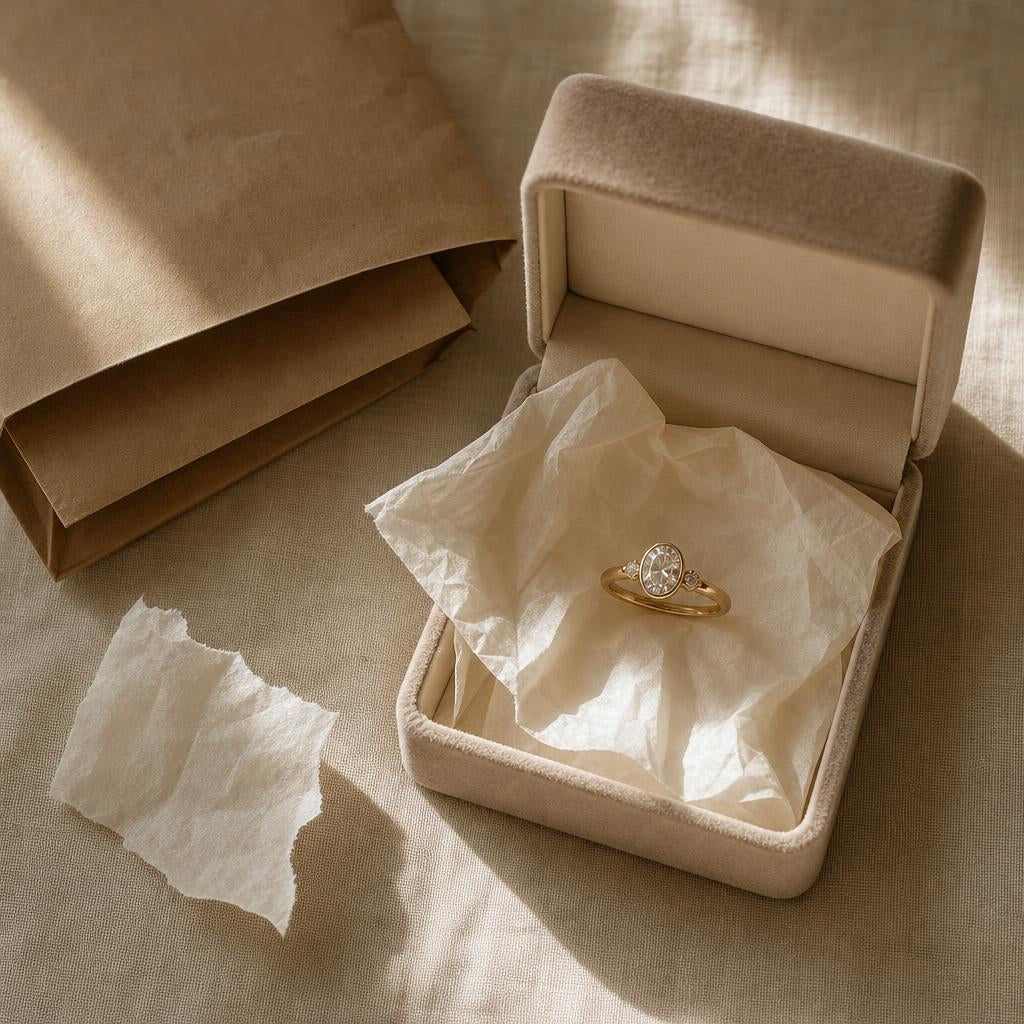
Understanding Return Windows: Why Jewelry Return Policies Range From 30 to 90 Days
Somewhere between "add to cart" and "it's on its way," most women never actually read the return policy. You skim for a number — 30 days, 60 days, whatever — and assume the rest works the way you'd expect. It usually doesn't.
A jewelry return policy isn't a courtesy stores extend out of goodwill — it's a business decision, and every retailer sets the terms differently. Before you buy your next ring, here's what that fine print is actually protecting, and what it means for you.


Why Return Windows Vary So Much From One Jeweler to the Next
There's no industry-wide standard for how long you have to change your mind. A department store can afford a 90-day window because it moves enormous volume and treats returns as a routine cost of doing business. A small independent jeweler, working with tighter margins and less inventory buffer, might cap it at 14. Neither one is wrong — they're both pricing risk the way that makes sense for their model.
What actually shapes the number, more than generosity, is how standardized the product is. A ring sold in a fixed size, ready to ship, is easy to restock and resell if it comes back. A ring that's been sized, engraved, or custom-set is not — the moment that work happens, the return clock usually resets or closes entirely. That's why the window quoted on a product page can look completely different from the window quoted at checkout for a personalized piece.
For online-only brands specifically, there's an added wrinkle: you can't try the ring on in person before you pay for it, which is exactly why the return window carries more weight here than it would in a shop where you tried it on first. A policy that's fair and clearly stated is what makes buying sight-unseen a reasonable decision instead of a gamble — it's doing real work, not just sitting in the footer as boilerplate.
Worth knowing: The return window almost always starts from the ship date or delivery date, not the order date. A 30-day window can feel like 24 days by the time a package actually reaches you — factor shipping time in before you assume you have longer than you do.
Return, Exchange, or Warranty — They're Not the Same Promise
These three words get used interchangeably, and that's where most of the confusion starts. A return gets you your money back within a limited window, no questions required. An exchange swaps the item for a different size or style, often on a slightly longer or more flexible timeline since no cash changes hands. A warranty is different from both — it's a promise about defects and workmanship that extends well past the return window, sometimes for a year or more, and it only kicks in if something is actually wrong with the piece, not if you simply changed your mind.
Confusing the two leads to real disappointment. A woman who assumes her one-year warranty means she can return a ring for a refund on day 200 is going to be surprised — and a retailer who's clear about the difference up front is doing her a favor, not being difficult.

The Everlasting Ring
A continuous line of pavé brilliance built to stack daily — and, like every Gemiros ring, backed by a one-year warranty against defects, separate from the return window itself.
Shop The Everlasting Ring →The Return Policy Checklist: What to Actually Check Before You Buy
Before you click purchase, run the policy against this short list. It takes two minutes and it's the difference between an easy fix and a frustrating one if the ring isn't right.
| What to Check | Why It Matters |
|---|---|
| Window length | Ranges widely by retailer — confirm the exact number, not an assumption |
| Start date | Order date, ship date, or delivery date all mean a different real deadline |
| Refund method | Original payment method vs. store credit only changes what you're actually owed |
| Condition required | Unworn, tags attached, original packaging — resized or worn pieces are often excluded |
| Return shipping cost | Some retailers cover it, others deduct it from your refund |
| Final sale categories | Earrings and custom pieces are commonly excluded industry-wide |
Why Some Items Are Marked Final Sale — And It's Not a Trick
Final sale gets read as a red flag, but on jewelry sites, it's almost always about hygiene rather than a tactic to avoid honoring returns. Pierced earrings are the most consistent example across the entire industry: once an earring has touched skin, it can't be resold to another customer, full stop. That's why Gemiros marks earrings as final sale — the same reason nearly every jeweler, mass-market or luxury, does the same.
Rings usually don't carry that restriction, since they're tried on rather than worn against a piercing, which is part of why ring return windows tend to be more generous than earring policies across the category.
✦ Pro tip: If a listing doesn't clearly state whether an item is final sale, check before you buy — not after. A quick message to customer service settles it in minutes and saves a returns headache later.
What This Actually Looks Like at Gemiros
Every Gemiros ring is backed by a one-year warranty against defects — separate from, and longer than, any return window, and it's there specifically so a manufacturing issue never becomes your problem to absorb. Shipping is free once your order clears a minimum threshold, and rings come in whole sizes only, since Gemiros doesn't currently offer half sizes or an in-house resizing service. If a ring needs adjusting, a local jeweler can typically handle it — worth knowing that third-party resizing can affect warranty coverage, so it's a good question to ask before you have it altered.
None of that is a workaround for a good return policy — it's what makes needing one less likely in the first place. Getting your size right before you buy is still the single best way to avoid a return altogether.

The Ondine Ring
A pear-cut center set in a striking east-west orientation — the kind of ring worth getting the size right on the first try.
Shop The Ondine Ring →Quick Takeaways
- A jewelry return policy is set by the retailer, not a universal rule — always confirm the window before you buy, not after
- Windows commonly range from about two weeks to 90 days, depending on the retailer's size and inventory model
- Earrings are almost always final sale industry-wide, Gemiros included, for hygiene reasons — not as a way to dodge returns
- A warranty and a return window are two different promises — one covers defects over time, the other covers changing your mind
- Getting your size right the first time is still the most reliable return policy there is
Frequently Asked Questions
Can jewelry always be returned to the store you bought it from?
Not automatically — it depends entirely on that retailer's written policy, not a general industry rule. A jewelry return policy is a private business decision, so the window length, the accepted condition, and who covers return shipping are all things you're agreeing to the moment you buy. Read it on the product page or at checkout, not after the box arrives.
What items are typically excluded from a return policy?
Pierced earrings are the most consistent exclusion across the industry — once an earring has touched skin, it can't be resold, so most retailers mark them final sale for hygiene reasons. Custom, engraved, or resized pieces are usually excluded too, since altering an item to fit removes it from resellable inventory the moment the work is done.
How does a jewelry refund actually get processed once a return is approved?
Once the retailer receives and inspects the return, the refund is typically issued to the original payment method, though timing varies — some process it the day the package arrives, others wait until a quality check clears. Ask upfront whether refunds go to your original payment method or store credit only; that detail matters more than the number of days in the window.
If a ring was a gift, can the person who received it still return or exchange it?
Store policy almost always follows the item, not the original purchaser — most retailers will process a return or exchange for whoever has the ring and the order details, gift or not. What usually causes friction isn't policy, it's paperwork: without an order number, an exchange for store credit is often still possible, but a refund to someone else's payment method typically isn't.
The smartest way to shop isn't chasing the retailer with the longest window — it's knowing exactly what that window covers before you need it. Read the policy, get your size right, and buy a ring you're confident about keeping in the first place.


