

Statement Jewelry and Confidence: A Few Principles, and When to Ignore All of Them
There's a common idea that statement jewelry belongs to a certain kind of woman — someone naturally louder, more confident, more comfortable being looked at. It's not true. Statement pieces work on the basis of a few specific principles, not personality type, and once you understand them, "I could never pull that off" usually turns out to be the wrong sentence entirely.
Confidence with a bold ring has less to do with who you are and more to do with proportion, repetition, and restraint everywhere else. Here's what that actually looks like, starting with a few pieces built for exactly this kind of presence.


Confidence Is Mostly a Design Principle, Not a Personality Trait
Watch anyone wear a genuinely bold ring well, and you'll notice it isn't attitude doing the work — it's context. The ring looks intentional because everything around it is quiet. The nails are simple, the rest of the jewelry is minimal, the outfit isn't competing for the same attention. Confidence, in other words, is often just good editing.
This matters because it means "pulling off" a statement ring isn't a fixed trait you either have or don't. It's a set of choices you can make on purpose, regardless of how bold you'd naturally describe yourself.
The Principles That Actually Make It Work
1. Let One Thing Be the Loudest
A statement ring only reads as intentional when it's the single loudest thing on your hand — not competing with a stack of other bold pieces, and not fighting a busy manicure or a heavily patterned sleeve. If the ring is the point, everything else needs to visibly agree to be quieter.
2. Fit Changes Everything
A large stone that sits slightly crooked or a band that's a half-size too big reads as accidental rather than deliberate — the confidence disappears entirely. A ring that fits properly, sits flat, and doesn't shift when you move your hand carries itself completely differently than the exact same design worn loose.
3. Repetition Builds Ease
The first few times you wear a bold ring, it can feel like everyone's looking at your hand. They aren't — but it takes a few wears before it stops feeling that way to you. Confidence with statement jewelry is very often just familiarity. Wear it on an ordinary Tuesday before you wear it somewhere that matters, and the second time will feel entirely different.

The Astrid Ring
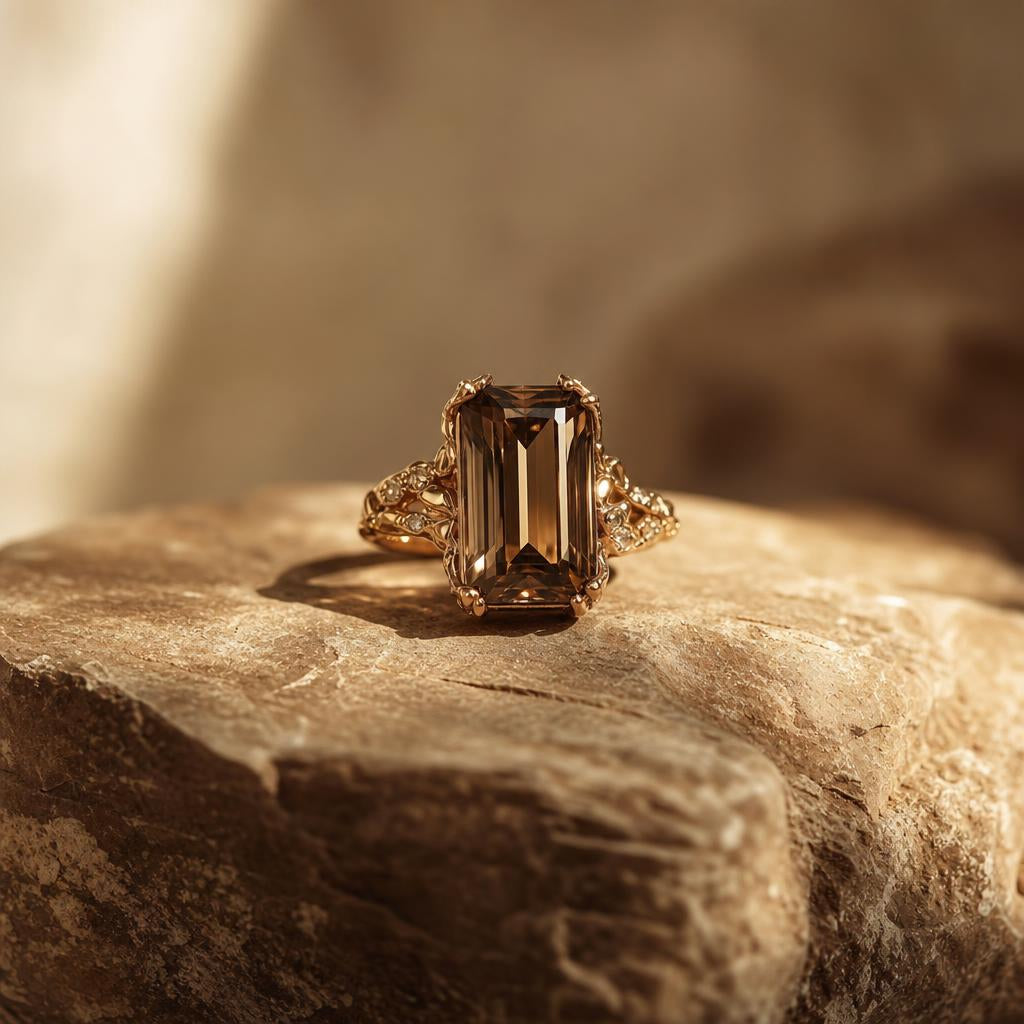
A 3-carat asscher-cut centre stone with Art Deco side detailing — built for the woman who wants her ring to have a point of view, not just a size.
Shop The Astrid →4. Scale Should Match the Occasion, Not Suppress the Ring
A common instinct is to "tone down" a bold ring for everyday settings by not wearing it at all, saving it for special occasions only. That approach usually backfires — the ring never gets the repetition it needs to feel natural, so it stays feeling like a costume piece indefinitely. A better approach is choosing one bold ring you actually commit to wearing regularly, rather than several you save for occasions that rarely come.
Worth knowing: Elongated shapes like oval and marquise create the visual effect of a larger stone at the same carat weight, which is why they're often the easiest entry point into bolder jewelry for someone used to smaller, quieter pieces.
When to Ignore All of This
None of these principles are rules in the strict sense — they're patterns that make bold jewelry easier to wear, not a checklist you owe anyone. There are good reasons to ignore every one of them.
If a quieter ring genuinely feels more like you after actually trying the bolder option, that's not a failure of confidence — it's information. Some women try a statement piece, wear it honestly for a few weeks, and come back to a simpler solitaire with total certainty, because now they know rather than assume. That's not the "wrong" outcome of the exercise. It's the entire point of it.

The Stella Ring
A round solitaire with nothing to prove — the ring for anyone who tries on the drama and decides, honestly, that quiet was the answer all along.
Shop The Stella →Similarly, if you love a bold ring but hate how it feels typing all day, or notice it catching on things constantly, that's a legitimate reason to reach for it selectively rather than as an everyday piece — not a personal failure to "own" the style. The principles above are meant to remove unnecessary hesitation, not replace your own read on what actually works for your life.
Quick Takeaways
- Confidence with bold jewelry is mostly proportion and repetition, not personality.
- Let one piece be the loudest thing you're wearing — quiet everything else around it.
- Fit matters enormously: a bold ring that sits properly reads as intentional, not accidental.
- Wear a new statement piece on ordinary days first — familiarity builds the confidence, not the other way around.
- If a quieter ring genuinely feels more like you after trying the bold option, that's a valid answer too.
Frequently Asked Questions
How do I know if I can "pull off" a statement ring?
Fit, repetition, and keeping everything else simple matter far more than any inherent personality trait. Most people who feel unsure simply haven't worn the piece enough times yet to stop noticing it themselves.
Should I save my statement ring for special occasions only?
Not exclusively. Wearing it only occasionally can keep it feeling unfamiliar indefinitely. Wearing it on ordinary days first tends to build the ease that makes it feel effortless when it counts.
What ring shape reads as bold without looking costume-like?
Elongated shapes like oval, marquise, and pear tend to create visual drama at a more moderate carat weight, which often makes them an easier entry point than a very large round or cushion stone.
Is it okay to prefer a quieter ring after trying a bold one?
Completely. Trying a statement piece and deciding a simpler ring actually suits you better isn't a failure — it's exactly the kind of clarity the exercise is meant to produce.
Statement jewelry was never really about being a certain kind of person. It's a handful of small, learnable habits — proportion, fit, repetition — dressed up as personality. Try the bold version honestly before deciding it isn't you, and trust whatever you learn from wearing it.


