

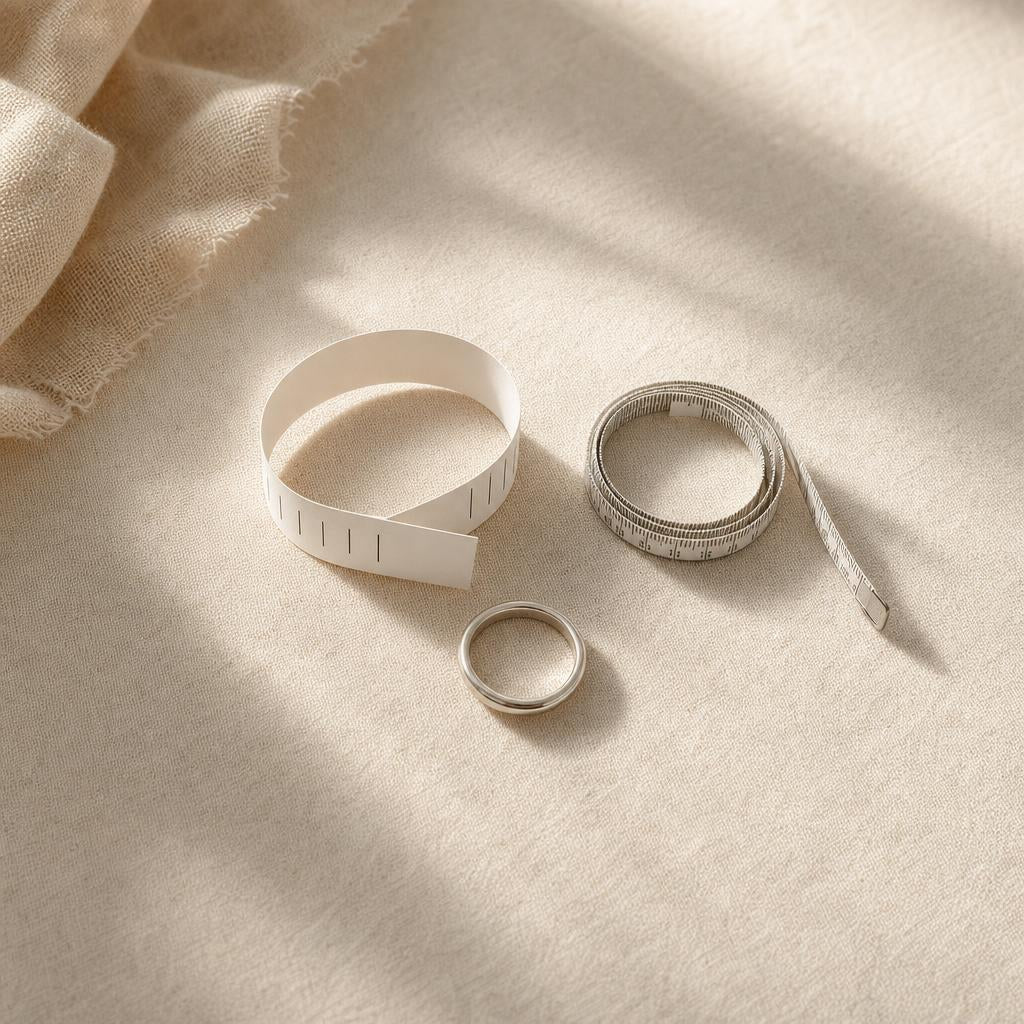
Ring Size Conversion Chart: How to Read MM, US & International Sizes
You've found a ring you love, pulled up the size guide, and now you're staring down three columns of numbers that don't appear to agree with each other — a US size, a diameter in millimeters, a circumference in yet another set of digits. Somewhere in that table is your actual ring size. You just need to know which column to trust, and why the others exist at all.
A ring size conversion chart looks intimidating because most of them skip the part where they explain what they're actually measuring. Once you understand the logic behind the numbers, reading one takes about ten seconds — here's a look at a few Gemiros styles worth sizing correctly for, before we get into exactly how.


Why Ring Sizes Come in More Than One Numbering System
There is no single global standard for ring sizing, which is the root of most of the confusion. The US and Canada use a numerical scale that runs roughly from 3 to 13. The UK and Australia use letters, A through Z. Most of Europe uses a number that corresponds directly to the ring's inside circumference in millimeters, so a size 52 literally means 52mm around. Japan and a handful of other countries run their own systems again. None of these are "more correct" than the others — they're just different labels applied to the same physical measurement: the inside of a ring's band.
That's the part worth holding onto. Reading one of these charts isn't translating between different concepts of size. It's re-labeling one real, physical number — usually a diameter or a circumference in millimeters — under whichever naming system a given country happens to use.
Diameter vs. Circumference: The Two Numbers Every Chart Is Actually Showing You
Most charts list two figures next to each US size: an inside diameter and an inside circumference, both in millimeters. This is where a lot of people get stuck, because they measure their finger one way and then try to match it against the wrong column.
If you wrapped a piece of string or a strip of paper around your finger and measured the length, you have a circumference — the distance around. If you laid an existing ring flat and measured straight across the inside edges, you have a diameter — the distance across the middle. They describe the same ring from two different angles, and a correct chart will always list both so you can match whichever one you actually measured.
| US Size | Inside Diameter | Inside Circumference |
|---|---|---|
| 4 | 14.8mm | 46.8mm |
| 5 | 15.7mm | 49.3mm |
| 6 | 16.5mm | 51.9mm |
| 6.5 | 16.9mm | 53.1mm |
| 7 | 17.3mm | 54.4mm |
| 7.5 | 17.7mm | 55.7mm |
| 8 | 18.2mm | 57.0mm |
| 9 | 19.0mm | 59.5mm |
| 10 | 19.8mm | 62.1mm |
✦ Pro tip: Measure at the end of the day, when your fingers are at their largest, and size for the hand you'll actually wear the ring on. Your dominant hand often runs a touch bigger than the other.
How to Measure Your Finger and Match It to the Chart
The two home methods that actually work are the ones jewelers themselves rely on. Wrap a thin strip of paper or non-stretch string around the base of your finger, mark where it overlaps, then lay it flat against a ruler — that's your circumference. Or lay a ring that already fits you well flat on a table and measure straight across the inside, edge to edge — that's your diameter. Either number, matched to the right column, gets you to the same size. If you want the full step-by-step with photos, our guide on measuring your ring size at home without a measuring tape walks through all four methods side by side.

The Stella Ring
A single round-cut stone, set clean and unadorned — the kind of ring that makes sizing correctly matter most, since there's nothing else on the band to distract from the fit.
Shop The Stella Ring →Reading a Ring Size Chart in Inches
If you measured with a tape measure marked in inches instead of a metric ruler, you'll need to convert that figure before it means anything against a standard chart — most jewelers publish their numbers in millimeters by default, since that's the unit rings are actually manufactured to. A size 7, for reference, sits at roughly 2.14 inches around. The conversion is exact; it just requires the right reference in front of you rather than mental math with a ruler.
Using an Inches to Ring Size Converter
The math underneath a tool like this is simple: divide your circumference by roughly 3.14 to get the diameter, then match that figure to the nearest size. You don't need to do this by hand — the point of understanding the logic is knowing that any converter or chart you use is running the same calculation, so the number it gives you back is trustworthy.
UK, EU, and International Sizes: Why the Numbers Don't Line Up
Converting a UK ring size to US isn't translating between two different sizing philosophies — it's the same diameter measurement, read off a different scale. The UK's letter system and the EU's circumference-based numbers both describe the identical physical ring as the US numerical scale; they just count differently. A US size 7 is roughly a UK size N and a European size 54. None of those three numbers are approximations of each other so much as three accurate readings of one ring.
This matters most if you're comparing a size from an overseas retailer, a vintage piece, or a family ring against a US chart. Our full breakdown of how US, UK, EU and Australian sizing compares covers every regional system side by side if you need to convert from something other than millimeters.

The Regent Ring
A princess-cut center stone in a halo setting with milgrain detail along the band — architectural, a little vintage-leaning, and precise enough that getting the size right the first time is worth the extra ten seconds.
Shop The Regent Ring →Common Mistakes People Make Reading a Sizing Chart
The most frequent error is measuring over the knuckle instead of the base of the finger, which pushes the reading up a full size or more for no reason. Close behind it is confusing diameter with circumference and matching the wrong column entirely — an easy mix-up if the chart doesn't label both clearly. Cold hands shrink slightly, so a measurement taken first thing in the morning can run a touch small. And translating millimeter measurements into a size only gets you halfway there if you forget that wider bands fit tighter than thin ones; a wide band in your usual size will often feel snugger than a thin one in the same number.
If a chart's numbers still don't seem to add up once you've ruled these out, the issue is usually the chart itself, not your measurement — our piece on why US, UK and international charts don't always convert cleanly gets into exactly where the small discrepancies come from.
Quick Takeaways
- A ring size chart is really just one diameter or circumference measurement, relabeled under different regional numbering systems.
- Measured a string around your finger? Use the circumference column. Measured an existing ring flat? Use diameter.
- UK, EU, and US sizes are three accurate readings of the same ring, not three different sizing philosophies.
- Wide bands fit tighter than thin ones in the same listed size — factor that in before you order.
- Gemiros rings are cut in whole US sizes only, so round up if your measurement falls between two numbers.
Frequently Asked Questions
How do I calculate my ring size from a chart?
Measure your finger's circumference (wrap a string or paper strip around it) or the diameter of a ring that already fits (measure straight across the inside), then match that number in millimeters to the corresponding column on a standard chart.
What is 10mm in ring size?
A 10mm inside diameter falls between a US size 12 and 13 — well above the average adult finger, so double-check whether your 10mm reading is a diameter or a circumference before ordering, since a 10mm circumference doesn't correspond to a real adult ring size at all.
How can I tell my ring size in inches?
Wrap a non-stretch string around the base of your finger, mark the overlap point, then measure that length against a ruler marked in inches rather than centimeters. A circumference of about 2.14 inches corresponds to a US size 7.
Is a US size 7 ring considered big or small?
Size 7 sits right around the US average for women, who most commonly fall between 5 and 7. It reads as neither notably small nor large — it's the most common size ordered across most jewelry retailers.
Why don't UK, EU, and US ring sizes convert evenly?
Each system rounds and increments differently — the US moves in quarter-size steps, the UK in half-letter steps, and the EU in whole millimeters of circumference — so a conversion will sometimes land between two values on the target scale rather than exactly on one.
Can I use my phone to find my ring size?
Some sizing apps use your screen's known dimensions to display an on-screen ring gauge, but screen calibration varies by device, so it's best treated as a rough starting point rather than a final answer — a physical measurement against a printed or standard chart is more reliable.
A ring size conversion chart stops being intimidating the moment you know it's only ever describing one thing — the inside of a ring, measured in millimeters, relabeled under whichever numbering system a given country prefers. Measure once, match it to the right column, and you'll never have to guess again.


