

Ring Falling Off Your Finger on Your Commute? The Jewelry Habits That Prevent Loss
Your ring looks perfect in the bathroom mirror at 7:40 a.m. By the time you're gripping a subway pole at 8:15, it's spinning loose around your finger, and you spend the rest of the ride half-convinced you're about to watch it slide down a storm drain. This isn't bad luck. It's physics, and it's fixable.
Commuting is one of the hardest environments jewelry ever has to survive — temperature swings, crowded contact, gloves on and off, bags dropped and picked back up a dozen times before 9 a.m. The good news: the women who never lose a ring on the way to work aren't lucky. They've just built a few habits, and they're wearing pieces designed to make those habits easy.


Why Your Ring Feels Looser by the Time You Reach the Office
If you've searched anything close to ring falling off finger after a rattled commute, the timing isn't a coincidence. Fingers change size by a surprising amount over the course of a single morning, and almost every variable involved is baked into a typical commute. Cold subway platforms and air-conditioned train cars constrict blood flow to your extremities, which shrinks your fingers measurably. Add a coffee you're gripping, a phone you're scrolling, and the general dehydration of an early start, and a ring that fit snugly on Sunday can feel like it's auditioning for a magic trick by Tuesday.
This is also why a ring that's cut correctly for your actual size matters more than most people realize. Gemiros rings are made in true, full US sizes — no fractional sizing, no guessing between a size and a half — because a ring that's sized correctly to begin with has far less room to become a problem later. It's a small detail, but it's the difference between a ring that moves with your hand and one that's constantly working its way toward your knuckle.
The habits that actually cause loss
Loss rarely happens because a ring is dramatically too big. It happens because of small, repeatable moments: pulling off a glove and stuffing it in a coat pocket without checking your hand first, tugging a sleeve down over cold fingers, bracing against a pole with a full grip instead of an open palm, or digging through a bag one-handed while your ring — already loosened by the cold — catches on the zipper pull. None of these are dramatic. That's exactly why they work.

The Soleil Ring
A round-cut solitaire held by six prongs instead of the usual four — more contact points, more security, and a setting that stays put through a full day of movement without changing how delicate it looks.
Shop The Soleil Ring →Five Habits That Actually Prevent Loss
These aren't complicated. They're the kind of small, repeatable checks that the women who never lose jewelry have simply made automatic.
- Do a hand check before you remove anything. Gloves, hand sanitizer, a workout, a public restroom — every one of these moments is a known point where rings come off. Glance at your hand before and after, every time, until it's reflexive.
- Choose settings built for contact, not display. A tall, delicate prong setting is beautiful for a dinner out. For a five-day-a-week commute, a bezel setting or a low channel-set band shrugs off contact with poles, bags, and turnstiles instead of catching on them.
- Know your correct size — and order it. A ring that's a hair too large is the single biggest predictor of a ring that eventually falls off. Most searches for how to keep ring from falling off end at the same answer: get the size right before you buy, since Gemiros doesn't offer resizing after the fact.
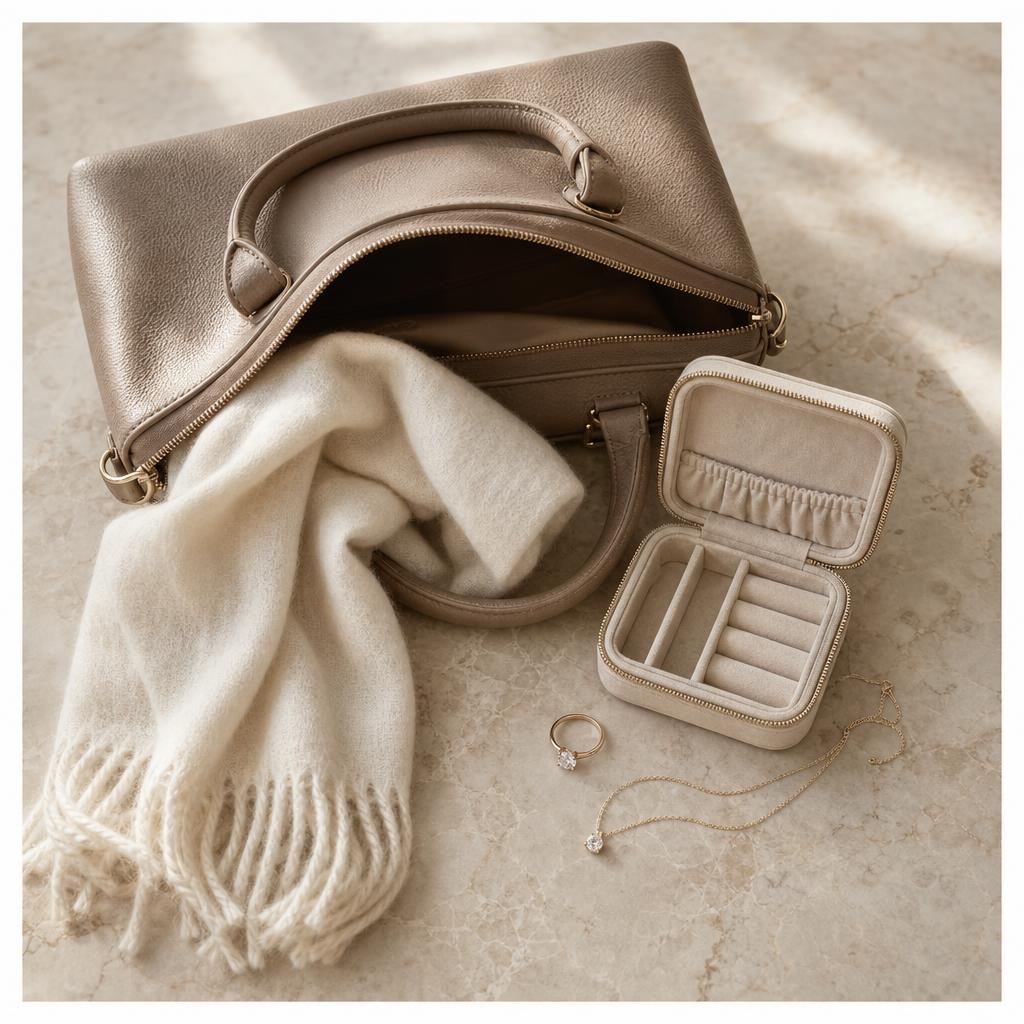
- Give loose items one home, every time. If you take a ring off for any reason during your commute, it goes in the same zipped interior pocket, every single time, with no exceptions for being in a hurry. A habit only works if it survives the days you're running late.
- Do a "wrist and hand" scan when you sit down and stand up. Seated-to-standing transitions on trains and buses are when bags shift, sleeves catch, and hands brush against seatbacks and poles. A two-second glance costs nothing and catches a slipping ring before it's gone.
✦ Pro tip: If a ring spins to the side more than once or twice a week, that's information, not bad luck — it's telling you the fit needs attention before it becomes a loss.
What a Spinning or Sliding Ring Is Actually Telling You
Ring spinning on finger is one of the most common complaints from anyone who commutes daily, and it isn't just an annoyance — it's usually gravity doing exactly what physics predicts. Weight settles at the lowest point of the band, which pulls the top of the ring downward and rotates the whole thing until the heaviest part hangs below your knuckle. On a commute, that rotation gets a lot of help: gripping a pole, carrying bags, typing on a phone at an angle all nudge a slightly loose ring further off-center. It's a pattern worth paying attention to, not a coincidence.
The fix isn't complicated, but it does mean being honest about fit. A ring that consistently spins is telling you it's sitting a little large. Before you reach for a temporary fix, it's worth checking your original sizing against a proper ring sizer rather than eyeballing it — a size that's correct from the start solves the problem permanently instead of managing it week to week.

The Stella Ring
A four-prong round solitaire with a slightly lower profile than a traditional halo — enough presence for the office, enough restraint to move through a crowded platform without a second thought.
Shop The Stella Ring →Necklaces and Earrings Have Their Own Commute Risks
Rings get most of the attention, but chains and studs have their own failure points. A pendant necklace worn over a scarf catches on wool fibers every time you unwind it — that's how clasps quietly work open. Earrings get caught on headphone cords and hood strings more often than anyone admits. The same principle applies across every category: low-snag, close-to-the-body pieces survive a commute better than anything with dangling or open elements, simply because there's less for the environment to catch onto.
Worth knowing: Every Gemiros piece is 925 sterling silver, hypoallergenic and nickel-free, so a quick jewelry check throughout the day never means dealing with skin irritation on top of everything else. Passes diamond testers, holds up to a daily commute, and comes backed by a one-year Gemiros warranty.
Building a Two-Minute Departure Routine
The women who never think twice about their jewelry on transit aren't more careful, exactly — they've just automated the careful part. Before you leave the house, run through the same thirty seconds every day: check that every ring you're wearing sits snugly past the knuckle, confirm any necklace clasp is centered and closed, and do a quick earring-back check if you're wearing studs or hoops. It takes less time than deciding what to have for breakfast, and it moves jewelry security out of the category of things you have to remember and into the category of things you simply do.
Quick Takeaways
- Cold and dehydration shrink fingers measurably — a ring that fits at home can feel loose by the time you're at work.
- Correct, true-to-size sizing prevents more loss than any accessory or habit ever will.
- Bezel and channel settings resist snagging on poles, bags, and gloves better than tall prong settings.
- A ring that spins repeatedly is telling you something real about its fit — don't ignore the pattern.
- Give loose jewelry one designated pocket, every time, with no exceptions.
Frequently Asked Questions
Why does my ring feel loose or start spinning on my commute specifically?
Cold platforms, air-conditioned train cars, dehydration, and the general swelling changes your fingers go through in a normal day all combine during a commute more than at almost any other point in your routine. A ring that's correctly sized will still move a little — but it shouldn't rotate or slide toward your knuckle.
What's the fastest way to stop a ring falling off finger during the day?
In the moment, closing your hand into a loose fist keeps a slipping ring from sliding further until you can safely check it. Longer term, the real fix is confirming your size is correct from the start and favoring settings — like bezel or channel-set bands — that sit lower and grip more evenly around the finger.
Is it safe to wear rings and necklaces on crowded public transit?
Yes — the goal isn't to avoid wearing jewelry, it's to choose pieces and habits suited to contact and movement. Low-profile settings, closed-back earrings, and a quick daily check solve almost every real risk without asking you to leave your favorite pieces at home.
Should I take my rings off before security lines or turnstiles?
You generally don't need to remove rings for standard transit turnstiles — the risk is bags and gloves, not the gate itself. If you do remove any piece for any reason, the habit that actually works is a single designated pocket, used every time, rather than a pocket chosen in the moment.
How do I make sure I don't forget jewelry I've taken off during the day?
Consistency beats memory. Use one specific, zipped pocket or a small pouch reserved only for jewelry, every time you remove a piece — never a coat pocket, bag pocket, or desk drawer "just this once." The habit only holds up if it's identical on your calmest day and your most rushed one.
None of this is about being more careful with your jewelry — it's about building a routine specific enough that carefulness stops being required. Choose pieces made for contact instead of just display, get your sizing right the first time, and give yourself a thirty-second check before you walk out the door. Your ring should be one less thing you have to think about on the way to work, not one more.


