

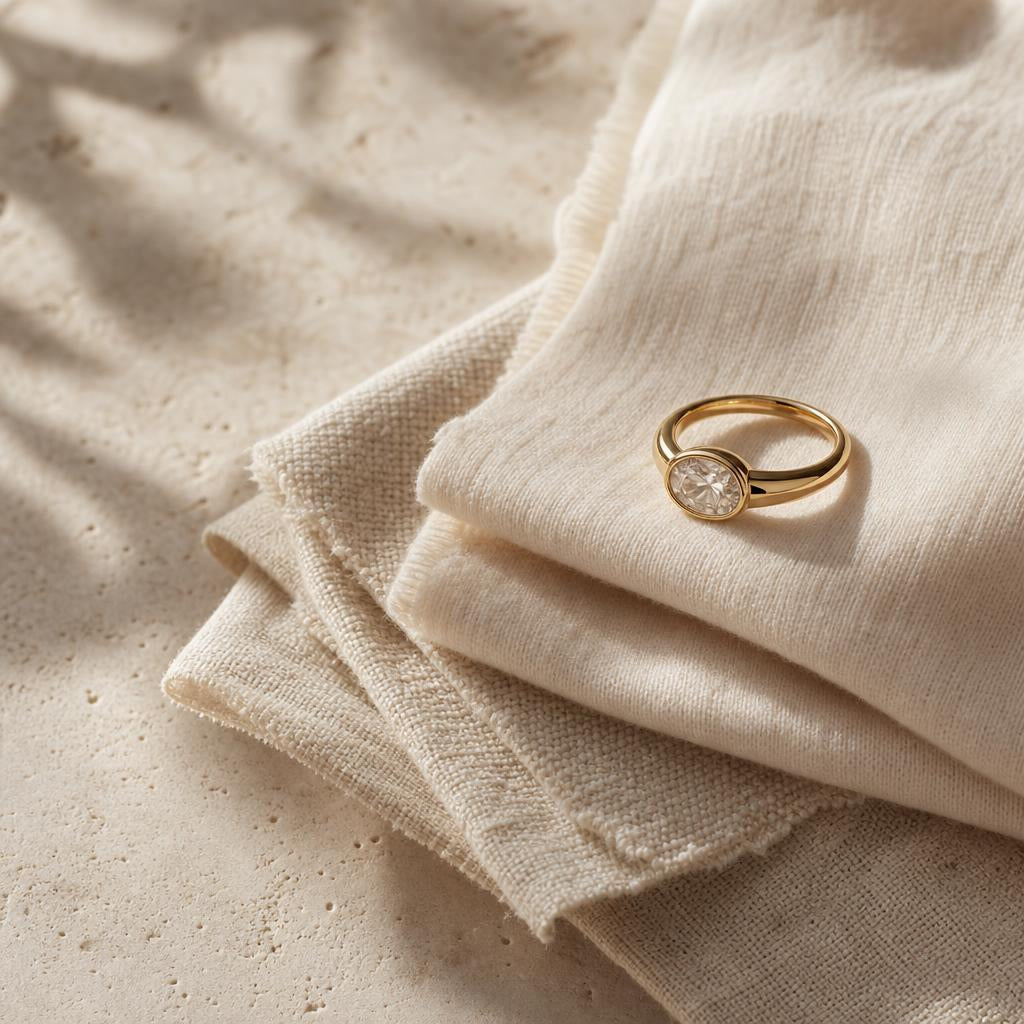
Quiet Luxury Rings: What Demi-Fine Jewelry Really Means
There's a particular kind of confidence in a ring that doesn't announce itself — no oversized logo, no obvious markup, just a stone that catches light and a woman who knows exactly what she's wearing and exactly what she paid for it. That's the entire premise behind quiet luxury, and it's finally caught up to how most women actually want to buy jewelry.
The trend has a name now, but the instinct behind it is old: buy the version that looks expensive because it's well made, not because it's loud. Before we get into what actually makes a ring read as considered instead of costume, here's where to start looking.


What "Quiet Luxury" Actually Means Once You Strip Out the Marketing
Every few years, the jewelry industry rebrands the same idea and sells it back to us as new. This time it's called quiet luxury, and underneath the trend piece headlines, the definition is fairly simple: pieces that read as expensive because of how they're made, not because of who made them. No visible logos. No shape so recognizable it functions as a brand billboard on your hand. Just proportion, material, and restraint doing the talking.
For the woman who's already figured out that the traditional jewelry store markup has very little to do with actual craftsmanship, this isn't a new idea at all. It's just the first time the rest of the industry has caught up to what she already knew.
Worth knowing: Quiet luxury was never really about spending more. It was about spending on the right things — proportion, setting, and finish — instead of the name printed on the box.
The Real Engine Behind the Look Is Demi-Fine Jewelry
If you trace the quiet luxury aesthetic back to what's actually sitting in most jewelry boxes right now, you land on one category doing most of the work: demi-fine jewelry. It's the middle tier between costume pieces that discolor your skin within a week and solid-gold rings priced for an occasion rather than a Tuesday — built from 925 sterling silver, finished in rhodium or gold plating, and set with lab-created stones that are indistinguishable from a mined diamond to the eye and to a diamond tester.
That distinction matters more than it sounds. This category is what made affordable luxury jewelry possible in the first place — not because it cuts corners, but because it removes the two costs that never had anything to do with beauty: the diamond industry's manufactured scarcity, and the retail markup that comes from a name on a velvet box rather than the materials inside it.
What Actually Signals Quiet Luxury in a Ring
Once you know what to look for, it's easy to spot the difference between a ring that reads as considered and one that reads as trying. Three details do almost all of the work.
The setting stays quiet even when the stone doesn't. A hidden halo is the clearest example — it adds size and light without adding a single visible embellishment from the top view, which is exactly the kind of detail the old money aesthetic has been built on for decades. A true solitaire does the same thing from a different direction: one stone, no distraction, nothing else asking for attention.
The band earns its texture instead of demanding it. Pavé, done well, reads as light rather than sparkle for sparkle's sake — a quiet accent instead of a second focal point competing with the center stone.

The Kensington Ring
A 3-carat emerald-cut center stone set atop a smooth, unadorned band — the kind of clean silhouette that photographs quietly and wears even better in person.
Shop The Kensington →The metal does what it's supposed to do and nothing more. No exaggerated prongs, no oversized shank, no detail that only makes sense in a product photo shot from six inches away. Quiet luxury settings are engineered to look intentional at arm's length — which, in practice, is the only distance anyone else is actually looking from.
Shopping for this online instead of in a store changes what you should actually be looking at. Ignore the styled lifestyle shots and go straight to the listing details: the stone shape and carat weight, the prong count, whether the band is described as solid or plated, and what the metal is underneath any finish. A listing that's vague about those specifics is usually vague on purpose. One that spells them out — down to the setting type and the base metal — is the clearer signal that the piece was designed with intention rather than assembled to photograph well for five seconds on a feed.
Materials That Actually Hold Up to Scrutiny
The two questions every buyer eventually asks are some version of: will it look cheap, and will it hold up. Both are fair, and both have direct answers instead of reassurances. Moissanite and lab-created stones set in 925 sterling silver are indistinguishable from a diamond, and they pass diamond testers — no one is going to clock the difference across a dinner table, including your jeweler.
Durability comes down to the base metal and the plating, not the price tag. Sterling silver tarnishes under the wrong conditions, but a quality rhodium or gold finish is built specifically to resist that, and the stone itself never dulls, clouds, or loses brilliance the way some cheaper materials do over time. This is also where affordable fine jewelry earns its reputation as a genuine category rather than a compromise — the materials are real, the construction is deliberate, and the only thing missing is the markup.
Building a Quiet-Luxury Ring Wardrobe Without Overspending
The instinct with any aesthetic trend is to buy everything at once. Resist it. Quiet luxury, almost by definition, rewards restraint — a small collection of considered pieces reads as more intentional than a large one assembled in a hurry. Start with one solitaire or hidden halo ring you can wear daily without thinking about it, then build outward from there.

The Stella Ring
A round-cut solitaire in a refined 4-prong setting — proof that minimalism and presence aren't opposites, just a matter of getting the proportions right.
Shop The Stella →If you're weighing what a given price actually buys you, it's worth reading through what each price point actually gets you in a ring before you shop — the honest version of that math is more useful than any trend piece. And if the whole idea of "less but better" appeals to you beyond just one ring, the case for minimalist engagement rings covers the same philosophy from a slightly different angle.
Quick Takeaways
- Quiet luxury in jewelry means understated settings and real materials — not a bigger budget.
- Demi-fine jewelry (925 sterling silver, rhodium or gold plating, lab-created stones) is the category actually powering the trend.
- Hidden halos, true solitaires, and restrained pavé are the three settings that read as considered rather than costly.
- Moissanite and simulated diamonds are indistinguishable from mined stones and pass diamond testers — no hedging required.
- Build slowly: one well-chosen piece worn daily says more than a full jewelry box bought in a weekend.
Frequently Asked Questions
What does "quiet luxury" actually mean?
It describes pieces that read as high quality because of their materials and proportions, not because of a visible logo or an easily recognizable silhouette. In jewelry specifically, it favors understated settings — solitaires, hidden halos, restrained pavé — over anything designed to be instantly identifiable as a status symbol.
What is demi-fine, exactly?
Demi-fine sits between costume pieces and solid-gold fine jewelry. It's typically built from 925 sterling silver finished with rhodium or gold plating, set with lab-created stones like moissanite or simulated diamonds — real materials and real construction, without the markup that comes from a brand name on the box.
What's the difference between demi-fine and fine jewelry?
Fine jewelry is solid precious metal — solid gold or platinum — often set with mined gemstones, and priced accordingly. Demi-fine keeps the same visual standard and daily-wear durability but uses a sterling silver base with a quality plating and lab-created stones, which is what keeps it accessible without looking or feeling like a downgrade.
Does demi-fine tarnish?
Sterling silver can tarnish under the wrong conditions, which is exactly why quality demi-fine pieces are finished with rhodium or gold plating rather than left bare. With that finish in place and basic care — keeping pieces away from harsh chemicals and moisture when possible — a well-made ring holds its shine for years, not weeks.
Is a ring worth buying if it's not solid gold?
Yes — the honest answer is that solid gold buys you resale value and metal weight, not visible quality. A well-made sterling silver ring with a genuine gold or rhodium finish and a lab-created stone looks identical at arm's length, passes diamond testers, and costs a fraction of the price. For daily wear, that's the more rational choice, not the compromise one.
The most useful thing about quiet luxury as a trend is that it finally gives a name to what smart buyers have been doing for years: choosing pieces because they hold up to scrutiny, not because they're loud enough to be noticed from across a room. That's not a lesser way to buy jewelry. It's the more intelligent one — and it's exactly the filter every ring on this list was built to pass.


