

How to Mix Metals in Jewelry Without It Looking Like an Accident
Somewhere along the way, someone decided your jewelry had to match — every ring the same tone as your necklace, every earring matched to your watch — and an entire generation of women quietly followed a rule nobody actually wrote down. It was never a design principle. It was a retail convention, the kind that sells you two identical sets instead of one collection that actually works together.
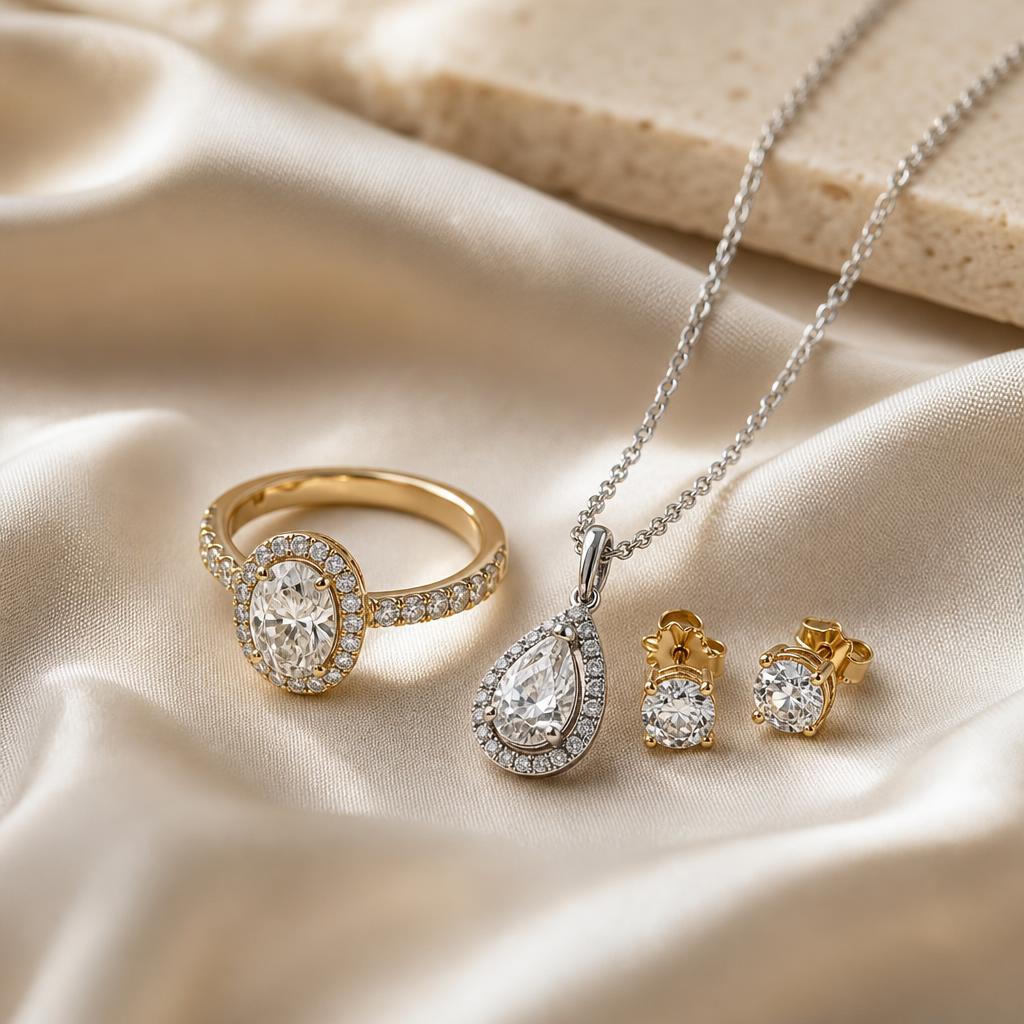
The good news is that the rule has already collapsed, and the women who noticed first are the ones with the most interesting jewelry boxes. Before we get into how to mix metals in jewelry the right way, here's a genuine spread of pieces — across gold and silver, across rings, necklaces, and earrings — that make the case better than any rule ever could.


The Rule You Were Taught Is Already Obsolete
"Don't mix your metals" belongs in the same category as "don't wear white after Labor Day" — a rule that sounded authoritative for exactly as long as nobody questioned where it came from. It came from a jewelry counter, not a design school. Matching everything in one metal made inventory simpler and upselling easier. It never made anyone's hand look better.
What actually changed is confidence, not fashion. Gold and silver next to each other reads as intentional the moment you stop treating it as a mistake to correct. A gold pendant under a silver ring isn't a wardrobe malfunction — it's proof you built a collection instead of just buying whatever matched the last thing you owned.
The One Principle That Actually Replaces the Old Rule
If you remember nothing else, remember this: pick a lead metal and let the second one act as the accent, not the rival. Something close to a 70/30 split — one tone doing most of the visual work, the other showing up with intention rather than by accident. A silver-heavy hand with one gold ring reads as styled. Three rings split evenly down the middle just reads as undecided.
The second half of the principle is repetition. Each metal needs to appear at least twice for the eye to register it as a choice rather than a stray. One gold necklace and one gold stud, paired with a silver ring and a silver cuff, feels balanced in a way that a single lonely gold piece surrounded by silver never will.
Start With a Bridge Piece
The easiest way into mixing metals is to buy the same design twice, in two different tones, and let it do the introducing for you. It sounds almost too simple, but a piece you already know and love — just recast in the opposite metal — removes the guesswork of whether two tones actually belong on the same hand.

The Odette Ring — Silver
The same oval solitaire shown above in gold, cast in 925 sterling silver instead. Wear the silver on one hand and the gold on the other, or stack them together — either way, the identical silhouette is what makes two different metals read as deliberate rather than mismatched.
Shop The Odette Ring →This is also where the Ophelia earns its reputation. It's set in hidden-halo pavé that reads as easily $15,000 or higher on first glance, which makes it exactly the kind of piece that can anchor a gold-and-silver hand without looking like it's competing with anything. A stone that confident doesn't need matching metal on every other finger to hold its own.
Mixing Metals, Category by Category
Rings: Where Mixing Metals Feels the Most Natural
Hands move, which means two different metals on two different fingers never sit still long enough to look forced. Mixing gold and silver rings is genuinely the lowest-risk place to start — alternate a gold band on one hand with a silver solitaire on the other, or stack a thin gold ring directly against a thin silver one on the same finger for contrast that reads as texture rather than clash.
Necklaces: Building a Stack That Uses Both Tones on Purpose
Layering is where the dominant-metal rule earns its keep. Vary the chain lengths — a shorter piece close to the collarbone, a longer one beneath it — and let one tone lead the stack while the other appears once, lower down, as the accent. A mixed metal necklace stack built this way looks curated because each layer has a job, not because every piece happens to be the same color.

The Faith Moissanite Necklace — Gold
The gold twin of the silver cross pendant featured above. Worn as the accent layer beneath a longer silver chain, or on its own — this is the piece that lets a two-tone stack feel finished instead of experimental.
Shop The Faith Moissanite Necklace →Earrings: The Category That Forgives Almost Anything
Because both ears are rarely in the same frame at once, mixed metal earrings are the most forgiving category to experiment in. A gold huggie in one ear and a silver stud in the other reads as an ear-stack decision, not an oversight. Even a single pair, worn alongside a mixed-tone necklace or ring, is enough to establish that the gold and silver in your collection are meant to be seen together.
Worth knowing: Moissanite and Gemiros' signature simulated diamonds catch light identically whether they're set in gold or sterling silver — the stone's fire doesn't change, so the metal choice really is just about the look you want, not a compromise on sparkle.
The Two Mistakes That Make It Look Sloppy Instead of Styled
The first mistake is going fifty-fifty. An even split between two metals, with neither one clearly leading, is what actually reads as accidental — not the presence of two tones, but the absence of a decision about which one matters more. Fix it by picking a lead metal and keeping the second one to roughly a third of what's visible.
The second mistake is mismatched weight. A delicate gold chain paired with a chunky, heavily textured silver cuff pulls the eye toward the size difference instead of the color contrast. Match proportions first — dainty with dainty, statement with statement — and let the metal do the rest of the work.
✦ Pro tip: If you're mixing silver and gold jewelry for the first time, start small — one earring, one ring, one necklace layer — rather than reworking your entire collection in a single day. Confidence with two tones builds the same way it does with anything else: one piece that works leads naturally to the next.
Why This Actually Matters Beyond the Styling Advice
There's a version of this article that stops at "here's how to layer your necklaces." But the more interesting shift is what mixing metals says about how you buy jewelry in the first place. A collection built entirely in one metal is a collection built around a rule someone else set. A collection with both gold and silver in it, worn together on purpose, is one built around what you actually want to wear that day — not around matching a single, arbitrary standard.
That's the same reasoning that makes simulated diamonds and moissanite an obvious choice once you actually sit with it. Nobody needs to overpay for a stone that looks identical to the naked eye and passes a diamond tester, and nobody needs to buy two entire matching jewelry sets just to have both gold and silver on hand. Once you see through one outdated rule, the others tend to follow.
Quick Takeaways
- There's no rule against mixing metals — it was always a retail convention, not a design principle.
- Pick a lead metal for roughly 70% of what's visible, and let the second tone act as a deliberate accent.
- Repeat each metal at least twice so the eye reads it as a choice, not a stray piece.
- Match proportions (dainty with dainty, bold with bold) before you worry about color.
- Rings and earrings are the most forgiving places to start experimenting.
Frequently Asked Questions
Is it actually okay to mix gold and silver jewelry?
Yes — there's no rule against it, and it hasn't been considered a styling mistake for years. The only thing that makes mixed metals look unintentional is an even split with no clear lead tone, not the combination of gold and silver itself.
What is it called when jewelry combines both gold and silver?
It's usually called "mixed metal" or "two-tone" jewelry, depending on whether the two colors appear in a single piece or across separate pieces worn together.
Is there a rule for how much of each metal to wear?
A rough 70/30 split works well as a starting point — one metal as the clear lead, the other as a repeated accent. It's a guideline, not a formula, but it's the fastest way to avoid the fifty-fifty look that reads as undecided rather than styled.
Can you wear gold and silver rings on the same hand?
Yes, and it's one of the easiest places to start. Alternate a gold ring and a silver ring across different fingers, or stack a thin band of each directly next to one another for contrast that reads as texture rather than mismatch.
Is mixing metals considered a passing trend?
It's better understood as a return to how jewelry was actually worn before matching sets became a retail norm. Collections built over years naturally include both tones — mixing them is less a trend than a practical reflection of how most jewelry boxes actually look.
The next time you reach for a necklace and hesitate because it's "the wrong metal" for the ring you already have on, that hesitation is worth noticing. It's not your taste holding you back — it's a rule you never actually agreed to. Wear both. Build the collection that makes sense for you, one piece at a time, in whatever metal actually caught your eye that day.


