

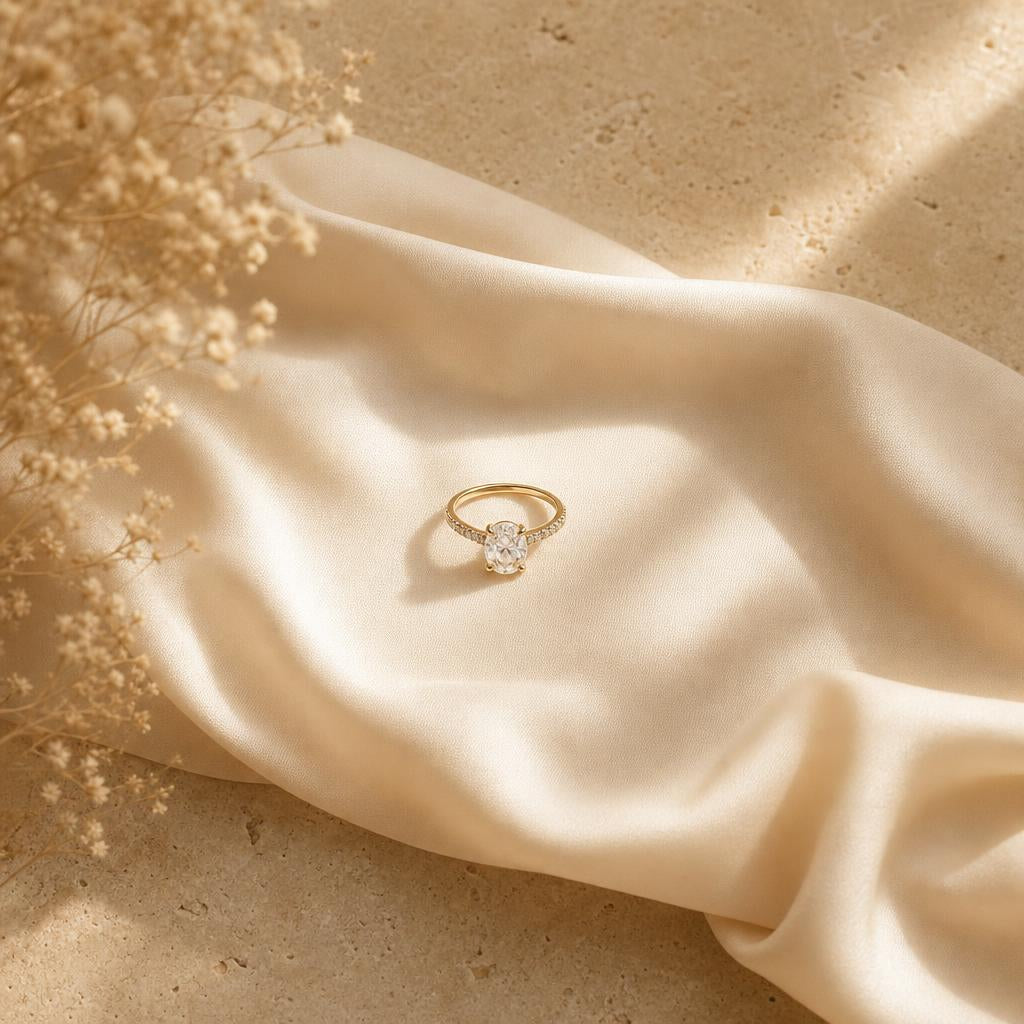
Divorce Rings for Women: How Jewelry Becomes Part of Starting Over
Nobody tells you what to do with your hand. The lawyers cover the house, the accounts, the custody schedule down to the last Tuesday — but nobody hands you a plan for the empty space where a ring used to sit. So women are making their own plan. Not by leaving the finger bare, and not by pretending the last few years didn't happen, but by putting something new there on purpose.
That's the whole idea behind a divorce ring: not a replacement for what was lost, but a piece you chose for exactly one reason — because you wanted it, and you didn't need anyone's permission to buy it. Before we get into what that actually looks like, here are a few pieces built for exactly that kind of decision.


What Is a Divorce Ring, Exactly?
It's a piece of jewelry a woman chooses for herself after a marriage ends — not to mourn it, and not to spite anyone, but to mark the fact that a new chapter has actually started. It's become common enough that it shows up in style coverage and family-law columns in the same week, which tells you something: this isn't a niche impulse. It's a recognizable, deliberate thing women are doing on purpose.
There's no single look that qualifies. Some women choose something quiet — a solitaire that says nothing except "this is mine." Others go bigger, because bigger finally feels honest. What actually earns it that label isn't the carat count or the setting. It's the decision behind it: you bought this for you, on your own terms, and that's the whole point.
Worth knowing: Divorce rings for women aren't about replacing what came before. Most of the ones getting attention right now are brand-new pieces, chosen specifically because they carry no history at all — which is exactly the appeal.
Why the Ring Matters More Than People Admit
There's an old assumption baked into how we talk about jewelry: that the meaningful pieces are the ones someone else gave you. A ring you buy yourself gets treated as an afterthought, a consolation prize, something smaller than the "real" version. That assumption is exactly what's being quietly dismantled here. A woman who buys her own ring after a divorce isn't settling for less than a proposal — she's making a decision that nobody else gets veto power over, which is arguably the more grown-up transaction.
It also solves a practical problem nobody talks about: the awkwardness of a bare hand where a ring used to be, or the discomfort of still wearing the old one because you haven't decided what else to do. A new ring gives you somewhere to land that isn't either of those. It's not a hole. It's not a relic. It's just yours.

Statement Ring
A radiant-cut center flanked by two heart-cut side stones — the classic "past, present, future" format, minus the assumption that the future has to involve anyone else.
Shop Statement Ring →Divorce Ring Ideas Worth Actually Considering
If you're sorting through divorce ring ideas and everything you're finding online is either an eye-watering custom reset or a throwaway novelty band, neither one is really answering the question. Here's what tends to work, depending on what you're actually looking for:
- The solitaire. One clean stone, nothing else competing for attention. This is the choice for a woman who wants the ring to say "settled," not "look at me."
- The three-stone. Past, present, future is a genuinely useful framework here — it's one of the few pieces of engagement-ring symbolism that translates directly, minus the marriage part.
- The halo. More surface sparkle, more presence on the hand. A good option if quiet isn't what this moment calls for.
- Something with texture. Pavé, milgrain, an unusual cut — anything that reads as considered rather than generic.
None of these require melting anything down or explaining yourself to a custom jeweler. That's actually the appeal of buying new: no old setting to work around, no compromise between what you had and what you want now. Just a piece that starts clean.
Which Finger, and Does It Even Matter?
The honest answer is no — there's no rulebook. Some women move a new ring onto the right hand specifically to put distance between it and the left-hand tradition. Others put it on the middle finger, which has become something of an unofficial signal of "this one's for me." Plenty just wear it wherever it sits best on their hand, because at a certain point the symbolism matters less than whether you actually like how it looks when you glance down.

Regent
A princess-cut center on a pavé band — sharper lines, more presence, built for a hand that's ready to be looked at again.
Shop Regent →The One Thing It Should Never Be
Apologetic. Not in the sterling-silver-instead-of-platinum sense, and not in the moissanite-instead-of-mined sense either. A ring set in 925 sterling silver with a moissanite or lab-created stone is indistinguishable from a diamond to the naked eye and passes diamond testers — nobody looking at your hand is running a spectrometer, and nobody is going to ask what it's "really" made of. The only thing that would make this ring feel small is choosing one you're not fully sure about. The material was never the issue.
This matters more here than in almost any other jewelry purchase, because this ring is doing identity work, not just decorative work. It's standing in for a decision you made about your own life. It should look like it — not like a hedge, not like a placeholder, not like something you'll "upgrade" once you feel more sure of yourself. You're already sure. The ring just needs to catch up.

Juliette
A pear-cut center with heart-cut side stones — a softer silhouette that still reads as fully intentional, not tentative.
Shop Juliette →Buying It for Yourself, Without the Speech
You don't owe anyone an explanation for a new ring, but people will ask anyway — a friend, a coworker, your mother. The easiest answer is also the truest one: you wanted it, so you got it. That's a complete sentence. It doesn't need a follow-up about healing journeys or personal growth unless you feel like giving one. A ring bought with your own money, on your own schedule, answers to exactly one person.
✦ Pro tip: If you're buying online, order your usual size first. Stress and travel can cause temporary swelling, but your baseline size is still the right starting point — you can always size up later if needed.
What This Isn't
It isn't a reset button, and it isn't proof of anything to an ex who probably isn't paying attention anyway. It's closer to what a woman buying her first "real" piece of jewelry at 25 is doing, or what a woman marking a hard year with something beautiful is doing — a small, deliberate act of choosing yourself. The circumstances are different. The instinct is the same.
Quick Takeaways
- This kind of ring is a new piece bought to mark a fresh start — not a repurposed heirloom and not a statement to anyone else
- Solitaires read as settled; three-stone designs carry past/present/future symbolism without the marriage baggage; halos bring more sparkle
- There's no required finger or hand — right hand, middle finger, or wherever it actually looks best on you
- 925 sterling silver with moissanite or a lab-created stone is indistinguishable from a diamond and passes diamond testers, so the material is never the compromise
- You don't need an explanation beyond "I wanted it" — that's the entire point of buying it for yourself
Frequently Asked Questions
Is this actually a real thing, or just a trend online?
It's a real and increasingly common choice, not just a passing trend — enough women are doing it deliberately that it now shows up regularly in style and lifestyle coverage. It simply means choosing a new piece of jewelry to mark the end of a marriage on your own terms, rather than leaving the moment unmarked.
Which finger do you wear a divorce ring on?
There's no fixed rule. Many women choose the right hand specifically to separate it from left-hand tradition, others prefer the middle finger as an unofficial signal of independence, and plenty just wear it wherever it looks best. The choice is entirely personal.
Is it bad luck to keep or wear a ring from a marriage that ended?
No — that's superstition, not fact. Plenty of women keep their original ring for sentimental or practical reasons, and plenty choose a new one instead. Neither choice is more "correct" than the other; it comes down to what actually feels right to you.
What does a divorce ring look like?
There's no standard style. Solitaires, three-stone designs, halos, and stacked bands are all common choices — what matters is that it feels intentional and fully yours, not that it follows a specific template.
Do you need to spend a lot on one?
Not at all. There's no set budget — the meaning comes from the intent behind the purchase, not the number on the receipt. Some women choose something modest; others go bigger. Both are equally valid.
Divorce ring etiquette: is there a "right" way to do this?
Not really. The one loose guideline worth following is intent — it works best as a symbol of self-love and moving forward, not as a pointed message aimed at anyone else. Beyond that, budget, timing, and style are entirely up to you.
Whatever you choose, choose it because you actually want it on your hand every day — not because it makes a point, and not because it fills a space. That's the only rule that was ever going to matter.


