

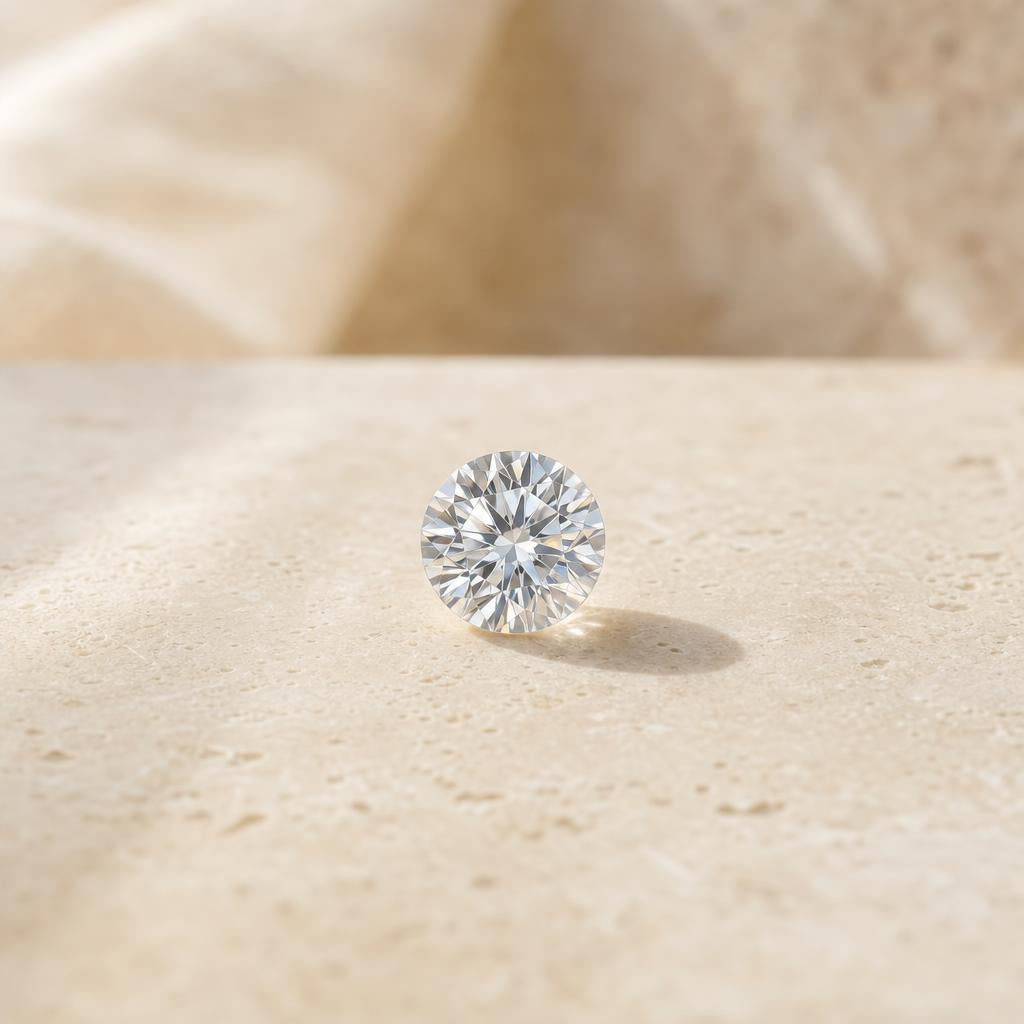
Conflict-Free Simulated Diamonds: What the Claim Actually Means
You've seen the phrase everywhere — "conflict-free" stamped across jewelry ads like a badge of honor, promising a clear conscience with your purchase. But when a listing calls a stone a conflict-free simulated diamond, what is that claim actually verifying? The honest answer is more interesting than the marketing shorthand suggests, and once you understand it, you'll never read a ring listing the same way again.
Here's the short version: "conflict-free" was built as a term for mined diamonds, to certify they didn't fund armed conflict. A simulated stone was never mined at all, which changes what the claim means — in a way that works entirely in your favor. Before we get into why, here's a look at a few rings built on exactly that foundation.


Where "Conflict-Free" Actually Comes From
The term didn't originate in a marketing department. It came out of the Kimberley Process, an international certification system built in the early 2000s to stop rough diamonds from funding armed conflict. A mined diamond earns the "conflict-free" label when it can be tracked from the ground to the counter without touching that supply chain. It's a real and important system — but it was designed to solve one specific problem: the trade in mined stones from conflict zones.
That distinction matters, because it means "conflict-free" was never meant to answer every ethical question a shopper might have. It says nothing about labor conditions at a mine, nothing about environmental impact, and nothing about whether a stone came out of the ground at all. It only answers one question: did this stone fund a war? For a mined diamond, that's worth knowing. For a stone that was never mined, the question barely applies.
Worth knowing: Conflict-free diamonds meaning, in its strictest sense, is narrower than most shoppers assume — it certifies the absence of war financing, not the presence of ethical sourcing overall. The two get treated as synonyms in marketing copy, but they're not the same claim.
Is a Conflict-Free Simulated Diamond Even a Category?
Technically, no — and that's the interesting part. A simulated stone, like a Gemiros® Signature Simulated Diamond or a moissanite center stone, is created, not extracted. There's no mine, no rough-stone trade route, and no possibility of funding a conflict, because there was never a conflict-adjacent supply chain to begin with. Calling it "conflict-free" is accurate, but it's also almost beside the point — the same way you wouldn't need to certify a photograph as "elephant-tusk-free." The category the claim was built to police simply doesn't apply.
What that means for you as a buyer: you're not trading ethics for savings. You're opting out of the entire question. Every Gemiros stone — 925 sterling silver setting, moissanite or lab-created stone — is conflict-free by construction, not by certificate. No sourcing audit required, because there's nothing in the chain to audit.
What "Ethically Sourced" Adds on Top
Some brands go further than conflict-free and use "ethically sourced" instead, which is meant to cover labor conditions, environmental practices, and fair pay across the supply chain — a broader promise than the Kimberley Process alone provides. Gemiros stones are conflict-free and ethically sourced: the moissanite and CZ are lab-created and conflict-free, sourced from the same supplier tier used by established names in the category, and every purchase supports carbon-neutral shipping and the brand's tree-planting program. It's not a claim stitched together after the fact — it's the baseline the product was built on.
The Confusion Between Simulated and Lab-Grown
This is where most shoppers get tangled, so it's worth being precise. A lab-grown diamond is chemically identical to a mined diamond — same carbon crystal structure, grown in a controlled environment instead of underground. A simulated diamond, like moissanite or cubic zirconia, is a different mineral entirely, engineered to mimic a diamond's brilliance and fire without sharing its chemistry. Both are created rather than mined, and both sidestep the mined-diamond conflict question entirely — but they are not the same product, and a listing that blurs the two is doing you a disservice.
Gemiros works exclusively with simulated stones and moissanite — never lab-grown diamonds — and the listings say so plainly. That's not a compromise. Indistinguishable from a diamond to the naked eye, passing standard diamond testers, and priced at a fraction of what a comparable mined stone would cost: that's the actual trade you're making, and it's a good one.

Ophelia Ring
An oval-cut hidden halo silhouette that reads like the kind of ring people assume cost $15,000 or higher. It didn't — but no one can tell from across the room, or up close.
Shop Ophelia Ring →Why This Should Change How You Read a Listing
Once you understand what "conflict-free" is actually certifying, you start reading jewelry listings differently — and that's the point. A retailer selling mined diamonds needs the Kimberley Process certificate to make a credible claim, and a shopper who understands the term knows to ask for it. A retailer selling simulated stones doesn't need that certificate, because the underlying question doesn't apply — but a shopper who understands why is making an informed choice, not just a cheaper one.
This is where the fear that usually drives a hesitation — am I settling for something lesser because I skipped the "real" certification process? — gets obliterated rather than soothed. You're not skipping a step. You've selected a stone for which that step was never relevant in the first place, and you understand exactly why.
What to Actually Look For
Since "conflict-free" doesn't tell the whole story, here's what's worth checking on any listing, simulated or otherwise:
- What the stone actually is — moissanite, cubic zirconia, lab-grown diamond, or mined diamond. Each has a different origin story worth knowing.
- What the setting is made from — 925 sterling silver, gold vermeil, or solid gold changes both durability and price.
- Whether sustainability claims go beyond the stone — carbon-neutral shipping, recycled metals, and give-back programs are separate from the stone's origin and worth knowing about on their own terms.
- Whether the brand hedges or states things plainly — a listing that's confident about what it's selling is usually more trustworthy than one leaning on vague reassurance.

Maxima Ring
A 3.5-carat cushion-cut hidden halo built for the woman who wants the statement without the sourcing question mark. Conflict-free by construction, not by paperwork.
Shop Maxima Ring →The Bigger Picture: Why This Detail Matters
None of this is trivia. It's the difference between buying because a term sounded reassuring and buying because you actually understand what you're getting. That's the entire premise behind choosing a simulated stone in the first place — you've already done the math on the diamond industry's markup and its manufactured scarcity, and you've decided the traditional path isn't the only rational one. Understanding the fine print on "conflict-free" is just one more piece of that same clear-eyed decision.
It's also a reminder that the most confident buyers aren't the ones who avoid asking questions — they're the ones who ask the right ones and already know the answer before the salesperson finishes the sentence.
Quick Takeaways
- "Conflict-free" was built to certify mined diamonds didn't fund armed conflict — it says nothing about labor conditions or environmental impact on its own.
- A simulated stone is created, not mined, so the mined-diamond conflict question doesn't apply to it in the first place.
- Simulated and lab-grown are not the same thing: lab-grown is chemically a diamond; simulated (moissanite, CZ) mimics one without sharing its chemistry.
- Gemiros stones are conflict-free and ethically sourced by design, set in 925 sterling silver, with carbon-neutral shipping on every order.
Frequently Asked Questions
Are conflict-free diamonds real?
Yes — for mined stones, a conflict-free diamond is a real, physical diamond that's been tracked through the Kimberley Process to confirm it didn't fund armed conflict. The certification verifies the stone's supply chain, not its chemistry. A simulated stone answers a different question entirely: it was never mined, so there's no supply chain to certify in the first place.
Are simulated diamonds real diamonds?
No, and that's not a downside — it's the point. A simulated diamond is a different material engineered to deliver the same brilliance and fire. It's indistinguishable from a diamond to the naked eye and passes standard diamond testers, at a fraction of what a comparable mined or lab-grown stone would cost.
Does "ethically sourced" mean the same thing as "conflict-free"?
No. "Conflict-free" is the narrower, older term focused specifically on war financing. "Ethically sourced" is a broader claim meant to cover labor conditions, fair pay, and environmental practices across the whole supply chain. A stone can technically be conflict-free without meeting a higher ethical bar — which is why it's worth checking what a brand actually means when it uses either term.
Are conflict-free diamonds lab-grown?
Not necessarily — the two labels describe different things. "Conflict-free" is about a stone's supply chain history, and it can apply to a mined diamond with clean paperwork. Lab-grown describes how a diamond was made. A lab-grown diamond is automatically conflict-free because it skips mining entirely, but plenty of conflict-free stones are still mined. Gemiros doesn't work with lab-grown diamonds at all — the collection is built on moissanite and simulated diamonds, which are a separate category from both.
The next time you see "conflict-free" on a ring listing, you'll know exactly what it is and isn't promising — and you'll know why a simulated stone answers a question the mined-diamond industry spent decades trying to solve, simply by never needing to ask it. That's not a technicality. That's the whole argument for choosing differently.


