

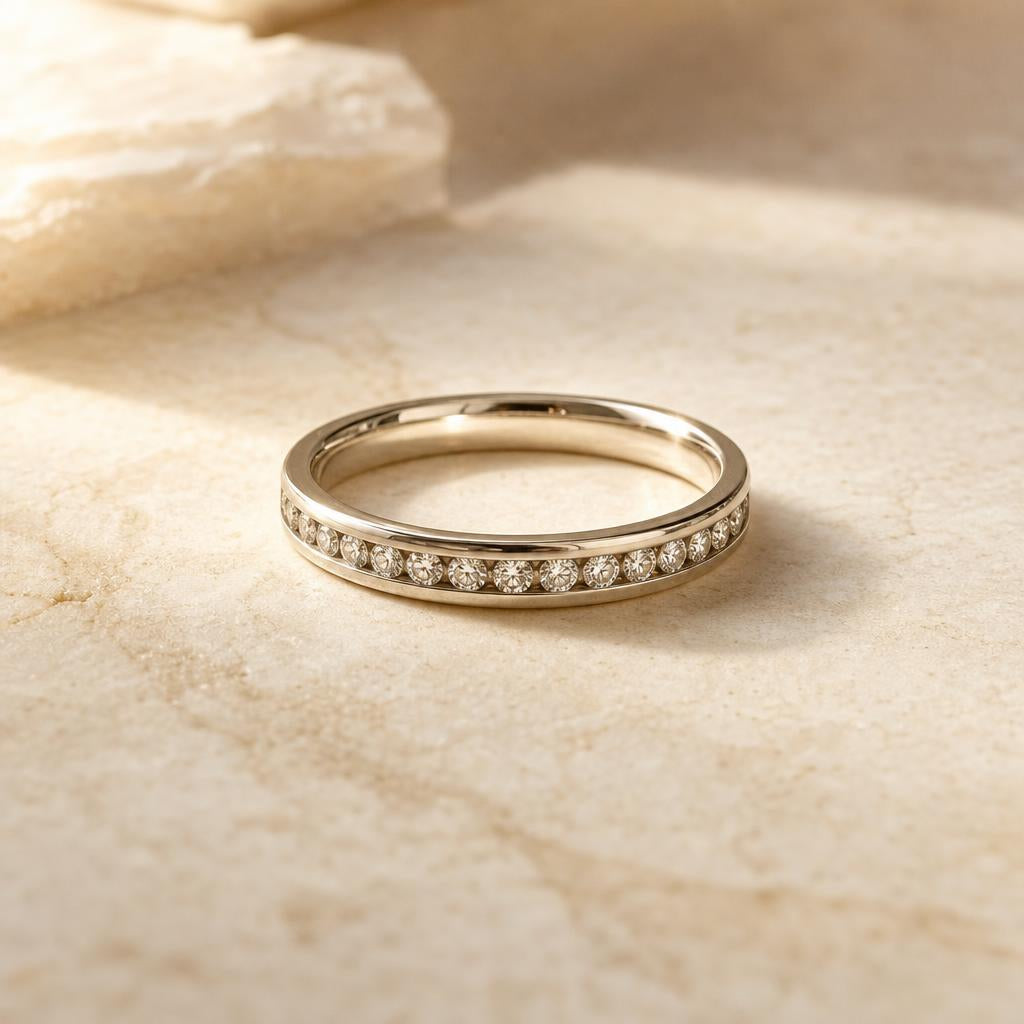
What Is a Channel Setting Ring? The Sleek, No-Snag Style Explained
Run your thumb along a ring with a channel setting and you won't find a single sharp edge. No raised prongs, no gaps to snag a sweater — just a smooth, continuous line of stones set flush into the band itself. It's one of the quietest ways a ring can look expensive, and one of the least understood.
Before we get into how it actually works, here's a look at a few Gemiros styles that share the same low-profile, everyday-durable thinking a channel setting is built around.


What Is a Channel Setting Ring?
A channel setting holds a row of stones between two thin walls of metal, carved directly into the band. There are no prongs reaching up to grip each stone individually — instead, the two metal edges are pressed gently inward, pinning the entire row in place at once. The result reads as one continuous line of sparkle rather than a series of separate stones, which is exactly why the style has stayed in circulation since it was first popularized nearly a century ago.
It's a construction method, not a stone type or a price point. You'll see channel settings on wedding bands, on the shoulders of a solitaire, and running around a full eternity band. What makes it recognizable is the smooth, unbroken surface — nothing sits above the metal, nothing sticks out to catch on a glove or a silk sleeve.
How a Channel Setting Band Actually Holds the Stone
Picture two parallel strips of metal running along the ring, with a narrow trench cut between them. Stones are dropped into that trench side by side, and the jeweler carefully pushes the top edge of each metal wall over the very edge of the stone — just enough to create tension without covering the face of it. That tension is what keeps everything locked in place. There's no glue, no soldering between individual stones, and no visible setting hardware at all.
Because the metal walls run continuously along the band, this construction distributes pressure evenly across every stone rather than concentrating it at a handful of prong tips. That's part of why the style has a reputation for holding up well under daily wear — there's simply less metal exposed to catch, bend, or wear down.

The Ophelia
A different construction — a hidden halo center on a pavé band — but built on the same instinct: a low, secure profile that looks intentional from every angle, not just the top.
Shop The Ophelia →Channel Setting vs. Pavé Setting: What's Actually Different
These two get confused constantly, and it's easy to see why — both feature a row of smaller stones running along the band. The difference comes down to what's holding the stones in place. Pavé uses tiny individual prongs or beads, invisible at a glance but present under magnification, to secure each stone separately. A channel setting skips the prongs entirely and relies on the two metal walls themselves.
| Feature | Channel Setting | Pavé Setting |
|---|---|---|
| How stones are held | Two metal walls, no prongs | Tiny individual prongs or beads |
| Surface feel | Smooth, flush, no snag points | Slightly textured, tiny raised beads |
| Everyday durability | Very high — built for active hands | Good, but beads can wear over years |
| Cleaning | Needs a soft brush to reach under stones | Easier surface access, still needs regular care |
| Visual effect | One continuous line of brilliance | A paved, shimmering surface |
Neither one is objectively better — they're solving for different things. If the goal is maximum surface sparkle, pavé wins. If the goal is a ring that disappears into your routine and never needs a second thought, the channel setting is doing exactly what it was designed to do.
Why Channel Settings Read as Durable and Low-Profile
The girdle — the thin outer edge of a stone, where chipping is most likely to happen — sits fully protected inside the channel. There's no exposed edge for a car door, a gym bar, or a tight glove to catch. That's not a marketing claim, it's just geometry: when the stone is bordered by solid metal on two sides instead of open air, there's less surface for anything to grab onto.
This is also why the style shows up so often on wedding bands meant to be worn alongside an engagement ring every single day. A ring that has to survive dish soap, gym chalk, and a dozen sweater sleeves a week benefits from having as few catch points as physically possible.

The Maxima
If you want that same secure, everyday-ready feeling in a bolder cushion cut, the Maxima pairs a square hidden halo with a pavé band for a similarly low, snag-resistant profile.
Shop The Maxima →Where the Style Shows Up Most
A channel set diamond band is the most common place you'll encounter the style — a plain, continuous ring of stones designed to sit flush against an engagement ring without adding bulk. It's also common as an accent detail along the shoulders of a center stone, where it reinforces the ring's main event without competing with it visually.
A full channel set engagement ring, where the technique runs the entire way around the band rather than just the shoulders, tends to appeal to buyers who want continuous sparkle without a single raised element anywhere on the piece. It reads as more architectural than a classic pavé eternity band, and it tends to photograph as one unbroken line of light rather than individual points of sparkle.
Worth knowing: Because the stones sit tightly against solid metal on both sides, a channel set diamond ring is genuinely harder to resize than most other styles. Stretching or compressing the band risks distorting the channel itself. If you think your size might change, it's worth having that conversation before you buy rather than after.
Is a Channel Setting Right for You?
If you're the kind of person who takes rings off before doing dishes just to be safe, a channel setting removes that anxiety almost entirely — there's very little to catch or loosen in the first place. It's a strong choice for anyone with an active daily routine, anyone who stacks multiple rings and wants the pieces to sit flush against each other, and anyone who prefers a cleaner, more architectural look over maximum surface texture.
It's a less obvious choice if you specifically want the extra surface shimmer that pavé or a halo setting delivers, or if you know you'll need to resize down the line. Neither is a wrong answer — it's simply a question of which trade-off matters more for how you actually wear your jewelry.
Quick Takeaways
- A channel setting holds stones between two metal walls instead of individual prongs, creating a smooth, unbroken surface.
- It protects the girdle of each stone, making it one of the more snag-resistant, durable setting styles for daily wear.
- Pavé delivers more surface sparkle; a channel setting delivers a cleaner, lower-profile line of brilliance.
- Resizing is genuinely more difficult with this style, so confirm your size before you buy.
- It shows up most often on wedding bands and eternity styles, though it can also frame the shoulders of a center stone.
Frequently Asked Questions
What is a channel setting, in plain terms?
It's a ring where stones sit in a row inside a groove cut into the band, held by two parallel metal walls instead of prongs. The stones sit flush with the surface, so there's nothing raised or exposed.
Is a channel setting secure — will the stones fall out?
It's one of the more secure setting styles available. Because the metal walls run continuously along the band and grip every stone at once, there's no single weak point the way a bent or worn prong can become. That said, any setting benefits from an occasional check by a jeweler, especially after years of daily wear.
Are channel set rings good for everyday wear?
Yes — this is where the style tends to shine. With no raised prongs to catch on clothing, hair, or gym equipment, it holds up well to the kind of daily friction that can loosen other settings over time.
Can a channel set ring be resized?
It's possible, but it's more delicate than resizing a plain band. Stretching or compressing the metal can distort the channel and loosen the stones, so it should always be handled by a jeweler experienced with the style — and it's worth sizing carefully the first time to avoid needing it at all.
What's the real difference between a channel setting and a pavé setting?
Pavé secures each stone with tiny individual prongs, creating a paved, textured shimmer across the surface. A channel setting uses two solid metal walls instead of prongs, creating one smooth, continuous line of stones with nothing raised above the band.
However you land on it, the appeal of a channel setting comes down to the same idea running through everything else in your jewelry box that you actually wear every day: the pieces that last are the ones that don't ask you to think twice before putting them on.


