

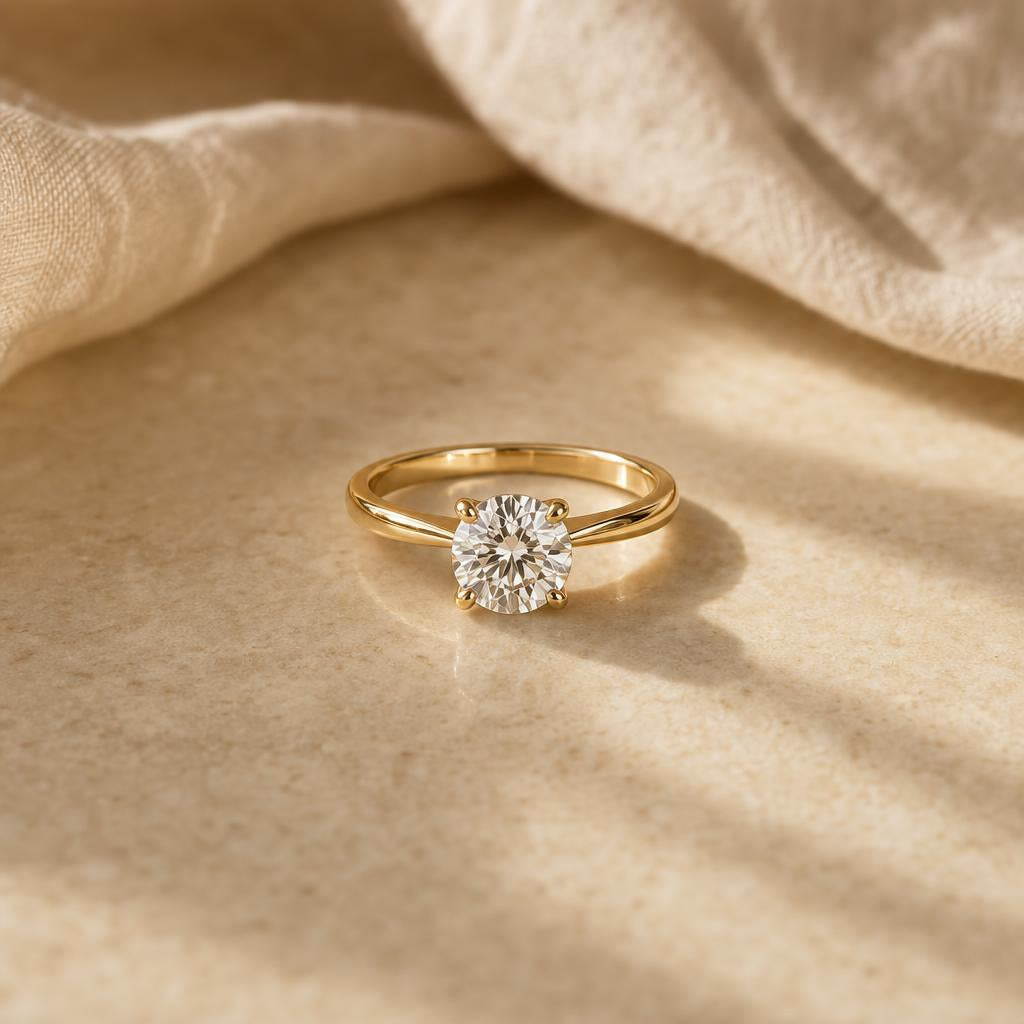
Why Some Women Wait Years Before Buying Their First 'Real' Ring for Themselves
There is a specific kind of ring that most women put off buying for years — not the one someone gives them, but the one they'd have to give themselves. It sits in a mental folder labeled "someday," right next to the vacation you'll take when things calm down and the apartment you'll redecorate once you're settled. The strange part is that "someday" rarely arrives on its own. It has to be decided.
If you've caught yourself scrolling past a ring you love and thinking maybe when I have a reason, you're in good company — and there's a real, specific reason so many women hesitate. Before we get into why, here's a look at four styles that make an easy, unfussy first ring for yourself.


The ring that's waiting for a reason that never quite arrives
Ask a woman why she hasn't bought herself a "real" ring yet, and you'll rarely hear "I don't want one." You'll hear something closer to: I'm waiting until things settle down. I'm waiting until I've hit some financial milestone. I'm waiting to see if someone else buys me one first. Each of those reasons sounds practical in the moment. Stacked together over years, they start to look like something else — a quiet belief that a ring like this needs to be earned, gifted, or justified before it's allowed.
That belief isn't really about the ring. It's about who gets to decide when a purchase is "worth it," and for a lot of women, that decision has always felt like it belonged to someone else — a partner, an occasion, a milestone birthday. The ring becomes a stand-in for permission. And permission, as anyone who's waited for it knows, has a way of never quite showing up on schedule.
Why the waiting feels so reasonable at the time
A few patterns show up again and again when women talk about putting off their first ring purchase:
The "it should mean something" trap
Somewhere along the way, rings got coded as symbols first and jewelry second. A ring is supposed to mark an engagement, an anniversary, a milestone — so buying one with no attached story can feel almost illegitimate, like wearing a costume for an event that isn't happening. But a ring you choose for yourself doesn't need someone else's occasion to justify it. The story can simply be that you wanted it, and you were the one who made it happen.
The budget-guilt spiral
Money spent on other people — gifts, family, the household — rarely gets interrogated the way money spent on yourself does. A dinner out with friends barely registers a second thought; a ring you'd wear every day for years gets run through a mental cost-benefit analysis a dozen times before the tab is even open. The math is rarely about whether you can afford it. It's about whether you feel entitled to want it.
Waiting for someone else to notice
For some women, there's a specific, unspoken hope tangled up in the waiting: that a partner, or family, will eventually notice the ring they've been eyeing and simply buy it for them. It's a lovely thought, and sometimes it happens. But basing a purchase on someone else's mind-reading ability is a plan with a very low success rate — and it quietly hands your own taste and timeline over to someone else's memory and budget.
Worth knowing: Simulated diamond rings are priced closer to a nice night out than to a major purchase — the hesitation is rarely really about the money.
What actually changes once you stop waiting
The women who do eventually buy their first ring for themselves tend to describe the same small, anticlimactic moment: nothing dramatic happened. There was no windfall, no sudden permission slip from the universe. They just decided the "someday" they'd been waiting for was, in fact, today — and bought the ring on a Tuesday afternoon like it was any other errand.
What changes afterward is usually more interesting than what prompted the purchase. A ring you bought for yourself carries a different kind of weight on your hand than one that arrived as a gift. It isn't attached to anyone else's story, timeline, or expectations. You catch yourself glancing at it and remembering that you were the one who decided you were worth the decision — which, it turns out, is a genuinely different feeling than admiring a gift, however lovely the gift might be.

The Duchess Ring
A cushion-cut hidden halo with a quiet, romantic edge — the kind of ring that photographs beautifully but never feels like it's trying too hard on an ordinary Tuesday.
Shop The Duchess Ring →How to choose the ring that becomes "the one you finally bought"
If you're getting close to your own version of "today," the ring itself matters less than you'd think — and more than you'd expect, in a different way. A few things worth thinking through before you shop:
Pick something you'll actually reach for daily
A first ring you buy yourself works hardest when it earns a permanent spot on your hand, not a special-occasion drawer. That usually means a setting that can survive a full day — typing, dishes, a gym bag — without you thinking twice about taking it off. Low-profile solitaires and hidden halos tend to hold up better here than tall, ornate settings that snag on everything from sweaters to seatbelts.
Choose a shape you actually like, not the "safe" one
It's tempting to default to whatever shape shows up most in engagement ring guides, on the theory that it's the least risky choice. But this isn't an engagement ring, and there's no one else's taste to account for. If you've always privately preferred an oval to a round, or a bit of pavé sparkle to a plain band, this is the purchase where that preference finally gets to win.
Let the price make the decision easier, not harder
One advantage of a simulated diamond ring is that it removes the "is this financially responsible" debate that mined-diamond price tags tend to provoke. An accessibly priced ring doesn't require a financial plan — it requires a decision. That's a very different, and much easier, threshold to clear.
✦ Pro tip: If you're torn between two styles, buy the one you'd wear with jeans, not the one you'd wear to a wedding. The ring that fits into an ordinary Tuesday is the one that ends up meaning the most, because you actually see it every day.

The Morgan Ring
A princess-cut centre stone with a pavé band and clean, architectural lines — for the woman whose first ring should look nothing like anyone else's.
Shop The Morgan Ring →The wait rarely ends because the moment is finally right
It's tempting to imagine that the hesitation will resolve itself — that one day you'll feel financially secure enough, or settled enough, or simply "ready" enough, and the ring will follow naturally. In practice, that feeling rarely arrives fully formed. Financial security is relative and shifting. Life doesn't obligingly pause to hand you a clean, guilt-free window. Most women who buy their first ring for themselves do it while still mid-way through some other goal, not after everything else in their life is checked off.
Which means the actual decision usually isn't will I ever be ready, but am I willing to stop waiting for a feeling that may not show up on its own. That's a much smaller, more answerable question — and it's one you get to answer on your own terms, on whatever afternoon you decide to answer it.
Quick Takeaways
- Waiting for a "reason" to buy a first ring often masks a deeper belief that self-purchases need outside permission — they don't.
- Budget guilt around a ring is rarely really about the number; it's about whether you feel entitled to want it.
- Pick a setting you'll wear daily, not just on special occasions — low-profile solitaires and hidden halos hold up best.
- Choose the shape and style you actually prefer, not the "safest" or most common one.
- The right moment to buy rarely announces itself — most women decide on an ordinary day, not a milestone one.
Frequently asked questions
Is it strange to buy myself a ring that looks like an engagement ring?
Not at all — plenty of women wear solitaire and halo styles on their right hand simply because they love the look, with no engagement connotation intended or assumed. If you'd rather sidestep any ambiguity, styles with a slightly less traditional silhouette, like a hidden halo or pavé band, read as personal jewelry rather than a symbol.
How do I know if I'm actually ready, versus just impulsively buying?
If you've been thinking about a specific ring, or a specific kind of ring, for more than a few weeks, that's not really impulse — that's a preference you've already tested against time. The "impulse" framing tends to be the guilt talking, not an accurate read on the decision.
Should I wait for a milestone birthday or anniversary of some kind?
You can, if a milestone genuinely appeals to you as a moment to mark. But it isn't required. Plenty of women find that an ordinary day — a Tuesday, a bonus paycheck, a particularly good week — makes just as meaningful an occasion, precisely because it wasn't waiting on a calendar to arrive.
What if I regret spending the money later?
It's a fair worry, and it's part of why price matters here. A simulated diamond ring is priced to be a genuinely low-risk decision — closer to a considered treat than a major financial commitment — which makes buyer's remorse far less likely than it would be with a significant mined-diamond purchase.
The ring you've been circling probably isn't waiting on a better moment. It's waiting on you to stop treating "someday" as a date on a calendar and start treating it as a decision you're allowed to make whenever you're ready to make it — which, if you've read this far, might be closer than you think.


