

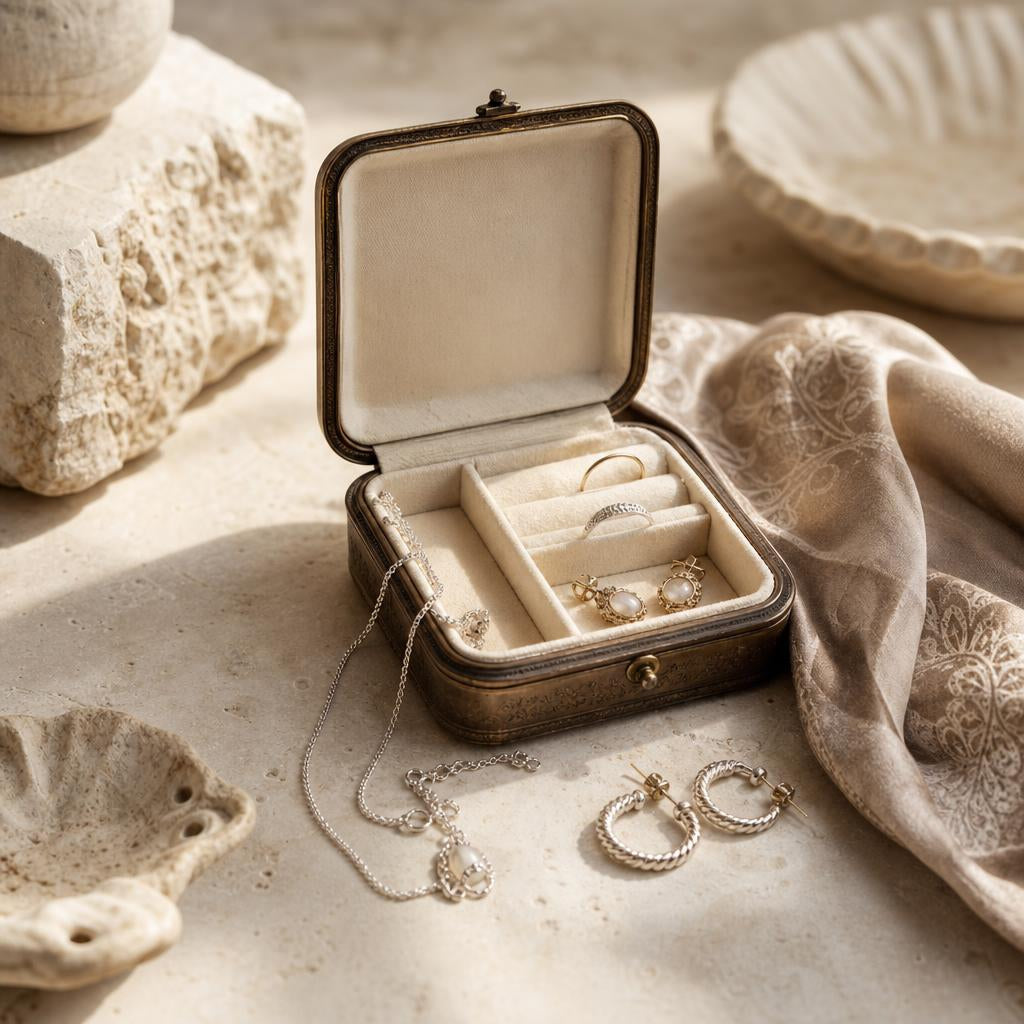
What 'Her Style' Actually Means When It Comes to Rings: A Guide for Partners
You've decided. You're doing this. And somewhere between the excitement and the spreadsheet of proposal logistics, a much smaller, much scarier question shows up: what is her ring style, exactly? Not her clothing style, not her home decor — her ring style. The thing you're supposed to already know, apparently, despite the fact that she has never once sat you down and explained it.
Here's the good news: "her style" isn't some secret code only she holds the key to. Most engagement rings fall into a handful of loose, recognizable categories, and once you know what to look for, you can usually spot which one she's already been gravitating toward — often without either of you realizing it. Before we get into how to read those signals, here's a spread of styles to get your eye calibrated.


Why "Her Style" Feels Impossible to Pin Down
Part of the problem is that ring style isn't usually something a woman announces out loud. It shows up sideways — in the jewelry she reaches for on a Tuesday, in the ring she comments on when a friend gets engaged, in the pair of earrings she's worn on rotation since 2019. It's a pattern, not a statement, which means you're not looking for a single clear answer. You're looking for a pattern you've probably already half-noticed.
The other part of the problem is that engagement ring marketing tends to flatten everything into two categories: "classic" and "unique." That's not actually useful. It doesn't tell you whether she wants a ring that disappears quietly into her hand or one that catches every bit of light in a room. So let's use a more specific map.
The Five Loose Style Categories
Almost every engagement ring — regardless of shape — falls somewhere within one of these five loose personalities. Think of them less as strict rules and more as a vocabulary for describing what you're seeing.
The Minimalist
She owns exactly one pair of everyday earrings and wears them constantly. Her jewelry box, if she has one, is edited down to a handful of pieces rather than overflowing. She'd rather have one good thing than five decent things. For this woman, a single clean solitaire — no halo, no extra detail competing for attention — usually reads as exactly right. The stone does the talking; nothing else needs to.
The Romantic
Soft edges, warm metal tones, anything with a bit of movement or detail. She's the one who lingers on lace trim, curved lines, delicate layering. A halo setting — especially a double or hidden halo that adds sparkle without adding size — tends to feel like her. So does a cushion or pear shape, both of which read a little softer than a sharp-cornered stone.
The Architectural
Clean geometry, strong lines, a ring that looks considered rather than sentimental. If she gravitates toward structured silhouettes in her clothing, or if her taste in furniture and design skews toward the deliberate and modern, an emerald or asscher cut with clean step-facets will likely appeal more than anything with soft curves. This is the woman who wants a ring that photographs like a piece of design, not just a piece of jewelry.
The Vintage Soul
Thrifted finds, inherited pieces, a general pull toward things that feel like they have history. Milgrain edges, filigree detail, and art deco framing tend to resonate here — the kind of detail that makes a ring look like it could have been someone's grandmother's, even when it's brand new. If you've ever heard her describe something as having "character," this is probably her category.
The Quiet Maximalist
Not loud, exactly — but not restrained either. She likes a ring that has presence: extra pavé, a bit more sparkle, a stone with real size and dimension. This isn't about being flashy for its own sake; it's about a ring that feels substantial on the hand. A cushion cut with a full halo of pavé, like Featured below, tends to land in exactly this territory.

The Maxima Ring
A 3.5-carat cushion cut simulated diamond wrapped in a full halo of pavé — substantial without tipping into costume territory.
Shop The Maxima Ring →Worth knowing: These categories aren't mutually exclusive, and very few women fit neatly into just one. Most people lean toward one or two, with a soft preference against a third. You're not solving for a perfect match — you're narrowing a wide field down to a manageable one.
Reading the Signals Without Asking
If a direct question feels too risky, there are quieter ways to gather information. None of these require her to know you're paying attention.
- Look at what she already wears daily. The rings, earrings, and necklaces in constant rotation are a far better indicator than anything she's said in passing. Daily jewelry reflects real preference, not a performance for a compliment.
- Notice what she compliments on other women. "I love that ring" said about a friend's cushion halo is data. So is "that's so pretty but I'd never wear something that big" — that's data too, just pointing the other direction.
- Check her saved folders, if you can do so honestly. Pinterest boards, Instagram saves, and screenshots are often more revealing than conversation, because she's curating for herself, not for an audience.
- Ask her friends or sister, carefully. The people she shops with tend to know more than they realize. A casual "has she ever mentioned what kind of ring she likes?" rarely raises suspicion.
- Consider her existing metal preference. Silver-tone, gold, or rose gold — whichever she already wears against her skin is usually the safest metal choice, even if the setting style is still a guess.
The Romantic, Revisited
If the romantic category above sounds right, a round halo with a bit of twist to the band tends to hold up especially well — it reads as detailed without crossing into busy.

The Camilla Ring
A round brilliant center stone set in a gently twisted pavé halo — soft movement without losing definition.
Shop The Camilla Ring →What If She's a Mix of Two?
Most people are. A minimalist with a romantic streak might want a solitaire with just a whisper of pavé along the band. An architectural woman with vintage leanings might gravitate toward an emerald cut with filigree detailing at the shoulders — clean lines, but with history built in. When you're genuinely stuck between two categories, the tie-breaker is usually whichever quality shows up more consistently in her everyday choices, not her special-occasion ones. A dress worn to one wedding tells you less than the earrings she wears to work every day.
✦ Pro tip: If you genuinely cannot narrow it down, a solitaire in her preferred metal and shape is close to a universal safe choice — it's the category every other style tends to respect, even if it's not someone's absolute favorite. From there, sizing and presentation matter more than getting the setting exactly perfect.
A Note on Getting It Wrong
Here's something worth sitting with before you spiral: getting the style slightly off is rarely the disaster it feels like in the moment. A ring that's close but not exact is still a ring chosen with real thought and effort, and most retailers — Gemiros included — build in room for exchanges and resizing precisely because this happens more often than anyone admits. The goal isn't a flawless guess. It's a genuine one, backed by actual attention to who she is.
If you want a second layer of confidence beyond style alone, it's worth understanding the setting types more broadly — halo, solitaire, pavé, bezel — since how a ring is set changes its whole personality independent of the stone shape underneath it.
Quick Takeaways
- Ring style shows up in daily habits, not declarations — watch what she already wears.
- Most women blend two categories rather than fitting neatly into one.
- Metal tone (silver, gold, rose gold) is often the easiest signal to nail down first.
- A clean solitaire in her preferred metal is the closest thing to a universally safe choice.
- A near-miss on style is fixable — sizing and setting can usually be adjusted after the fact.
Frequently Asked Questions
What if she's told me she "doesn't care" about the ring style?
Take it with a grain of salt. Most women who say this mean they don't want to feel like they're dictating the moment — not that they genuinely have no preference. The signals above (daily jewelry, compliments, saved photos) usually still apply even when she's said this.
Is it better to guess or to just ask outright?
Asking outright isn't a failure — plenty of couples shop together or narrow options as a team, and it removes almost all of the risk. If you want the moment to include an element of surprise, guessing based on real observation is the next best approach.
What if I genuinely can't tell which category she fits?
That's common, and it's not a sign you don't know her well. Default to metal tone and shape preference first — those are usually easier to observe than setting style — and choose a simpler solitaire silhouette, which flatters nearly every category listed above.
Can I change the setting later if I guess wrong?
In many cases, yes, particularly with resizing or exchanging for a different style within a reasonable window. Check the specific retailer's policy before you buy, but don't let fear of an imperfect guess stop you from choosing something thoughtful now.
At the end of the day, "her style" isn't a test with one right answer — it's a pattern you're already more familiar with than you think. Pay attention to what she reaches for without thinking, trust that pattern over guesswork, and remember that a ring chosen with real observation will almost always land better than one chosen from panic. That's the whole difference.


