

What Actually Voids an Engagement Ring Warranty — And What Doesn't
Somewhere between the receipt and the ring box, most engagement ring warranties quietly set a trap: a rule so easy to miss that entire categories of buyers void their coverage within the first year without ever finding out until they actually need it.
Before we get into exactly what cancels a warranty — and what genuinely doesn't — here's a look at a few rings worth knowing if you're shopping, because the smartest purchase decision starts with understanding what you're actually covered for.


What a Ring Warranty Actually Promises
"Lifetime warranty" is one of the most confidently printed phrases in jewelry marketing, and one of the least understood. In its honest form, a warranty is a manufacturer's promise to fix what it made wrong — a weak prong, a poorly seated stone, a clasp that fails from normal use. It is not a promise that your ring will look flawless forever regardless of what happens to it, and it is not insurance. Those two facts are where almost every warranty dispute actually starts.
The confusion is understandable. A ring that says "backed for life" sounds like blanket protection. In practice, that language almost always comes with conditions attached — conditions most buyers never read until the moment they need to file a claim and discover the coverage they thought they had was already gone.
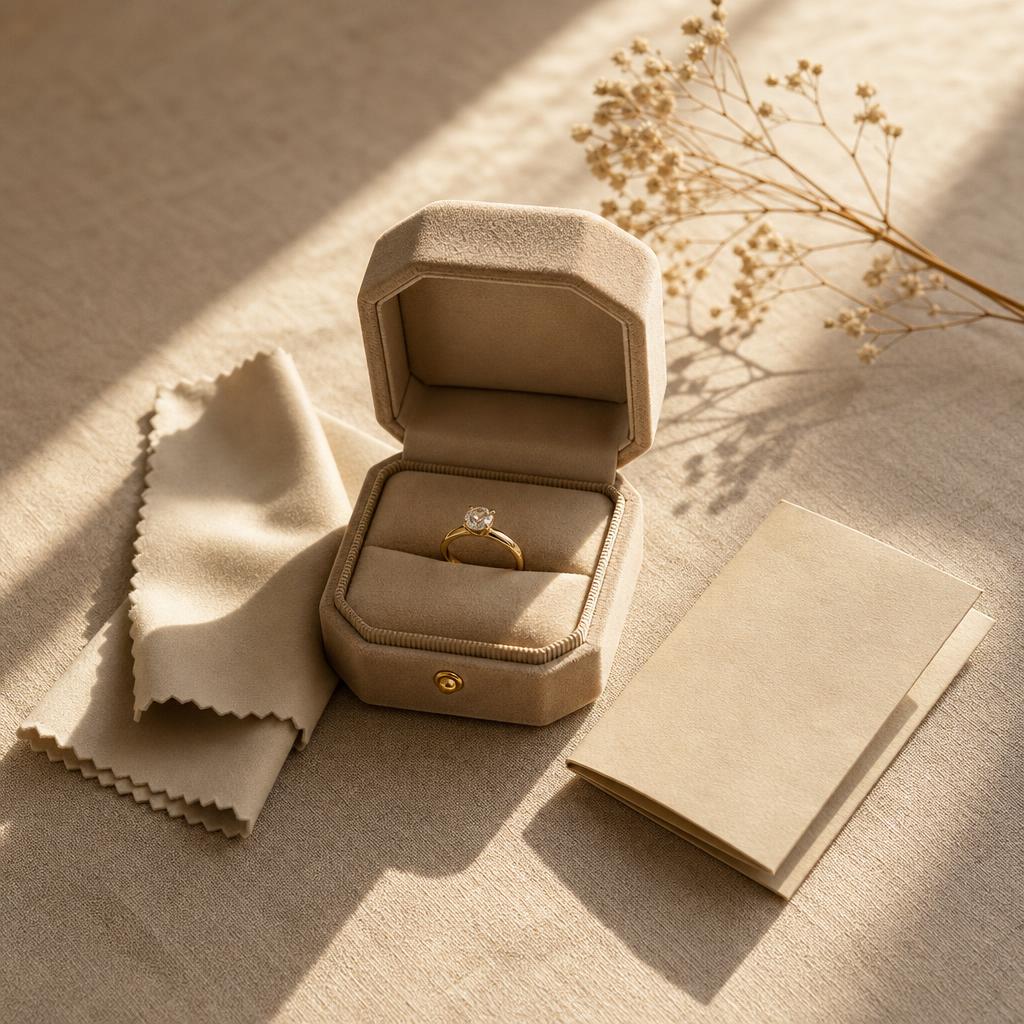
It also helps to separate the warranty itself from the paperwork that proves it. A warranty is a set of terms, not a physical object, but most jewelers still expect you to produce something when you actually file a claim: a receipt, an order confirmation, sometimes a card that came in the box. Losing that paperwork doesn't always void the coverage outright, but it can turn a five-minute claim into a much longer back-and-forth while the jeweler tries to verify the purchase another way. Photographing the receipt and saving the order confirmation email the day the ring arrives takes a minute and removes that entire problem later.
The Things That Actually Void an Engagement Ring Warranty
Across most jewelers, the reasons a warranty gets canceled are more predictable — and more avoidable — than people expect. Here's what actually does it.
- Outside repairs or resizing. Having any jeweler other than the original seller touch the ring — even for something as small as tightening a prong — voids the warranty at nearly every retailer that offers one. The logic is that once someone else has worked on the metal, the manufacturer can no longer guarantee what they didn't do.
- Missing a mandatory inspection window. A large share of "lifetime" warranties are not actually lifetime at all — they're conditional on bringing the ring back every six months for a formal inspection. Skip one appointment and the coverage typically lapses permanently, with no reinstatement.
- Engraving or structural alteration after purchase. Adding an engraving, changing the shank width, or otherwise modifying the ring from its original form is treated the same as outside repair work in most warranty terms.
- Damage from an event, not a defect. A stone that falls out because it was struck against something hard is wear-and-tear or accidental damage, not a manufacturing flaw — and warranties are written to cover the latter, not the former.
- Loss or theft. This one surprises people the most: no standard jewelry warranty, anywhere, covers a ring that goes missing. That risk sits entirely outside what a warranty is designed to do.
Worth knowing: The six-month inspection requirement is the single most common reason warranties quietly expire. Buyers assume "lifetime" means permanent and passive, when for many retailers it actually means an ongoing obligation that's easy to forget about during a busy year.
What Doesn't Void Your Coverage
Just as important as knowing what cancels a warranty is knowing what doesn't — because plenty of buyers avoid getting their ring cleaned or checked at all, out of a vague fear that touching it somehow risks the coverage. Normal daily wear doesn't void anything. Neither does contacting the original jeweler for a covered service within the stated terms, or having the piece professionally cleaned by the brand that sold it to you. A warranty exists so you'll actually use the ring — hiding it in a drawer to "protect the coverage" defeats the purpose entirely.

The Ophelia Ring
An oval center stone set in a hidden halo, engineered to read as a diamond most people would price at $15,000 or higher. It comes backed by the same straightforward, one-year Gemiros warranty as every ring in the collection — no mandatory inspection schedule to track.
Shop The Ophelia →Warranty vs. Insurance: What's Actually Different
The real distinction that resolves most of the confusion is engagement ring warranty vs insurance, and it comes down to who is responsible for what. A warranty is issued by the jeweler and covers manufacturing defects and structural workmanship — the things that are the maker's fault. Insurance is a separate policy, purchased independently, that covers loss, theft, and accidental damage — the things that are nobody's fault, or the wearer's. Neither one substitutes for the other, and a ring can carry excellent coverage under one while still being completely unprotected under the other — which is exactly the scenario buyers actually worry about most: losing it.
If replacing your ring would be a real financial setback, that's a conversation with an insurer, not a warranty department. A warranty was never built to answer that question, and no amount of fine print changes that.

The Maxima Ring
A 3.5-carat cushion-cut center stone in a square halo, set on a pavé band. Like the rest of the collection, it's 925 sterling silver and covered by a warranty designed to actually be used, not one written to quietly expire in the fine print.
Shop The Maxima →How Gemiros Actually Handles This
Every Gemiros ring is backed by a one-year warranty with no mandatory six-month inspection requirement to track and no appointment to miss. You don't need to bring the ring back to keep your coverage active — it stays active on its own, because that's how a warranty should work in the first place.
One honest piece of fine print worth knowing upfront: Gemiros doesn't offer an in-house resizing service. Because sizing runs in whole sizes only, buyers needing a different fit are referred to a local jeweler. If that jeweler resizes or otherwise modifies the ring, it can affect your warranty coverage the same way outside work does anywhere else — so it's worth confirming your size carefully before you order, and asking your local jeweler about their own workmanship guarantee if resizing turns out to be necessary. Telling you this now, before you need it, is the same principle behind everything else here: no one should discover the terms of their coverage the day they actually need it.
That's really the whole philosophy. A warranty that only reveals its real conditions during a claim isn't protecting the buyer — it's protecting the jeweler from having to pay out. Reading the terms before you need them, keeping the receipt somewhere you'll actually find it, and knowing which changes are safe to make on your own are the three things that matter more than the word "lifetime" ever will.
Quick Takeaways
- A warranty covers manufacturing defects and workmanship — not loss, theft, or accidental damage.
- Outside repairs, missed inspection appointments, and post-purchase alterations are the most common reasons coverage gets voided.
- Normal wear, and service from the original jeweler within the stated terms, never voids anything.
- Warranty and insurance solve two different problems — you may genuinely want both.
- Gemiros rings carry a one-year warranty with no mandatory inspection schedule to maintain.
Frequently Asked Questions
How long does an engagement ring warranty typically last?
It varies widely by retailer — anywhere from one year to a "lifetime" claim that's actually conditional on regular inspections. Always check the specific term and any conditions attached to it, rather than assuming "lifetime" means indefinite and unconditional.
Is it worth getting a warranty on an engagement ring?
If it's included at no extra cost and doesn't require you to jump through hoops to keep it active, yes — there's no downside to having manufacturing defects covered. It's worth being skeptical of paid add-on warranty plans with strict inspection requirements, since the fine print can make the coverage harder to actually use than it first appears.
What's the difference between a warranty and insurance on a ring?
A warranty is issued by the jeweler and covers defects in materials or craftsmanship. Insurance is a separate policy that covers loss, theft, and accidental damage. They cover different risks, and neither one replaces the other.
Do you need a lifetime warranty on an engagement ring?
Not necessarily. A shorter, unconditional warranty with no inspection requirements can offer more real-world protection than a "lifetime" one that's easy to accidentally forfeit. Read the actual terms before treating the word "lifetime" as a selling point on its own.
The fine print isn't there to trick you — but it is there, and it only works against you if you never read it. Know what actually voids your coverage, keep any required paperwork, and the rest of owning the ring gets a lot simpler.


