

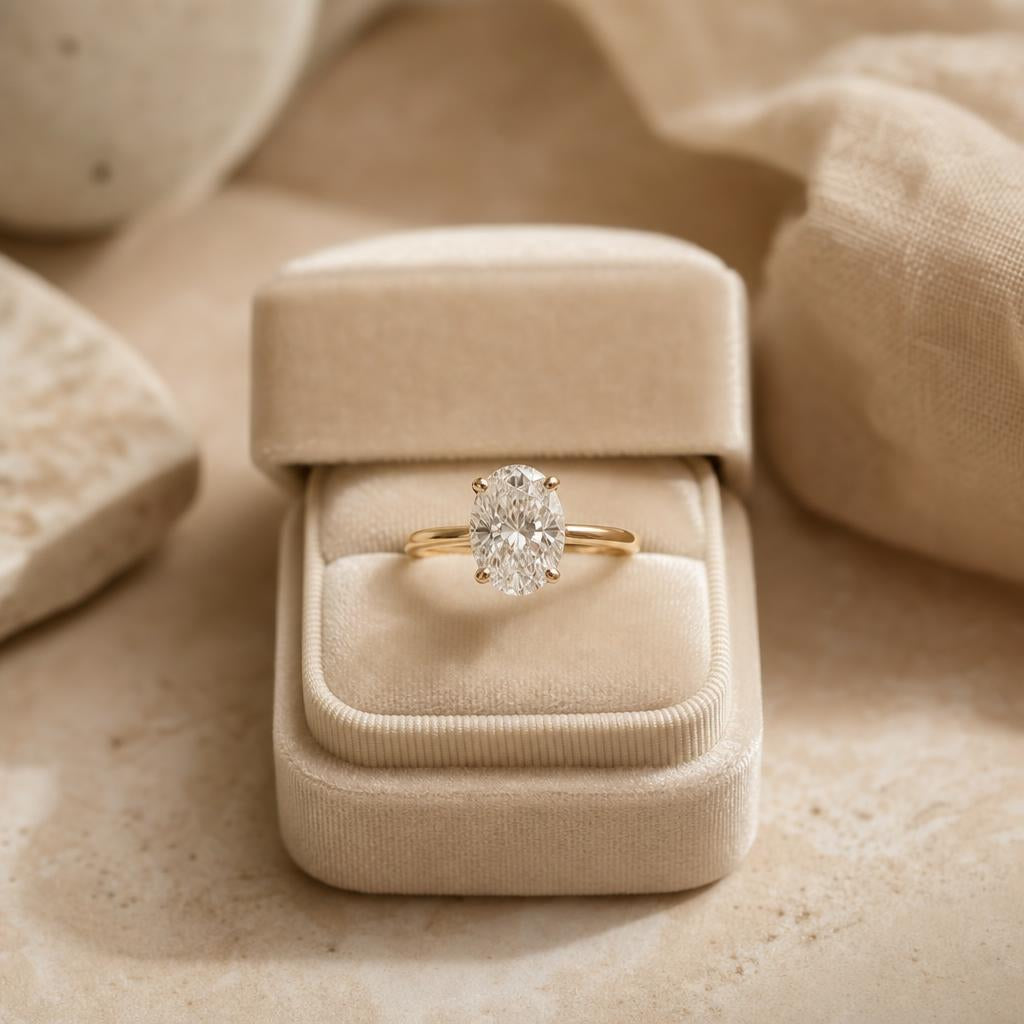
What Actually Happens After You Propose: The Ring To-Do List Nobody Warns You About
The question is asked, the answer is yes, and somewhere in the middle of the hugging and the happy-crying, nobody hands you a checklist. Engagement culture spends an enormous amount of energy on the proposal itself — the ring, the setting, the surprise — and almost none on the very practical, very unglamorous week that follows it. There are things that need doing, and most of them are more time-sensitive than anyone tells you.
This isn't a romance guide. It's the practical one — the sizing, the insurance, the care, and the slightly overwhelming number of people who are suddenly going to ask about your hand. Here's what actually happens after you propose, and the order to handle it in.


Get It Sized — Before You Get Used to It
Sizing feels like it can wait. It can't, not really. The longer a ring sits slightly loose or slightly tight, the more likely it is to get knocked around, spun off in your sleep, or simply avoided because it doesn't feel right yet. If the ring was a surprise, there's a real chance the size is an estimate, and estimates are rarely perfect on the first try.
The good news is that most rings can be adjusted without drama, and it's worth understanding your options early rather than guessing at what's possible once you're already three weeks into wearing something that pinches. If you're unsure whether your ring is even a candidate for adjustment, what's possible and what isn't when it comes to resizing a ring is worth reading before you assume anything needs fixing at all. Book the sizing appointment in the same week as the proposal, not the same month.
Worth knowing: A ring that runs a half-size off usually isn't obvious right away. It tends to reveal itself gradually — spinning while you type, sliding when your hands are cold, feeling tight after a salty meal. Don't wait for a dramatic sign before getting it checked.
Insure It Before You Need To
Insurance is the item most commonly skipped, and the one people regret skipping the most. It doesn't need to happen the day of the proposal, but it does need to happen before the ring leaves the house for a wedding, a holiday, or a gym bag. Most homeowners' or renters' policies either don't cover jewelry at all or cap it at a few hundred dollars — nowhere near enough for anything with real sentimental or replacement value.
A standalone jewelry insurance policy is inexpensive relative to what it protects, and most providers will insure a ring based on a receipt or an appraisal rather than requiring an in-person inspection. If you don't have either yet, that's the next item on the list — not because anyone expects disaster, but because disasters are precisely the thing insurance exists for.
Understand What You're Actually Wearing
This sounds obvious, but a surprising number of newly engaged women don't actually know the specifics of their own ring — what the center stone is, what metal the band is, what the setting is called. This isn't about being a jewelry expert. It's about being able to answer basic questions when you get the ring cleaned, resized, or insured, and about knowing what kind of daily care it actually needs.
If the listing or paperwork that came with the ring is full of terms you don't recognize, it's worth spending ten minutes with a plain-language breakdown of what those terms actually mean before you find yourself nodding along at a jeweler's counter without really following what they're telling you.
If the ring still feels unfamiliar, that's completely normal
New jewelry takes time to feel like yours, especially a piece you'll wear every single day for the rest of your life. Some women fall for their ring instantly. Others need a few weeks of catching it in the light before it stops feeling like something borrowed. Both are normal, and neither means anything about how you feel about the proposal itself — a ring is just an object that needs a little time to become familiar.
If you're the kind of person who tends to grow into a style rather than love it immediately, vintage-inflected settings tend to reward a slower relationship — there's more to notice over time.

The Harlow Ring
An emerald-cut center in a softly detailed halo setting — the kind of ring that reveals a little more of itself the longer you wear it, rather than announcing everything at once.
Shop The Harlow Ring →Learn How to Actually Live With It
Wearing an engagement ring day to day is a different skill than admiring it in a box. There are decisions to make almost immediately: do you take it off to wash dishes, to work out, to sleep? Do you wear it to a job that involves your hands — cooking, lifting, typing all day, working with clients who might comment on it constantly?
There's no universal right answer, but there is a wrong one: making no decision at all and letting the ring absorb whatever your day throws at it. Chlorine, harsh cleaning products, and repeated impact are the most common causes of avoidable damage in the first few months of ownership — not dramatic accidents, just accumulated small ones.
✦ Pro tip: Keep a small dish by the sink or your nightstand specifically for the ring. It sounds trivial, but "a ring left on the edge of a sink" is one of the single most common ways engagement rings get lost in the first year.
Clean It Properly — Not Just Rinse It
A ring that's worn constantly picks up lotion, soap residue, and everyday grime faster than most people expect, and that buildup is what dulls sparkle far more than the stone itself ever does. Cleaning doesn't need to be complicated, but it does need to be done with the right method for your specific stone and setting rather than whatever happens to be under the sink.
If you haven't settled into a cleaning routine yet, a fast, safe cleaning method that actually works is worth bookmarking now, before the ring has a chance to look dull enough that you notice it in every photo from here on out.
Take the Photos Now, Not "Eventually"
Every newly engaged person plans to get a proper photo of the ring. Most don't, until weeks or months have passed and the moment feels less urgent. The problem is that ring photos taken in the first few days — hand relaxed, natural light, no rush — tend to look noticeably better than ones taken later under pressure to finally post something.
If your photos so far look more like evidence than a keepsake, learning how to actually photograph a ring so it looks the way it does in person covers the lighting and angle mistakes almost everyone makes on the first attempt.
Prepare for the Questions — All of Them
The moment people see the ring, a fairly predictable script begins: how did he do it, when's the date, have you picked a venue, are you keeping your name. Some of these questions you'll want to answer in detail. Others you'll want a polite, repeatable non-answer for, especially in the early weeks when you genuinely don't know yet and are tired of saying so.
It helps to decide, even loosely, how much you want to share and with whom before you're standing in a group chat or a family dinner fielding the same three questions on repeat. You don't owe anyone a timeline just because they asked for one.
Decide How the Ring Fits Into the Rest of Your Jewelry
Some women wear their engagement ring completely alone for a while, letting it be the singular statement. Others start layering almost immediately — a thin band, a stack, something on the opposite hand. Neither is more "correct," but it's worth being intentional rather than accidental about it, since what you build around the ring in the first few months often becomes the habit you keep for years.
If your taste runs toward something quieter and more solitary rather than layered, a clean solitaire tends to hold its own without needing anything else around it.

The Odette Ring
A single oval-cut stone with nothing competing for attention — the choice for a ring that's meant to be the whole statement, not one piece of a larger look.
Shop The Odette Ring →Watch How It Fits Over the First Few Weeks
Fit isn't a one-time check. Fingers change size with temperature, salt intake, exercise, and time of day, and a ring that felt perfect at the jeweler's counter can feel different a month later. Pay attention to how it sits, especially in the first stretch of regular wear, rather than assuming the initial fitting is the final word.
If something feels off and you're not sure whether it's a real problem or just a normal daily fluctuation, knowing how to tell the difference between a genuine fit issue and a passing swell lays out what a proper, comfortable fit is actually supposed to feel like day to day.
Quick Takeaways
- Book a sizing check in the first week — don't wait for discomfort to confirm the problem.
- Get the ring insured before it leaves the house for travel, a wedding, or the gym.
- Know the basics of your own ring — stone, metal, setting — before you need that information.
- Decide on daily-wear rules early: dishes, workouts, sleep, and work all deserve a plan.
- Photograph it properly in the first week, while the moment and the light still feel easy.
- Keep watching the fit for the first few months — it isn't a one-time decision.
Frequently Asked Questions
How soon after getting engaged should I get my ring sized?
As soon as you can get an appointment, ideally within the first couple of weeks. The longer a ring sits at the wrong size, the more likely it is to get bumped, spun off, or simply avoided.
Do I need to insure my ring right away?
You don't need to do it the same day, but it should happen before the ring travels anywhere — a trip, a wedding, a gym bag. Most standard home insurance doesn't adequately cover jewelry on its own.
Is it normal to not feel completely used to my ring yet?
Completely normal. New jewelry, especially something worn daily for life, often takes weeks to feel familiar. It has nothing to do with how you feel about the engagement itself.
Should I take my ring off to sleep or exercise?
Many women do, particularly for workouts involving grip or impact, and for sleep if the setting has prongs that can snag on fabric. There's no universal rule — just make sure it's an intentional choice, with a consistent, safe place to put it.
None of this needs to happen perfectly, and none of it needs to happen today. But it does need to happen — quietly, practically, in the weeks while the excitement is still fresh enough to make the errands feel worth doing. The proposal was the story. This is just the follow-through, and it's a lot less complicated than anyone makes it sound.


