

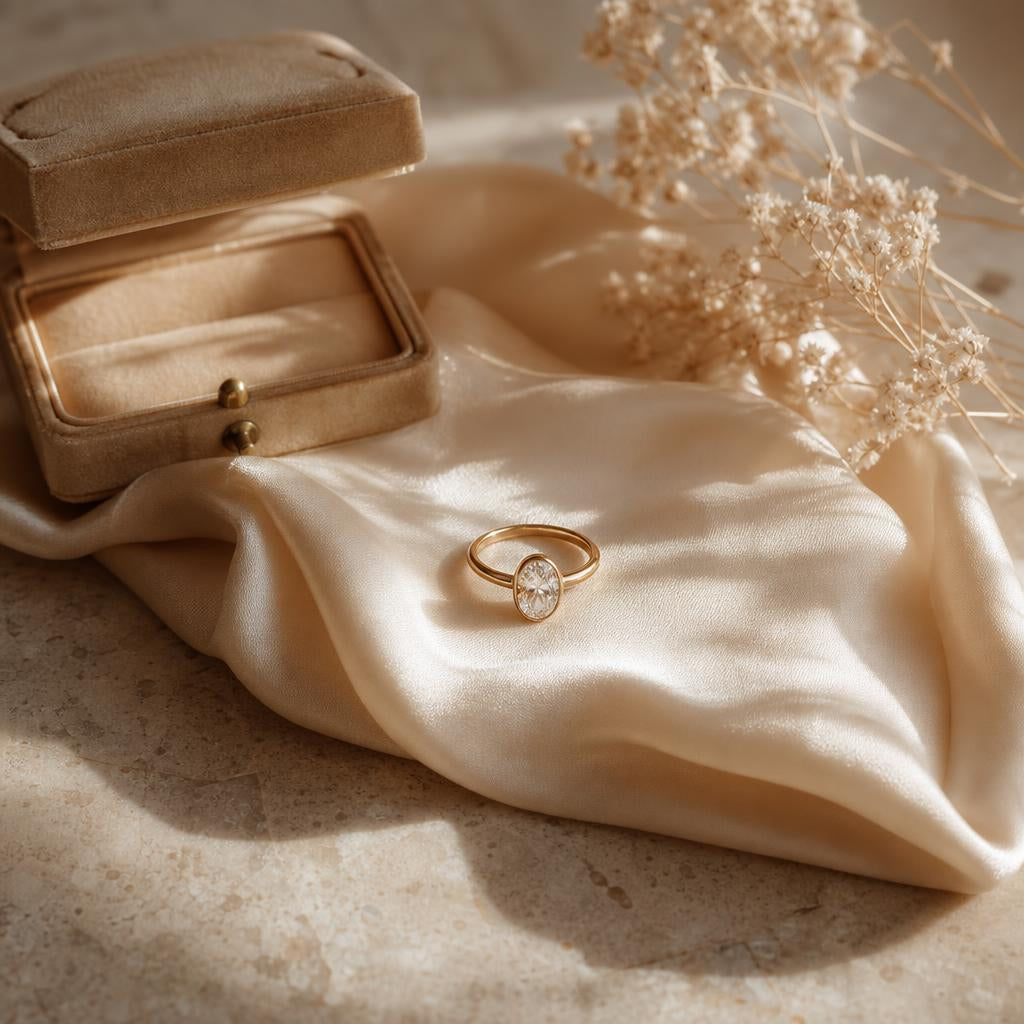
She Kept the Ring, Changed the Finger: Right-Hand Ring Meaning Explained
There's a specific kind of quiet that happens the first time you slide a familiar ring onto a different finger. It's not the same ring anymore — not because anything about it changed, but because you did.
Maybe the relationship ended. Maybe it was never romantic to begin with — a ring from a grandmother, a promise to yourself, a piece you simply outgrew on one hand and grew into on another. Whatever brought you here, the ring didn't get retired. It got reassigned. Before you decide what goes on that hand next, here's what a right-hand ring actually signals, and how to choose one that says exactly what you mean.


What it actually means to "change the finger"
Left hand, fourth finger — that placement carries so much cultural weight that it drowns out every other option. But rings have never actually been limited to that one spot. Women have been moving rings to the right hand for generations, for reasons that have nothing to do with a wedding at all: a divorce finalized, a relationship that ended before it became a marriage, a piece inherited from a mother or grandmother, or simply a ring bought for no one but yourself, worn wherever you decide it belongs.
The finger isn't the meaning. You are. Moving a ring — instead of boxing it up, selling it, or letting it sit in a drawer — is its own decision, and it's one worth making on purpose rather than by default.
The real right hand ring finger meaning
In the United States and most Western countries, a ring on the right hand carries none of the automatic "taken" signal that the left ring finger does. The right hand ring finger meaning that shows up across jewelry history and modern style writing again and again is independence: personal achievement, self-sufficiency, and a milestone that belongs to you alone. It's the finger reserved for cocktail rings, signet rings, and — increasingly — the ring that used to sit somewhere else entirely.
That's precisely why it works so well for a ring in transition. It reads as intentional rather than accidental. Nobody glances at a ring on your right hand and assumes a proposal happened. What they read instead is a woman who chose to keep something beautiful and simply decided where it goes now.
Worth knowing: In a handful of Orthodox Christian and Central/South American cultures, the right hand is actually the traditional placement for a wedding band. If your ring's history includes a marriage, that's worth knowing before you assume the finger reads as "single" everywhere — context still matters, even if independence is the dominant read in the US.
Why "self-love" isn't a soft explanation — it's the whole point
There's a tendency to treat "self-love" as the gentle, slightly apologetic reason a woman gives for buying herself something nice. It shouldn't be. Choosing to wear a ring on your own terms — without a partner, a proposal, or anyone else's approval attached to it — is not a consolation prize version of the "real" story. It's the more honest one.
This is also where right hand ring meaning shifts from cultural trivia into something more personal. A ring you move yourself, on your own timeline, isn't asking anyone's permission to exist. It's simply stating a fact: this is mine, this is where it lives now, and that's the end of the explanation required.

The Aura Ring
A radiant-cut center stone with a hidden side halo underneath — the kind of ring that was never built to stay in one lane. Worn as an engagement piece, a promise, or a personal statement bought for no one but yourself, it moves with whatever chapter you're actually in.
Shop The Aura Ring →The transitions that actually bring women here
A few of the moments that tend to send a ring from one hand to the other, based on what shows up again and again in how women talk about it:
- The relationship ended, but the ring didn't do anything wrong. Divorce or a broken engagement doesn't have to mean the piece gets sold or shoved in a drawer — moving it to your right hand keeps the object without keeping the old meaning attached to it.
- It was inherited, not given. A grandmother's ring, a mother's ring — pieces with real history that were never meant to signal your own relationship status in the first place.
- It was self-purchased from day one. No proposal to reference, no story to correct — just a ring you bought because you wanted it, worn wherever it makes the most sense on your hand.
- A milestone that has nothing to do with a partner. A promotion, a first apartment, a hard year survived — reasons that are entirely yours and don't need translating for anyone else.
None of these need a public explanation attached. That's the appeal. A ring on the right hand does the talking, or it doesn't talk at all — either way, it's your call.
Choosing a ring for its new chapter
If you're restyling a ring you already own, the finger change is often enough on its own — no new purchase required. But plenty of women use this moment as the actual occasion: a ring bought specifically to mark the shift, not to replace anything, but to add something new to the story.
A few things worth considering when you're choosing (or re-choosing) a piece for the right hand specifically:
Let it be bigger than you'd normally choose
The right hand carries statement pieces well precisely because there's no "matching set" expectation weighing it down. A cushion-cut double halo or a bold asscher-cut silhouette reads as confident rather than excessive when it's not trying to coordinate with anything else on your hand.
Consider what it needs to survive
If this is a ring you'll wear daily — through typing, cooking, everyday errands — a low-profile halo setting or a bezel edge holds up better than a raised, catch-prone prong setting. Comfort earns its place on a ring you plan to wear for years, not just for the story behind it.
Let the setting do the emotional work
A hidden halo adds quiet drama without shouting. A milgrain bezel band adds vintage warmth to a ring with real history behind it. There's no wrong choice here — just the version that actually matches how you want this next chapter to feel.

The Beatrice Ring
A round-cut center stone set into an intricate milgrain bezel band — sturdy enough for daily wear, detailed enough to feel like an heirloom from day one. Available in platinum, gold, and rose gold.
Shop The Beatrice Ring →✦ Pro tip: Right hands and left hands aren't always the same size. Measure the specific finger you plan to wear the ring on before you order — don't assume your left-hand ring size carries over.
What it doesn't have to mean
It doesn't have to mean you're over it. It doesn't have to mean you're not. It doesn't have to signal availability, unavailability, or anything else for the benefit of a stranger reading your hand like a headline. A ring on the right hand is allowed to simply be a ring you like, worn where you decided it goes — full stop, no further commentary required.
Quick Takeaways
- In the US, a right-hand ring reads as independence and self-sufficiency — not marital status.
- Moving a ring you already own to your right hand is a legitimate way to keep it without keeping its old meaning.
- Statement settings — double halos, asscher cuts, bold silhouettes — work especially well on the right hand since there's no "matching" expectation.
- Prioritize a low-profile or bezel setting if this will be an everyday piece.
- Always measure the actual finger you'll wear it on — sizing isn't identical hand to hand.
Frequently Asked Questions
Does a ring on my right hand mean I'm married?
Not in the US or most Western countries — there, a right-hand ring generally signals independence or personal style rather than marital status. A handful of cultures do use the right hand for wedding bands, so context can shift the read, but in mainstream American style, it's not assumed to mean "taken."
Can I wear a ring on my right hand if I'm not married?
Yes — right-hand rings carry no marital requirement at all. They're worn by single, partnered, divorced, and married women alike, usually as a personal style choice rather than a relationship signal.
What does wearing a ring on your right hand actually signify?
Historically and today, it tends to represent independence, personal achievement, or self-expression — a ring worn for yourself rather than as a symbol tied to another person.
Are right-hand rings still a "thing," or has the trend faded?
They're as relevant as ever. If anything, the self-purchase jewelry movement has made right-hand rings more common — women are buying statement pieces for themselves without waiting for an occasion, and the right hand is where those pieces naturally land.
Which finger signals that I'm single?
There isn't a universal "single" finger in Western jewelry tradition — the only widely recognized signal is the left ring finger for engagement or marriage. Every other finger, including the right hand, is open interpretation, which is exactly why it works so well for a ring that doesn't need to announce anything.
Is it okay to move an old engagement or wedding ring to my right hand?
Completely. There's no rule requiring a ring to stay on the finger it started on. Moving it is a common, well-established way to keep a piece you love while letting go of the meaning it used to carry.
Whatever brought that ring to your right hand — an ending, an inheritance, or simply a piece you finally bought for no one but yourself — it doesn't need a caption. It just needs to fit the finger you're wearing it on now.


