

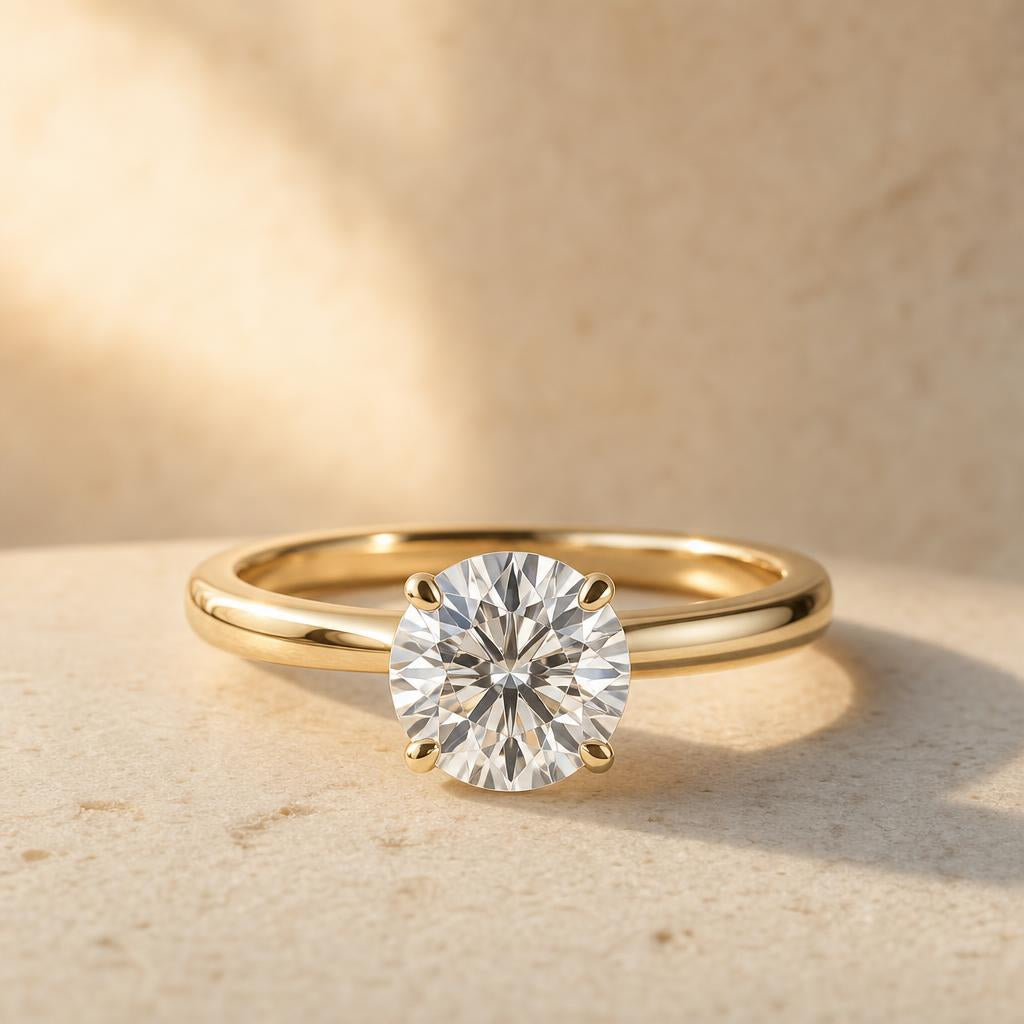
Buying Yourself a Ring: Why You Don't Need a Reason, and Where to Start
Nobody is waiting to give you the ring you actually want. You've thought about it, saved images of it, worn it in your imagination. You know exactly which cut, which metal, which kind of stone. This is the guide for the woman who's finally decided to buy it herself — and the only question left is where to start.
Buying a ring for yourself is the kind of decision that feels like it needs justifying until you actually do it — and then it just feels obvious. Below is a practical guide: what to look for, which styles earn their place in daily rotation, and some of the strongest options available right now.


The right-hand ring is not a consolation prize
The right-hand diamond ring has been building quietly in popularity for more than a decade — but it has never felt more deliberate than it does now. Women wear them to mark milestones, to celebrate themselves, to simply put something beautiful on their hand without waiting for the occasion to arrive from somewhere else.
The premise is straightforward. Your left hand, in most cultural traditions, carries obligation. Your right hand carries intent. Everything on the right is chosen — and that is a different kind of meaning entirely.
Simulated diamond rings are a natural fit for this kind of purchase. They offer the visual weight and genuine sparkle of fine jewellery at a price point that makes buying for yourself feel reasonable rather than reckless. The point is not to do something foolish. The point is to wear something genuinely beautiful every day without a purchase that requires months of deliberation before you allow yourself the decision.
Worth knowing: Simulated diamonds like cubic zirconia and moissanite are precision-engineered stones that pass the visual test easily at any normal social distance. The difference between a well-cut simulated diamond and a mined one is primarily a laboratory result — not something visible on your hand at a dinner table, a handshake, or in a photograph.
Think about how you'll actually wear it
The most common mistake in any ring purchase — self-treat or otherwise — is buying for the occasion and not for your actual life. A ring you're afraid to wear every day is a ring that ends up in a drawer within six months.
Consider your practical context before settling on a style. If your hands are frequently in water or if you work with your hands, a lower-profile setting with fewer exposed prongs will hold up more gracefully over time. If you're behind a desk, you have more latitude for something architectural. If you plan to wear it alongside other rings, think about whether you want it to anchor a stack or stand completely alone.
These questions matter more than any trend report.

The Empress Ring
A 3.5-carat elongated oval centre stone flanked by tapered baguette sides — a ring that does exactly what its name suggests. The Empress is for the woman who does not want to wonder whether her ring reads as significant. The oval elongates the finger naturally, and the baguettes give it a structured, modern quality: unmistakably chosen, unmistakably intentional.
Shop The Empress Ring →What cut actually works on the right hand
Some cuts carry different connotations depending on which hand they're worn on. Understanding the visual language helps you make a choice that feels deliberate rather than ambiguous.
Round brilliant: Versatile and inherently balanced. A round brilliant reads as elegant on any finger, layers with virtually anything, and is the most forgiving choice if you're still defining your style or plan to build a stack around it over time.
Oval: One of the most sought-after cuts for right-hand rings precisely because it elongates the finger and carries quiet drama without requiring a halo to do the heavy lifting. Works beautifully alone or alongside narrow pavé bands.
Radiant: A rectangular or square cut with brilliant faceting — more visual complexity than a traditional solitaire, and exceptional at catching light from multiple angles. The Aura Ring carries this cut exceptionally well.
Asscher: For women with a clear, defined aesthetic. The Asscher's step-cut faceting creates a graphic, art-deco quality that bears no resemblance to a traditional engagement ring — which is precisely the point for many women buying for themselves.
Cushion: Soft-cornered and luxurious, a cushion-cut halo like The Duchess reads as statement jewellery — substantial and confident. Best for women who want maximum presence on the hand without compromise.

The Échelon Ring
A 1.25-carat Asscher-cut solitaire with deeply layered step cuts and a clean geometric silhouette. The Échelon is the ring for someone who knows exactly what she likes: structured, graphic, and quietly uncommon. It will not be mistaken for an engagement ring, and it was never meant to be. This is jewellery chosen for yourself precisely because nothing about it is accidental.
Shop The Échelon Ring →The specifics worth checking when you're buying for yourself
When you're buying a ring to wear daily — which self-purchased rings almost always become — certain details matter more than they would for an occasional piece.
The metal and plating
925 sterling silver with rhodium plating is the standard for fine-looking jewellery at this price point. Rhodium is a bright white metal applied as a thin coat over the sterling silver beneath — it prevents tarnishing and maintains a brilliant finish without the cost of solid white gold. Look for it on any ring described as silver-toned, and verify that the base is actually sterling rather than a lesser base metal.
If you're drawn to yellow gold or rose gold, an 18k gold-plated sterling silver ring gives you the warmth of those tones without the cost of solid gold. The plating wears gradually with daily wear — measured in years, not months — on any quality piece.
Nickel-free settings
If your skin has ever reacted to a ring — redness, a green mark, persistent irritation — nickel is almost certainly the cause. It's common in lower-grade alloy settings and one of the most frequent sources of contact dermatitis from jewellery. All Gemiros rings are nickel-free, meaning they are suitable for sensitive skin without any caveats. Worth confirming on any ring you consider from any source.
Cubic zirconia vs moissanite
Both are excellent for daily wear. Moissanite has a slightly higher refractive index than diamond, which produces more fire — the coloured light flashes visible in bright or direct lighting. It also scores 9.25 on the Mohs hardness scale, making it highly durable for everyday use. Cubic zirconia is slightly softer at 8–8.5 on the Mohs scale and may show minor surface wear after many years of very hard daily use, but for most wearers this is a non-issue. The difference between the two is most visible indoors in strong light. Neither is the wrong choice.
✦ Practical note: Sterling silver rings benefit from occasional cleaning to maintain their brightness. A soft cloth and a few drops of mild dish soap in warm water is all it takes — no ultrasonic cleaners, no bleach, nothing abrasive. Most women who wear their self-purchased ring daily clean it every few weeks and notice no significant tarnishing under normal conditions.
When do women buy themselves a ring?
The honest answer is: whenever they decide to. The moments that most commonly crystallise the decision include:
- A birthday that felt significant — a round number, a year you'd remember regardless
- A promotion, raise, or professional milestone worth marking in some material form
- A chapter ending — a divorce, a relationship that ran its course, a move away from something that no longer fit
- A chapter beginning — a new city, a new role, the first year lived entirely on your own terms
- Genuinely no reason other than wanting it
The last category is the most common. And it's the one that requires the least justification — which is precisely what trips people up. They expect to need a story. You don't. The decision to choose something beautiful for yourself and wear it is the story. Everything else is detail.
Quick Takeaways
- Right-hand rings are self-chosen jewellery — the significance comes from the decision, not from who gave it to you
- Consider your actual daily life before choosing a setting — active hands do better with lower-profile, fewer-prong designs
- Round brilliants and ovals are the most versatile cuts for right-hand wear; Asscher and radiant cuts carry a more defined aesthetic
- Look for 925 sterling silver, rhodium plating, and nickel-free settings — these three together give you a ring that holds up and wears well every day
- Moissanite and cubic zirconia are both excellent daily-wear options — the difference is most visible in bright indoor light
- There is no occasion required. Wanting the ring is sufficient.
Common questions
Is buying yourself a diamond ring considered bad luck?
No — and this question is worth retiring. The idea comes from an era when rings were primarily objects received from a partner, and it carries no meaningful weight today. A ring holds whatever meaning you assign to it. Choosing something beautiful for yourself is not unlucky. It is intentional.
Which finger should a self-purchased ring go on?
Whichever one sits most comfortably and reads the way you want it to. The right ring finger is the most common choice for women who want a ring that reads as deliberate — something chosen rather than something received. The right index finger works well for bolder statement pieces. There is no rule. Wear it where it looks best and sits most securely on your hand.
Should I buy a solitaire or something with more detail?
A solitaire is the safer long-term bet — it pairs with anything, stays wearable through every trend, and reads as quietly confident rather than fashion-dependent. More detailed rings (halos, vintage pavé bands, twist settings) give greater daily satisfaction if you have a strong and clear aesthetic, but carry slightly more risk of feeling dated over time. If you find yourself returning to the same style consistently — that consistency is your answer. Buy that one.
Will a simulated diamond look obviously different from a real diamond?
At any normal social distance — across a table, a handshake, a photograph — no. Simulated diamonds are cut with the same precision as mined stones and produce the same visual impression: brilliance, fire, and unmistakable sparkle. A gemologist with testing equipment could identify the stone type. The person sitting across from you at dinner will not.
How do I find my ring size without going to a jeweller?
Measure at the end of the day, when fingers are at their largest (they swell slightly in warmth and by evening). Wrap a narrow strip of paper around the knuckle of the finger you plan to wear it on, mark where it overlaps, and measure that length in millimetres. Divide by 3.14 to get your diameter in mm, then match it to a standard ring size chart. When in doubt between two sizes, go up — a ring that's slightly large is far easier to resize than one that won't clear the knuckle.
The ring you've been thinking about buying for yourself is probably the right one. The only decision left is actually making it.


