

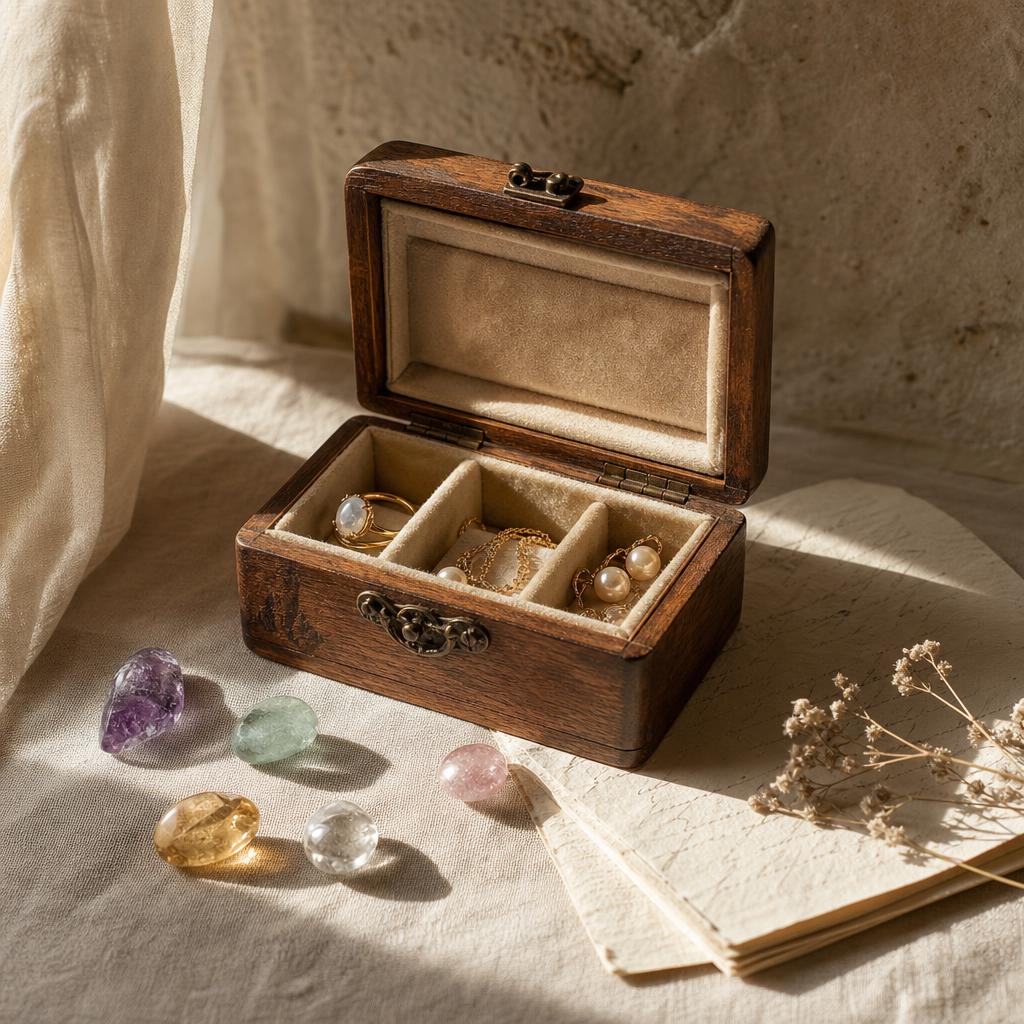
The Rings That Mean Something vs. The Rings That Just Look Good: How to Tell the Difference
Every jewelry box has both kinds. The ring you bought because a particular Tuesday needed marking, and the ring you bought because it caught the light in a way you simply couldn't walk past. Most women assume these are two different categories — sentimental versus superficial, considered versus impulsive. They're not. The real difference has very little to do with why you bought a ring, and everything to do with what you decided to make it mean afterward.
Before we get into how to actually tell the two apart — and why a well-built collection has room for plenty of each — here's where to start looking. Four styles built to hold either kind of story, depending on which one you're ready to tell.


The Myth of the "Meaningful" Ring
Somewhere along the way, meaning got tangled up with money. The story we've all absorbed is that a ring only counts as significant if it cost someone three months of their salary, or if it was handed down through a family, or if a man got down on one knee to present it. Meaning, in other words, was something that had to be earned through sacrifice — usually someone else's.
That's the old rule, and it was never really about the ring. It was about who got to decide when a piece of jewelry mattered. A woman buying for herself was, by definition, excluded from that framework — she hadn't waited to be chosen, hadn't required anyone's financial proof of devotion. So the industry quietly filed her purchases under "just because," as though a ring bought on your own terms was inherently less significant than one bought as tribute.
It isn't. Meaning is not a byproduct of price. It's a byproduct of attention — of deciding, consciously, that this object now stands for something. You can do that with a ring that cost you an afternoon's browsing just as easily as with one that cost someone else a fortune. The only real question is whether you did it at all.
What Actually Makes a Ring "Just Look Good" — And Why That's Not an Insult
On the other end of the spectrum sits the ring you bought purely because it's stunning. No anniversary attached, no milestone, no story yet — just a shape and a sparkle you couldn't stop thinking about. This is where a lot of women hesitate, worried that buying something "just because it's beautiful" makes the purchase frivolous.
It doesn't. A ring bought purely for its visual impact is doing exactly what it's supposed to do. The Statement Ring exists for this reason alone — a 4-carat radiant-cut center stone with heart-cut side stones, built to be noticed the second it enters a room. Nothing about it needs a backstory to justify its presence on your hand. It earns its place by catching light, not by carrying weight.

The Statement Ring
A 4-carat radiant-cut center stone with heart-cut side stones on a sleek 2.0mm band — built to command a room with zero explanation required.
Shop The Statement Ring →The mistake isn't buying this kind of ring. The mistake is assuming it has to stay this kind of ring forever. Aesthetic-first purchases are where a lot of meaning ends up living eventually — you just haven't assigned it yet.
The Questions That Actually Tell You the Difference
Instead of sorting your rings by how much they cost or who gave them to you, try sorting by these three questions instead. They're a far more accurate test of what a ring actually is to you.
| Question | What it reveals |
|---|---|
| Would you still wear it if no one ever complimented it? | Whether it's about how it looks, or how it feels |
| Does it mark something, or fill space? | Whether it's tied to a moment, or just to your hand |
| Will you remember buying it in five years? | Whether a story has already attached itself |
Notice that none of these questions ask what the ring cost, or who was there when you bought it. That's deliberate. A ring bought entirely alone, on a Tuesday, for no occasion at all, can pass every one of these tests. A ring given with enormous ceremony can fail all three. The meaning was never in the moment of purchase — it's in what happened after.
How to Build Meaning Into a Ring You Bought For the Sparkle
If you already own a ring you bought purely for its looks and now find yourself wanting it to carry more weight, the good news is that meaning can be assigned retroactively. A few ways women actually do this:
✦ Pro tip: Wear it for the first time somewhere specific — a trip, a promotion, a decision you finally made — and let that occasion become the ring's origin story going forward, even if you bought it weeks earlier.
Stacking is another route. A ring bought for pure aesthetics can shift into something more sentimental the moment you start building around it — adding a band that marks a specific year, or pairing it with a piece that already carries history. The Cherish Ring was designed with exactly this in mind: individually bezel-set stones that create a bubble effect around the finger, secure enough to wear daily and versatile enough to stack against almost anything else you own.

The Cherish Ring
A reimagined eternity band with individually bezel-set stones — protective, versatile, and designed to layer into a story you're still building.
Shop The Cherish Ring →The Rings Built to Do Both
Some styles don't force the choice at all. The Everlasting Ring, with its continuous line of round simulated diamonds circling the finger with no beginning or end, has symbolism built directly into its shape — it doesn't need an occasion to mean something, because permanence is the entire design brief. Whether you bought it to mark something specific or simply because the unbroken circle appealed to you, it arrives already halfway to meaningful.
The Odette Ring works the opposite way — a single 3.5-carat oval solitaire with nothing else competing for attention. Its meaning, if you choose to give it one, comes from restraint rather than symbolism. Buyers who choose it tend to describe it the same way: quiet confidence, one stone doing all the talking. And the Ophelia, Gemiros' most-loved style, reads like something that costs $15,000 or higher — until you remember what you actually paid for it, which is its own kind of story worth telling.
Worth knowing: Every Gemiros ring is 925 sterling silver set with moissanite or cubic zirconia — indistinguishable from a diamond to the naked eye, and it passes diamond testers. A ring built to carry meaning has to survive daily wear, not just admiration from a drawer, and that's exactly what it's built for.
You Don't Actually Have to Choose
The real shift happens when you stop treating "meaningful" and "just looks good" as opposite ends of a spectrum, and start treating them as two separate questions you can answer about the exact same ring. A style bought purely for its sparkle can become the one you wore the day you finally quit a job that wasn't serving you. A ring bought to mark something specific can also, simply, be the most beautiful thing in your entire collection.
The old framework needed you to choose, because it assumed meaning was scarce — that only one ring per lifetime deserved the label, and everything else was decoration. That was never true, and it was never really about jewelry. It was about deciding who got permission to call a purchase significant. Buying for yourself, on your own timeline, is permission enough.
Quick Takeaways
- Meaning comes from attention and story, not from price or who gave it to you
- A ring bought purely for its looks can still become meaningful later — the story can attach itself retroactively
- Use the three-question test (would you wear it unnoticed, does it mark something, will you remember buying it) instead of sorting by occasion or cost
- Some styles, like full eternity bands, carry symbolism in their shape before you've assigned them any story at all
- You never have to choose between beautiful and meaningful — the best rings in a collection are usually both
Frequently Asked Questions
Does a ring need a special occasion to be meaningful?
No. Plenty of the most meaningful rings women own were bought on an ordinary day, for no occasion at all — the meaning came later, once a story attached itself to the piece.
Can a ring become meaningful after you've already bought it?
Yes, and it happens more often than people admit. Wearing a ring for the first time on a specific day, or pairing it with a piece that already carries history, is often enough to shift how you think about it going forward.
How many "meaningful" rings should be in a jewelry collection?
There's no set number. Some women build an entire collection around a single sentimental piece; others assign meaning loosely across several rings. The label matters less than whether it's genuinely true for you.
Is it okay to buy a ring just because it's beautiful?
Completely. A ring doesn't need to justify itself with a backstory to be worth buying. Aesthetic appeal is a legitimate reason on its own, and meaning can always find its way in later.
The next time you're standing in front of a ring trying to decide whether it's "meaningful enough" to buy, skip the question entirely. Ask instead whether you love it, and whether you can picture wearing it often enough to find out what it becomes. That's the only test that's ever actually mattered.


