

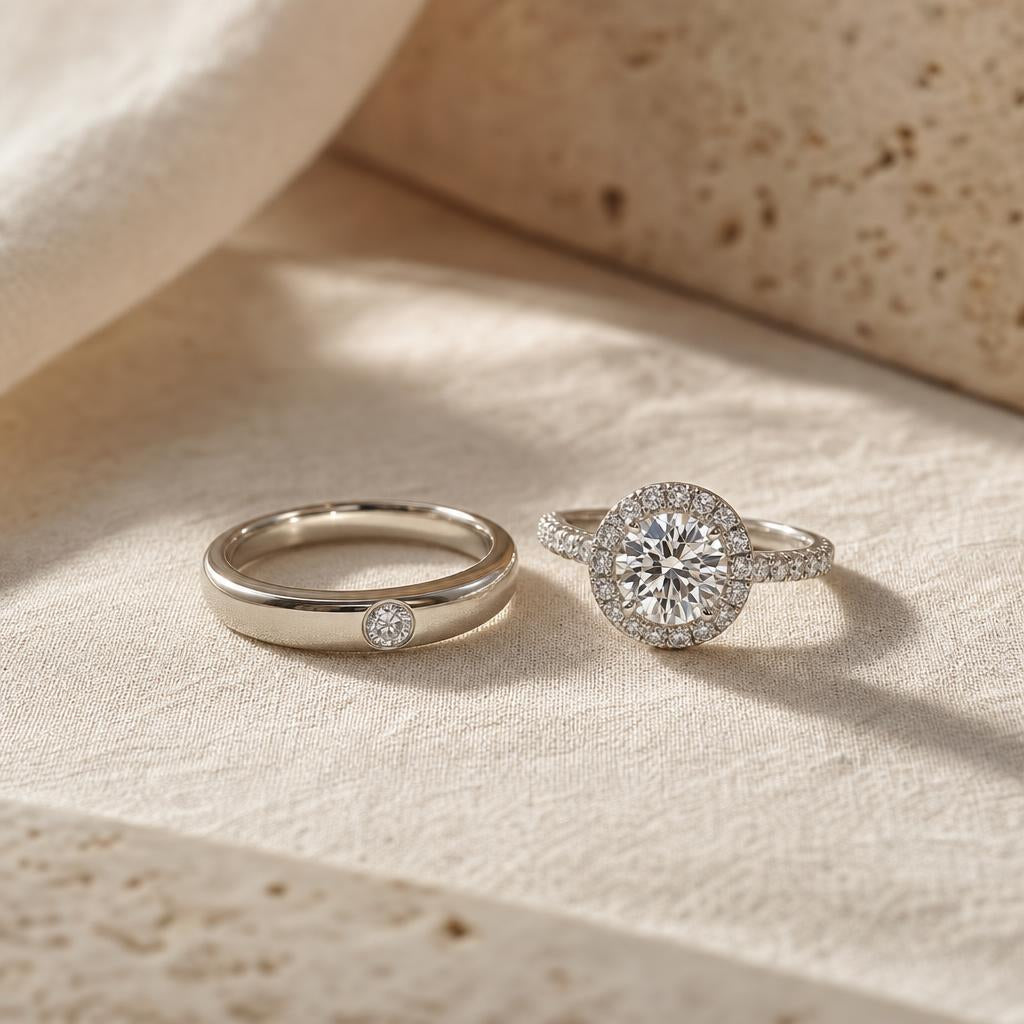
Ring for Everyday Wear vs. Special Occasion: What Actually Holds Up
Not every ring in your collection needs to do the same job. The ring you reach for every single morning — the one that survives dish soap, laptop keys, and a full day of typing — is built differently than the one you save for a dinner reservation you actually planned an outfit around. Knowing which is which, before you buy, saves you from either babying a ring you wanted to wear carelessly or wrecking one that was never meant for daily abuse.
The difference isn't really about how expensive a ring looks. It's about a handful of structural choices — how the stone is set, how wide the band is, how far the metal sits above your finger — that decide whether a ring can handle your actual life or whether it's happiest staying in the box until the occasion calls for it.


It's a structural question, not a price question
An inexpensive ring can be more durable than a far pricier one, and a museum-worthy piece can be entirely wrong for a ring for everyday wear. What actually determines whether a ring belongs in daily rotation comes down to four things: how the stone is set, how wide the band is, how far the design sits off your hand, and how many small, breakable details it's carrying. None of those are about price. All of them are about engineering.
Special occasion rings are allowed to prioritize drama over practicality, because they're only on your hand for a few hours at a time. Everyday rings don't get that luxury — they have to survive a sink full of dishes, a gym bag, a keyboard, and a coat pocket, on repeat, for years.
Setting type: the single biggest factor
If you only look at one thing before deciding whether a ring can be an everyday wear ring, look at the setting. This is where most of the risk — and most of the durability — actually lives.
Low-risk settings built for daily wear
- Bezel settings — the stone is wrapped in a rim of metal instead of held up by prongs. Nothing to catch on sweaters, nothing to snag on a car door, nothing sticking up to knock loose.
- Solitaire settings — a single, securely held center stone with no side stones to lose, chip, or work themselves loose over time.
- Channel settings — stones sit flush inside the band itself, protected on both sides by metal, rather than exposed above the surface.
Higher-maintenance settings better suited to special occasions
- Halo settings — gorgeous under restaurant lighting, but the ring of small stones around the center adds more surface area that can catch and more prongs that can eventually need tightening.
- Three-stone and cluster settings — beautiful for the drama of a big night out, but every additional stone is another point of contact with the world, and another thing to check on periodically.
- Statement settings with elevated stones — the higher a stone sits above the band, the more likely it is to hit a doorframe, a countertop, or someone's hand during a handshake.
Worth knowing: A hidden halo — where the halo sits underneath the center stone rather than around it — gets you the visual size boost of a halo with almost none of the everyday risk, since the extra stones are tucked out of the way of daily contact.
Band width and profile
The second-biggest factor is how much metal is actually holding the design together. A wide, substantial band distributes daily impact — bumping a doorframe, gripping a steering wheel — across more surface area. A thin, delicate band concentrates that same impact into a smaller point, which is exactly why the most fragile-looking rings tend to be the ones saved for occasions where your hands are mostly holding a glass, not a grocery bag.
Low-profile settings matter here too. A ring that sits close to your finger is less likely to catch on gloves, pockets, or the edge of a laptop bag than one with a dramatically raised center stone.
What "everyday wear ring" actually means, structurally
Put those two factors together — protected setting, substantial band — and you get the actual definition of an everyday ring. Not "simple looking" or "affordable." Structurally sound enough to survive contact with the world without you having to think about it every time you wash your hands.
This is also why the durability conversation matters more than the material conversation on its own. A ring built in 925 sterling silver with a bezel-set stone and a rhodium finish will outlast a fragile 18k gold ring with an exposed prong halo, even though the second one technically uses a "finer" metal. The setting decides the risk. The metal decides the maintenance.

The Cherish Ring
A bezel-set stacking band with nothing raised, nothing exposed, and nothing to catch — the kind of low-profile piece you forget you're wearing until someone compliments it.
Shop The Cherish Ring →Does the material change the equation?
Yes, but not in the way most buying guides frame it. Materials get compared as if softer metals are automatically the wrong choice for daily wear — but the more useful question is finish and construction, not just metal type. Gemiros rings are set in 925 sterling silver with rhodium, 18k gold, or rose gold plating: hypoallergenic, nickel-free, and finished specifically to hold up against daily contact rather than sit in a jewelry box between events. Indistinguishable from a diamond, passes diamond testers, and doesn't discolor skin — none of that changes whether you're wearing it to the office or to a wedding.
What does change is how the sparkle behaves. A tarnish-resistant, rhodium-plated finish on a low-profile setting is engineered for repeat, daily contact. A dramatic, elevated setting with more exposed surface area will always show wear faster, regardless of what it's made from — which is exactly why that kind of design gets reserved for special occasions in the first place, independent of material.
✦ Pro tip: If you're not sure whether a ring you already own is an everyday piece or a special-occasion piece, run your finger across the front of it. If everything is flush or nearly flush, it's built for daily contact. If you can feel raised edges, gaps, or points, it's telling you to save it for occasions where your hands are doing less.
Building a two-tier ring wardrobe
The most efficient approach isn't choosing one ring that has to do everything. It's building two categories on purpose:
- Your everyday ring(s): bezel or solitaire settings, substantial band width, low-profile stones — the pieces you put on in the morning and don't think about again.
- Your special-occasion ring(s): halo, three-stone, or elevated statement settings — the pieces that get more visual impact precisely because they're not absorbing daily wear.
This is also the logic behind stacking well: an everyday solitaire or bezel piece gives you a steady base, and a special-occasion ring can rotate in for the nights that call for more presence, without either one being asked to do a job it wasn't built for.

The Duchess Ring
A cushion cut center stone with a hidden halo and pavé band — all the visual weight of a statement piece, saved for the nights it deserves to be the main event.
Shop The Duchess Ring →Quick checklist before you buy
Whichever category you're shopping for, ask these questions before checkout:
- Is the stone bezel-set, solitaire, or channel-set? → Likely an everyday piece.
- Is the stone raised in a halo, cluster, or elevated statement setting? → Likely a special-occasion piece.
- Is the band thin and delicate, or substantial and low-profile?
- Would you feel comfortable wearing it to wash dishes, type all day, or go to the gym? If not, it's a special-occasion ring, and that's fine — it just tells you when to reach for it.
Quick Takeaways
- Durability comes down to setting type and band width — not price or how "fine" the piece looks.
- Bezel, solitaire, and channel settings are built for daily contact; halo, three-stone, and elevated statement settings are built for occasions with less physical wear.
- Material affects maintenance, but setting affects risk — a well-constructed silver ring can outlast a fragile gold one.
- The smartest ring wardrobe has both: a steady everyday piece and a special-occasion piece that gets to stay dramatic because it isn't absorbing daily life.
Frequently Asked Questions
What kind of ring can you wear every day?
The safest everyday picks have a bezel, solitaire, or channel setting, a band with enough width to resist bending, and a low profile that sits close to the finger instead of rising dramatically above it. Those three factors matter far more than the specific metal or price point.
Does 925 sterling silver hold up to daily wear?
Yes. Gemiros rings are set in 925 sterling silver with rhodium, 18k gold, or rose gold plating, and finished to be hypoallergenic and nickel-free — built specifically for repeat, daily contact rather than occasional wear. The finish and setting matter more to daily durability than the base metal alone.
Is it okay to wear a ring in the shower or while washing your hands?
For a well-constructed everyday ring with a secure, low-profile setting, yes — that's exactly the kind of daily contact it's designed to handle. Rings with raised, delicate settings are better removed before anything that involves soap, lotion, or a lot of hand contact, simply because there's more exposed detail that can catch.
What's the difference between an everyday ring and a special-occasion ring, structurally?
An everyday ring protects its stone with a bezel, solitaire, or channel setting and keeps the design low-profile and flush against the band. A special-occasion ring prioritizes visual drama — halos, elevated centers, extra stones — because it's only worn for shorter stretches at a time, not because it's inherently more fragile as an object.
At the end of the day, this isn't about owning "better" or "worse" rings — it's about matching the ring to the job. A ring built to survive your actual life earns its place in daily rotation. A ring built to turn heads for one night earns its place too, just on a different schedule. Once you know what to look for structurally, building both into your collection stops being guesswork.


