

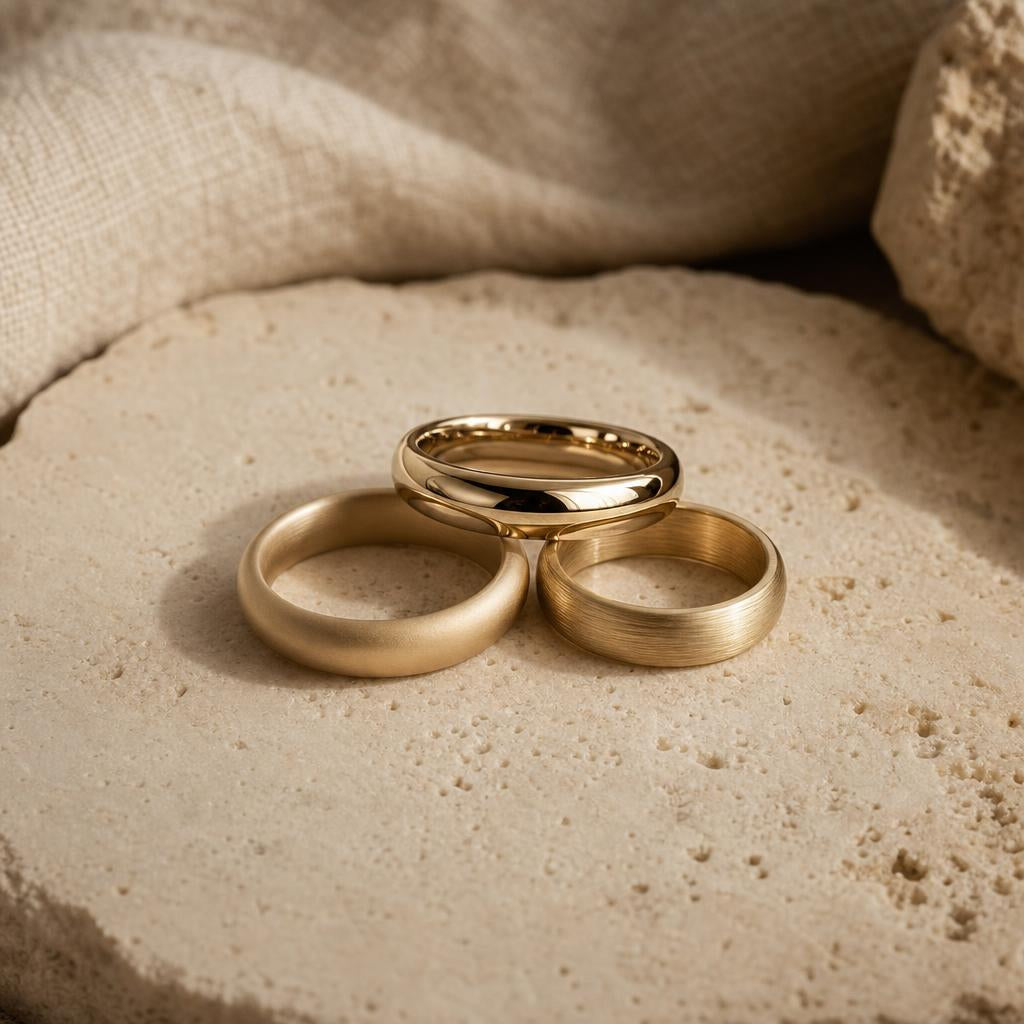
Ring Finishes Explained: Polished, Matte, Brushed — Does Rhodium Plating Tarnish?
Every ring listing mentions a "finish" somewhere in the fine print, and most buyers skim right past it — until the ring arrives and looks nothing like the smooth, glassy product photo. The truth is that finish changes almost everything about how a ring behaves day to day: how it catches light, how it hides or reveals daily wear, and how much maintenance it actually asks of you.
Before you fall in love with a setting or a stone shape, it's worth understanding what's happening on the surface. Here's a closer look at the three finishes you'll see most often, plus the honest answer to the question every sterling silver buyer eventually asks: does the plating actually tarnish?


Ring Finish Types, Explained
Most rings — Gemiros included — start from the same base construction: 925 sterling silver, finished with a plating layer in rhodium, 18k gold, or rose gold. What changes between one ring and the next is the surface treatment applied on top of that plating. Three finishes show up again and again, and each one changes the personality of a ring more than people expect before they've seen it worn.
Polished (high-shine)
This is the finish most people picture when they think "ring." The surface is buffed to a mirror-smooth shine that reflects light directly, which is exactly why it makes a center stone look its brightest — nothing on the band competes with the stone for attention. The Odette is a good example of this in action: a plain polished band that puts all the focus on the oval center stone.
The tradeoff is visibility. A polished surface shows every scratch and scuff as a small dull line against all that shine, so it reads best on someone who either wears jewelry gently or doesn't mind the occasional re-polish to bring the shine back.
Matte
A matte finish is the opposite instinct: the surface is treated so light diffuses across it instead of bouncing straight back. The result is a soft, almost powdery-looking band that reads modern and quiet rather than glossy. It's become a popular choice for buyers who want the center stone to do the sparkling while the band stays deliberately understated.
Matte surfaces hide fine surface marks better than polished ones — small scuffs blend into the texture instead of standing out as bright scratches. Over time, the highest points of a matte band can pick up a faint natural sheen from everyday friction, which most people barely notice and some genuinely prefer.
Brushed (satin)
Somewhere between the two sits brushed, sometimes labeled satin. Fine, parallel lines are worked into the metal, giving it a soft, textured glow rather than a flat shine or a fully diffused matte look. It's a favorite for buyers who want something that feels a little more tactile and a little less "just-polished," without going all the way to matte's quieter finish.
Worth knowing: Finish is a surface treatment, not a separate material — a polished, matte, or brushed band can all be made from the exact same 925 sterling silver base. The choice comes down to how you want light and daily wear to show up on the metal, not which one is "better" quality.
Does Rhodium Plating Tarnish?
No — and this is worth saying plainly, because it's the question that actually keeps people from buying. Rhodium is a member of the platinum family, and it doesn't react with air, moisture, or the oils on your skin. That's precisely why it's used as a plating layer over sterling silver in the first place: it locks in a bright, cool-white shine and acts as a barrier against tarnish.
What can happen, on any rhodium-plated piece from any brand, is that the plating layer wears thin at high-friction points over months of daily wear — the underside of a band, the spot that brushes against your other hand. That's a property of plating in general, not a flaw specific to one ring. A Gemiros ring stands up to this the same way fine jewelry does: the sterling silver base underneath is solid, not hollow, so there's real substance beneath the finish, not a coating over something flimsy.
How long does rhodium plating last?
For a ring worn daily, expect the shine to stay at its brightest for a long stretch before a refresh is worth considering — how long depends on how often the ring comes off for showers, workouts, and swimming, since chlorine, lotion, and perfume all accelerate wear on any plated surface. Removing rings before those activities is the single easiest way to extend how long a finish looks new.
✦ Pro tip: Put on lotion and perfume before your ring, not after — and slide rings off before swimming or cleaning with harsh products. It's a thirty-second habit that noticeably slows how fast any plated finish shows wear.
Matte vs. Polished Wedding Band: Which One Actually Fits Your Life?
This is the comparison most people are really trying to make when they ask about finish. The honest answer depends less on trend and more on how you actually use your hands day to day.
| Consider | Polished | Matte / Brushed |
|---|---|---|
| Shows scratches | More visibly | Blends in better |
| Best for | Letting the stone shine | A quieter, modern look |
| Upkeep | Occasional re-polish | Minimal — texture hides wear |
| Pairs well with | Solitaires, pavé halos | Minimalist, everyday styles |
Neither finish is more durable in any structural sense — both sit on the same solid sterling silver base underneath. The real difference is cosmetic: how visible daily life is going to be on the metal, and which look you'd rather live with for years, not months.
Which Finish Suits Which Ring
Setting style tends to guide finish more than the other way around. A halo or pavé design already has a lot of visual movement happening around the stone, so a polished band lets that detail read clearly without extra competition. The Ophelia, with its hidden halo and pavé band, leans into exactly this — the polish keeps every facet of the pavé work catching light.

The Regent Ring
A princess-cut center framed by a halo and finished with intricate milgrain edging — a textured detail that reads vintage rather than glossy, catching light in flickers that photograph beautifully.
Shop The Regent →Milgrain is its own kind of finish decision — tiny beaded edging that catches light in flickers rather than one continuous gleam. It's a texture more than a shine level, which is why it tends to read as vintage-inspired regardless of whether the underlying metal is polished or matte underneath it.
Twisted and textured bands complicate the polish-vs-matte question further, since the band's shape does visual work independent of its finish. The Camilla is a good example — its twisted band creates movement and shadow even in a polished finish, so the texture of the design and the texture of the surface aren't actually the same thing.
What About Rose Gold and Gold Finishes?
Everything above applies whether the plating underneath is rhodium, 18k gold, or rose gold — the finish itself (polished, matte, brushed) is a separate decision from the metal tone. A rose gold band can be polished for maximum warmth and shine, or matte for a softer, more muted version of the same color.

The Maxima Ring — Rose Gold
A breathtaking 3.5-carat cushion cut center framed by a hidden halo and pavé band, finished in warm rose gold for a softer glow against the same high-polish shine.
Shop The Maxima →Rose gold and yellow gold plating behave the same way rhodium does when it comes to durability — each is a layer over the same sterling silver base, and the same care habits apply no matter which metal tone you choose.
The plating layer itself doesn't tarnish on rhodium, gold, or rose gold sterling silver — it wears at high-contact points over time, exactly the same way across all three tones. That means the decision between them can come down entirely to what color looks best against your skin, with no durability tradeoff to weigh against it.
Caring for Whatever Finish You Choose
Polished rings respond well to a simple polishing cloth every few weeks — a minute of light buffing brings the mirror shine straight back, no special products required. Matte and brushed finishes need a gentler hand: a soft-bristled brush and mild soapy water lift dust out of the texture without smoothing the finish flat over time, which a hard polishing cloth eventually would.
Whichever finish you choose, the habits that protect it are the same ones that protect any sterling silver jewelry — rings off before swimming, showering, or heavy cleaning, stored separately so bands don't scratch against each other, and an occasional gentle clean rather than daily scrubbing.
Quick Takeaways
- Polished shows the most shine but also the most scratches; matte and brushed hide daily wear better.
- Rhodium itself does not tarnish — it's a hard, corrosion-resistant metal in the platinum family.
- Finish and metal tone (rhodium, gold, rose gold) are two separate choices, not the same decision.
- Removing rings before swimming, lotion, and cleaning is the easiest way to extend how long any finish looks new.
- Setting style — halo, pavé, milgrain — often points you toward the finish that will show it off best.
Frequently Asked Questions
What are the different ring finishes?
The three most common are polished (a smooth, mirror-bright shine), matte (a soft, diffused surface that hides wear), and brushed or satin (fine parallel texturing that sits between the two). Milgrain and twisted-band designs add further texture on top of whichever base finish is used.
Will rhodium plating wear off with everyday wear?
The plating can thin at high-friction points over months of daily wear, but it doesn't tarnish or discolor on its own — the underlying sterling silver stays protected as long as the plating is intact. Removing rings before swimming or heavy cleaning slows this process considerably.
Do matte rings scratch easily?
Matte surfaces pick up the same daily contact as any ring, but the texture hides fine marks far better than a polished surface does — a small scuff on a matte band tends to blend in rather than stand out as a bright line.
What's the difference between matte and brushed ring finishes?
Matte is fully diffused with no directional pattern, giving a soft, uniform look. Brushed (or satin) has fine, parallel lines worked into the surface, which catch light in a gentler way than a full polish while still reading as more textured than matte.
Which is better, rhodium plated or sterling silver?
It's not really either-or — a Gemiros ring is both. The 925 sterling silver base gives the ring real substance and structure, while the rhodium plating adds a bright, cool-white shine and an extra layer of tarnish resistance on top. You're not choosing between the two; you're getting the benefits of both in the same piece.
Finish is one of those details that's easy to skip past on a product listing — until the ring is actually on your hand every day. Whichever surface you land on, the sterling silver base and rhodium, gold, or rose gold plating underneath is the same solid foundation. The finish is simply how you want that foundation to catch the light.


